
A facility manager signs off on a fresh coating job, only to watch it bubble and peel within months. The culprit is almost never the paint itself. Improper surface preparation, specifically missed steps in sandblasting, is responsible for the vast majority of premature coating failures on industrial assets. For municipal and commercial facility managers in Florida, this is not just a quality issue. It is a budget problem, a compliance risk, and a liability. This guide walks you through every stage of a correct sandblasting process, from regulatory requirements to post-blast inspection, so your next project holds up for the long term.
Table of Contents
- Understanding sandblasting: Methods, standards, and Florida regulations
- Preparing for sandblasting: Tools, safety, and site setup
- How to sandblast: Step-by-step process for optimal results
- Verifying results and troubleshooting: Inspection, waste, and compliance
- What most miss about sandblasting: It’s a compliance process, not just cleaning
- Need expert sandblasting in Florida? Partner for compliance and results
- Frequently asked questions
Key Takeaways
| Point | Details |
|---|---|
| Follow correct standards | Using the right sandblasting standards ensures long-lasting coating adhesion and compliance. |
| Prep is essential | Thorough preparation with proper tools and safety checks prevents project failures and hazards. |
| Comply with Florida law | Meeting DEP and EPA waste management standards avoids costly fines and environmental issues. |
| Verify every result | Always inspect and document your results for consistent asset performance and regulatory assurance. |
Understanding sandblasting: Methods, standards, and Florida regulations
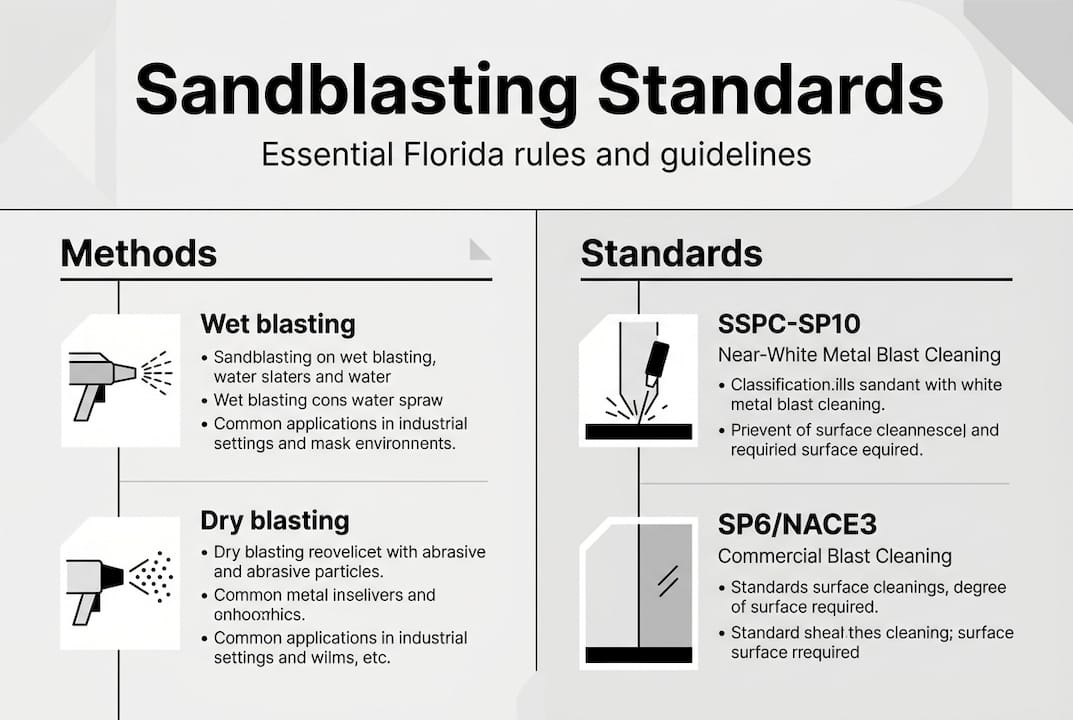
Before your crew fires up a blast pot, you need a firm grip on what sandblasting actually does and what rules govern it here in Florida. Sandblasting propels abrasive media at high speed using compressed air to clean and profile industrial surfaces like metal, concrete, and pipelines for coating adhesion. That surface profile, the microscopic peaks and valleys left behind, is what gives industrial coatings something to grip. Without it, even premium coatings fail fast.
There are two main methods you will encounter: wet and dry sandblasting. Dry blasting is faster and more aggressive, making it effective for heavy rust removal. Wet blasting mixes water with the abrasive stream, which suppresses dust and reduces heat transfer to the substrate. In Florida’s high-humidity environment, wet blasting is often the smarter choice for outdoor work because it also helps prevent flash rust from forming immediately after blasting. Your choice between the two affects your PPE requirements, waste management plan, and overall project timeline, so factor in choosing sandblasting methods carefully before mobilizing.
Industry standards you must know
The table below summarizes the key standards governing surface cleanliness after blasting:
| Standard | Cleanliness level | Max allowable stain | Typical application |
|---|---|---|---|
| SSPC-SP10 / NACE2 / ISO Sa2.5 | Near-white | Less than 5% | Water tanks, pipelines, critical infrastructure |
| SSPC-SP6 / NACE3 / ISO Sa2 | Commercial blast | Up to 33% | General industrial, commercial facilities |
| SSPC-SP5 / NACE1 / ISO Sa3 | White metal | Zero | Immersion service, severe environments |
SSPC-SP10 and SP6 standards are the most commonly specified for Florida’s municipal infrastructure and commercial facilities. Knowing which standard your coating manufacturer requires is non-negotiable before you start.
Florida-specific regulatory requirements
Florida does not ban sandblasting outright, but DEP and EPA rules require proper waste capture, containment, and disposal, particularly when blasting surfaces with lead paint or other hazardous coatings. National silica dust rules apply statewide, meaning operators must use compliant respirators and dust controls. Review environmental protection practices to stay current on what containment setups satisfy both state and federal inspectors.
Before any project starts, facility managers must verify:
- Required permits from local and state agencies
- Containment and booth setup for hazardous waste capture
- Appropriate PPE for all operators and nearby workers
- Certified technicians with documented training
- Waste disposal plan meeting DEP and EPA requirements
Regulatory note: Skipping containment on a job involving lead-based paint does not just risk a fine. It can trigger a full project shutdown, third-party remediation costs, and potential liability for environmental contamination.
Preparing for sandblasting: Tools, safety, and site setup
With standards and regulations covered, let’s walk through the right way to prepare your site for successful, compliant sandblasting. Good preparation is what separates a project that passes inspection from one that gets flagged or fails in the field.
Essential equipment and media
| Category | Items needed |
|---|---|
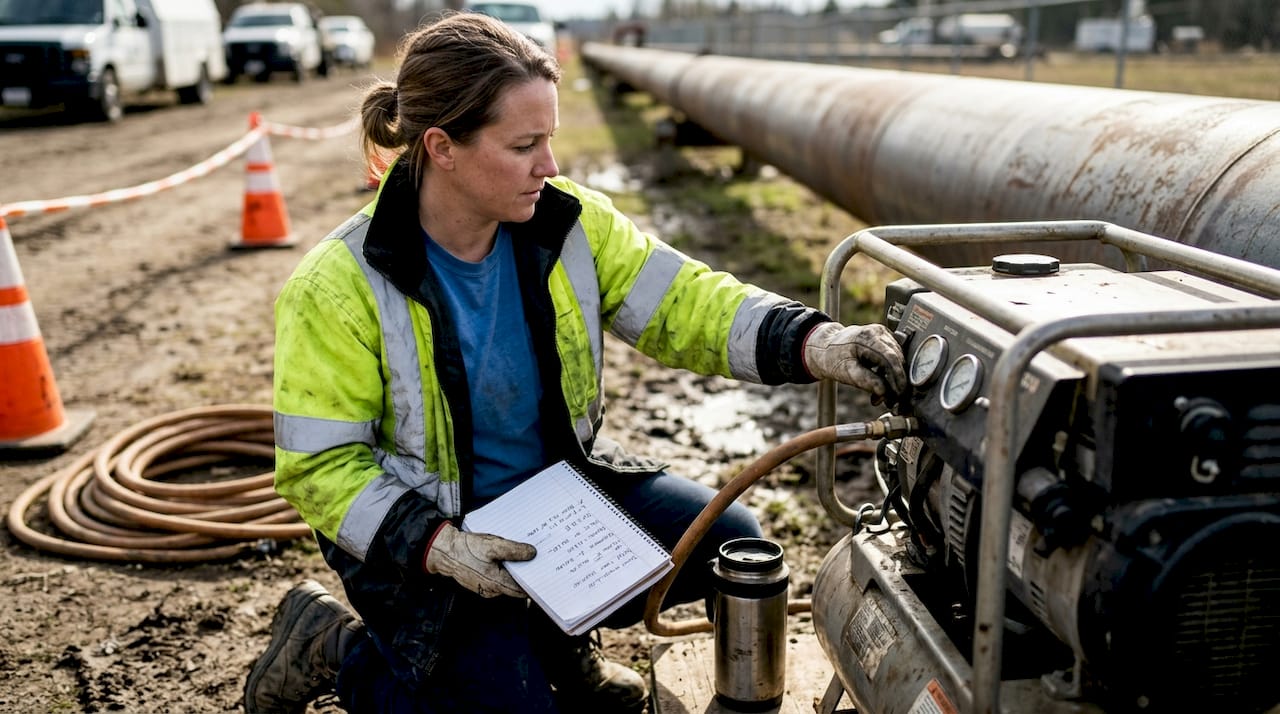
| Blasting equipment | Blast pot, air compressor (minimum 185 CFM), hoses, nozzles |
| PPE | Supplied-air respirator, blast suit, gloves, safety boots |
| Abrasive media | Steel grit, garnet, aluminum oxide, crushed glass (project-specific) |
| Support gear | Moisture separator, pressure gauges, lighting, containment tarps |
Media selection matters more than most managers realize. Steel grit cuts aggressively and is reusable, making it cost-effective for large steel structures. Garnet is a popular choice for projects near waterways because it is chemically inert. Crushed glass works well on concrete. Match your media to your substrate and your waste disposal constraints.
Site setup checklist
- Secure the work zone with barriers and signage at least 20 feet beyond the blast area.
- Erect containment sheeting or a blast booth to capture abrasive and debris.
- Install a moisture separator on the air line to prevent wet air from contaminating the blast stream.
- Verify all PPE fits correctly and that supplied-air respirators are functioning.
- Confirm your waste collection containers are labeled and positioned for immediate use.
- Brief all crew on emergency procedures and silica dust protocols.
Booths with filtration systems are the recommended setup for managing hazardous waste during blasting operations. For open-air work on large structures, shroud containment systems serve the same purpose.
Safety requirement: Florida’s silica exposure rules require that airborne crystalline silica remain below the OSHA permissible exposure limit. Wet blasting suppresses dust at the source, while dry blasting demands a full supplied-air respirator and active monitoring.
Pro Tip: Check ambient temperature, dew point, and relative humidity before blasting. If the steel temperature is within 5°F of the dew point, flash rust will form within minutes of blasting. Florida’s humidity makes this a daily concern, not an occasional one.
Certified operators are not optional on regulated projects. Technicians with AMPP abrasive blaster certification understand how to adjust technique for substrate type, media behavior, and environmental conditions. Review a full sandblasting procedure for managers to understand what your contractor should be doing at each stage.
How to sandblast: Step-by-step process for optimal results
Once your site and gear are ready, it’s time to follow a proven sequence for efficient, safe sandblasting. Skipping steps or rushing the sequence is how projects end up with uneven profiles, compliance gaps, and coating failures.
- Equipment check: Inspect all hoses, couplings, and the blast pot for leaks or wear. A failing hose under pressure is a serious safety hazard.
- Media test: Load a small amount of abrasive and run a test blast on a scrap piece or inconspicuous area to confirm media flow and nozzle condition.
- Set air pressure: Typical operating pressure is 70 to 120 PSI for most industrial applications. Higher pressure increases aggressiveness but also increases the risk of warping thin metals.
- Establish blasting pattern: Work in overlapping passes at a consistent 6 to 12 inch standoff distance. Angle the nozzle at 45 to 90 degrees to the surface depending on the profile depth required.
- Check coverage: After each pass, visually inspect for missed edges, corners, and weld seams. These areas are where corrosion starts if left under-blasted.
- Measure surface profile: Use a replica tape or digital gauge per ASTM D4417 measurement standards to confirm the profile depth matches your coating specification.
- Clean the surface: Remove all loose abrasive, dust, and debris using clean compressed air or a vacuum before any coating is applied.
PSI reference: Most structural steel projects run at 90 to 110 PSI. Dropping below 70 PSI produces an insufficient profile. Exceeding 120 PSI on thinner substrates risks distortion.
Common errors at this stage include blasting too close to edges (which rounds them off and reduces coating adhesion), over-blasting soft metals, and failing to clean the surface before the coating window closes. In Florida’s heat, that window can be as short as 30 minutes before flash rust begins.
Pro Tip: Keep a blasting log for every project. Record PSI settings, media type, ambient conditions, profile readings, and operator names. This documentation supports compliance audits and protects you if coating performance is ever disputed. Review the complete sandblasting guide for a sample log format.
Always keep dust suppression active throughout the process. Wet blasting handles this automatically, but dry blasting crews need to monitor air quality continuously and adjust containment if wind shifts.
Verifying results and troubleshooting: Inspection, waste, and compliance
After blasting, ensuring results meet standards and documenting your work sets the stage for regulatory compliance and lasting asset performance. This is the step most facility managers underinvest in, and it is where projects quietly fail.
Post-blast inspection checklist
- Use adequate lighting (minimum 50 foot-candles) to spot residual staining, mill scale, or surface contamination
- Run a gloved hand across the surface to feel for embedded abrasive or loose debris
- Compare the surface visually against SSPC pictorial standards for your specified cleanliness level
- Measure surface profile using ASTM D4417 tools at multiple points across the substrate
- Document all readings with photos and written records before coating begins
Common post-blast results and remedies
| Result | Likely cause | Remedy |
|---|---|---|
| Profile too shallow | Low PSI or wrong media | Re-blast with higher pressure or coarser media |
| Profile too deep | Excessive PSI or hard media | Adjust settings; consult coating manufacturer for tolerance |
| Residual staining above spec | Insufficient passes | Additional blasting passes on affected areas |
| Embedded abrasive | Wrong media for substrate | Vacuum blast or brush-off to remove; adjust media selection |
| Flash rust | Delay before coating | Re-blast affected areas; coat immediately after blasting |
Surface profile must be measured per ASTM D4417, and all waste must be managed under DEP and EPA rules. This is not optional on municipal or commercial projects. Review your surface prep for contractors requirements and compliance standards in painting before closing out any project.
Waste management requirement: Florida DEP and EPA rules require that all blasting waste, especially from surfaces with lead or chromate coatings, be captured, labeled, and disposed of through a licensed hazardous waste hauler. Improper disposal carries significant fines and potential criminal liability.
The top three mistakes at this stage are: coating over an under-blasted surface, failing to document profile readings, and disposing of blast media in a standard dumpster. Each one has real consequences. Understanding how sandblasting and asset life connect reinforces why verification is worth the time investment.
What most miss about sandblasting: It’s a compliance process, not just cleaning
After more than 20 years working on Florida’s water tanks, pipelines, and city infrastructure, the pattern is clear. Facilities that treat sandblasting as a simple cleaning task consistently spend more on maintenance, coating reapplication, and regulatory remediation than those that treat it as a regulated workflow.
The technical quality of the blast matters, but documentation and waste management are what protect you legally and financially. One missed waste manifest or an undocumented profile reading can unravel an otherwise excellent project during an audit.
Facilities that build routine profile checks, certified operators, and proper waste tracking into every project see fewer failures over time. It is not about doing more work. It is about doing the right work in the right order, every time. Understanding how blasting and infrastructure longevity are connected should change how you budget for surface prep. It is not a cost to minimize. It is a protection strategy.
Need expert sandblasting in Florida? Partner for compliance and results
Getting sandblasting right in Florida requires more than good equipment. It takes certified operators who know the state’s environmental rules, understand how humidity affects surface prep, and can document every step for compliance.
Southern Sandblasting & Painting LLC has delivered compliant, high-performance surface preparation for municipal water systems, airports, and commercial facilities across Central Florida for over 20 years. Whether you need a full project assessment or guidance on Florida sandblasting services for your next asset, our team is ready to help. Explore our approach to coating application steps to see how surface prep connects directly to coating performance and asset lifespan.
Frequently asked questions
What is the difference between wet and dry sandblasting?
Wet blasting suppresses dust and reduces heat transfer to the substrate, making it well-suited for Florida’s outdoor environments, while dry blasting works faster for heavy rust removal but demands advanced PPE and stricter dust controls.
What standards should Florida facilities use for sandblasting?
Follow SSPC-SP10/NACE2/ISO Sa2.5 for critical infrastructure like water tanks and pipelines, or SP6/NACE3/Sa2 for general commercial projects, and always verify the surface profile using ASTM D4417 measurement tools before applying any coating.
Are there special sandblasting regulations in Florida?
Florida follows national silica dust rules and requires DEP and EPA waste compliance, meaning blast waste from hazardous coatings must be contained, labeled, and disposed of through a licensed hauler, with no state-level ban on sandblasting itself beyond those federal standards.
How do I know if sandblasting was successful?
A successful blast meets the specified surface profile depth and cleanliness level, confirmed through ASTM D4417 profile measurement at multiple points across the substrate and a visual comparison against the applicable SSPC pictorial standard before any coating is applied.
Recommended
- Industrial sandblasting guide for facility managers
- How sandblasting protects and extends infrastructure life
- Mastering pipe sandblasting workflow for large projects
- Industrial blasting terms demystified: a facility leader’s guide
- Industrial Painting Services in Orlando, FL
- Sandblasting Services in Orlando, FL


