
Facility managers and contractors in Central Florida face unique challenges when preparing pipelines for protective coatings. High humidity, strict environmental regulations, and the scale of municipal and industrial infrastructure demand precision in every phase of surface preparation. Without a systematic workflow, projects risk coating failure, costly rework, and shortened asset lifespans. This guide walks you through the complete pipe sandblasting workflow, from initial assessment through final verification, ensuring your large-scale projects meet industry standards and deliver lasting protection for critical infrastructure.
Table of Contents
- Key takeaways
- Essential preparations for pipe sandblasting projects
- Executing the pipe sandblasting workflow step by step
- Verifying results and troubleshooting common challenges
- Partner with Central Florida’s pipe sandblasting experts
- Frequently asked questions
Key Takeaways
| Point | Details |
|---|---|
| Wet vs Dry Blasting | Use wet blasting for humidity and dust suppression in Central Florida municipal projects, and dry blasting for enclosed shop environments with dust control. |
| Manual vs Automated | Field pipelines benefit from manual blasting for access and complexity, while automated systems excel in large scale shop projects for consistency. |
| Surface Prep Standards | Aim for SSPC-SP10/NACE No.2/ISO Sa2.5 level coating adhesion to ensure durable bonds. |
| Test Patches | Implement test patches and verification steps to confirm surface cleanliness and coating longevity before full coating application. |
Essential preparations for pipe sandblasting projects
Central Florida’s climate and regulatory environment shape every decision in pipe sandblasting workflows. Florida’s high humidity favors wet blasting for dust suppression and environmental compliance, making it the preferred approach for many municipal and industrial projects. Dry blasting remains viable for enclosed shop environments where dust collection systems can manage airborne particles effectively. Understanding when to deploy each method prevents regulatory violations and protects worker health.
Method selection extends beyond wet versus dry considerations. Manual sandblasting is common for field pipelines in municipal Florida projects, while machines are preferred for large-scale shop work. Field conditions often involve complex geometries, limited access, and variable pipe orientations that make portable equipment essential. Shop environments allow for automated systems that deliver consistent results across long production runs. Evaluating your project’s location, timeline, and pipe configuration determines the optimal equipment strategy.
Essential equipment and materials for pipe sandblasting include:
- Portable blast pots or automated blast machines matched to project scale
- Air compressors sized for sustained CFM requirements and pressure stability
- Blast nozzles in ceramic or tungsten carbide for extended service life
- Abrasive media selected for pipe material, coating specifications, and environmental impact
- Dust collection systems or water injection equipment for emission control
- Personal protective equipment including respirators, blast suits, and hearing protection
- Surface profile gauges and test patches for quality verification
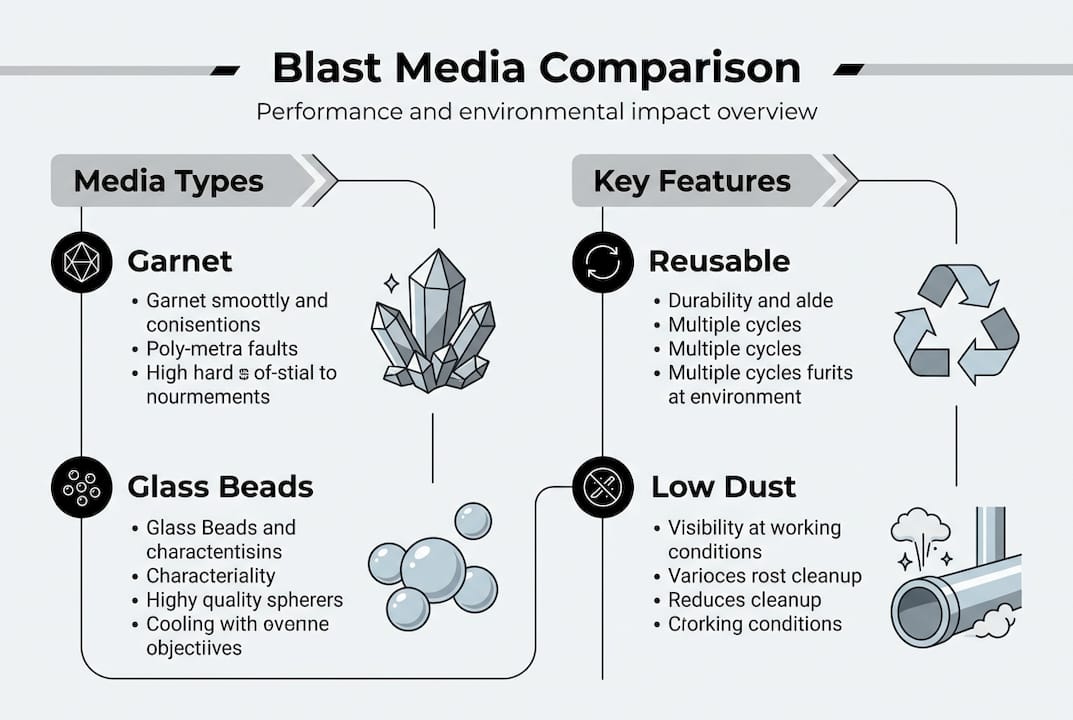
Abrasive selection balances performance, cost, and environmental compliance. The table below compares common blast media for pipe sandblasting projects.
| Abrasive Type | Reusability | Contamination Risk | Environmental Impact | Best Application |
|---|---|---|---|---|
| Steel grit | High (5-8 cycles) | Moderate (rust potential) | Higher dust generation | Shop environments with recycling systems |
| Garnet | Low (1-2 cycles) | Very low | Low dust, inert material | Field work in populated areas |
| Glass beads | Moderate (3-5 cycles) | Very low | Low dust, chemically stable | Sensitive substrates requiring gentle profiles |
Pro Tip: Always select abrasives balancing performance and environmental compliance. Garnet delivers excellent profile depth with minimal dust, making it ideal for Florida’s outdoor municipal projects where air quality monitoring is strict.
Site preparation also involves establishing containment zones, securing utilities, and coordinating with facility operations to minimize disruption. For complex projects requiring choosing sandblasting methods florida specific to local conditions, early planning prevents delays and ensures regulatory alignment. With preparations complete, the workflow moves to execution.
Executing the pipe sandblasting workflow step by step
A systematic execution process ensures consistent surface quality across large-scale pipe projects. Follow these steps for optimal results:
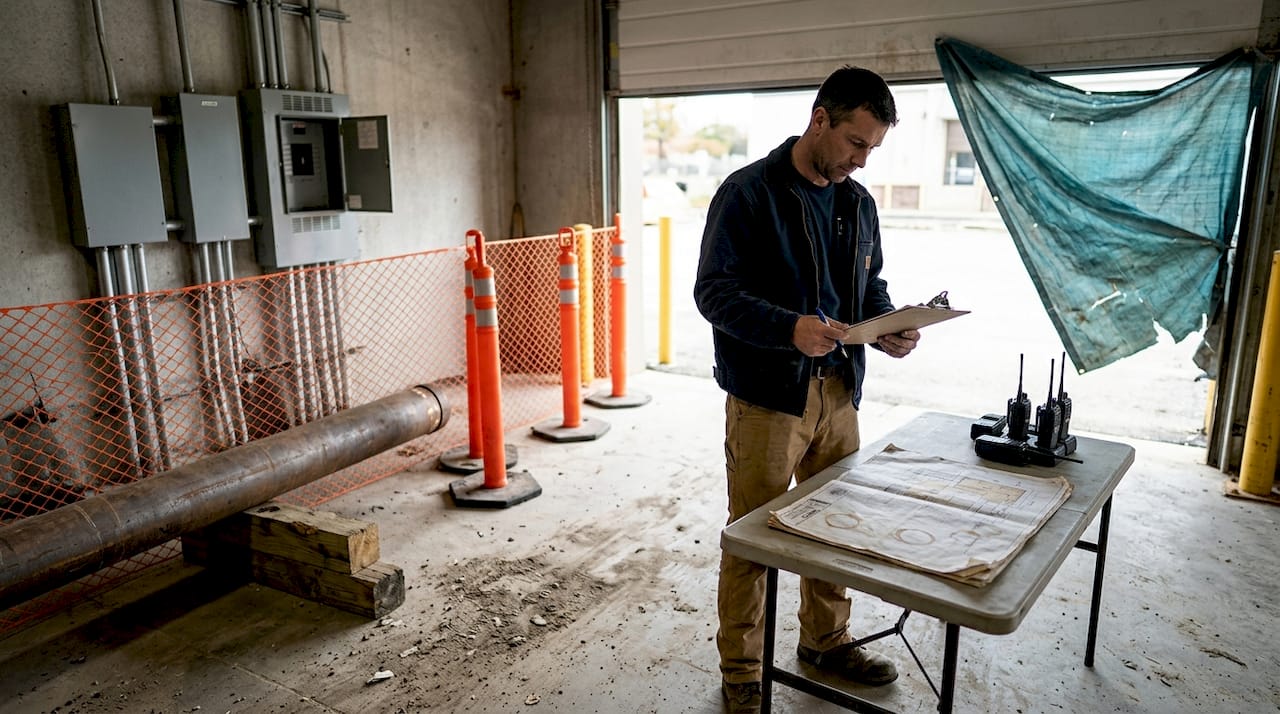
- Inspection and assessment: Examine pipe surfaces for existing coatings, corrosion depth, mill scale, and contamination. Document baseline conditions with photographs and profile measurements. Identify areas requiring special attention or repair before blasting. This assessment informs abrasive selection and blast pressure settings.
- Equipment setup and calibration: Position blast equipment for efficient coverage and operator safety. Connect air supplies, verify pressure settings, and test abrasive flow rates. For automated systems, program travel speeds and nozzle angles to match pipe diameter and desired profile. Confirm dust collection or water injection systems operate properly before starting production blasting.
- Controlled blasting execution: Maintain consistent nozzle distance (typically 6-12 inches) and traverse speed to achieve uniform surface preparation. Overlap blast patterns by 30-50% to eliminate missed areas. Monitor abrasive consumption and adjust feed rates as needed. For pipe interiors, use specialized lance equipment with rotating nozzles to reach all surfaces. SSPC-SP10/NACE No.2/ISO Sa2.5 are benchmark standards for proper surface cleanliness ensuring coating adhesion.
- Continuous monitoring and quality control: Inspect surfaces during blasting to verify profile depth and cleanliness. Use magnification to detect remaining contaminants or inadequate anchor patterns. Test abrasive quality periodically, as degraded media loses cutting efficiency and may introduce contaminants. Adjust blast parameters immediately when surface quality deviates from specifications.
- Post-blast cleaning and preparation: Remove residual abrasive and dust using compressed air, vacuum systems, or solvent wipes depending on coating requirements. Verify surfaces meet cleanliness standards within the specified time window before coating application. In humid environments, this window may be as short as 2-4 hours before flash rusting occurs. Coordinate coating crews to minimize exposure time.
Pro Tip: Use portable blasting units for fieldwork and automated systems in controlled shops for efficiency. Portable equipment offers flexibility for pipeline networks spread across municipal facilities, while automated systems maximize throughput for fabrication shops preparing pipe sections before installation.
Proper execution creates the foundation for coating success, but verification confirms readiness. Understanding how to validate surface preparation and address common workflow challenges ensures projects meet performance expectations. For comprehensive guidance on surface preparation workflow industrial projects, facility managers benefit from documented procedures that standardize quality across multiple crews and locations.
Verifying results and troubleshooting common challenges
Verification transforms surface preparation from a process into a documented quality outcome. Test patches are essential for validation of surface preparation meeting SSPC-SP10/NACE No.2 standards. Create test patches at project start and after any parameter changes to confirm blast settings produce the required profile depth and cleanliness. Submit samples to independent labs for quantitative analysis when specifications demand third-party verification. This documentation protects against warranty disputes and proves compliance with engineering specifications.
Inspection checklists ensure consistent evaluation across project phases:
- Visual examination under adequate lighting (minimum 1000 lux) for complete removal of contaminants
- Surface profile measurement using replica tape or digital profilometers
- Cleanliness verification against photographic standards or dust tape tests
- Moisture and chloride contamination testing for marine or coastal environments
- Documentation of environmental conditions during blasting and coating windows
Common challenges require proactive troubleshooting to maintain workflow efficiency. The table below outlines typical issues and resolutions.
| Challenge | Cause | Resolution |
|---|---|---|
| Surface contamination | Oil, grease, or soluble salts not removed pre-blast | Pre-clean with detergents or solvents; reblast affected areas |
| Uneven blasting | Inconsistent nozzle distance or traverse speed | Implement guides or templates; train operators on technique |
| Excessive dust | Dry blasting in open environments | Switch to wet blasting or enhance dust collection capacity |
| Flash rusting | High humidity exposure after blasting | Reduce coating delay; apply rust inhibitors; control environment |
Troubleshooting tips for maintaining workflow quality include:
- Monitor abrasive quality hourly, replacing degraded media before it affects surface preparation
- Track humidity and temperature continuously, adjusting coating schedules to stay within specification windows
- Calibrate equipment daily, verifying pressure gauges and flow meters against known standards
- Rotate operators to prevent fatigue-related quality variations on long production runs
- Maintain spare nozzles, hoses, and couplings to minimize downtime from equipment failures
Safety Warning: Pipe sandblasting generates hazardous dust, noise exceeding 100 dBA, and potential for high-pressure injuries. Mandatory protective measures include supplied-air respirators, hearing protection, blast suits, and lockout/tagout procedures for pressurized systems. Never bypass safety interlocks or operate equipment without proper training and certification.
Addressing these verification and troubleshooting elements ensures projects deliver surfaces ready for long-term coating performance. Facility managers who implement systematic verification protocols reduce callbacks and extend asset service life. For real-world applications demonstrating these principles, review examples sandblasting projects asset longevity to see how proper workflows translate into infrastructure durability.
Partner with Central Florida’s pipe sandblasting experts
Large-scale pipe projects demand more than equipment and materials. They require partners who understand Central Florida’s unique environmental challenges and regulatory landscape. Southern Sandblasting & Painting delivers specialized pipe sandblasting and surface preparation services tailored to municipal water systems, industrial facilities, and infrastructure projects across the Orlando region. Our team combines portable equipment for field installations with shop-based automated systems for fabrication projects, ensuring optimal efficiency regardless of project location.
With over 20 years serving Florida’s industrial and municipal sectors, we’ve developed workflows that address humidity control, dust management, and accelerated coating schedules. Our expertise spans sandblasting services in Orlando for pipelines, tanks, and structural steel, supported by comprehensive sandblasting and painting services that take projects from surface preparation through final coating application. We maintain certifications in industry standards and employ quality control protocols that document every phase of surface preparation.
Pro Tip: Engage expert contractors early in project planning for optimal surface prep outcomes. Early involvement allows us to recommend abrasive strategies, schedule coordination with coating applicators, and identify potential site challenges before mobilization.
Our commitment extends beyond meeting specifications. We partner with facility managers and contractors to deliver surfaces that maximize coating adhesion, extend maintenance intervals, and protect critical infrastructure investments. Every project receives the same attention to safety, quality, and compliance that has made us Central Florida’s trusted surface preparation specialist.
For guidance on implementing these workflows in your next project, explore our resources on surface prep best practices coatings to understand how proper preparation drives long-term asset performance.
Frequently asked questions
What is the best abrasive for sandblasting pipes in humid climates?
Garnet and glass abrasives are preferred in humid climates for low dust generation and environmental friendliness. These media produce minimal airborne particles, reducing respiratory hazards and simplifying compliance with air quality regulations. Steel grit offers excellent reusability for shop environments with recycling systems, but may introduce rust contamination in humid conditions and creates higher dust levels that require enhanced collection equipment.
When should manual sandblasting be preferred over automated systems?
Manual blasting is ideal for fieldwork involving complex pipeline geometries, limited access points, and variable installation conditions common in municipal infrastructure. Portable equipment allows operators to navigate around obstacles and adjust techniques for pipe bends, flanges, and support structures. Automated systems deliver superior consistency and efficiency for large-scale shop projects where pipes can be positioned on rollers or manipulators, enabling continuous blasting of straight sections with predictable surface requirements.
How can facility managers verify the quality of sandblasting before coating?
Use test patches to validate cleaning standards like SSPC-SP10/NACE No.2, creating representative samples at project start and after any process changes. Visual inspections should be conducted under minimum 1000 lux lighting, comparing surfaces against photographic standards. Profile depth measurements using replica tape or digital gauges confirm anchor patterns meet coating manufacturer specifications. Document environmental conditions including temperature, humidity, and time elapsed between blasting and coating to prove compliance with application windows.
What are common challenges in pipe sandblasting and how to avoid them?
Humidity-induced complications including flash rusting and dust control issues can be managed by switching to wet blasting methods or applying temporary rust inhibitors immediately after surface preparation. Improper abrasive reuse introduces contaminants that compromise coating adhesion, so monitor media quality hourly and replace degraded abrasives before they affect surface cleanliness. Implement comprehensive safety protocols including supplied-air respirators, hearing protection, and equipment lockout procedures to prevent health risks and environmental violations that halt project progress.


