
Many infrastructure managers mistakenly believe primer and topcoat are interchangeable layers in coating systems. This confusion leads to premature coating failure, increased maintenance costs, and shortened asset lifespans. Understanding the distinct roles of each layer is critical for protecting municipal water tanks, bridges, pipelines, and commercial facilities across Central Florida. Primer prepares surfaces and ensures adhesion, while topcoat delivers weather resistance and durability. Together, they form a protective barrier that extends infrastructure service life by decades when applied correctly.
Table of Contents
- Key takeaways
- Understanding primer: purpose and benefits
- Explaining topcoat: function and importance
- Primer vs topcoat: a detailed comparison
- Practical guidance: choosing and applying primers and topcoats for Central Florida infrastructure
- Protect your infrastructure with expert coating services
- FAQ
Key Takeaways
| Point | Details |
|---|---|
| Primer provides adhesion | Primer creates a chemical and mechanical bond to the surface, enabling topcoat adhesion and providing corrosion resistance. |
| Topcoat adds durability | Topcoat serves as the final protective layer that withstands UV exposure, temperature extremes, and chemical pollutants. |
| Surface prep matters | Proper surface preparation through sandblasting and cleaning establishes a rough profile and removes contamination to ensure primer bonding. |
| Primer thickness matters | Maintaining a 3 to 5 mils dry film thickness is critical for performance and long term protection. |
Understanding primer: purpose and benefits
Primer serves as the foundational layer in any industrial coating system, applied directly to prepared metal, concrete, or composite surfaces. This critical first coat creates a chemical and mechanical bond between the substrate and subsequent coating layers. Without proper primer application, even the highest quality topcoats will fail prematurely, wasting resources and compromising asset protection.
The primer acts as a bonding layer that enhances coating adhesion and corrosion resistance. It penetrates surface irregularities created during sandblasting or other preparation methods, establishing anchor points for topcoat attachment. This mechanical interlocking prevents coating separation under thermal expansion, vibration, or moisture exposure common in Florida’s climate.
Primers deliver three essential functions for infrastructure protection:
- Adhesion enhancement through chemical bonding agents that grip both substrate and topcoat
- Corrosion inhibition using zinc, epoxy, or other sacrificial compounds that protect metal from oxidation
- Surface sealing that prevents moisture penetration and substrate degradation
- Compatibility bridging between dissimilar materials like galvanized steel and urethane topcoats
Industrial infrastructure projects typically use epoxy primers for steel structures, zinc-rich primers for maximum corrosion protection, and urethane primers for concrete surfaces. Each formulation addresses specific substrate characteristics and environmental challenges. Epoxy primers excel in chemical resistance for wastewater facilities, while zinc-rich options provide cathodic protection for coastal installations exposed to salt spray.
Proper surface preparation determines primer effectiveness more than any other factor. Sandblasting to white metal or commercial grade removes contaminants, creates surface profile for mechanical bonding, and ensures primer can perform its protective functions. Applying primer to poorly prepared surfaces wastes material and guarantees coating system failure within months rather than decades.
Pro Tip: Always verify primer compatibility with your chosen topcoat system before purchasing materials. Incompatible chemistries can cause delamination or poor curing, even when each product is high quality individually.
Primer thickness matters significantly for performance. Industrial standards typically require 3 to 5 mils of dry film thickness, measured with calibrated gauges during application. Insufficient thickness leaves substrate vulnerable, while excessive buildup can crack or trap solvents that weaken the coating system. Professional applicators monitor thickness continuously to maintain specifications throughout the project.
Explaining topcoat: function and importance
Topcoat represents the final protective barrier between infrastructure assets and environmental degradation. This visible layer endures direct exposure to ultraviolet radiation, temperature extremes, chemical pollutants, and mechanical wear that would rapidly destroy unprotected substrates. Unlike primer, which focuses on adhesion and corrosion prevention, topcoat prioritizes durability and environmental resistance.
The topcoat provides weather resistance, UV protection, and mechanical durability critical for outdoor infrastructure. Advanced formulations incorporate UV stabilizers, flexible resins, and pigments that reflect solar radiation rather than absorbing heat. These properties prevent coating breakdown, color fading, and chalking that compromise both protection and appearance over time.
Topcoats deliver comprehensive protection through multiple mechanisms:
- UV resistance using titanium dioxide pigments and organic stabilizers that prevent photodegradation
- Chemical barrier properties that resist acids, alkalis, solvents, and industrial pollutants
- Abrasion resistance for surfaces subject to traffic, equipment contact, or wind-blown debris
- Moisture exclusion that prevents water penetration to primer and substrate layers
- Aesthetic finish that meets municipal codes and maintains professional appearance
Polyurethane topcoats dominate infrastructure applications due to superior gloss retention and UV stability. Epoxy topcoats offer excellent chemical resistance for industrial facilities but chalk under Florida sunlight. Acrylic systems provide economical protection for less demanding environments. Selecting appropriate topcoat chemistry requires balancing performance requirements, budget constraints, and expected service life.
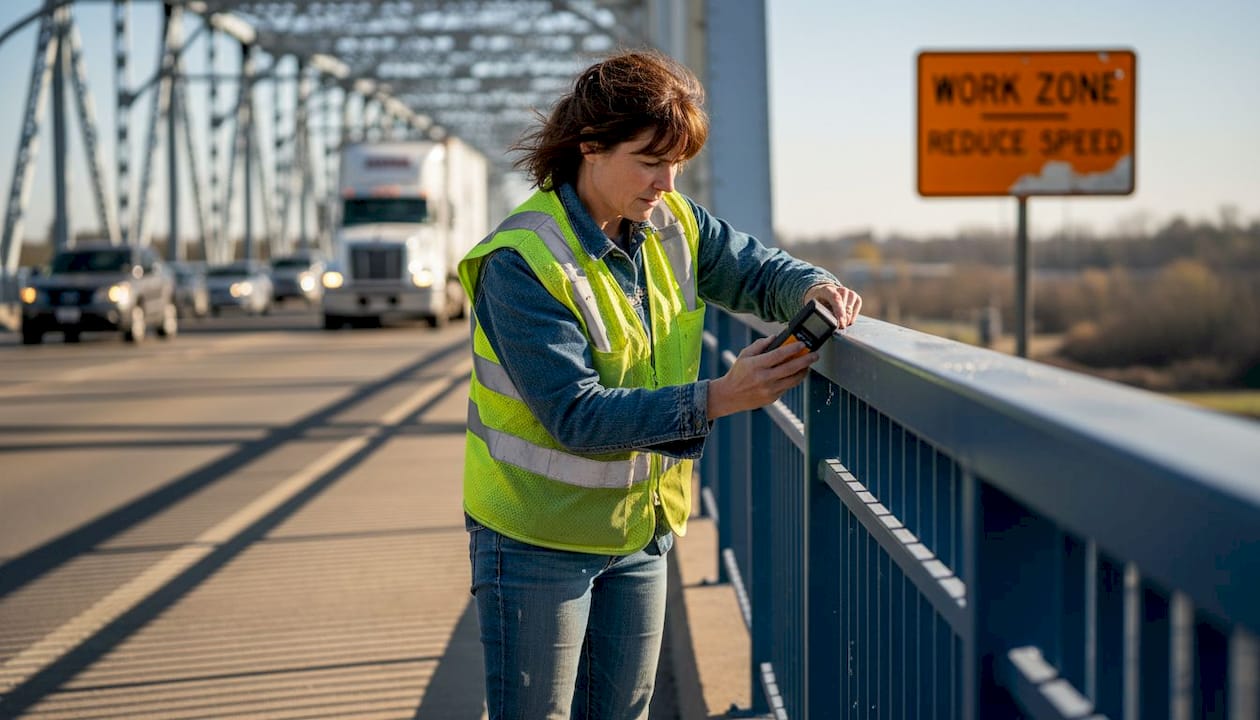
Topcoat protects the primer layer from environmental assault that would otherwise degrade its corrosion-inhibiting properties. Even the best epoxy or zinc-rich primer will fail rapidly under direct UV exposure or chemical attack. The topcoat sacrifices itself through gradual weathering, maintaining a protective barrier while the primer continues preventing corrosion at the substrate interface.
Pro Tip: Specify topcoats with a minimum 10-year gloss retention guarantee for infrastructure exposed to direct sunlight. This ensures the coating maintains both protective and aesthetic properties throughout its service life without premature recoating.
Color selection impacts topcoat performance significantly in Central Florida’s intense solar environment. Light colors reflect heat and UV radiation, reducing surface temperatures and extending coating life. Dark colors absorb energy, accelerating degradation and potentially causing substrate damage through thermal cycling. White, light gray, and tan remain the most durable choices for long-term infrastructure protection.
Primer vs topcoat: a detailed comparison
Understanding the complementary relationship between primer and topcoat eliminates specification errors that compromise coating system performance. Each layer addresses distinct failure modes, and omitting either creates vulnerabilities that accelerate asset deterioration. The following comparison clarifies their different but equally critical roles.
| Characteristic | Primer | Topcoat |
|---|---|---|
| Primary objective | Substrate adhesion and corrosion prevention | Environmental protection and durability |
| Chemical composition | Epoxy, zinc, urethane with adhesion promoters | Polyurethane, epoxy, acrylic with UV stabilizers |
| Surface preparation | Requires clean, profiled substrate | Requires cured primer with proper intercoat timing |
| Film thickness | 3-5 mils dry film typical | 2-4 mils dry film typical |
| Appearance | Usually dull, may be colored for coverage verification | Glossy or satin finish in specified color |
| Cost per gallon | Generally lower than topcoat | Higher due to UV stabilizers and pigments |
| Recoat window | Critical for topcoat adhesion | Determines maintenance intervals |
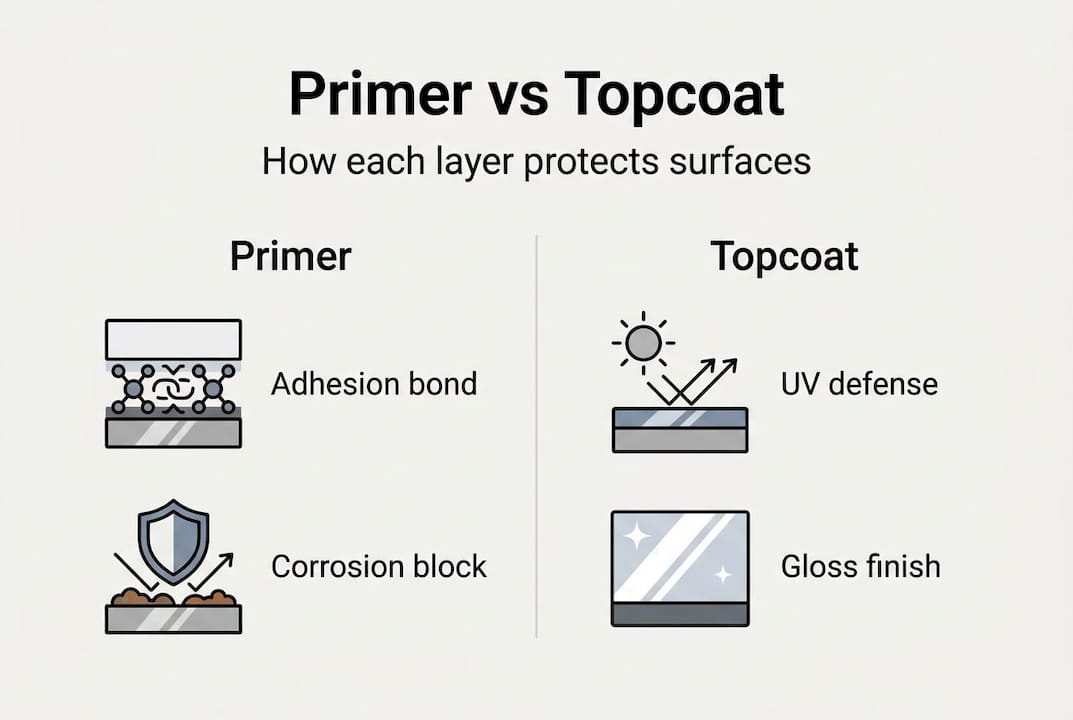
Primer focuses on what happens at the substrate interface, while topcoat addresses environmental assault from above. This division of labor creates a synergistic system where each layer protects the other. Primer prevents corrosion that would undermine topcoat adhesion, while topcoat shields primer from UV degradation and chemical exposure.
Applying topcoat without primer causes several predictable failure modes. The coating lacks proper adhesion to the substrate, leading to delamination under thermal stress or mechanical impact. Without corrosion inhibitors, rust forms rapidly at the coating-substrate interface, pushing the topcoat away from the surface. Moisture penetrates more easily, accelerating degradation cycles.
Using primer without topcoat exposes the primer to environmental conditions it cannot withstand. Epoxy primers chalk and degrade under UV exposure within months. Zinc-rich primers corrode sacrificially but leave surfaces unprotected once zinc depletes. The misapplication or omission of primers or topcoats leads to reduced coating effectiveness and asset lifespan.
Common problems from improper layer specification include:
- Flash rusting when topcoat is applied before primer cures fully
- Intercoat delamination from exceeding maximum recoat windows
- Solvent entrapment causing blistering when layers are applied too quickly
- Incompatible chemistries preventing proper cross-linking between layers
- Insufficient total system thickness leaving substrate vulnerable
Successful coating systems match primer and topcoat to specific exposure conditions. Marine environments require zinc-rich primers with polyurethane topcoats for maximum corrosion and UV resistance. Chemical processing facilities need epoxy primers and chemical-resistant epoxy topcoats. Water storage tanks benefit from high-solids epoxy primers with aliphatic urethane topcoats that maintain potable water compliance.
Pro Tip: Always purchase primer and topcoat from the same manufacturer whenever possible. This ensures chemical compatibility and allows you to leverage their technical support for application guidance specific to your substrate and environment.
Practical guidance: choosing and applying primers and topcoats for Central Florida infrastructure
Central Florida’s unique climate demands careful coating selection to combat high humidity, intense UV radiation, salt-laden coastal winds, and frequent thermal cycling. Infrastructure managers must account for these environmental stressors when specifying primers and topcoats to achieve maximum asset protection and longevity.
Key selection criteria for Florida infrastructure coatings:
- UV stability rating of excellent or superior for topcoats exposed to direct sunlight
- Moisture vapor transmission rate below 0.5 perms to prevent substrate degradation
- Service temperature range covering 20°F to 150°F for surface temperatures under solar loading
- Salt spray resistance exceeding 3,000 hours in ASTM B117 testing for coastal locations
- VOC compliance with Florida air quality regulations while maintaining performance
- Proven field performance in similar Central Florida applications over 10+ years
Proper selection and application aligned with Florida’s climate extends asset longevity significantly. Coatings must cure properly in high humidity conditions common year-round, requiring formulations with moisture-tolerant curing mechanisms. Temperature during application affects film formation, with ideal conditions between 50°F and 90°F and relative humidity below 85%.
Application best practices ensure coating system effectiveness:
- Complete surface preparation to SSPC-SP10 or better, removing all rust, mill scale, and contaminants
- Apply primer within four hours of surface preparation to prevent flash rusting in humid conditions
- Measure and document wet and dry film thickness at multiple locations per coating specification
- Observe minimum and maximum recoat windows precisely, typically 4-48 hours depending on product
- Avoid application during morning dew, afternoon thunderstorms, or when surface temperature is within 5°F of dew point
- Use plural component spray equipment for consistent mixing ratios with epoxy and urethane systems
- Inspect for holidays, thin spots, and defects before applying subsequent layers
Maintenance extends coating life and prevents minor defects from becoming major failures. Annual inspections identify areas where topcoat weathering exposes primer or where mechanical damage requires touch-up. Washing surfaces removes corrosive salt deposits and organic growth that accelerate degradation. Small repairs cost pennies per square foot compared to complete recoating at dollars per square foot.
Working with experienced industrial coating contractors ensures proper product selection, surface preparation, and application techniques. Professional applicators understand intercoat timing, environmental limitations, and quality control procedures that determine long-term performance. They maintain calibrated equipment, follow manufacturer specifications exactly, and document the process for warranty compliance and future maintenance planning.
Pro Tip: Schedule coating projects for October through April when Central Florida humidity and temperature are most favorable for curing. Summer application requires careful monitoring of dew point and may necessitate dehumidification equipment for enclosed structures.
Common pitfalls include using architectural paints instead of industrial coatings, inadequate surface preparation to save time, applying coatings outside environmental windows, and mixing incompatible products. Each mistake compromises the coating system and leads to premature failure requiring complete removal and reapplication. Following industrial coating best practices and surface preparation guidelines prevents these costly errors.
Establishing a coating maintenance program protects infrastructure investments long-term. Document coating specifications, application dates, and environmental conditions during installation. Schedule regular inspections and budget for touch-up repairs before widespread failure occurs. Proper maintenance practices can double or triple coating service life compared to neglected systems.
Protect your infrastructure with expert coating services
Understanding primer and topcoat differences is essential, but proper application requires specialized equipment, training, and experience. Southern Sandblasting & Painting brings over 20 years of industrial coating expertise to Central Florida infrastructure projects, ensuring your assets receive maximum protection against environmental degradation.
Our comprehensive approach begins with professional sandblasting services in Orlando that prepare surfaces to exact specifications for optimal primer adhesion. We then apply industrial-grade primer and topcoat systems matched precisely to your substrate, exposure conditions, and performance requirements. Our team understands Florida’s challenging climate and selects coating chemistries proven to deliver decades of reliable protection.
From water tanks and bridges to pipelines and commercial facilities, we provide complete sandblasting and painting services in Orlando that extend asset life and reduce total ownership costs. Contact us today to discuss your infrastructure coating needs and discover how proper surface preparation and coating application protect your investments for the long term.
FAQ
What is the main difference between primer and topcoat?
Primer bonds directly to the prepared substrate and prevents corrosion at the surface interface through specialized chemical inhibitors and adhesion promoters. Topcoat provides the final protective barrier against UV radiation, moisture, chemicals, and mechanical wear while delivering the desired aesthetic finish. Both layers work together as a system, with primer handling substrate adhesion and corrosion while topcoat manages environmental protection and durability.
Can a topcoat be applied without a primer?
Applying topcoat without primer typically results in poor adhesion, rapid coating failure, and accelerated substrate corrosion within months rather than years. Some specialty topcoats claim direct-to-metal application capability, but they sacrifice long-term performance and corrosion protection compared to proper two-coat systems. For critical infrastructure requiring decades of service life, skipping primer is false economy that multiplies maintenance costs and shortens asset lifespan significantly.
How often should commercial infrastructure coatings be maintained in Central Florida?
Maintenance frequency depends on coating quality, exposure severity, and performance requirements, but most industrial coating systems need inspection annually with touch-up every 3 to 5 years. Complete recoating typically occurs every 10 to 20 years for properly applied systems in moderate exposure conditions. Coastal installations or chemically aggressive environments may require more frequent maintenance, while sheltered structures can extend intervals with proper initial application and regular inspections.
Why does surface preparation matter more than coating quality?
Even premium coatings fail rapidly when applied over contaminated, rusty, or improperly profiled surfaces because they cannot achieve the mechanical and chemical bonds necessary for long-term adhesion. Surface preparation accounts for approximately 50% of coating system performance, while coating selection and application each contribute 25%. Professional sandblasting to white metal or near-white metal standards removes all contaminants and creates the surface profile that allows primer to grip the substrate and resist delamination under environmental stress.
What coating system works best for Central Florida water infrastructure?
Potable water tanks require NSF-61 certified epoxy or polyurethane systems that resist moisture, provide corrosion protection, and maintain water quality without leaching harmful compounds. High-solids epoxy primers paired with aliphatic polyurethane topcoats deliver excellent UV resistance, gloss retention, and durability in Florida’s intense sunlight. Wastewater facilities benefit from chemical-resistant epoxy systems throughout, while exterior surfaces need UV-stable topcoats to prevent chalking and maintain long-term protection against the elements.
Recommended
- Coating Application Step by Step for Lasting Protection
- How to Maintain Coatings for Long-Lasting Protection
- Surface Prep Best Practices for Long-Lasting Coatings
- How to Apply Protective Coatings for Lasting Asset Durability
- Industrial Painting Services in Orlando, FL
- Sandblasting Services in Orlando, FL


