

TL;DR:
- Industry standards establish minimum safety, quality, and performance requirements for infrastructure projects and promote consistency across the industry.
- Following standards reduces project errors, prevents costly downtime, and improves risk management by clearly defining materials, processes, and safety protocols.
Industry standards are defined as consensus-based technical specifications that establish minimum requirements for safety, quality, and performance across infrastructure and construction projects. The role of industry standards extends far beyond paperwork. Bodies like ANSI, ISO, and NIST develop these frameworks so that every contractor, facility manager, and municipality works from the same baseline. Standards and technical regulations impact up to 93% of global trade. That figure tells you how deeply these frameworks are woven into every material, process, and project you manage.
How do industry standards improve project quality and reduce risk?
Standards improve project quality by replacing guesswork with defined specifications for materials, processes, and documentation. When every team member follows the same procedure, the margin for error shrinks significantly. The importance of industry standards shows up most clearly when something goes wrong without them.

Process inconsistencies cause 76% of industrial downtime, and unplanned downtime can cost up to $500 per hour. That is not a theoretical risk. For a water tank recoating project or a pipeline rehabilitation job, one day of unplanned stoppage can cascade into schedule overruns and contract penalties.
Standards address this by specifying:
- Material specifications: Coating thickness, substrate cleanliness levels, and application temperatures are defined before work begins.
- Process documentation: Test certificates, inspection reports, and traceability logs create a verifiable record of compliance.
- Worker safety protocols: OSHA-aligned standards set exposure limits, PPE requirements, and confined-space entry procedures.
- Quality checkpoints: Hold points and witness points are built into the workflow so defects are caught early, not at project closeout.
The benefits of industry standards are most visible in risk prevention. A surface preparation standard like SSPC SP-10 Near-White Blast Cleaning defines exactly what a cleaned surface must look like before a coating is applied. Without that definition, two contractors on the same project can interpret “clean” differently, and the coating fails prematurely.
Pro Tip: Start your compliance folder on day one of a project. Capture test certificates, inspection photos, and material data sheets as work progresses. Trying to reconstruct documentation at project closeout is where compliance failures happen.
Consistent industrial maintenance best practices tied to recognized standards also reduce the frequency of reactive repairs, which are always more expensive than planned maintenance cycles.
What is the economic impact of harmonized industry standards?
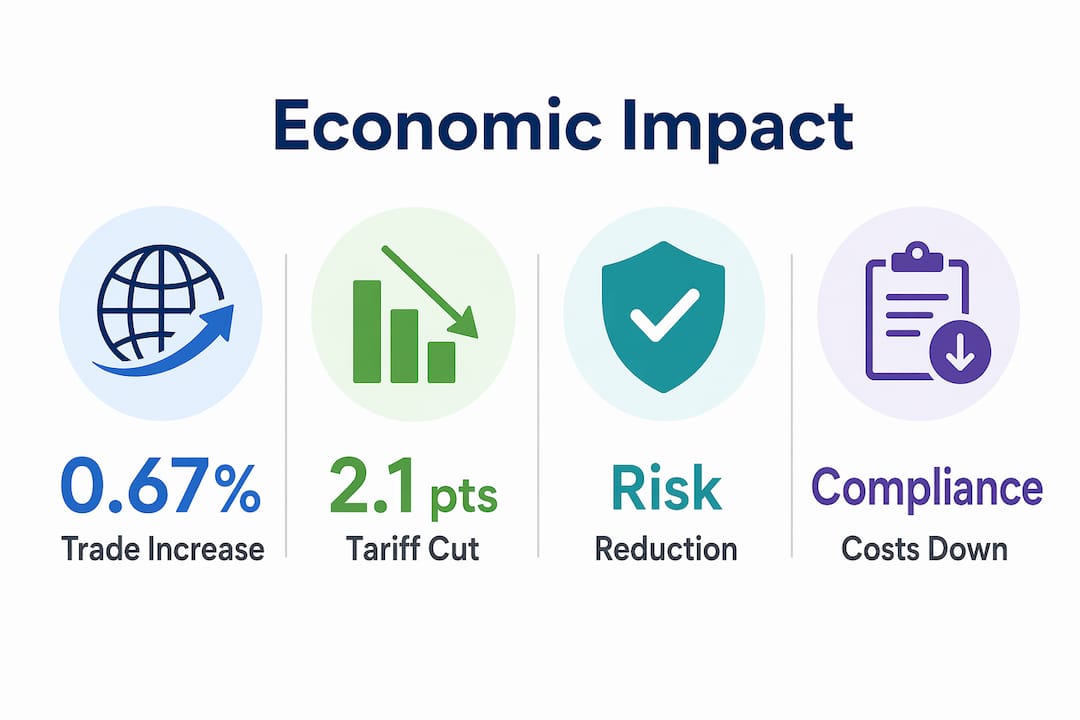
Harmonized standards do more than protect workers. They open markets and lower the cost of doing business across borders and project types. Harmonized standards raise product-level trade by 0.67%, which is equivalent to reducing tariffs by 2.1 percentage points. For infrastructure professionals sourcing specialty coatings, steel components, or abrasive media, that translates directly into more competitive pricing and a wider supplier base.
Standard-setting organizations generate measurable GDP growth, accelerate innovation diffusion, and promote consumer welfare in competitive sectors. They are not just technical bodies. They are economic infrastructure.
“Standards act as the ‘social glue’ enabling fair, safe, and efficient global trade, sometimes contributing more to economic growth than patents or licenses.” — DKE, Importance of Standardization
The table below summarizes the key economic benefits that harmonized standards deliver to infrastructure and construction sectors.
| Economic benefit | What it means for your projects |
|---|---|
| 0.67% increase in product-level trade | More suppliers compete for your material contracts, lowering costs. |
| 2.1 percentage point tariff equivalent | Imported specialty coatings and components become more price-competitive. |
| GDP and innovation growth via SSOs | New materials and application methods reach the market faster. |
| Reduced technical barriers to trade | Specifications accepted in one market transfer to another without retesting. |
The impact of industry standards on procurement is often underestimated. When a municipality in Florida specifies AWWA C213 for pipeline coatings, it is not just setting a technical bar. It is signaling to every qualified supplier worldwide that their product is eligible for consideration. That competition protects public budgets.
How do industry standards differ from regulations?
Standards and regulations are not the same thing, and confusing them creates compliance gaps. A regulation is a legal mandate enforced by a government body. A standard is a consensus-based document developed by technical experts and adopted voluntarily. The distinction matters because your obligations under each are different.
Industry standards provide a flexible, adaptive alternative to regulation, recognized internationally as best practices that enable faster innovation while maintaining safety. Regulations move slowly through legislative processes. Standards can be updated by technical committees in months when new data or materials emerge.
The relationship between the two works like this:
- Standards inform regulations: Regulatory agencies frequently reference or incorporate published standards rather than writing technical specifications from scratch.
- Standards can become de facto requirements: Voluntary standards become de facto regulations when referenced in contracts, permits, or procurement specifications. Once a standard appears in a contract, it carries the same legal weight as a regulation for that project.
- Early participation shapes outcomes: Professionals who engage in standards development committees influence the technical requirements before they become mandatory. That is a significant strategic advantage.
- Standards reduce regulatory burden: When an industry self-regulates effectively through standards, government agencies have less reason to impose prescriptive regulations.
The role of standards in business strategy is clearest here. A contractor who participates in SSPC or NACE International technical committees does not just learn what is coming. They help write it. That knowledge gap between participants and non-participants is real and consequential.
What are the best practices for implementing industry standards compliance?
Compliance with industry standards does not happen automatically. It requires deliberate planning from the first day of a project. The following steps reflect what experienced project managers do consistently on infrastructure jobs.
- Verify the current edition of every applicable standard. Using outdated standards creates liability exposure. Contracts must specify which edition governs the project. SSPC, AWWA, and NACE standards are revised regularly, and a two-year-old edition may have different requirements than the current one.
- Define governing standards in the contract. Every subcontract and purchase order should name the specific standard, edition, and clause that applies to each scope of work. Ambiguity at the contract stage becomes a dispute at project closeout.
- Build a compliance documentation system from day one. Detailed compliance documentation including test certificates and traceability logs is critical to passing audits. A project that meets every technical requirement but cannot prove it will still fail an audit.
- Schedule internal audits at key milestones. Do not wait for the owner’s inspector to find a gap. Conduct your own hold-point inspections at surface preparation, primer application, and final coating stages.
- Train field crews on the specific standards that govern their work. A coating applicator who understands why SSPC SP-6 Commercial Blast Cleaning exists will apply it more consistently than one who just follows verbal instructions.
Pro Tip: Assign one person on every project as the standards compliance lead. Their job is to track standard revisions, maintain the compliance folder, and flag any scope changes that trigger a different standard edition.
Integrating industry standards early in project planning is crucial to ensuring market access and sustainability. Standards compliance built into the project plan from the start costs far less than corrections made after the fact. For surface preparation standards compliance in Florida, the gap between a planned approach and a reactive one can mean the difference between a project that passes inspection and one that requires full rework.
Key Takeaways
Industry standards are the most cost-effective risk management tool available to infrastructure and construction professionals, and compliance built into project planning from day one prevents the majority of costly rework and audit failures.
| Point | Details |
|---|---|
| Standards reduce downtime | Process inconsistencies cause 76% of industrial downtime; standards eliminate the root cause. |
| Economic impact is measurable | Harmonized standards raise trade by 0.67%, expanding supplier competition and lowering material costs. |
| Standards differ from regulations | Voluntary standards become legally binding when referenced in contracts or permits. |
| Documentation is non-negotiable | Test certificates and traceability logs are required to prove compliance, not just achieve it. |
| Early engagement pays off | Participating in standards development lets professionals shape requirements before they become mandatory. |
Why I treat standards as a project management tool, not a compliance checkbox
Most professionals treat industry standards as something to satisfy at the end of a project. That is the wrong frame entirely. The teams I have seen struggle most with audits and rework are not the ones who ignored standards. They are the ones who followed them technically but never built compliance into their workflow from the start.
The most common mistake I see is relying on the edition of a standard that was current when a firm last did a similar project. Standards bodies update their documents. NACE and SSPC merged into AMPP in 2021, and their combined standards library has seen significant revisions since. A project manager who pulls a standard from a shared drive without checking the publication date is taking a real risk.
The second mistake is treating standards participation as something only large firms can afford. Technical committees at ANSI, ASTM, and AMPP accept individual members. The cost of participation is modest compared to the intelligence you gain. You learn what is being debated, what new test methods are under consideration, and which current requirements are likely to tighten. That knowledge changes how you specify work and how you train crews.
Standards are also the best defense against scope creep and change order disputes. When the contract names a specific standard edition, both parties have a shared reference point. Disagreements about quality become technical questions with documented answers, not arguments about opinion.
The industry standards and compliance relationship works best when it is proactive. Build the system, train the people, and let the documentation prove the work.
— Southernsandblastingandpainting
Standards-compliant surface preparation and coatings services
Southernsandblastingandpainting has delivered standards-compliant surface preparation and industrial coating services across Central Florida for over 20 years. Municipal water tanks, airport infrastructure, pipelines, and commercial facilities all require surface work that meets SSPC, AWWA, and NACE specifications. Getting that work right starts with the right equipment and the right process.

The team at Southern Sandblasting and Painting works directly with facility managers, contractors, and municipal clients to specify the correct surface preparation grade and coating system for each asset. Whether you need a full sandblasting equipment overview to understand what the job requires, or you are ready to discuss a specific project, Southernsandblastingandpainting brings the technical knowledge and field experience to keep your project compliant, on schedule, and built to last. Explore the full range of industrial coating services available for your next infrastructure project.
FAQ
What is the role of industry standards in construction?
Industry standards define minimum requirements for materials, processes, and safety in construction projects. They reduce risk, improve quality consistency, and provide a shared technical reference for all project stakeholders.
Why are industry standards important for compliance?
Voluntary standards become legally binding when referenced in contracts or permits. Failing to meet the specified standard edition can result in audit failures, rework costs, and contract disputes.
How do industry standards affect trade and procurement?
Harmonized standards increase product-level trade by 0.67%, equivalent to a 2.1 percentage point tariff reduction. That expands the supplier pool and creates more competitive pricing for construction materials.
What is the difference between a standard and a regulation?
A regulation is a legal mandate enforced by government. A standard is a consensus-based technical document adopted voluntarily, though it carries legal weight when referenced in a contract or permit.
How do I keep my project compliant with current standards?
Always verify the current edition of every applicable standard before a project begins, name the specific edition in the contract, and maintain a compliance documentation folder from day one through project closeout.


