
TL;DR:
- Surface preparation equipment includes tools that clean, profile, and prepare surfaces for coatings. Choosing the correct equipment ensures long-lasting coatings and prevents failure due to inadequate prep.
Surface preparation equipment comprises specialized tools designed to clean, profile, and prepare surfaces for coatings and repairs. Choosing the right surface prep equipment types directly determines whether a coating system lasts years or fails within months. Proper surface preparation accounts for up to 80% of coating project success, with most failures traced back to inadequate prep. For construction professionals and facility managers, understanding the full range of surface preparation tools, from concrete grinders and shot blasters to HEPA dust extractors and scarifiers, is the foundation of every durable project.
What are the main types of surface prep equipment used in construction?
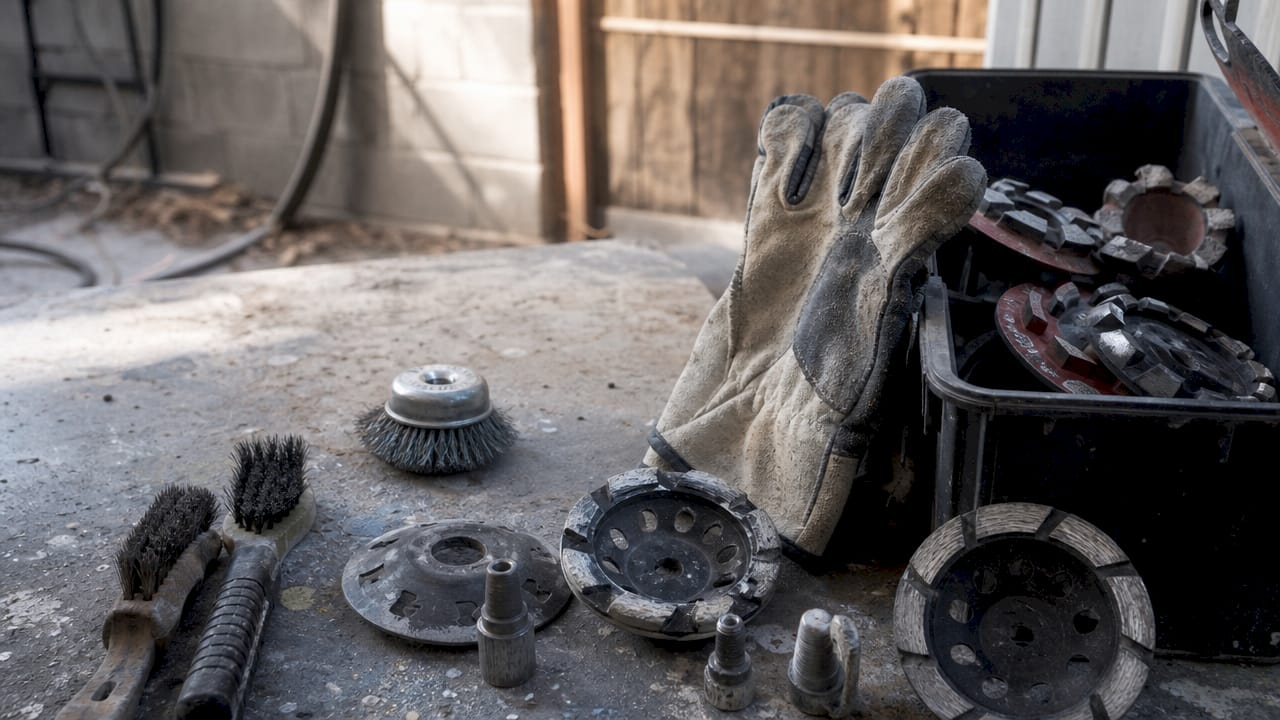
The surface prep equipment types used most often in construction fall into five core categories: mechanical profiling machines, abrasive blasting equipment, hand and power tools, dust extraction systems, and inspection tools. Each category serves a distinct function in the preparation process. Selecting the wrong category for a given substrate or coating system is one of the most common and costly mistakes on industrial projects.
Mechanical profiling machines include concrete grinders, shot blasters, and scarifiers. Concrete grinders use diamond tooling to smooth or lightly profile surfaces, making them ideal for sealers and thin-film coatings. Shot blasting propels steel shot at high velocity to mechanically profile concrete and remove thin coatings without chemicals. Scarifiers use rotating cutters to aggressively remove material, making them the right choice when heavy coatings, adhesives, or surface defects need to come off fast.
Abrasive blasting equipment covers sandblasting, wet blasting, and vacuum blasting systems. These machines remove rust, mill scale, old coatings, and contaminants from steel, concrete, and masonry. Vacuum blasting units contain the abrasive and debris within a closed system, which is critical for projects in occupied facilities or near sensitive infrastructure.
- Concrete grinders and polishers: diamond tooling for CSP 1–3 profiles
- Shot blasters: mechanical profiling and coating removal on horizontal surfaces
- Scarifiers and planers: aggressive material removal for heavy prep tasks
- Abrasive blasting systems: rust, scale, and coating removal on steel and masonry
- Dust extraction and HEPA vacuum systems: mandatory for safety and adhesion quality
- Hand tools: scrapers, wire brushes, and chisels for detail and edge work
- Inspection tools: surface profile gauges, moisture meters, and adhesion testers
Pro Tip: Match diamond bond hardness to your concrete hardness. Soft-bond diamonds work on hard concrete; hard-bond diamonds work on soft concrete. Getting this wrong destroys tooling and wastes hours.
Matching diamond-bond hardness to concrete hardness prevents premature tool wear and keeps grinding efficient. This single detail separates experienced crews from those who burn through tooling on every job.
How do surface prep equipment types correspond to CSP requirements?
The Concrete Surface Profile scale from 1 to 10 is the industry standard for specifying surface texture before coating application. A CSP 1 is nearly smooth; a CSP 10 is heavily fractured and rough. Every coating system has a minimum CSP requirement, and your equipment choice must deliver that profile consistently.
| CSP Level | Equipment Type | Typical Application |
|---|---|---|
| CSP 1–3 | Concrete grinders, polishers | Sealers, thin-film coatings, epoxy floor paint |
| CSP 4–6 | Scarifiers, shot blasters | Epoxy coatings, urethane systems, overlays |
| CSP 7–8 | Scabblers, heavy shot blasters | Thick overlays, structural coatings |
| CSP 9–10 | Multi-head scabblers, heavy cutters | Extreme texture, bonded overlays, repair mortars |
CSP 1–3 uses concrete grinders; CSP 4–6 uses scarifiers; CSP 7–10 demands scabblers and heavy cutters. That progression is not arbitrary. Each step up in profile requires more aggressive tooling that removes more surface material and creates a deeper mechanical anchor for the coating.
Shot blasters are the preferred tool for large horizontal surfaces in the CSP 4–6 range. They cover ground quickly, leave a consistent profile, and work well on parking decks, warehouse floors, and airport aprons. Scarifiers outperform shot blasters when the surface has raised edges, heavy coatings, or significant contamination that needs physical removal rather than just profiling.
For projects requiring compliance with SSPC-SP10 or SSPC-SP11 standards, equipment selection must be documented and verified. These standards specify both cleanliness level and anchor profile, which means your equipment choice and its output both need to meet the spec before coating begins.
What are the essential surface finishing equipment and tools beyond mechanical prep machines?
Surface finishing equipment extends beyond the large mechanical machines. Detail work, contamination control, and verification all require their own tools. Skipping this layer of the surface prep tools list is a common reason coatings fail at edges, joints, and transitions.
Hand tools and power sanders handle areas that machines cannot reach. Scrapers and wire brushes are standard for removing loose material, rust, and old coatings from corners, welds, and pipe connections. Orbital sanders and angle grinders with abrasive discs handle fine finishing on steel and wood substrates where a large machine would cause damage.
- Scrapers and chisels: loose coating and rust removal in tight areas
- Wire brushes and cup wheels: rust and mill scale removal on steel
- Orbital and random-orbit sanders: fine finishing on wood and light steel
- Buffing wheels: surface smoothing before sealers on decorative concrete
- Industrial dust extractors with HEPA filters: capture fine particulate during grinding and sanding
- Moisture meters: detect substrate moisture before coating application
- Surface profile gauges: verify CSP level after mechanical prep
Pro Tip: Invisible contaminants like soluble salts cause coating failure even on visually clean surfaces. Secondary decontamination with freshwater washing removes salts that blasting alone cannot eliminate. Always test for salts on steel structures near coastal or industrial environments.
Dust extraction and HEPA vacuum systems are now mandatory under OSHA silica regulations for most grinding and blasting operations. This is not optional equipment. Running a grinder without proper dust control exposes workers to respirable crystalline silica and reduces coating adhesion by leaving fine dust on the prepared surface.
What are common surface prep challenges and how do specific equipment types address them?
Surface prep challenges fall into three categories: substrate issues, contamination, and environmental compliance. Each requires a targeted equipment response. Guessing at solutions wastes time and money on rework.
Substrate hardness mismatch is the most common mechanical problem. Using a grinder with the wrong diamond bond on hard concrete produces glazing instead of profiling. The diamonds load up with material and stop cutting. The fix is simple: test a small area first, assess the scratch pattern, and switch bond hardness if the tool is not cutting cleanly.
Moisture contamination is the leading cause of coating delamination on concrete floors. Moisture meters and calcium chloride tests identify moisture vapor emission rates before any coating goes down. No mechanical prep machine solves a moisture problem. You need to address the source, then verify with testing tools before proceeding.
- Substrate hardness mismatch: switch diamond bond hardness or change to a scarifier for harder surfaces
- Moisture contamination: use moisture meters and calcium chloride tests; address source before coating
- Dust management failure: underpowered vacuums reduce adhesion and cause motor overheating in grinders
- Invisible salt contamination: use conductivity testing kits and follow with freshwater washing
- Profile verification gaps: use surface profile gauges and ASTM D4541 pull-off tests to confirm adhesion readiness
Poor logistical planning in surface prep causes costly reworks and material waste. Scheduling the wrong equipment for a substrate, or skipping verification steps, turns a one-day prep job into a three-day repair. The industrial surface prep workflow for large projects should always include an equipment selection checklist tied to the coating manufacturer’s spec sheet.
SSPC standards guide equipment choices by defining minimum cleanliness and profile requirements for each coating system. Referencing SSPC-SP6, SSPC-SP10, or SSPC-SP11 before selecting equipment removes guesswork and protects you from spec disputes during project closeout. For facility managers overseeing contractors, requiring SSPC compliance documentation is the single most effective quality control step available.
Key Takeaways
The right surface prep equipment type is determined by substrate hardness, required CSP level, contamination type, and coating system specs.
| Point | Details |
|---|---|
| Match equipment to CSP level | Grinders suit CSP 1–3; scarifiers and shot blasters cover CSP 4–6; scabblers handle CSP 7–10. |
| Dust control is mandatory | HEPA extraction systems are required by OSHA and directly affect coating adhesion quality. |
| Invisible contaminants matter | Soluble salts require freshwater washing after blasting; moisture requires testing before coating. |
| Verify profile before coating | Use surface profile gauges and ASTM D4541 pull-off tests to confirm the surface meets spec. |
| Standards remove guesswork | SSPC-SP10 and SSPC-SP11 define cleanliness and anchor profile requirements for each coating system. |
What 20 years of surface prep projects taught me about equipment selection
The most expensive mistake I see on industrial projects is not choosing the wrong machine. It is choosing the right machine and then skipping verification. A crew can run a shot blaster perfectly, hit the target CSP, and still fail inspection because no one checked for moisture or soluble salts afterward. The machine did its job. The process did not.
Equipment selection gets most of the attention in pre-job planning, and it should. But the tools that confirm your prep, moisture meters, profile gauges, and conductivity kits, deserve equal weight in your equipment budget. They cost a fraction of a rework. I have seen facility managers approve coating applications on floors that tested at twice the acceptable moisture vapor emission rate because the contractor did not own a calcium chloride test kit.
Dust extraction is the other area where I see consistent underinvestment. Running an underpowered vacuum on a grinder does not just create a compliance problem. It loads the motor, shortens tool life, and leaves a fine dust layer on the surface that kills adhesion. The safety practices around dust control are not bureaucratic overhead. They are directly tied to whether your coating lasts five years or fifteen.
My recommendation: build your surface prep tools list around the coating manufacturer’s spec sheet, not around what equipment you already own. The spec tells you the required CSP, the cleanliness standard, and the acceptable moisture level. Work backward from there to select machines, tooling, and verification instruments. That sequence produces consistent results on every substrate.
— Southernsandblastingandpainting
Surface prep solutions from Southernsandblastingandpainting
Southernsandblastingandpainting has delivered industrial surface preparation across Central Florida for over 20 years, working on water tanks, pipelines, airports, and municipal infrastructure. The team brings the right equipment to every project, from abrasive blasting systems for heavy steel prep to HEPA-equipped grinding setups for occupied facilities.
Whether you are managing a recoating project on a water treatment facility or preparing a warehouse floor for an epoxy system, Southernsandblastingandpainting matches equipment to your substrate, profile requirement, and compliance standard. The sandblasting equipment guide covers the full range of blasting systems used on asset protection projects. For project-specific guidance on equipment selection and service options, contact the Southernsandblastingandpainting team directly through the services page.
FAQ
What are the most common surface prep equipment types?
The most common types are concrete grinders, shot blasters, scarifiers, abrasive blasting systems, and HEPA dust extractors. Each serves a different substrate, profile level, and contamination scenario.
How do I choose between a grinder and a shot blaster?
Use a grinder for CSP 1–3 profiles on light prep and sealer applications. Use a shot blaster for CSP 4–6 on large horizontal surfaces where mechanical profiling and coating removal are both required.
Why is dust extraction considered mandatory equipment?
OSHA silica regulations require dust control during grinding and blasting operations. Beyond compliance, underpowered dust extraction reduces coating adhesion by leaving fine particulate on the prepared surface.
What is the CSP scale and why does it matter for equipment selection?
The Concrete Surface Profile scale runs from 1 to 10 and defines the texture level required before coating application. Each coating system specifies a minimum CSP, and your equipment must reliably deliver that profile to meet manufacturer specs.
How do SSPC standards affect which equipment I use?
SSPC standards like SSPC-SP10 and SSPC-SP11 define minimum cleanliness and anchor profile requirements for specific coating systems. Referencing the correct standard before selecting equipment protects you from spec disputes and ensures coating performance.


