
TL;DR:
- Scheduled maintenance intervals are essential for prolonging coating life and preventing premature failures. Proper inspection and timely repairs, especially on edges and welds, protect the underlying substrate and extend asset durability. Condition-based scheduling using detailed inspection data outperforms fixed schedules and reduces overall lifecycle costs.
Maintenance intervals for protective coatings are defined as systematic schedules of inspections and interventions designed to preserve coating effectiveness and structural integrity over decades. The role of maintenance intervals coatings play in asset management is direct: without them, even a well-applied system degrades faster than its design life. ISO 12944 classifies coating durability into Low (2–5 years), Medium (5–15 years), and High (15+ years) categories, with most infrastructure projects targeting High durability systems. Properly managed maintenance can extend coating life by 20–40%, turning a 15-year system into a 20-year or longer asset. Poor management, by contrast, can collapse that same system within 3–5 years.
What is the role of maintenance intervals in coating performance?
Scheduled maintenance intervals are the difference between a coating system that protects for decades and one that fails prematurely. Well-specified coatings typically last 15–25 years before first major maintenance when correctly applied and monitored. That lifespan collapses without structured inspection cycles. Maintenance intervals give you a defined window to catch degradation before it reaches the substrate, which is the point where repair costs multiply.
Coating lifecycle management is not a passive process. Corrosion does not announce itself. It progresses invisibly beneath the film, and by the time surface blistering or delamination appears, the substrate has already suffered damage. Facilities that treat coatings as financial control mechanisms report stabilized operations and fewer unplanned shutdowns. That shift from reactive to proactive maintenance is the core value of a structured interval program.
The importance of coating maintenance also shows up in budget predictability. Reactive repairs are expensive and disruptive. Scheduled interventions are neither. When you know your inspection calendar and your condition thresholds, you can plan labor, materials, and downtime around production cycles rather than around failures.
What factors affect coating durability and influence maintenance scheduling?
Environmental corrosivity is the single largest variable in coating durability. ISO 12944 defines corrosivity categories from C1 (very low, indoor dry environments) through C5 (very high, industrial and coastal zones). A coating system rated for C3 conditions will degrade significantly faster if installed in a C5 environment without adjusted maintenance scheduling. Maintenance managers must match their inspection frequency to the actual corrosivity category of each asset’s location.
The following factors directly determine how quickly a coating system degrades and how often you need to intervene:
- Surface preparation quality. Contamination, mill scale, and inadequate anchor profiles reduce adhesion and accelerate failure. Standards SP-10 (near-white blast) and SP-11 (power tool clean to bare metal) define the minimum acceptable condition for maintenance recoating.
- Coating system type. Zinc-rich primers, epoxy intermediates, and polyurethane topcoats each carry different maintenance-free interval expectations. A zinc-epoxy system in a C4 environment performs differently than an alkyd system in the same zone.
- Application quality. Dry film thickness below specification creates thin spots that fail first. Uneven coverage over complex geometry, such as pipe joints or structural angles, creates early failure points.
- Geometry vulnerabilities. Edges, welds, fasteners, and crevices receive less coating thickness during application and concentrate corrosion stress. These areas require more frequent inspection regardless of the overall system condition.
- Age of the existing system. Older coatings may contain lead or other legacy materials that complicate maintenance intervention and require specialized handling.
Pro Tip: Map your asset’s geometry before setting inspection intervals. Welds and cut edges on steel structures typically show first failure and should anchor your inspection checklist, not be treated as afterthoughts.
Risk-based inspection scheduling in ISO C5 environments often requires quarterly checks of welds, fasteners, and edges, even when the broader coating system appears sound. That targeted approach prevents small failures from becoming structural problems.
What are industry best practices for coatings inspection and maintenance intervals?
The current standard for industrial and coastal assets is a minimum of one full inspection per year, with increased frequency for C5 and similarly aggressive environments. Condition-based maintenance programs go further: they use measured data from each inspection to determine when the next intervention is needed, rather than relying on a fixed calendar. Condition-based programs integrate thickness readings, adhesion test results, and rust grade assessments to tailor scheduling dynamically.
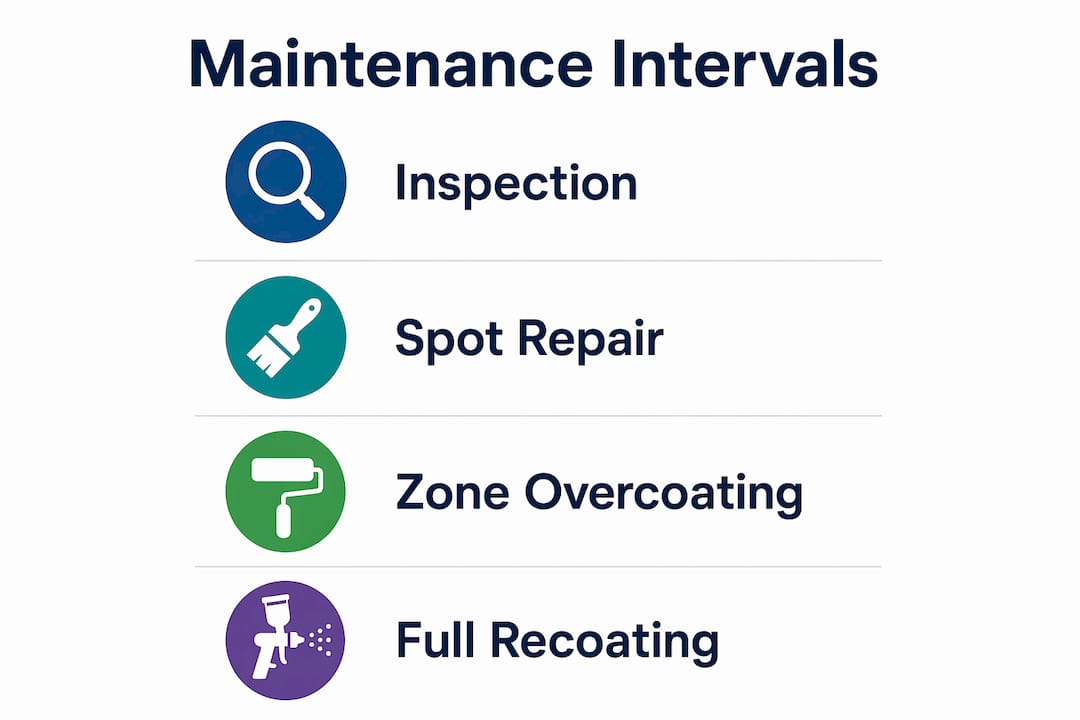
The table below summarizes the three primary maintenance intervention types, their triggers, and their cost implications.
| Intervention type | Damage threshold | Trigger condition | Relative cost |
|---|---|---|---|
| Spot repair | Less than 1% surface damage | Isolated rust spots, minor coating loss | Lowest |
| Zone overcoating | 1–10% surface damage | Blistering, adhesion loss in defined areas | Moderate |
| Full recoating | Greater than 10% with delamination | Active corrosion, primer exposure across large areas | Highest |
Proactive spot repairs reduce lifecycle costs by 50% or more compared to reactive full recoating. That figure reflects the compounding cost of substrate damage, extended downtime, and the labor intensity of abrasive blast preparation required before full recoating.
Condition assessment during each inspection should evaluate rust grade per ISO 4628, adhesion by pull-off test, and visible blistering or delamination extent. When adhesion drops below specification or rust grade reaches Ri 2 or higher across more than 1% of a surface, spot repair is the correct response. Waiting until Ri 3 or Ri 4 forces zone overcoating or full recoating, which costs significantly more. Detailed coating inspection practices give maintenance managers the data they need to make those calls accurately.
How does effective maintenance scheduling improve asset lifecycle and reduce costs?
Effective coating maintenance scheduling extends steel structure service life from a typical 15–25 year range to 50 years or more. Preserving the primer layer is the key mechanism. The primer is the most difficult and expensive layer to replace because it requires full abrasive blast preparation of the substrate. Every maintenance action that protects the primer delays the most costly phase of the coating lifecycle.
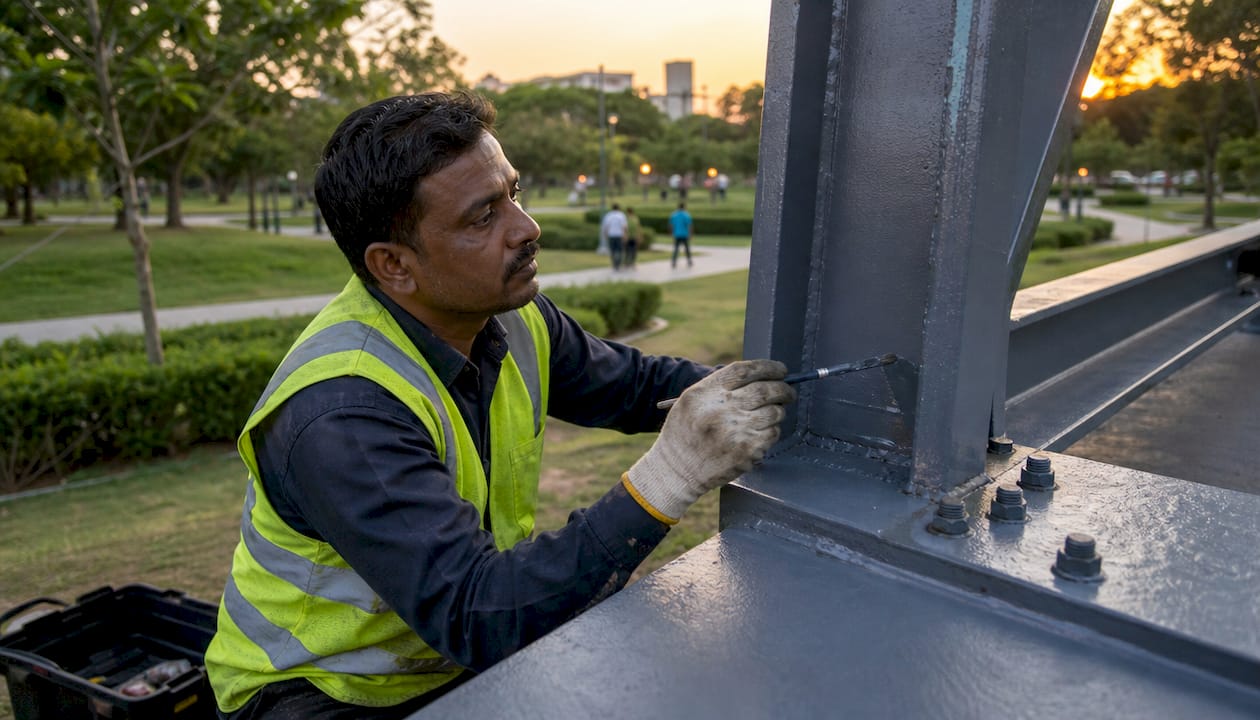
The cost-benefit case for premium coating systems with rigorous maintenance is clear. Premium coatings cost 30–50% more initially but defer heavy maintenance intervals by 15 or more years. That deferral compounds over the asset’s life. A facility that pays more upfront for a zinc-epoxy primer system with scheduled topcoat renewals avoids multiple full recoating cycles that a budget system would require within the same period.
The operational benefits of well-managed coating intervals extend beyond direct repair costs:
- Stable production schedules. Planned maintenance fits around production windows. Unplanned coating failures force reactive shutdowns that disrupt operations.
- Predictable capital budgets. Condition-based data lets finance teams forecast maintenance expenditure years in advance rather than absorbing surprise costs.
- Reduced structural risk. Primer preservation prevents corrosion from reaching structural steel, which protects load-bearing capacity and regulatory compliance.
- Lower insurance exposure. Documented maintenance programs demonstrate due diligence and reduce liability risk for infrastructure operators.
Pro Tip: A zinc-epoxy primer combined with scheduled polyurethane topcoat renewals is the most proven system for multi-decade asset protection. The topcoat is the sacrificial layer. Renewing it on schedule protects the primer, which protects the steel.
Coating application quality during maintenance is as critical as the original application. Maintenance recoating over inadequately prepared surfaces fails faster than the original system, compressing the interval before the next intervention and erasing the cost advantage of proactive maintenance.
What practical steps should maintenance managers follow for coating maintenance intervals?
Implementing a structured coating maintenance interval program requires a defined process, not just good intentions. The following steps give you a repeatable framework.
- Classify each asset by environment and risk. Assign ISO 12944 corrosivity categories to each asset location. Higher corrosivity means shorter inspection intervals and earlier intervention thresholds. Prioritize assets where coating failure creates safety or regulatory consequences.
- Establish baseline condition data. Before setting intervals, document the current coating condition using rust grade, adhesion, and dry film thickness measurements. This baseline is your reference point for tracking degradation rate between inspections.
- Define condition thresholds for each intervention type. Specify in writing the rust grade, adhesion value, and damage percentage that trigger spot repair, zone overcoating, or full recoating. Remove ambiguity so field inspectors make consistent calls.
- Schedule inspections and document every finding. Annual inspections are the minimum for most industrial assets. C5 environments require quarterly checks of vulnerable areas. Record every measurement and photograph every defect. Patterns across inspections reveal degradation rates that let you adjust intervals before failures occur.
- Apply correct surface preparation standards at every intervention. Spot repairs require SP-11 power tool preparation at minimum. Full recoating requires SP-10 near-white blast. Skipping preparation standards during maintenance is the most common cause of premature maintenance failure. Review surface prep best practices before every maintenance cycle.
- Integrate coating inspectors and maintenance teams. Inspectors who understand coating systems catch defects that general maintenance crews miss. Cross-training or embedding a coating specialist in the inspection process improves detection rates and reduces the gap between defect formation and intervention.
- Review and adjust intervals annually. Condition data from each inspection cycle should feed back into the scheduling model. If degradation is faster than expected, shorten intervals. If the system is performing ahead of projection, you have evidence to extend them without increasing risk.
Key Takeaways
Structured maintenance intervals are the primary mechanism for extending coating service life and controlling infrastructure lifecycle costs over decades.
| Point | Details |
|---|---|
| ISO 12944 defines durability targets | High durability systems target 15+ years before first major maintenance with proper application. |
| Spot repairs cut lifecycle costs | Proactive spot repairs reduce total lifecycle costs by 50% or more versus reactive full recoating. |
| Primer preservation is the priority | Protecting the primer layer delays the most expensive phase of the coating lifecycle. |
| Condition-based scheduling outperforms fixed cycles | Inspection data on rust grade, adhesion, and thickness should govern intervention timing. |
| Environment drives interval frequency | C5 assets require quarterly checks of welds, fasteners, and edges, not just annual inspections. |
What most maintenance managers get wrong about coating intervals
The most common mistake I see is treating recoating as an aesthetic decision. Maintenance managers schedule a topcoat renewal because the surface looks dull or discolored, not because the coating system has reached a measurable degradation threshold. That approach wastes budget on surfaces that do not need intervention while missing early failures on edges and welds that do.
The second mistake is trusting fixed calendar intervals without condition data. A three-year inspection cycle may be appropriate for a C3 inland structure. Applied to a coastal C5 asset, that same cycle guarantees substrate damage between inspections. Corrosion creep progresses invisibly beneath the coating film, often until delamination makes the damage visible. By that point, spot repair is no longer an option.
The shift I advocate is treating coating maintenance as a data collection exercise first and a repair exercise second. Every inspection generates condition data. That data tells you the degradation rate of each asset, which lets you predict when the next intervention is needed with real accuracy. Fixed schedules are a starting point, not a permanent answer.
The emerging direction in coating maintenance is integration of monitoring technology with inspection programs. Thickness mapping, adhesion trending, and environmental logging are moving from specialist tools to standard practice. Facilities that adopt these tools now will have multi-year condition histories that make maintenance scheduling genuinely predictive rather than reactive.
View your coating system as a financial instrument. The primer is the principal. The topcoat is the interest payment. Renewing the topcoat on schedule protects the principal. Letting the principal erode forces a full recapitalization, which is the most expensive outcome in the coating lifecycle.
— Results
How Southernsandblastingandpainting supports your coating maintenance program
Southernsandblastingandpainting brings 20+ years of industrial surface preparation and coating expertise to maintenance managers across Central Florida’s infrastructure sectors, from water tanks and pipelines to airports and municipal facilities.
Whether you need a full condition assessment, targeted spot repairs, or a complete recoating program, Southern Sandblasting and Painting delivers the surface preparation and coating application quality that makes maintenance intervals work as designed. The team applies SP-10 and SP-11 preparation standards on every maintenance project, protecting the primer layer that extends your asset’s service life. Explore the full range of industrial coating services or contact Southernsandblastingandpainting directly to schedule a consultation for your next maintenance cycle.
FAQ
What is the role of maintenance intervals in coating systems?
Maintenance intervals define when inspections and repairs occur to prevent coating degradation from reaching the substrate. Structured intervals extend coating service life by 20–40% compared to unmanaged systems.
How often should industrial coatings be inspected?
Annual inspections are the minimum standard for most industrial assets. Assets in ISO C5 environments, such as coastal or chemical exposure zones, require quarterly checks of welds, fasteners, and edges.
What triggers a spot repair versus full recoating?
Spot repair is appropriate when surface damage is below 1%. Zone overcoating applies to 1–10% damage with localized blistering. Full recoating is required when damage exceeds 10% or active corrosion is present.
Why is primer preservation the priority in coating maintenance?
The primer layer provides direct corrosion protection to the steel substrate and is the most expensive layer to replace because it requires full abrasive blast preparation. Maintenance programs that protect the primer can support asset lifespans measured in decades.
How do condition-based maintenance programs differ from fixed schedules?
Condition-based programs use measured rust grade, adhesion, and thickness data from each inspection to determine the next intervention date. Fixed schedules apply the same interval regardless of actual asset condition, which leads to either over-maintenance or missed failures.
Recommended
- How to Maintain Coatings for Long-Lasting Protection
- Role of Coatings in Longevity – Extending Asset Lifespans
- Industrial Coating Terminology: Keys for Asset Longevity
- How to Apply Protective Coatings for Lasting Asset Durability
- Sandblasting Contractor Baldwin Park FL
- Sandblasting Services Oviedo FL


