
Meeting strict quality and safety requirements is a daily challenge for municipal infrastructure managers in Central Florida, especially when preparing surfaces for long-lasting protective treatments. Surface preparation forms the foundation for reliable coatings, directly influencing how well public assets resist corrosion and environmental wear. By following precise standards and focusing on clean, sound surfaces that maximize coating adhesion, managers gain the confidence that their projects will stand up against both regulatory scrutiny and Central Florida’s demanding climate.
Table of Contents
- Defining Surface Preparation and Inspection
- Types of Industrial Surface Defects
- Inspection Standards and Compliance Requirements
- Impact on Coating Durability and Lifespan
- Common Problems from Poor Preparation
- Risk Management and Cost Implications
Key Takeaways
| Point | Details |
|---|---|
| Importance of Surface Preparation | Proper surface preparation is essential for protecting infrastructure from corrosion and maximizing coating adhesion. It directly impacts asset longevity and requires systematic approaches. |
| Types of Surface Defects | Identifying mechanical, thermal, and chemical defects is crucial for maintaining material integrity. Comprehensive inspection protocols help mitigate risks associated with these defects. |
| Compliance with Inspection Standards | Adhering to surface preparation standards ensures high-performance outcomes. Detailed documentation and third-party verification are critical for compliance. |
| Economic Implications of Preparation Quality | High-quality surface preparation may incur higher upfront costs but results in significantly lower long-term maintenance expenses and improved asset reliability. |
Defining Surface Preparation and Inspection
Surface preparation represents the critical first stage in protecting industrial and municipal infrastructure from corrosion and degradation. Surface preparation involves systematically treating a substrate – like steel or concrete – to create optimal conditions for protective coatings and long-term asset performance. Surface preparation standards outline precise methodologies for achieving clean, sound surfaces that maximize coating adhesion.
The primary objectives of surface preparation encompass several essential goals:
- Removing contaminants like rust, old paint, and debris
- Creating surface roughness to enhance coating adhesion
- Eliminating potential corrosion initiation points
- Producing a clean substrate compatible with protective treatments
- Ensuring environmental and safety compliance during preparation
For municipal infrastructure managers, understanding surface preparation means recognizing it as more than a preliminary step – it’s a strategic process that directly impacts asset longevity. Concrete surface preparation techniques involve carefully evaluating substrate condition, removing unsound materials, and creating an ideal surface profile for subsequent protective treatments.
Successful surface preparation requires comprehensive inspection protocols that go beyond visual assessment. Professionals utilize advanced techniques like:
- Microscopic surface profile measurement
- Contaminant detection and removal
- Substrate roughness evaluation
- Environmental condition monitoring
- Compatibility testing with proposed coating systems
Pro tip: Always document surface preparation processes with detailed inspection reports to establish a clear baseline for future maintenance and warranty claims.
Types of Industrial Surface Defects
Surface defects represent critical vulnerabilities that can compromise the integrity and performance of industrial materials, particularly in steel and metal processing. Surface defect formation mechanisms reveal complex interactions between thermal, mechanical, and metallurgical factors that generate potential structural weaknesses.
Industrial surface defects can be categorized into several primary classifications:
- Mechanical Defects
- Scratches and abrasions
- Dents and indentations
- Surface depressions
- Impact-related damage
- Thermal-Related Defects
- Cracking from thermal stress
- Uneven heat distribution marks
- Solidification-induced discontinuities
- Oscillation marks during casting
- Chemical and Metallurgical Defects
- Oxide skin inclusions
- Dross entrapment
- Corrosion-related surface degradation
- Substrate contamination
Hot dip galvanized steel defects demonstrate the complexity of surface imperfections, highlighting how manufacturing processes directly influence material quality. These defects often result from intricate interactions between substrate conditions, processing parameters, and environmental factors.
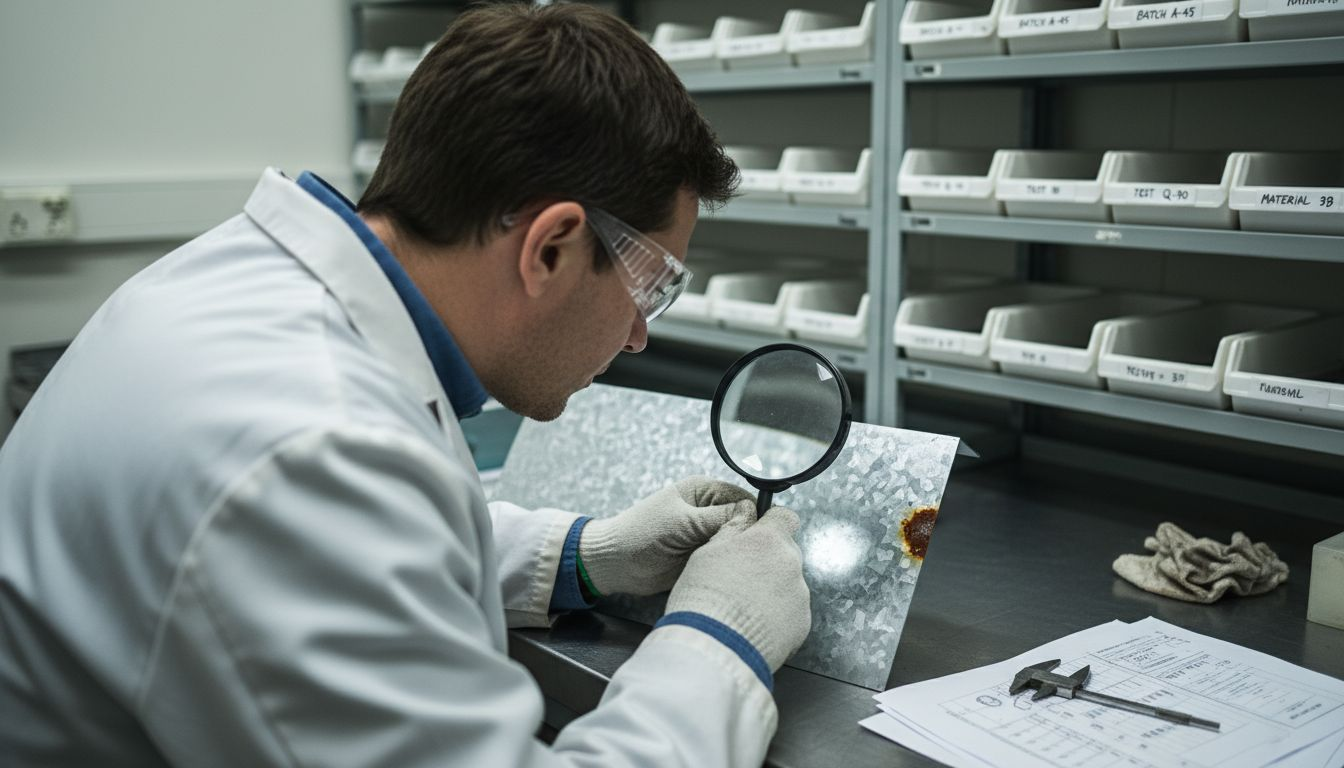
Understanding these defect types enables engineers and managers to develop targeted prevention and mitigation strategies. Detailed inspection protocols, advanced monitoring techniques, and rigorous quality control processes are essential for identifying and addressing potential surface discontinuities before they compromise asset performance.
Here is a summary of how different types of industrial surface defects impact asset performance:
| Defect Category | Typical Origin | Main Risk to Assets | Detection Challenge |
|---|---|---|---|
| Mechanical Defects | Physical abrasion or impact | Reduced mechanical strength | Often visible, but depth may be hidden |
| Thermal-Related Defects | Extreme or uneven heating processes | Cracking and stress points | Can be subsurface |
| Chemical/Metallurgical | Reactions with environment or process | Corrosion and contamination | May require laboratory analysis |
Pro tip: Implement regular microscopic surface examinations and maintain comprehensive defect tracking databases to proactively manage industrial material integrity.
Inspection Standards and Compliance Requirements
Inspection standards form the critical backbone of quality assurance in surface preparation and industrial coating processes. Surface preparation standards provide comprehensive guidelines that ensure consistent, reliable, and high-performance protective treatments across diverse industrial applications.
Key international inspection standards encompass multiple critical aspects:
- Surface Cleanliness Standards
- Removal of contaminants
- Defining acceptable contamination levels
- Specifying cleaning methods
- Establishing verification techniques
- Surface Profile Requirements
- Measuring surface roughness
- Defining acceptable roughness ranges
- Matching profile to coating specifications
- Quantifying surface texture parameters
- Compliance Documentation
- Detailed inspection reports
- Photographic evidence
- Measurement documentation
- Third-party verification protocols
Concrete surface preparation standards illustrate the complex requirements for achieving optimal coating performance. These standards provide precise methodologies for evaluating surface conditions, ensuring that protective treatments meet rigorous industry specifications.
Compliance with these standards requires systematic approaches that integrate advanced measurement technologies, professional expertise, and comprehensive documentation. Municipal infrastructure managers must develop robust inspection protocols that not only meet but exceed minimum regulatory requirements.
Pro tip: Develop a standardized digital inspection checklist that incorporates photographic documentation and real-time measurement tracking to streamline compliance verification.
Impact on Coating Durability and Lifespan
Coating durability represents a critical factor in protecting industrial and municipal assets from environmental degradation and premature failure. Surface preparation techniques fundamentally determine the long-term performance and resilience of protective coatings across diverse infrastructure applications.
Key factors influencing coating durability include:
- Substrate Preparation
- Complete contaminant removal
- Precise surface profile creation
- Eliminating microscopic imperfections
- Ensuring optimal surface chemistry
- Coating Application Parameters
- Correct thickness measurement
- Uniform material distribution
- Controlled environmental conditions
- Proper curing and adhesion protocols
- Environmental Stress Resistance
- UV radiation protection
- Temperature fluctuation tolerance
- Chemical exposure resilience
- Mechanical impact resistance
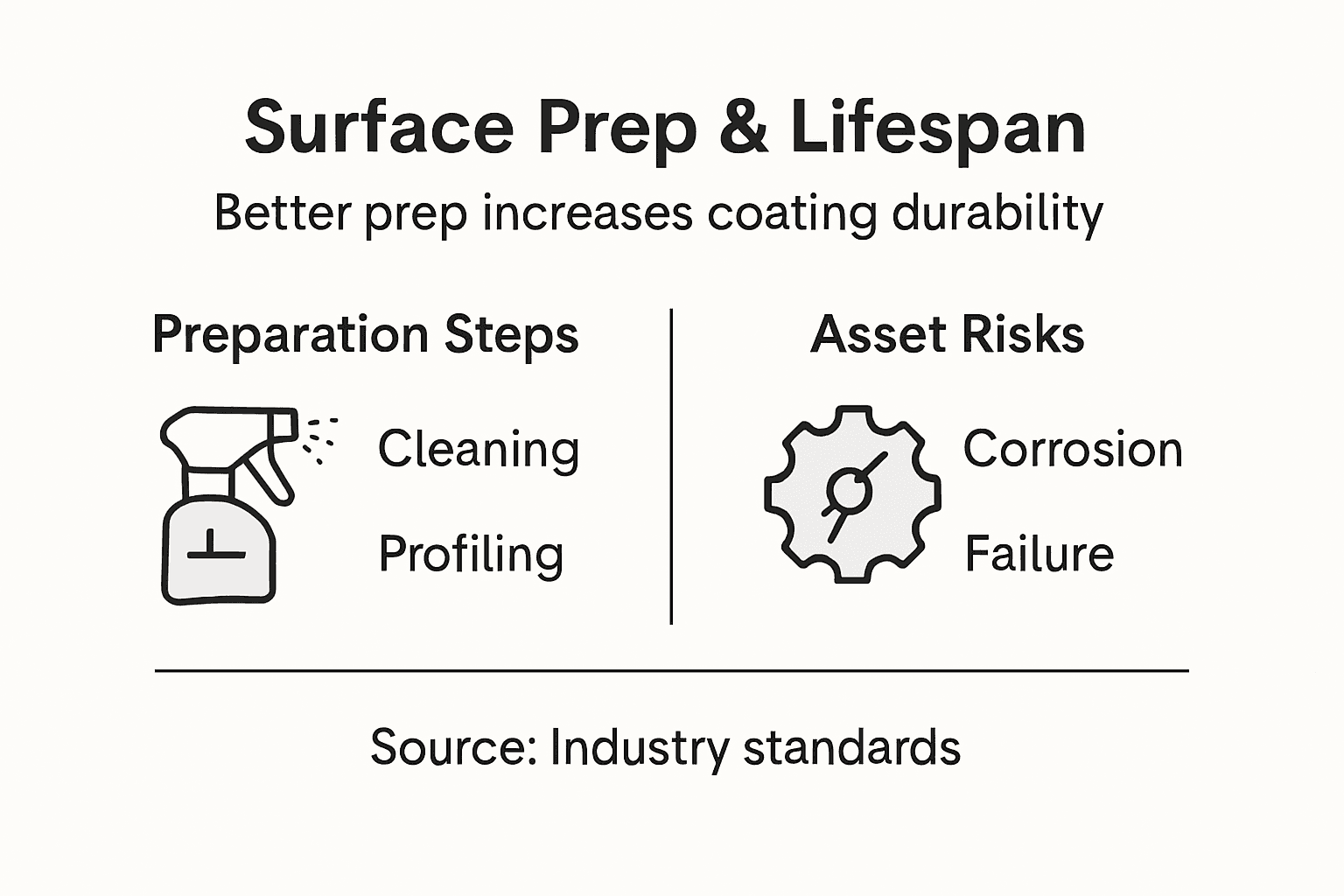
Coating durability advancements demonstrate how systematic surface preparation directly translates to extended asset lifespans. By implementing rigorous inspection and preparation methodologies, municipal infrastructure managers can significantly reduce long-term maintenance costs and prevent premature structural deterioration.
The relationship between surface preparation and coating performance is not linear but exponential. Meticulous attention to preparation details can extend asset lifespans by decades, transforming what seems like an initial investment into a substantial long-term cost-saving strategy.
Pro tip: Develop a comprehensive digital tracking system that correlates surface preparation metrics with coating performance data to predict and optimize asset maintenance cycles.
Common Problems from Poor Preparation
Surface preparation failures can lead to catastrophic consequences for municipal infrastructure and industrial assets. Concrete surface preparation problems reveal a complex landscape of potential failures that can dramatically reduce asset lifespan and increase maintenance costs.
Critical problems arising from inadequate surface preparation include:
- Adhesion Failures
- Coating delamination
- Poor bonding between substrate and protective layer
- Premature material separation
- Reduced protective performance
- Corrosion-Related Issues
- Accelerated metal degradation
- Chloride contamination
- Reinforcement material exposure
- Rapid structural deterioration
- Environmental Vulnerability
- Increased chemical penetration
- Enhanced moisture intrusion
- Reduced UV and temperature resistance
- Compromised mechanical strength
Surface preparation guidelines emphasize that improper preparation can transform a seemingly minor oversight into a major infrastructure failure. Municipal infrastructure managers must recognize that cutting corners during initial surface treatment can lead to exponentially higher repair and replacement costs.
The economic implications of poor surface preparation extend far beyond immediate coating failures. Repeated repairs, structural compromises, and premature asset replacement can drain municipal budgets and compromise public infrastructure reliability.
Pro tip: Implement a comprehensive pre-preparation diagnostic checklist that systematically identifies and documents potential surface preparation challenges before beginning any coating project.
Risk Management and Cost Implications
Risk management in surface preparation represents a critical strategic approach for municipal infrastructure managers seeking to minimize long-term financial vulnerabilities. Surface preparation risk strategies demonstrate how proactive investment can dramatically reduce potential economic losses associated with asset degradation.
Key risk management considerations include:
- Direct Cost Factors
- Initial preparation expenses
- Material selection costs
- Professional inspection fees
- Equipment and labor investments
- Indirect Cost Mitigation
- Reduced maintenance frequency
- Extended asset lifespan
- Minimized operational disruptions
- Preventing catastrophic failure scenarios
- Long-Term Financial Implications
- Lifecycle cost reduction
- Improved asset reliability
- Lower replacement frequency
- Enhanced infrastructure resilience
Coating durability investment strategies reveal that comprehensive surface preparation can yield substantial financial returns. By allocating resources strategically during initial treatment, municipalities can prevent exponentially higher repair and replacement costs.
The economic calculus of surface preparation extends beyond immediate monetary considerations. Proper preparation transforms an upfront expense into a long-term risk management strategy, protecting critical infrastructure and public assets from premature degradation.
This table outlines the financial impacts of poor vs. thorough surface preparation:
| Preparation Quality | Short-Term Cost | Long-Term Maintenance Cost | Example Outcome |
|---|---|---|---|
| Inadequate | Lower initial spend | Very high, recurring | Early failure, frequent repairs |
| Comprehensive | Higher upfront investment | Much lower, infrequent | Decades-long asset durability |
Pro tip: Develop a standardized financial modeling framework that quantifies potential cost savings from thorough surface preparation across different infrastructure asset categories.
Ensure Long-Term Asset Protection with Expert Surface Preparation and Inspection
The article highlights the critical challenge of inadequate surface preparation leading to coating failures and costly infrastructure damage. Municipal infrastructure managers and industrial facility operators must address key pain points such as adhesion failure, corrosion risks, and compliance with strict surface preparation standards. By focusing on thorough cleaning, precise surface profiling, and comprehensive inspection protocols, you secure coating durability that extends asset lifespans and reduces costly maintenance.
At Southern Sandblasting & Painting LLC, we specialize in solving these exact challenges with over 20 years of experience in professional sandblasting and industrial painting services tailored for critical infrastructure projects. Our highly trained teams use advanced surface preparation techniques designed to meet and exceed inspection standards, ensuring your assets receive coatings that last decades under the toughest conditions.
Take control of your asset longevity today.
Ready to prevent surface preparation problems before they start

Contact Southern Sandblasting & Painting LLC now for expert consultation and reliable execution. Discover how our full range of sandblasting & painting solutions can transform your infrastructure maintenance strategy. Visit Southern Sandblasting & Painting LLC to get started.
Frequently Asked Questions
What is surface preparation and why is it important?
Surface preparation is the systematic treatment of a substrate, like steel or concrete, to create optimal conditions for protective coatings. It is important because it directly impacts asset longevity by preventing corrosion and ensuring proper adhesion of coatings.
What are common types of surface defects that can affect asset performance?
Common types of surface defects include mechanical defects (like scratches and dents), thermal-related defects (such as cracking from stress), and chemical/metallurgical defects (like corrosion and contamination). Each can compromise the integrity and performance of materials.
How do inspection standards ensure the quality of surface preparation?
Inspection standards outline procedures for verifying surface cleanliness, roughness, and compliance with established protocols. They ensure that preparation is conducted consistently and meets industry specifications, which is crucial for long-lasting protective coatings.
What are the consequences of poor surface preparation?
Poor surface preparation can lead to adhesion failures, accelerated corrosion, and increased vulnerability to environmental factors. This often results in costly repairs, premature asset deterioration, and a significant rise in maintenance expenses.
Recommended
- Role of Surface Preparation in Asset Longevity
- Role of Coatings in Longevity – Extending Asset Lifespans
- Surface Prep Best Practices for Long-Lasting Coatings
- Why Prep Surfaces Before Painting Matters Most
- How Long Do Asphalt Shingles Last? When To Replace Yours – Sunflowers Energy LLC A Roofing and Solar Companys
- Solar Panel Maintenance Guide for Maximum Efficiency
- Kwaaitaal of Manta vloeren en veiligheid – Schippers Bouwconsult
- Sandblasting Contractor Baldwin Park FL
- Sandblasting Services Oviedo FL


