
TL;DR:
- Choosing professional sandblasting ensures surface cleanliness, safety compliance, and long-lasting coating durability.
- The decision impacts asset longevity, regulatory adherence, and total project costs, including preparation and waste management.
When you’re managing infrastructure assets, the decision to choose professional sandblasting over in-house or low-bid alternatives carries far more consequence than most facility managers initially realize. Abrasive blasting, the industry-standard term for what’s commonly called sandblasting, determines whether your protective coatings last two years or twenty. Get the surface preparation wrong and the coating fails. The regulatory exposure compounds quickly. And the rework costs dwarf whatever you thought you saved upfront. This guide breaks down the technical, operational, and financial realities that make professional abrasive blasting the right call for serious industrial work.
Table of Contents
- Key Takeaways
- Why choose professional sandblasting: the technical standards case
- Safety and regulatory compliance in professional blasting
- Understanding the real cost structure
- Expertise and equipment for complex surface preparation
- Environmental controls and operational efficiency
- My take on why this decision matters more than most managers expect
- Work with a team that gets the standards right
- FAQ
Key Takeaways
| Point | Details |
|---|---|
| Standards matter critically | Professional contractors verify surface cleanliness to SSPC-SP10 and ISO 8501-1 Sa 2½ levels, not just visual rust-free checks. |
| Safety compliance is non-negotiable | OSHA silica exposure limits and ventilation requirements demand engineering controls most in-house teams cannot meet. |
| True cost is more than nozzle time | Setup, teardown, containment, and logistics add 1-2 hours per job and must be factored when comparing quotes. |
| Media selection prevents damage | Trained professionals match abrasive type and pressure to substrate, preventing warping, pitting, and costly asset damage. |
| Environmental controls reduce liability | Dust suppression, containment, and media reclamation protect your site from contamination and regulatory penalties. |
Why choose professional sandblasting: the technical standards case
The most common misconception is that “clean enough” is a visual judgment. It is not. The industry operates on specific cleanliness standards that determine whether your coating system will bond correctly and last its rated service life. SSPC-SP10 (also called NACE No. 2) requires that no more than 5% of the surface show random staining, with the remainder achieving near-white metallic cleanliness. This corresponds to ISO 8501-1 Sa 2½, the benchmark specification for high-performance industrial coatings.
Why does this precision matter in practice? Because coating durability correlates directly with achieving the specified surface cleanliness and roughness profile before application. A surface that looks clean to an untrained eye can still carry mill scale, embedded corrosion, or surface salts that cause delamination within months. Many high-performance coating systems, including those used on water tanks, pipelines, and airport infrastructure, contractually require SSPC-SP10 compliance. Using a contractor who cannot verify and document this level is a warranty-voiding decision.
Professional blasting contractors use standardized measurement tools: surface profile comparators, soluble salt test kits, and inspection-grade lighting to confirm cleanliness at multiple stages. The best longevity outcomes for facility managers come when sandblasting scope matches coating specifications and is verified on-site, not estimated by eye.
Pro Tip: When reviewing a contractor’s proposal, ask specifically which SSPC or ISO cleanliness standard will be achieved and how it will be documented. If they cannot answer with a specific test method, that’s a red flag worth acting on before signing.
| Cleanliness Standard | Description | Typical Application |
|---|---|---|
| SSPC-SP6 / Sa 2 | Commercial blast, 67% clean | Primer coats on low-exposure structural steel |
| SSPC-SP10 / Sa 2½ | Near-white metal, 95% clean | High-performance industrial coatings, immersion service |
| SSPC-SP5 / Sa 3 | White metal, 100% clean | Chemical exposure, nuclear, severe marine environments |
Safety and regulatory compliance in professional blasting
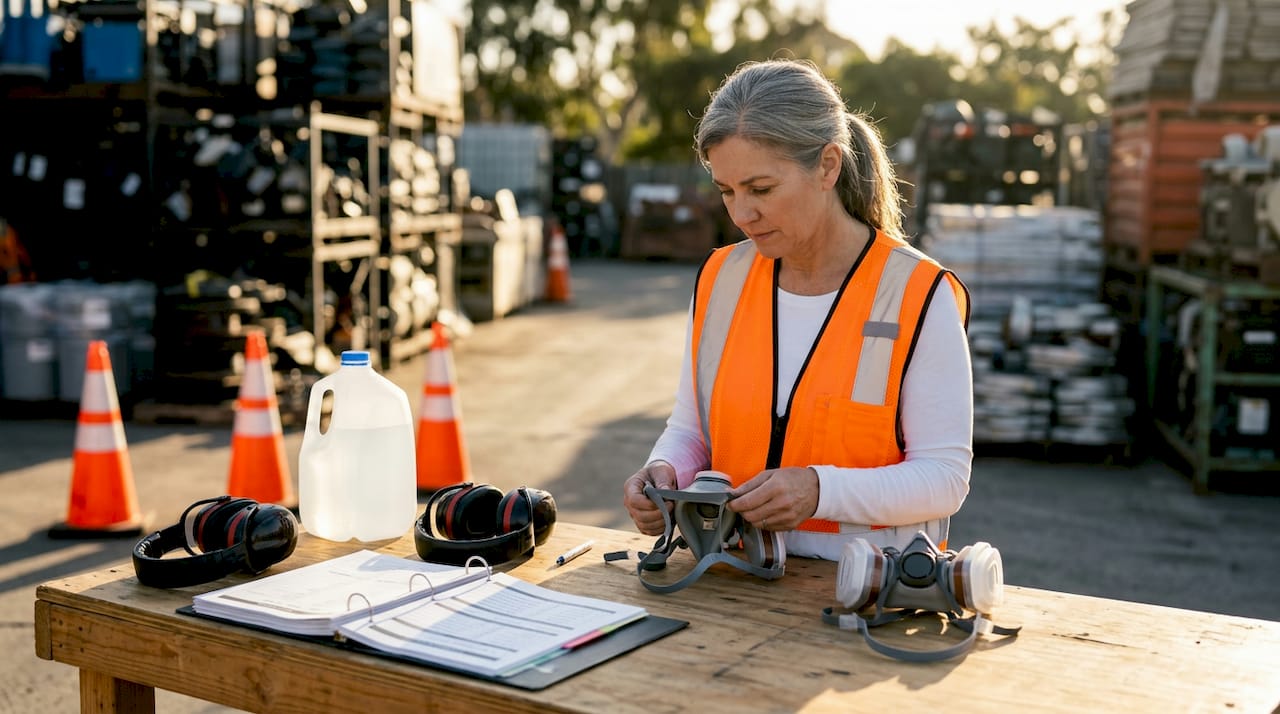
Abrasive blasting involves multiple simultaneous hazards that require comprehensive engineering controls, full personal protective equipment, and ongoing environmental monitoring. This is not a job where a dust mask and safety glasses cover your liability. The hazard profile includes:
- Respirable silica dust: Even non-silica media generates fine particulates. OSHA’s current permissible exposure limit sits at a 25 µg/m³ action level for crystalline silica, requiring air monitoring and documented controls.
- Blast ricochet and fragment hazards: High-velocity media rebounds create projectile risks extending well beyond the blast zone.
- High-pressure compressed air: Hose failures and fitting separations at operating pressures carry serious injury risk without engineered shutoffs and whipcheck cables.
- Noise exposure: Blasting equipment routinely exceeds 100 dB at operator distances, triggering OSHA hearing conservation program requirements.
- Ventilation requirements: Indoor or enclosed blasting must comply with 29 CFR 1910.94(a), including mechanical ventilation that controls airborne contaminants and provides adequate air replacement.
In-house teams or general laborers tasked with blasting rarely have the proper equipment, training documentation, or site controls to meet these standards. The liability this creates is not theoretical. OSHA citations for abrasive blasting violations carry significant financial penalties per instance. For sandblasting safety essentials on industrial projects, the compliance framework is non-negotiable, and professional contractors bring both the equipment and the documented training records to meet it.
Pro Tip: Request a copy of the contractor’s written OSHA Hazard Communication program and their blasting media Safety Data Sheets before work begins. A professional crew should hand these over without hesitation.
Understanding the real cost structure
The advantages of sandblasting services from a professional provider go well beyond the per-hour nozzle rate on a quote. Total sandblasting cost includes setup, teardown, and portal-to-portal time, not just active blasting. On a typical industrial job, setup and logistics add one to two hours of billable time per visit before a single square foot of substrate is touched.
Here is what gets missed when facility managers compare quotes based on hourly blasting rates alone:
| Cost Component | What It Covers | Missed in DIY Estimates |
|---|---|---|
| Equipment mobilization | Trailer, compressor, blast pot transport | Yes, regularly |
| Containment and setup | Plastic sheeting, blast blankets, exclusion zones | Often ignored |
| Abrasive media | Type, volume, and disposal or reclamation | Underestimated |
| Cleanup and waste disposal | Spent media, removed coatings, contaminated materials | Frequently excluded |
| Inspection and documentation | Surface cleanliness verification, photos, reports | Rarely included in DIY |
Quotes that exclude full operational scope mislead decisions by showing only nozzle time instead of total billable time. The biggest hidden cost in most blasting projects is containment and hazardous waste handling, especially when removing lead-based or other regulated coatings. Professional services price this in. Amateur operations discover it mid-job.
The long-term ROI calculation is clearer when you factor in rework rates. A coating system applied over an improperly prepared surface often fails within two to three years. Redoing that work, including re-blasting, recoating, and lost service downtime, typically costs three to five times the original project value.
Expertise and equipment for complex surface preparation
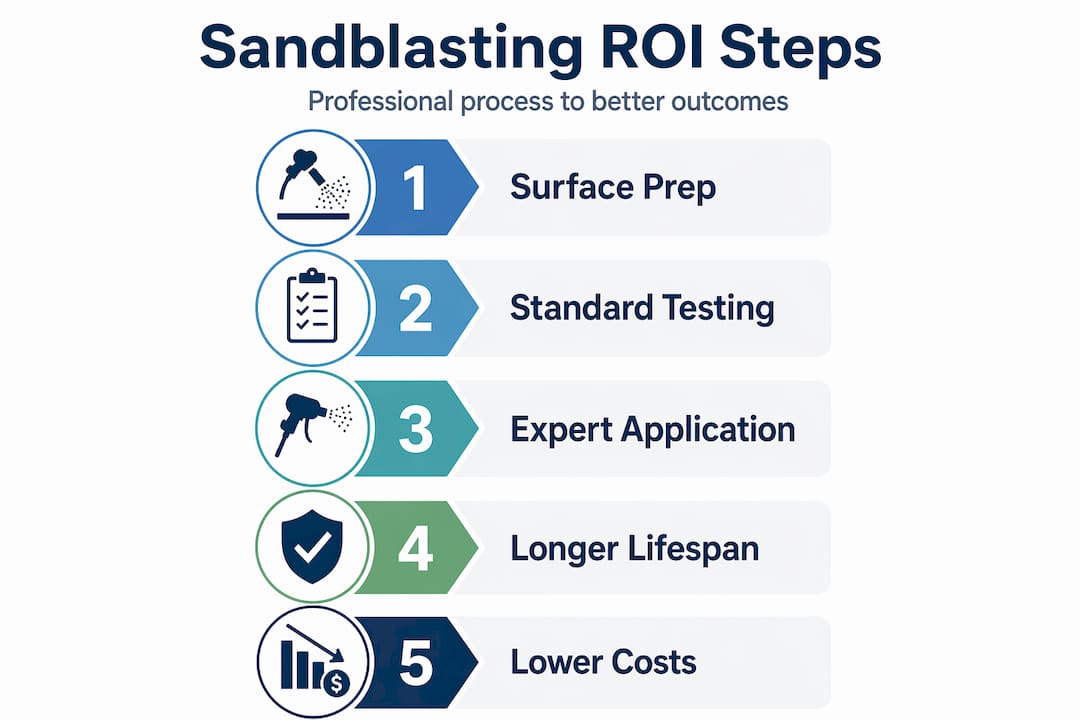
One of the most practical benefits of professional sandblasting is the ability to match process parameters precisely to the substrate you are working on. This sounds straightforward. In practice, it requires significant training and experience to get right. Professional sandblasting personnel are trained to adapt abrasive media type, particle size, and operating pressure to the specific material and condition of each surface.
Consider the difference between preparing structural steel on a bridge versus cleaning aluminum panels on a terminal building or removing corrosion from cast iron pipe. Each substrate has different hardness, thickness, and damage thresholds. Applying the same pressure and media across all three without adjustment causes problems ranging from surface pitting on aluminum to panel warping on thinner automotive-grade steel.
Professional contractors bring equipment that in-house programs simply cannot match:
- Variable pressure blast systems that let operators drop from 125 psi down to 40 psi for sensitive substrates without stopping work
- Wet abrasive blasting rigs that suppress dust while maintaining cleaning effectiveness on outdoor and open-air infrastructure
- Wide-production nozzles and blast wheels that increase production rates on large flat surfaces like tank exteriors and runway infrastructure
- Media reclamation systems that recover and rescreen abrasive for reuse, cutting media cost on large projects
The choosing sandblasting methods decision is not one-size-fits-all. Professionals evaluate the substrate, the coating system going on top, the environmental conditions, and the project timeline before selecting equipment and media. That diagnostic step alone separates professional blasting outcomes from generic blasting operations.
Environmental controls and operational efficiency
The environmental responsibilities around abrasive blasting have grown substantially, and professional providers have built systems to manage them without disrupting project timelines. Modern professional blasting operations rely on a layered approach:
- Media selection: Eco-friendly media like aluminum oxide, garnet, and glass bead replace silica sand across most professional applications. These materials have full Safety Data Sheets, predictable dust profiles, and substantially lower toxicity risk. Silica sand is largely avoided in professional operations due to documented silicosis risk.
- Dust suppression systems: Wet blasting attachments and fogging systems reduce airborne particulate at the source. For outdoor work near occupied facilities or protected waterways, this is often a permit condition, not just a courtesy.
- Containment installation: Scaffolding-mounted containment systems, ground tarps, and vacuum blast heads capture spent media and removed coatings before they reach soil or stormwater. Professional shops with dedicated blast booths manage this internally; mobile operations build temporary equivalents on-site.
- Waste classification and disposal: Removed lead paint, chromate primers, and contaminated media are regulated wastes. Professional contractors document waste streams and use licensed disposal vendors. This protects your facility from third-party environmental liability.
These controls reduce cleanup time, protect surrounding operations, and eliminate the regulatory exposure that comes with improper waste handling on industrial sites. See real-world outcomes in sandblasting project examples where professional controls directly extended coating life and avoided environmental penalties.
My take on why this decision matters more than most managers expect
I’ve seen facility managers make the professional sandblasting vs DIY calculation based almost entirely on the quoted day rate. And I understand the logic. The line item looks negotiable when the budget is tight. But after watching what happens to coating systems over five, ten, and fifteen years, my view is that the surface preparation decision is the single highest-leverage call in the entire asset maintenance cycle.
What most managers don’t price in is the documentation gap. When a coating fails prematurely and you need to pursue a warranty claim or defend a maintenance decision to a city council or board, your ability to produce verified surface prep records is what protects you. Professional blasting provides that paper trail. DIY and informal arrangements do not.
The other thing that consistently catches managers off guard is the safety liability exposure during the work itself. The industry standards for coatings compliance are detailed enough that an in-house crew running an informal blasting operation can generate OSHA violations before the first hour of work is complete. That is not a theoretical risk. It happens on real projects with real consequences.
When you hire sandblasting experts with documented training, calibrated equipment, and a track record on comparable infrastructure, you are buying verified outcomes. That is the investment case.
— Southernsandblastingandpainting
Work with a team that gets the standards right
Southern Sandblasting and Painting has delivered professional abrasive blasting and industrial coating services across Central Florida for more than 20 years, handling projects for municipalities, airports, water authorities, and large commercial facilities. Every project is approached with documented surface preparation standards, verified compliance, and equipment matched to the specific substrate and coating system.
If you are evaluating contractors for your next surface preparation project, start with the sandblasting equipment guide to understand what professional-grade operations look like in practice. For project-specific consultation, the sandblasting services page outlines service capabilities, target industries, and how to request a quote. Southernsandblastingandpainting also provides industrial coating applications following surface preparation, giving facility managers a single accountable contractor for the full scope of work.
FAQ
What standard should professional sandblasting meet for industrial coatings?
Most high-performance industrial coating systems require SSPC-SP10 (Near-White Metal Blast), corresponding to ISO 8501-1 Sa 2½, which means no more than 5% surface staining. Professional contractors verify this with surface profile comparators and soluble salt tests, not visual inspection alone.
How does professional sandblasting vs DIY differ on safety?
Professional blasting operations must meet OSHA’s 29 CFR 1910.94(a) ventilation requirements and maintain silica exposure at or below 25 µg/m³. In-house or DIY teams rarely have the engineered controls, monitoring equipment, or documented training programs to meet these standards.
Why hire sandblasting experts rather than using cheaper labor?
Trained professionals tailor media type, particle size, and pressure to the specific substrate, preventing damage like warping or pitting. They also provide documented surface prep records and warranty-compliant cleanliness verification that untrained labor cannot deliver.
What does professional sandblasting actually cost when everything is included?
Total cost includes equipment mobilization, containment setup, media, labor, cleanup, and waste disposal, not just nozzle time. Setup and teardown alone add one to two hours of billable time per job, and hazardous coating removal adds regulated waste disposal costs that DIY estimates routinely miss.
When should facility managers use professional sandblasting services?
Use professional blasting whenever the project involves high-performance coating systems, regulated waste removal, confined or enclosed spaces, or assets with documented maintenance histories. These conditions require verified surface prep, safety compliance, and contractor accountability that only professional services provide.
Recommended
- Industrial sandblasting guide for facility managers
- Sandblasting & Painting Services in Orlando FL | Southern
- Step-by-step sandblasting guide for Florida facility managers
- Orlando Sandblasting & Industrial Painting | Southern Sandblasting
- Sandblasting Contractor Baldwin Park FL
- Sandblasting Services Oviedo FL


