

TL;DR:
- Lead paint abatement permanently eliminates lead hazards in pre-1978 housing, involving specialized, EPA-certified methods.
- It is distinct from renovation work that only disturbs lead paint temporarily and requires different certifications.
Lead paint abatement is defined by the EPA as a permanent set of activities that eliminate lead-based paint hazards in pre-1978 housing and child-occupied facilities. It goes well beyond a simple coat of fresh paint. Approximately 75% of U.S. homes built before 1978 contain lead paint, and around 3.6 million of those homes have children under six living in them. That scale makes lead hazard remediation one of the most urgent public health responsibilities a homeowner or property manager can face. Abatement is also legally distinct from Renovation, Repair and Painting (RRP) work, which carries its own separate EPA certification requirements.
What is lead paint abatement and how does it differ from RRP?
Lead paint abatement is a permanent intervention. Its goal is to eliminate the hazard entirely, not just manage it temporarily. RRP work, by contrast, covers routine renovation tasks that disturb lead paint as a side effect, such as window replacement or drywall repair. Abatement requires contractors certified specifically by the EPA or an EPA-authorized state program. RRP contractors hold a different certification and are not authorized to perform abatement work.
Lead paint in good, intact condition generally poses little immediate health risk. The hazard arises when paint deteriorates, chips, or gets disturbed during construction. That distinction matters because it determines whether you need full abatement or simply careful monitoring. Children are most vulnerable to the neurological damage that lead exposure causes, which is why child-occupied facilities face the strictest regulatory scrutiny.
The goal of lead paint abatement extends beyond aesthetics. It is primarily a long-term health investment to prevent irreversible neurological damage in children. Property managers who understand this distinction make better decisions about when to act and how urgently.
What methods are used in lead paint abatement?
Lead abatement methods fall into four categories: removal, enclosure, encapsulation, and replacement. Each suits different surfaces, budgets, and project goals. Large projects often combine two or more methods.
| Method | Best for | Key benefit | Main downside |
|---|---|---|---|
| Removal | Flat surfaces, trim | Eliminates hazard completely | Generates significant dust |
| Enclosure | Large wall areas | Fast, cost-effective | Requires ongoing monitoring |
| Encapsulation | Stable painted surfaces | Less disruptive | Needs patch test; degrades over time |
| Replacement | Windows, doors, trim | Most permanent solution | Highest upfront cost |
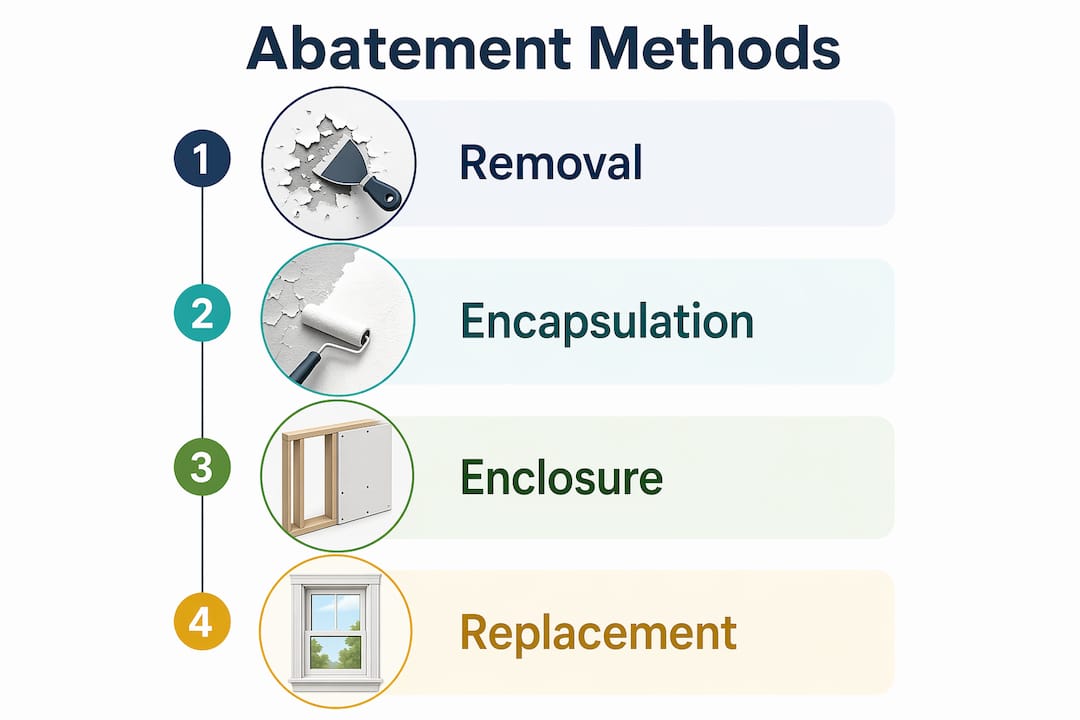
Removal means physically stripping lead paint from a surface or removing the component entirely. It produces the most dust and requires the strictest containment controls. Enclosure covers lead-painted surfaces with a durable barrier such as drywall or paneling, sealing the hazard underneath without disturbing it. Encapsulation applies a specialized bonding compound or thick coating that chemically seals lead paint in place. Encapsulation requires a mandatory patch test before full application to confirm adhesion, and periodic re-inspections are needed afterward to check for coating degradation that could re-expose the hazard. Replacement removes the lead-painted component entirely, such as swapping out old windows or door frames, and substitutes a new lead-free unit. It is the costliest method but the most permanent for high-friction areas where paint wears quickly.
Pro Tip: For larger projects, certified contractors frequently combine enclosure on broad wall surfaces with replacement on windows and doors. That combination balances cost with permanence where it matters most.
What safety protocols govern lead abatement work?
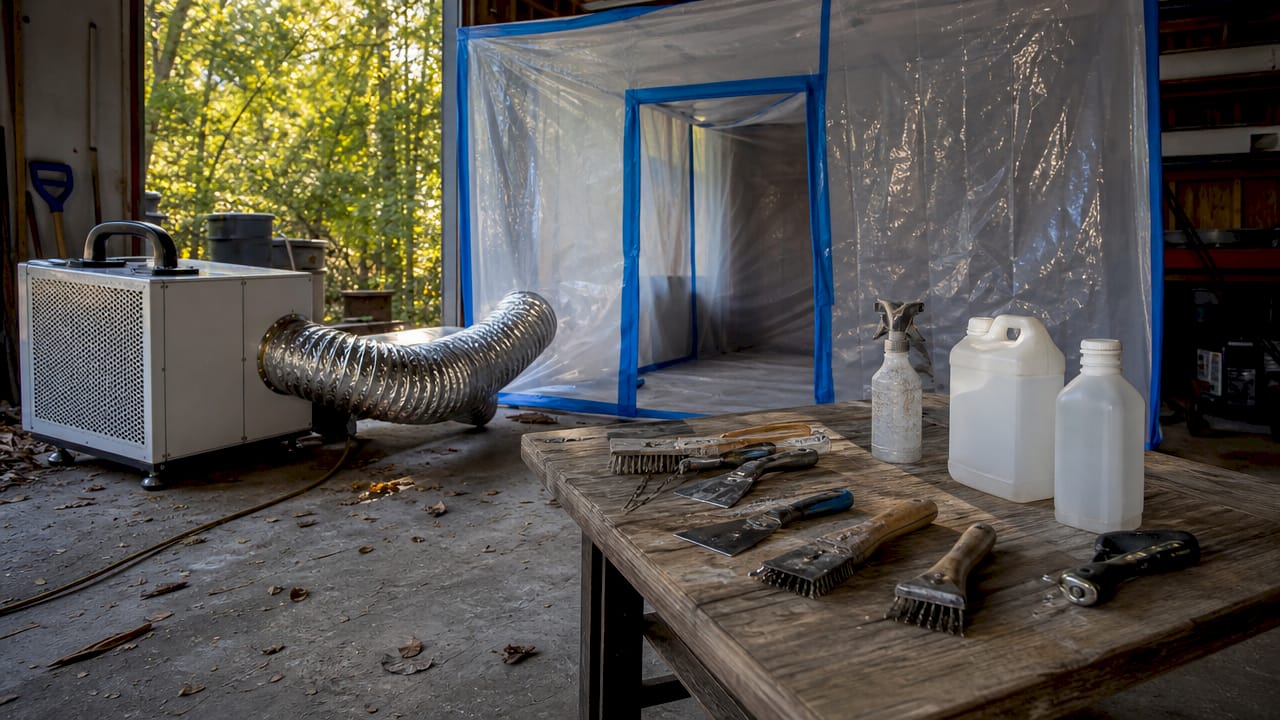
Lead abatement is treated as an environmental safety process, not a standard construction job. Containment and negative-pressure work zones are required to prevent toxic dust from escaping into living areas. Proper containment means sealing doorways, windows, vents, and all openings with polyethylene sheeting while maintaining negative pressure airflow to trap dust within the work zone.
Federal and state regulations mandate specific practices during every abatement project:
- Use 6-mil polyethylene sheeting to seal off the work area completely before any disturbance begins.
- Apply wet methods during removal to suppress airborne lead dust at the source.
- Use HEPA vacuums exclusively. Standard household vacuums disperse lead dust rather than capture it, worsening contamination.
- Dispose of all lead-contaminated debris according to local hazardous waste regulations.
- Conduct a thorough cleaning of the work zone before requesting clearance testing.
Prohibited practices include dry scraping, power sanding without HEPA attachment, grinding, and open-flame burning. Each of these generates lethal airborne lead dust or fumes and is illegal under EPA rules. Before re-occupancy, clearance testing must confirm that dust wipe samples meet EPA thresholds: 10 µg/ft² for floors and 100 µg/ft² for window sills. An independent, third-party certified inspector must conduct that clearance test. The contractor who performed the abatement cannot self-certify.
Pro Tip: Property managers face strict liability for child lead poisoning on their properties. Hiring a certified abatement contractor and retaining all clearance documentation is the only legally defensible position if a claim arises.
How much does lead paint abatement cost?
Professional lead abatement inspection costs typically range from $350 to $1,000. Abatement work itself runs $6 to $17 per square foot, depending on the method and surface type. A full home abatement project commonly totals between $1,500 and $5,500. Soil remediation, HVAC cleaning, or extensive replacement work can push costs well above that range.
Several factors drive the final price:
- Method chosen. Encapsulation costs less per square foot than replacement. Removal sits in the middle.
- Surface type and condition. Deteriorated or multi-layer paint requires more labor and containment.
- Project size. Larger surface areas reduce the per-square-foot rate but increase total spend.
- Geographic location. Labor rates and disposal fees vary significantly by state and city.
- Clearance testing. Budget separately for the independent clearance inspection, which is a required step, not an optional add-on.
Enclosure is often the most cost-effective choice for large wall surfaces. Replacement costs more upfront but eliminates future monitoring costs for high-friction components like windows. Homeowners who skip clearance testing to save money risk re-occupying a space that still fails EPA thresholds, which creates both health and legal exposure.
What steps should homeowners and property managers take?
Responsible lead hazard management follows a clear sequence. Skipping steps creates gaps that can result in failed clearance tests, ongoing contamination, or regulatory penalties.
- Hire a certified inspector or risk assessor. Certified specialists use X-ray fluorescence or lab analysis to identify lead presence and evaluate surface condition and child accessibility before any abatement plan is designed.
- Review the risk assessment findings. The report identifies which surfaces are hazardous, which are deteriorating, and which are stable enough to monitor without immediate action.
- Select a certified abatement contractor. Verify EPA or state program certification before signing any contract. Ask for proof of insurance and references from comparable projects.
- Relocate occupants before work begins. Children and pregnant women must leave the property before abatement starts and cannot return until clearance testing passes.
- Monitor the work zone during abatement. Confirm that containment sheeting stays intact and that wet methods and HEPA vacuums are in use throughout the project.
- Commission an independent clearance inspection. A third-party certified inspector collects dust wipe samples after cleaning and confirms results meet EPA thresholds before anyone re-enters the building.
- Address secondary contamination. If previous DIY attempts occurred, check HVAC ducts and carpets. HVAC and carpet contamination from improper removal is a hidden risk that requires specialized HEPA vacuuming and duct sealing.
- Maintain encapsulation coatings. Schedule visual inspections annually to catch any coating degradation before it re-exposes lead paint.
- Retain all documentation. Keep inspection reports, abatement records, and clearance certificates. Property managers must disclose known lead hazards to tenants under federal law.
For lead paint safety tips during renovation work, the key rule is simple: if you do not know whether a surface contains lead, treat it as if it does until a certified inspector confirms otherwise.
Key Takeaways
Professional lead paint abatement requires certified contractors, EPA-compliant containment, and independent clearance testing before any occupant returns to the treated space.
| Point | Details |
|---|---|
| Abatement vs. RRP | Abatement permanently eliminates hazards; RRP covers renovation work that incidentally disturbs lead paint. |
| Four core methods | Removal, enclosure, encapsulation, and replacement each suit different surfaces and budgets. |
| Clearance standards | EPA thresholds are 10 µg/ft² for floors and 100 µg/ft² for window sills before re-occupancy. |
| Cost range | Inspection runs $350–$1,000; abatement work costs $6–$17 per square foot for most projects. |
| Documentation matters | Retaining clearance certificates protects property managers from liability and satisfies disclosure laws. |
The misconception that costs property managers the most
The most damaging belief I encounter is that intact lead paint requires immediate abatement. It does not. Condition is what determines urgency. Paint that is firmly bonded, unscored, and not in a friction zone poses little active risk. The real danger is disturbing stable lead paint without proper controls, which is exactly what happens during unpermitted renovations or DIY removal attempts.
What I have seen repeatedly is that homeowners who attempt their own lead paint removal create a worse problem than the one they started with. Standard shop vacuums spread lead dust through the HVAC system. Dry scraping sends particles into carpet fibers that no amount of regular cleaning removes. The remediation cost after a failed DIY attempt often exceeds what a certified contractor would have charged from the start.
For property managers, the liability calculus is straightforward. A tenant’s child who tests positive for elevated blood lead levels can trigger a legal claim. Without documented abatement records and clearance certificates, there is no defense. Professional abatement with proper documentation is not an expense. It is protection.
My practical advice: always verify that your contractor holds current EPA or state certification, not just general contractor licensing. Ask specifically for their abatement supervisor certification number and check it against your state’s registry. Then insist on a third-party clearance inspection, not one arranged by the contractor. That separation is what gives the clearance result legal weight.
— Results
Southernsandblastingandpainting: professional surface prep for lead-safe results
Southern Sandblasting and Painting brings over 20 years of industrial surface preparation experience to projects across Central Florida, including work that demands strict lead-safe practices and EPA-compliant containment.

Whether you manage a commercial property, a municipal facility, or a large residential complex, the surface preparation process behind safe lead hazard remediation requires the same rigor as any critical infrastructure project. Southernsandblastingandpainting applies that same standard to every job, using professional-grade equipment and documented workflows that hold up to regulatory review. Explore the full range of surface preparation and abatement services or review the sandblasting equipment guide to understand the tools behind compliant, lasting results.
FAQ
What is the difference between lead abatement and encapsulation?
Lead abatement is a broad term covering any permanent method of eliminating a lead paint hazard, including removal, enclosure, encapsulation, and replacement. Encapsulation is one specific abatement method that seals lead paint with a bonding coating rather than removing it.
How do I know if my home has lead paint?
A certified inspector or risk assessor uses X-ray fluorescence (XRF) testing or collects paint chip samples for lab analysis to confirm lead presence. Homes built before 1978 are the primary candidates for testing.
Can I remove lead paint myself?
DIY lead paint removal is legal in owner-occupied single-family homes but carries serious health risks. Standard vacuums spread lead dust, and prohibited methods like dry scraping are illegal. Hiring a certified abatement contractor is the only approach that guarantees EPA-compliant results and clearance certification.
What clearance levels must be met before re-occupancy?
EPA standards require floor dust wipe samples to test below 10 µg/ft² and window sill samples below 100 µg/ft². A certified third-party inspector must verify these levels before occupants return.
How long does lead paint abatement take?
Project duration depends on the method, surface area, and extent of contamination. A single-room encapsulation may take one to two days. Full home abatement with replacement of multiple components can take one to two weeks, plus additional time for clearance testing results.


