
TL;DR:
- Airless spray painting uses high-pressure pumps to atomize paint without compressed air, providing fast, uniform coverage on large surfaces. Proper pressure control, thorough masking, and surface prep are essential for efficient and high-quality results, while overspray and cleanup pose common challenges. Skilled operators treat pressure as a precision setting, ensuring material efficiency and a professional finish across industrial and large-scale projects.
Airless spray painting is defined as a high-pressure coating method that forces paint through a small spray tip orifice to atomize it into a fine mist without using compressed air. Equipment brands like Graco and Titan dominate the professional market, offering electric and gas-powered pump units that operate across a wide range of project scales. The method covers everything from residential fences to industrial water tanks and airport infrastructure. Both DIY enthusiasts and professional contractors rely on airless systems because they deliver uniform, high-speed coverage that brushes and rollers simply cannot match at scale.
What is airless spray painting and how does it work?
Airless spray painting works by using a high-pressure pump to pressurize paint directly inside the fluid line, then forcing it through a precisely sized spray tip. The sudden pressure drop at the tip orifice shatters the paint into thousands of fine droplets, creating the characteristic fan-shaped spray pattern. No compressed air mixes with the paint stream, which is what separates this method from conventional air-spray and HVLP systems.
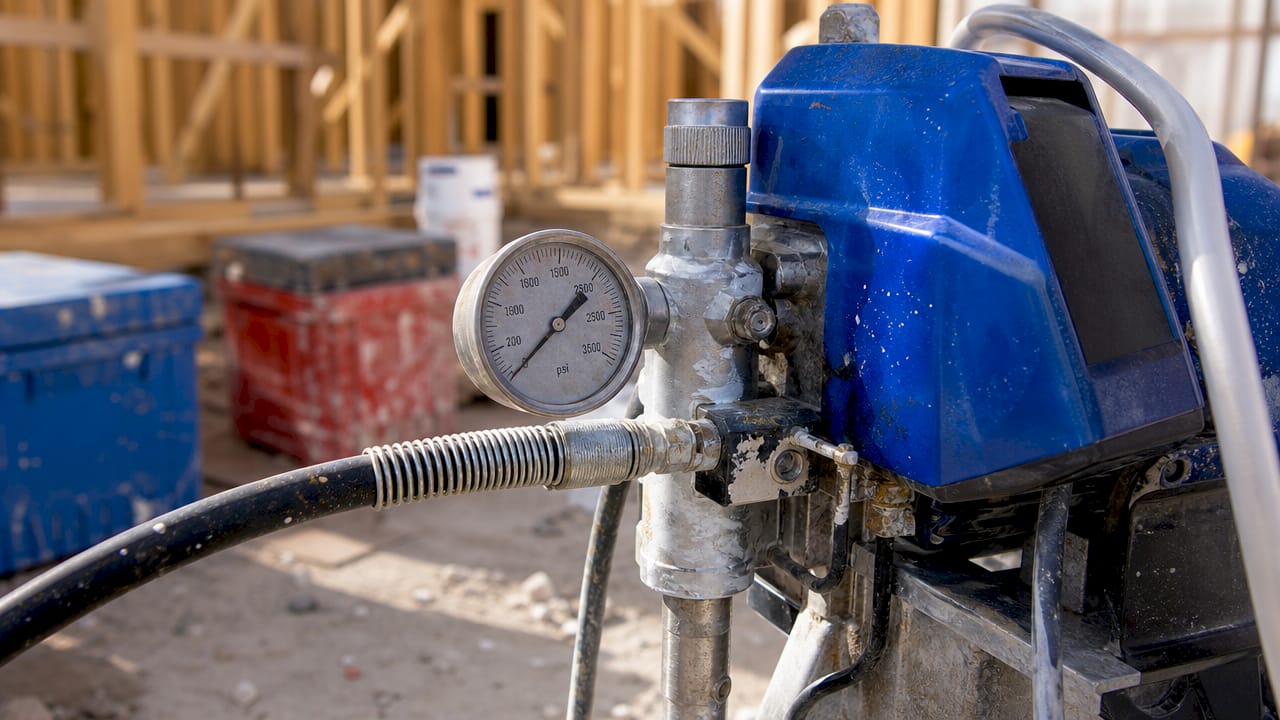
The pump is the heart of the system. Standard operating pressures for airless systems range from 1,500 to 3,000 PSI, which is high enough to push thick materials like epoxy coatings and elastomeric paints without thinning. That pressure range means airless units handle coatings that would clog or stall a conventional air-spray gun.
The spray tip controls two critical variables: fan width and fluid output. Tip sizes commonly range from 0.011 to 0.025 inches or larger, depending on paint viscosity and the surface being coated. A wider tip orifice delivers more paint per pass, which speeds up coverage on large flat surfaces but reduces precision on detail work.
Pressure settings directly affect finish quality. Excessive pressure causes bounce-back, orange peel texture, and dry spray defects, while pressure that is too low produces weak atomization and runs. The correct setting is always dynamic, not fixed.
- Pump types: Electric pumps suit most DIY and light commercial work; gas-powered units handle remote job sites without power access.
- Tip selection: Match tip size to paint viscosity. Thin latex uses a 0.013 to 0.015 inch tip; heavy epoxy needs 0.021 to 0.025 inch.
- Pressure range: Start at the manufacturer’s low end and increase only until tails disappear from the spray pattern edges.
- Fluid lines: Longer hose runs reduce pressure at the tip, so account for hose length when dialing in settings.
Pro Tip: Listen to your sprayer while it runs. A steady rhythmic hiss signals proper operation. Sputtering or irregular sounds point to a clogged tip or dirty intake filter that needs immediate attention before the finish is ruined.
What are the advantages of airless spray painting vs traditional methods?
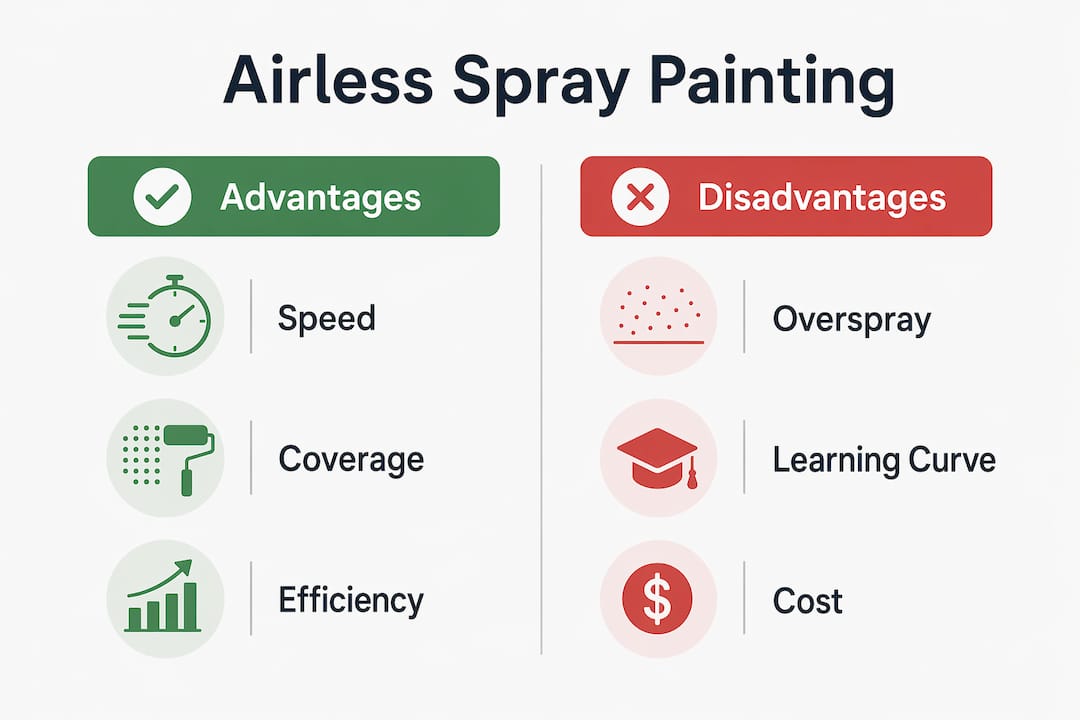
Speed is the most measurable advantage. Airless spray painting reduces overall job time by 66% to 75% compared to brushing and rolling, cutting labor costs by 40% to 60%. A project that would take a full week with rollers can be completed in two to three days with an airless unit. For facility managers and contractors pricing large jobs, that time compression changes the economics of every bid.
Coverage consistency is the second major advantage. Airless systems deliver a uniform wet film thickness across the entire spray fan, which is difficult to replicate with a brush or roller on textured or irregular surfaces. Industrial coatings like epoxy and polyurethane require precise film thickness to perform correctly, and airless application hits that target more reliably than manual methods.
Airless sprayers are preferred for large projects over 1,500 square feet, including exterior siding, fences, decks, and industrial structures. HVLP systems produce a finer finish on cabinetry and trim but cannot match the throughput of airless equipment on open surfaces. Brush and roller methods offer the most control but the least speed.
| Method | Speed | Finish quality | Best application | Transfer efficiency |
|---|---|---|---|---|
| Airless spray | Very fast | Good to excellent | Large surfaces, industrial coatings | 25% to 50% |
| HVLP spray | Moderate | Excellent | Fine woodwork, cabinets, trim | 65% to 90% |
| Brush and roller | Slow | Good | Small areas, detail work | Near 100% |
Additional advantages worth noting:
- Airless systems handle thick, high-viscosity coatings without thinning, preserving the coating’s protective properties.
- Operator fatigue drops significantly compared to rolling large wall or floor areas repeatedly.
- One operator with an airless unit can cover the same area as two or three workers with rollers in the same timeframe.
- The method works on virtually any substrate: concrete, steel, wood, masonry, and composite materials.
What are the common disadvantages and how do you manage them?
Overspray is the most significant drawback. Airless systems have transfer efficiencies between 25% and 50%, meaning up to half the paint you spray may land somewhere other than the target surface. That material loss adds up fast on large jobs and requires thorough masking of adjacent surfaces, fixtures, and landscaping before spraying begins.
The learning curve is steeper than most beginners expect. Maintaining consistent gun speed, distance, and overlap simultaneously takes practice. Rushing the learning process produces striping, sags, and uneven film thickness that require sanding and recoating.
Cleanup is non-negotiable and time-consuming. Water-based coatings require flushing the pump, hose, and gun with clean water immediately after use. Solvent-based coatings need mineral spirits or lacquer thinner flushed through the entire system. Skipping this step destroys the pump seals and clogs the tip permanently.
Common defects and their causes:
- Orange peel texture: Pressure too high or gun held too close to the surface.
- Dry spray or overspray fallout: Pressure too high, gun moving too fast, or working in hot and windy conditions.
- Runs and sags: Pressure too low, gun moving too slowly, or tip orifice too large for the coating.
- Striping or uneven coverage: Insufficient overlap between passes or inconsistent gun speed.
Pro Tip: Always mask beyond what you think is necessary. Airless overspray travels farther than it appears, especially in outdoor conditions with any wind. Refer to painting safety and compliance guidelines before starting any large project to protect surrounding areas and workers.
Best practices for airless spray painting results
Setup and surface preparation determine 50% of the final result before a single drop of paint is sprayed. Clean, dry, and properly primed surfaces accept coatings evenly. Contaminated or unprepared surfaces cause adhesion failure regardless of how well the spraying technique is executed.
Follow this sequence for consistent professional results:
- Prepare the surface. Remove rust, loose paint, grease, and contaminants. Sand or abrasive blast as required by the coating manufacturer’s specification.
- Mask all adjacent areas. Cover windows, trim, fixtures, and any surface not being coated. Use plastic sheeting and painter’s tape rated for the coating type.
- Set up equipment. Prime the pump, check all fittings for leaks, and select the correct tip for the coating being applied.
- Dial in pressure. Start at the low end of the manufacturer’s recommended range and increase gradually until tails at the edges of the spray fan disappear.
- Practice your pass. Spray onto cardboard or scrap material first to confirm fan pattern, fluid output, and pressure before touching the actual surface.
- Spray with shoulder movement. Begin each pass outside the work area, pull the trigger, move across the surface using your shoulder rather than your wrist, and release the trigger after clearing the opposite edge.
- Maintain 50% overlap. Each spray pass must overlap the previous pass by 50% to produce uniform coverage and prevent visible striping.
- Hold consistent distance. Keep the gun 12 to 18 inches from the surface and perpendicular to it at all times. Angling the gun distorts the fan pattern and creates uneven film thickness.
- Clean immediately after use. Flush the entire system with the appropriate solvent before the coating has time to cure inside the pump or hose.
- Inspect filters regularly. Dirty intake and tip filters cause pressure drops and uneven spray patterns. Clean or replace them at the start of every job.
For a deeper look at how these steps apply to industrial coating applications, the sequence above maps directly to professional-grade project workflows used on water tanks, pipelines, and structural steel.
Pro Tip: If you see tails on the edges of your spray fan, increase pressure in small increments rather than jumping to the maximum. Optimal pressure is dynamic: the goal is the lowest pressure that produces a clean, tail-free fan, not the highest pressure the pump can generate.
Key takeaways
Airless spray painting delivers professional-grade speed and coverage by using high pressure to atomize paint through a small tip orifice, making it the most efficient method for large-scale coating projects.
| Point | Details |
|---|---|
| Core working principle | High-pressure pumps (1,500 to 3,000 PSI) force paint through a tip orifice to atomize it without compressed air. |
| Speed advantage | Airless spray reduces job time by 66% to 75% versus brushing and rolling, cutting labor costs significantly. |
| Transfer efficiency trade-off | Airless systems lose 25% to 50% of material to overspray, requiring thorough masking and surface prep. |
| Technique fundamentals | Maintain 50% pass overlap, hold 12 to 18 inches from the surface, and start each pass outside the work area. |
| Equipment maintenance | Clean the pump, hose, and tip immediately after every use to prevent clogging and seal damage. |
Why pressure discipline separates good results from wasted material
After working alongside crews on large industrial projects, the single most consistent mistake I see is treating pressure as a “more is better” dial. Operators crank the PSI to maximum because the spray looks more aggressive and feels faster. What actually happens is that transfer efficiency collapses, overspray clouds the surrounding area, and the finish develops orange peel or dry spray texture that requires rework.
The professionals who get clean results every time treat pressure as a precision setting, not a power setting. They start low, watch the fan pattern edges, and increase only until the tails disappear. That discipline saves material, reduces cleanup time, and produces a finish that does not need sanding between coats.
The second pattern I consistently observe is that airless and HVLP methods are not competitors. They are complements. Experienced painters use airless equipment for field coats on large open surfaces and switch to HVLP for detail areas, edges, and fine finish work. Treating airless as a universal solution for every surface leads to frustration on trim and cabinetry where the method genuinely does not perform as well.
Patience in the setup phase pays back in the application phase. Crews that spend an extra 30 minutes masking, priming the pump correctly, and dialing in pressure on scrap material consistently outperform crews that rush to start spraying. The equipment rewards preparation and punishes shortcuts.
— Southernsandblastingandpainting
How Southernsandblastingandpainting supports your coating projects
Southern Sandblasting and Painting brings over 20 years of industrial surface preparation and coating experience to projects across Central Florida, including water tanks, airports, pipelines, and city infrastructure. Whether you are managing a municipal coating project or a large commercial facility, the team applies the same pressure discipline and technique standards described in this guide at an industrial scale.
For projects where surface preparation is as critical as the coating itself, the sandblasting and painting services offered by Southernsandblastingandpainting cover everything from abrasive blasting to remove rust and contaminants through to final protective coating application. The sandblasting equipment guide also provides detailed guidance on selecting the right equipment for surface prep before any coating work begins.
FAQ
What is the main difference between airless and HVLP spray painting?
Airless spray painting uses high fluid pressure (1,500 to 3,000 PSI) to atomize paint without compressed air, making it faster and better suited for large surfaces. HVLP uses a high volume of low-pressure air to atomize paint, producing a finer finish with less overspray but significantly slower coverage.
What PSI do you need for airless spray painting?
Most airless spray systems operate between 1,500 and 3,000 PSI depending on the coating viscosity and tip size. Start at the manufacturer’s recommended low end and increase pressure only until the spray fan produces clean edges without tails.
How do you prevent overspray with an airless sprayer?
Thorough masking of all adjacent surfaces before spraying is the primary control. Keeping pressure at the minimum effective level, maintaining consistent gun distance (12 to 18 inches), and avoiding spraying in windy conditions all reduce overspray significantly.
Can beginners use airless spray painting equipment?
Yes, but the learning curve requires deliberate practice. Beginners should start on scrap material to dial in pressure and overlap technique before moving to the actual project surface. Mastering consistent 50% overlap is the single most important skill for a clean, professional result.
How do you clean an airless sprayer after use?
Flush the pump, hose, and gun with the appropriate solvent immediately after finishing. Water-based coatings require clean water; solvent-based coatings need mineral spirits or lacquer thinner. Delaying cleanup allows paint to cure inside the system, which damages seals and clogs the tip permanently.


