
TL;DR:
- Many weather-resistant coatings fail quickly under harsh conditions due to poor formulation or application. Selecting the right coating depends on substrate type, environment, and service life requirements. Proper surface preparation and compliance with ASTM standards are essential for long-term infrastructure protection.
Not every coating that claims weather protection can handle what Central Florida or a mid-Atlantic bridge system actually throws at it. UV saturation, ponding water, thermal cycling, and chemical exposure will expose a weak selection within the first season. The global waterproof coatings market is projected to reach USD 27.97 billion by 2036, driven by infrastructure modernization demands and tightening moisture protection standards. For construction and maintenance professionals, the real challenge is not just finding a coating that holds up. It’s understanding which of the main types of weather-resistant coatings actually fits the substrate, environment, and service life requirements of a specific asset.
Table of Contents
- Key takeaways
- 1. Types of weather-resistant coatings: epoxy for corrosion control
- 2. Acrylic coatings: UV resistance at a practical price point
- 3. Polyurethane coatings: flexibility where rigid films crack
- 4. Silicone and polysiloxane coatings for UV and ponding water
- 5. Weatherproof coatings for wood: penetrating vs. film-forming systems
- 6. STPE coatings: the emerging hybrid technology
- 7. Comparison of key weather-resistant coating types
- What field experience teaches you about coating selection
- Protect your infrastructure with the right coating system
- FAQ
Key takeaways
| Point | Details |
|---|---|
| Match coating to environment | Substrate type, UV load, moisture exposure, and thermal movement must all drive your coating selection. |
| ASTM compliance matters | Relying on product labeling alone without verifying ASTM standards creates long-term failure risk. |
| Multi-layer systems outperform single coats | Combining primer, intermediate, and topcoat layers extends asset life far beyond any single-product application. |
| STPE coatings are gaining traction | Solvent-free, isocyanate-free hybrid technology is changing what’s possible for compliant, durable exterior protection. |
| Surface preparation is non-negotiable | Even the best coating fails on a poorly prepared substrate. Sandblasting before application sets the performance baseline. |
1. Types of weather-resistant coatings: epoxy for corrosion control
Epoxy coatings are the workhorse of infrastructure protection. They form a hard, dense film with high moisture and chemical resistance, making them the standard intermediate layer in multi-coat systems for steel structures, bridges, water tanks, and concrete parking decks.
What makes epoxy effective is its adhesion. It bonds aggressively to prepared metal and concrete surfaces, creating a barrier that resists chloride penetration and moisture-driven delamination. In bridge coating systems, high-build epoxies serve as the moisture barrier layer, positioned between a zinc-rich primer and a polyurethane or polysiloxane topcoat.
Key performance characteristics of epoxy coatings:
- High resistance to water, salts, and chemicals
- Excellent adhesion to steel and concrete substrates
- Suitable for high-build application to fill surface irregularities
- Available in solvent-free formulas for restricted environments
One critical limitation: epoxy chalks under direct UV exposure. Without a UV-stable topcoat, it degrades and loses gloss relatively quickly. This is not a flaw in the product. It’s a system design consideration every professional needs to account for from the start.
Pro Tip: Solvent-free epoxy formulas offer environmental application advantages in confined or poorly ventilated spaces, tolerate damp surfaces, and still achieve required dry film thickness. Specify them for tanks, tunnels, and enclosed steel structures.
2. Acrylic coatings: UV resistance at a practical price point
Acrylic coatings are among the most widely used types of exterior coatings for walls, roofs, and horizontal surfaces exposed to moderate environmental stress. Water-based acrylic systems dry fast, apply easily, and offer solid UV resistance for climates without extreme thermal swings or heavy chemical exposure.
The breathability of acrylic coatings is a genuine technical advantage, not just a marketing claim. Vapor-permeable films allow moisture trapped within concrete or masonry to escape without blistering the coating. This matters significantly on older concrete structures where residual moisture is expected.
Performance characteristics worth knowing:
- Fast dry times reduce project scheduling constraints
- Strong UV and color retention in moderate climates
- Compatible with concrete, stucco, masonry, and wood substrates
- ASTM D6083 governs acrylic roof coating performance requirements
- Cost-effective for large surface areas with lower severity exposure
The honest limitation is load-bearing and water-standing conditions. Acrylic coatings are not designed for ponding water, high-traffic decks, or surfaces exposed to fuel or solvents. Specifying acrylic in those environments produces premature failure and costly rework.
3. Polyurethane coatings: flexibility where rigid films crack
Polyurethane coatings deliver what neither epoxy nor acrylic can match on structures that move. Thermal expansion, joint movement, and vibration-induced micro-cracking all require a coating film that flexes without fracturing. Polyurethane does exactly that.
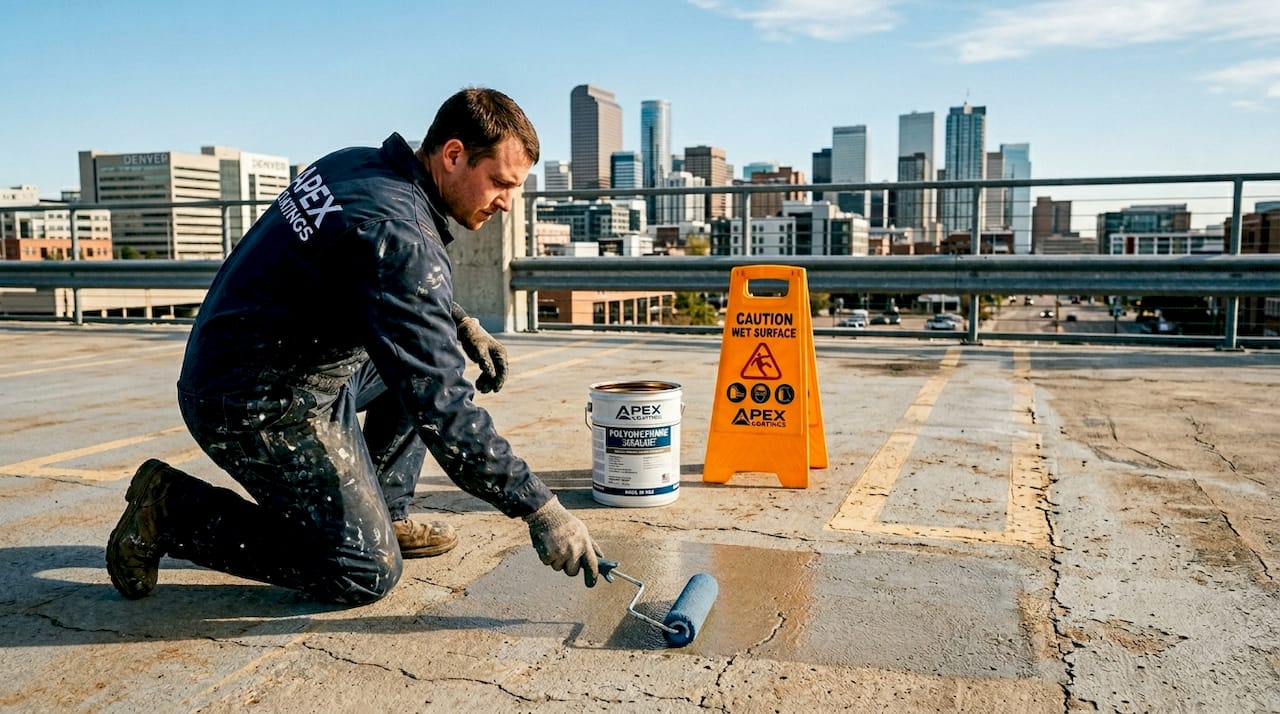
ASTM C957 governs high-solids, cold-liquid-applied elastomeric waterproofing systems, which includes many polyurethane-based coatings used on roofs and decks. This standard matters because it defines the elongation and tensile strength requirements that separate genuinely durable systems from ones that look good on a spec sheet.
Performance characteristics of polyurethane coatings:
- Superior elongation and impact resistance over rigid substrates
- Excellent UV resistance in aliphatic formulations
- Chemical resistance against fuels, oils, and mild solvents
- Strong performance on traffic-bearing decks and parking structures
- Effective topcoat over epoxy in multi-layer protective systems
Pro Tip: Specify aliphatic polyurethane as the topcoat and aromatic polyurethane as the mid-coat when budget is a constraint. Aromatic formulas cost less but chalk under UV. The aliphatic finish layer takes the sun while the aromatic layer handles build and adhesion underneath.
The flexibility advantage is most visible on assets like airport tarmac coatings, theme park walkways, and bridge decks where temperature shifts from morning to peak afternoon can span 50 degrees or more. Rigid coatings crack at those joints. Polyurethane does not.
4. Silicone and polysiloxane coatings for UV and ponding water
Silicone coatings occupy a specific and important niche in the protective coating options available to infrastructure professionals. Their resistance to ponding water is unmatched among common roof coating types. Unlike acrylics that absorb moisture over time, silicone repels it continuously without film degradation.
ASTM D6694 sets the performance requirements for silicone-based roof coatings, including film integrity under standing water conditions. This is the standard that actually separates qualified silicone products from generic waterproof claims.
Polysiloxane coatings take silicone chemistry further by incorporating organic components through hybrid formulation. The result is a finish with longer gloss and color retention than either straight polyurethane or silicone alone. These are not cheap products, but on assets like water towers, petrochemical storage tanks, and coastal bridges, the extended recoat cycle offsets the upfront cost significantly.
Key advantages of silicone and polysiloxane systems:
- Exceptional UV and oxidation resistance
- Sustained performance in ponding water without softening
- Polysiloxane hybrids offer superior gloss and color retention over time
- Low VOC formulations available for regulated environments
- Long service intervals reduce lifecycle maintenance costs on critical assets
The primary trade-off is adhesion sensitivity. Silicone does not bond well to other coating types without specific primers, and recoating over an existing silicone layer typically requires the same chemistry. Locking yourself into a silicone system is a long-term commitment that requires planning from the first maintenance cycle.
5. Weatherproof coatings for wood: penetrating vs. film-forming systems
Wood substrates in infrastructure, including utility poles, marine piers, boardwalks, and timber bridges, require a different approach than metal or concrete. Wood moves with humidity, expands and contracts seasonally, and can harbor biological growth that most coating systems are not designed to address.
Penetrating systems such as oil-based alkyds and water-repellent preservatives absorb into the grain rather than forming a surface film. They move with the wood, resist cracking, and protect against moisture intrusion at the fiber level. Film-forming systems such as exterior alkyds and polyurethane clears offer a hard, aesthetic finish but require more rigorous surface preparation and more frequent maintenance cycles when the film begins to crack or peel.
For industrial-grade wood infrastructure, weatherproofing materials must account for biological attack as well as moisture. Copper-based preservatives and borate treatments used beneath topcoats extend service life considerably on exposed timber. Applying a polyurethane topcoat over untreated wood in a high-humidity environment is a prescription for delamination within two to three years.
Pro Tip: Always specify end-grain sealing on cut or drilled timber sections. End grain absorbs moisture twenty times faster than face grain. Leaving it uncoated undermines the entire coating system.
6. STPE coatings: the emerging hybrid technology
Silyl-terminated polyether technology represents a meaningful shift in what coatings for outdoor use can achieve without compromising environmental compliance. STPE products combine silicone’s UV resistance and polyurethane’s mechanical durability in a single moisture-cured system that contains no isocyanates and no solvents.
That combination addresses two real problems at once. Polyurethane has long been the performance standard for exterior coatings, but isocyanate hazards create handling, storage, and disposal complications. Silicone addresses UV without the hazard, but lacks polyurethane’s toughness. STPE resolves the trade-off.
STPE characteristics relevant to infrastructure projects:
- Moisture-cured chemistry allows application in varied humidity conditions
- Paintable and UV stable across wide temperature ranges
- No isocyanates or solvents, simplifying job-site compliance
- Suitable for both interior and exterior applications
- Growing adoption in green construction projects and government specifications
For professionals tracking where specifications are heading, STPE adoption is accelerating as green building standards tighten. Municipal infrastructure budgets increasingly include environmental compliance requirements alongside performance specs. STPE positions projects to meet both without system compromise.
7. Comparison of key weather-resistant coating types
Selecting among these systems requires matching coating properties to the specific demands of your project environment. Below is a direct side-by-side comparison of the five primary coating categories covered in this article.
| Coating type | UV resistance | Moisture resistance | Flexibility | Typical use case | Key ASTM standard |
|---|---|---|---|---|---|
| Epoxy | Low (topcoat required) | High | Low | Steel, concrete, tanks | ASTM C836 |
| Acrylic | High | Moderate | Moderate | Walls, roofs, masonry | ASTM D6083 |
| Polyurethane | High (aliphatic) | High | High | Decks, bridges, traffic surfaces | ASTM C957 |
| Silicone/Polysiloxane | Very high | Very high | Moderate | Flat roofs, towers, coastal steel | ASTM D6694 |
| STPE | High | High | High | Green builds, exterior joints, multi-use | Emerging standards |
The key pattern this comparison reveals is that no single coating system wins across all categories. Multi-layer systems with zinc-rich primers, epoxy intermediates, and polyurethane or polysiloxane topcoats consistently outperform any single-product approach on critical infrastructure. Budget pressure frequently pushes projects toward single-coat solutions, and that is where performance gaps appear two to four years into service.
For professionals using an industrial coating selection guide, running each candidate coating against substrate type, service environment, expected movement, and lifecycle cost produces a defensible specification. Choosing based on cost per gallon alone without that analysis is the fastest path to premature failure.
ASTM waterproofing standards such as ASTM C836 and ASTM D5385 define hydrostatic pressure resistance requirements. Meeting these is not optional on assets like water containment structures, below-grade concrete, or bridge decks exposed to road salt and standing water. Verify compliance documentation before spec approval.
What field experience teaches you about coating selection
I’ve reviewed and overseen coating specifications on water tanks, bridges, and municipal infrastructure long enough to have a clear opinion about where most failures originate. They rarely start with the coating itself. They start with a selection made for the wrong reasons.
The most common mistake I see is choosing a coating based on what worked on the last project without accounting for what’s different about this one. A polyurethane topcoat that performed beautifully on a covered parking deck does not automatically translate to a coastal water tower getting full UV exposure and salt air year-round. The conditions define the coating, not the other way around.
Selecting coatings by appearance alone without understanding environmental classification and ASTM durability categories is a documented path to failure. I’ve seen it produce delamination within 18 months on steel structures that should have lasted 15 years.
My honest take on STPE and other emerging systems: they are worth serious evaluation, not cautious skepticism. The solvent-free, isocyanate-free chemistry is not a compromise. It’s a specification that removes regulatory friction while delivering performance that competes with systems that have been dominant for decades.
The professionals who get the best long-term results are the ones who treat coating compliance and standards as a baseline, not an afterthought. They run surface preparation to profile specs, verify product data sheets against actual ASTM test results, and build maintenance intervals into the original project plan.
— Southernsandblastingandpainting
Protect your infrastructure with the right coating system
Knowing the coating types is only half the equation. The other half is proper surface preparation, and nothing prepares a substrate for coating adhesion like professional sandblasting. A coating applied over contaminated, corroded, or improperly profiled steel or concrete will fail on schedule, regardless of how well the product is specified.
Southernsandblastingandpainting brings 20-plus years of experience preparing and coating critical infrastructure across Central Florida, including water tanks, airports, pipelines, and municipal assets. From selecting the right primer system to achieving the surface profile that your coating manufacturer requires, the team handles the full scope. Review the sandblasting equipment guide to understand what professional preparation looks like, or explore sandblasting services in Orlando to get a project consultation started with a team that knows what Florida’s climate and regulatory environment actually demand.
FAQ
What are the main types of weather-resistant coatings?
The primary types include epoxy, acrylic, polyurethane, silicone, polysiloxane, and emerging STPE systems. Each serves distinct substrates and environmental exposure conditions.
Which coating type works best for ponding water on flat roofs?
Silicone coatings perform best under ponding water conditions, meeting the requirements defined in ASTM D6694 without film degradation over time.
Why do multi-layer coating systems outperform single-coat applications?
Multi-layer systems combine a sacrificial primer, a moisture-barrier intermediate, and a UV-stable topcoat, each handling a different failure mechanism that no single product can address alone.
What is STPE and why is it gaining adoption?
Silyl-terminated polyether is a moisture-cured hybrid coating that combines UV resistance with mechanical durability and contains no isocyanates or solvents, making it compatible with green building specifications.
How does surface preparation affect coating performance?
Inadequate surface preparation is the leading cause of coating failure. Achieving the correct surface profile through sandblasting promotes adhesion and ensures the coating system performs to its rated service life.


