
Rope access painting is a sound choice for most mid-rise and high-rise commercial exterior work, and often the fastest way to get quality coverage without shutting down the property, as shown by Cape Apex Painters’ high-rise painting expertise. It works when two conditions hold: the anchors have been engineer-tested and certified, and every technician on the rope carries a current SPRAT or IRATA card. Before signing anything, ask the contractor for anchor certification records and technician credentials, in writing, up front.
TL;DR:
- Rope access painting requires certified anchors and technicians with current SPRAT or IRATA cards, with documentation verified before work begins.
- It offers faster setup, less disruption, and a smaller environmental impact, making it ideal for limited ground access or spot repairs on high-rise buildings.
- Complete paperwork, including anchor certification, rescue plans, and inspection logs, is legally the owner’s responsibility and essential for safety compliance.
- Scaffolding may still be more cost-effective for jobs involving heavy material staging, long-term access, or multiple workers operating concurrently over several weeks.
- A site assessment is crucial to determine if rope access, scaffolding, or a hybrid approach best suits the project’s scope and site conditions before requesting bids.
Table of Contents
- What Is Rope Access Painting and How Does the Two-Rope System Work?
- Why Do Owners Choose Rope Access Over Scaffolding?
- What Safety Standards and Certifications Should You Require?
- Rope Access or Scaffolding: How Do You Decide?
- What Does the Project Timeline and Cost Structure Look Like?
- How Do You Vet a Rope Access Painting Contractor?
- How Southern Sandblasting & Painting Handles Compliance and Documentation
- What a Project Manager Learns After a Few of These Jobs
- Get a Site Assessment Before You Choose a Painting Method
- Sources
What Is Rope Access Painting and How Does the Two-Rope System Work?
Rope access painting uses trained technicians suspended on ropes to reach façades, towers, tanks, and signage that would otherwise require scaffolding or a lift. It is not the recreational rappelling or window-washing setup some property managers picture. Industrial rope access painting runs on a redundant, engineered system built specifically for sustained work at height.
Every technician rigs two independent ropes: a working line that carries their weight and lets them move, and a separate safety line with a backup device that only activates if the primary system fails. That separation is the whole point. If one rope or anchor point fails, the second one holds. It’s the same logic behind a backup parachute, applied to painting a water tower or a 12-story façade.
Crews are structured around SPRAT and IRATA certification levels, from Level 1 (supervised technician) through Level 3 (safety supervisor who oversees rigging, rescue readiness, and site safety). Equipment includes certified harnesses, descenders, backup devices, and anchor connectors rated well beyond the loads they’ll ever see in practice.
Why Do Owners Choose Rope Access Over Scaffolding?
Cost and schedule are the two arguments that get a rope access proposal approved. A rope access crew mobilizes in hours, not days, because there’s no scaffold to erect, inspect, and later dismantle. That shrinks labor hours and equipment rental fees, and it’s a big part of why rope access is widely used for façade maintenance when speed and disruption matter as much as cost.
The practical advantages line up like this:
- Smaller footprint. No scaffold towers or ground-level staging eating into parking, sidewalks, or tenant access.
- Less disruption. Fewer road closures, less noise from heavy equipment, and shorter windows where entrances are blocked.
- Lower mobilization cost. Crews set up and strike anchors in a fraction of the time scaffolding erection takes.
- Smaller environmental footprint. Fewer diesel-powered lifts and less heavy machinery on site.
Those advantages fade fast on certain jobs. If a project needs to stage pallets of material, house a large crew working simultaneously across one wall, or maintain contiguous access to the same section for weeks, scaffolding or a mast climber usually wins on total cost per square foot. Rope access shines on spot work, tall narrow structures, and jobs where ground access is tight or restricted.
What Safety Standards and Certifications Should You Require?
This is where a lot of commercial owners get caught off guard: the paperwork burden isn’t optional, and most of it legally sits on the building owner, not just the contractor.
OSHA 1910.27 requires the building owner to provide written documentation that anchorages used for rope descent systems have been identified, tested, certified, and maintained. Each anchor point must support a specified heavy load per attached employee as required by safety regulations. If your contractor can’t produce that paperwork, you’re both exposed.
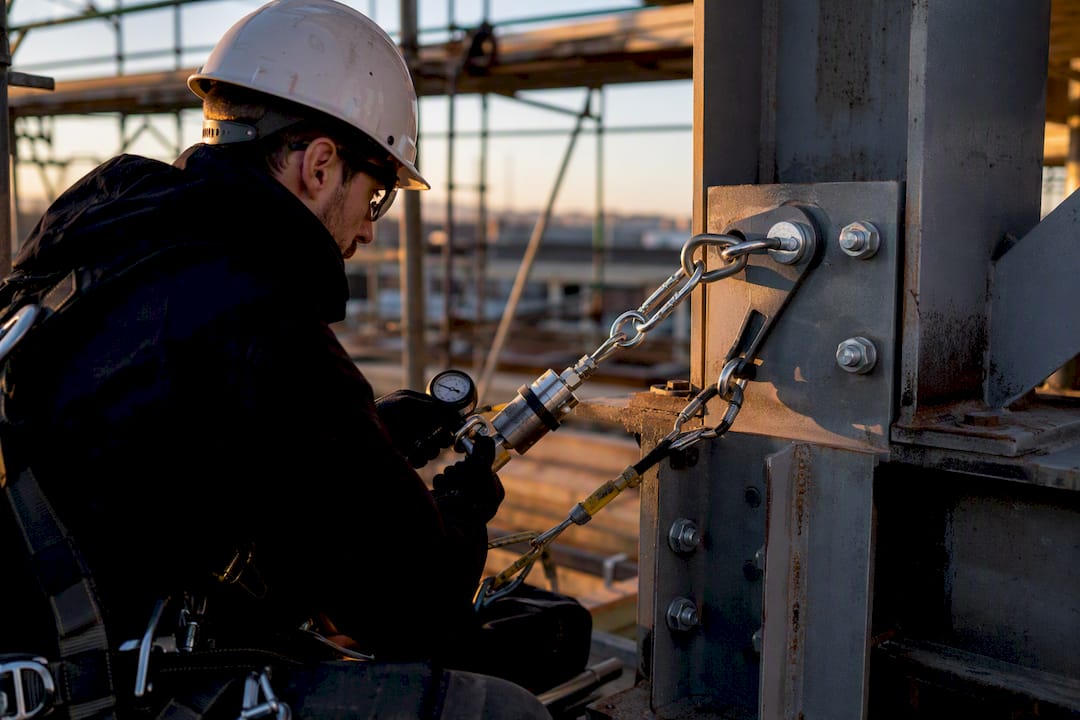
ANSI/ASSP Z459.1 goes further than anchor testing. It treats rope access as a full program: equipment specifications, inspection schedules, technician training, and a written rescue plan, not just two ropes and a harness. One misconception worth clearing up: ANSI doesn’t allow simultaneous loading of a single attachment point except during brief, controlled transitions between systems. The separation between progress and backup lines is a hard requirement, not a suggestion crews can skip on a tight schedule.
On certification, SPRAT is the predominant North American scheme, while IRATA dominates globally. Both use a three-level structure, and either is acceptable evidence of competency, provided the card is current and a Level 3 supervisor is on site.
Before work starts, request:
- Anchor test and certification records for every attachment point.
- Current SPRAT or IRATA cards for each technician on the rope.
- A written method statement describing the specific work sequence.
- A site-specific rescue plan.
- Equipment inspection logs covering harnesses, ropes, and descenders.
Pro Tip: Ask for the rescue plan by name, not “safety procedures” in general. A generic safety binder without a site-specific rescue plan is the single biggest gap inspectors find after an incident.
Rope Access or Scaffolding: How Do You Decide?
Run through this before you request bids, not after:
- Choose rope access when: ground access is constrained (courtyards, water features, active loading docks), disruption needs to stay minimal, or the scope is targeted (window washing, signage repaint, tank exteriors, tower recoating).
- Choose scaffolding or a mobile elevated work platform (MEWP) when: the job requires heavy material staging, a large crew working the same section simultaneously, or contiguous access held for several weeks.
- Consider a hybrid when part of the building needs sustained platform work and other sections only need spot access. Suspended platforms paired with rope access technicians for detail work is common on complex façades.
A proper site survey settles most of this. A qualified rope access services provider will walk the building, check for viable anchor locations, measure obstructions, and confirm whether the ground footprint actually allows scaffold staging in the first place. If anchors don’t exist yet, factor in the cost and lead time to engineer and install them.
What Does the Project Timeline and Cost Structure Look Like?
Every high-rise painting job runs through the same basic stages, though the time spent at each varies with building height and complexity:
- Site survey and anchor assessment. The contractor evaluates existing anchor points or identifies where new ones need engineering.
- Anchor testing and certification. Load testing occurs before any technician clips in.
- Method statement and permits. A written plan covers the work sequence, equipment, and any local permitting.
- Surface preparation. Sandblasting or another abrasive method removes rust, old coatings, and contaminants before paint goes on.
- Coating application and inspection. Crews apply the specified coating system, with quality checks at intervals.
- Handover and documentation. The owner receives inspection logs, photos, and warranty paperwork.
Surface prep is usually the biggest cost driver, more than the rope access method itself. A façade with heavy rust or failing paint needs abrasive blasting before anything else touches it, which affects both budget and schedule. Access complexity (height, anchor availability, wind exposure) and the coating system chosen come next. A small tower repaint might run a few days; a full high-rise façade with heavy prep work can stretch several weeks.
After handover, plan for annual inspections and touch-up cycles. One underrated advantage of rope access: it lets you handle targeted spot repairs between full repaint cycles without erecting scaffolding for a small patch job, which stretches the life of the full coating system.
How Do You Vet a Rope Access Painting Contractor?
Price is the easy variable to compare. Documentation is the one that actually protects you.
- Request anchor certification records and SPRAT/IRATA cards for the specific crew assigned to your job, not a company-wide roster.
- Confirm current liability insurance that names rope access work explicitly, not general contracting coverage.
- Ask who the on-site Level 3 supervisor is and how rescue response actually works if a technician needs assistance.
- Get the method statement and rescue plan in writing before the contract is signed, not after.
- Check references specifically for rope access projects, not just general painting jobs.
Disqualify any bid missing a Level 3 supervisor, unable to produce anchor test proof, or evasive when you ask about rescue procedures. A contractor that hedges on paperwork will hedge on the job site too. Weigh documentation completeness at least as heavily as price. The cheapest bid with incomplete safety records almost always costs more later, whether through delays, failed inspections, or liability exposure.
How Southern Sandblasting & Painting Handles Compliance and Documentation
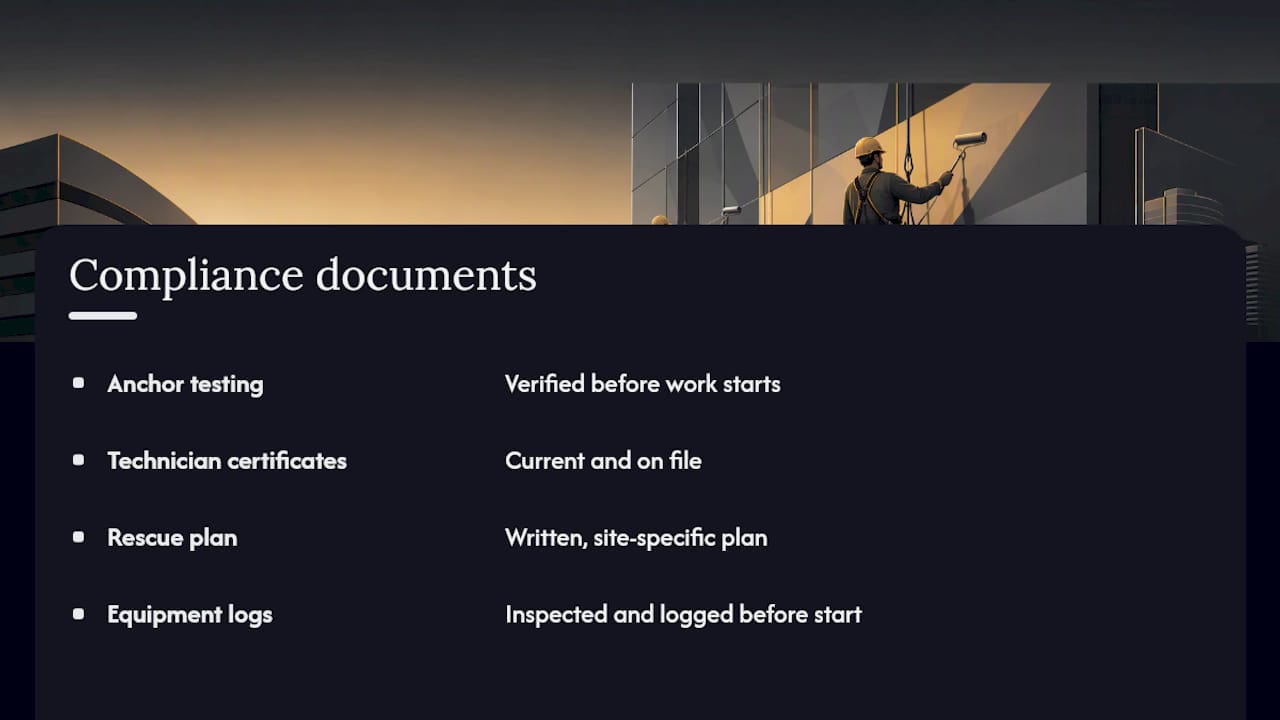
Southern Sandblasting & Painting has spent more than 20 years handling surface prep and industrial coatings for municipal, commercial, and industrial clients across Central Florida, and that experience shapes how projects get documented, not just how they get painted. Every job runs on verified anchor testing, current technician certification, a written rescue plan, and equipment inspection logs delivered before work starts. Maintenance programs are built around the same industrial painting safety protocols that keep water tanks, bridges, and infrastructure assets compliant year after year.
What a Project Manager Learns After a Few of These Jobs
The surprises are rarely the ropes. They’re the anchors nobody tested in a decade, and the weather window that closes faster than the schedule assumed. Get the rescue plan and documentation locked before mobilization. Everything downstream depends on it.
— Results
Get a Site Assessment Before You Choose a Painting Method
If your building needs exterior work and you’re weighing rope access against scaffolding, the fastest way to get a real answer is a site survey, not a guess from a proposal template. Southern Sandblasting & Painting handles the full scope for commercial and municipal clients across Central Florida: anchor inspection, surface preparation through professional sandblasting, and industrial coating application by crews trained to work safely at height.
Surface prep drives most of the cost and durability outcome on any exterior repaint, which is why it’s worth reviewing before you finalize a scope. Request a site assessment or capability statement through Southern Sandblasting & Painting’s sandblasting and painting services page, and get a straight answer on whether rope access, scaffolding, or a hybrid approach fits your building before you commit to a bid.
Sources
- 1910.27 – Scaffolds and rope descent systems. | Occupational Safety and Health Administration
- SPRAT Certification
- IRATA — About certification


