
TL;DR:
- Large-scale painting involves coating large structures with systematic planning, quality control, and surface preparation. Proper assessment, detailed scope, certified contractors, and thorough surface prep are essential to prevent costly failures and ensure longevity. Using standardized methods like grid transfer for murals and detailed documentation supports successful project execution and warranty protection.
Large-scale painting is defined as any coating or mural project covering commercial buildings, industrial surfaces, or oversized wall areas requiring systematic planning, specialized equipment, and documented quality control. For facility managers, contractors, and project planners, the stakes are high. A failed coating on a water tank or airport structure means costly repainting, compliance violations, and shortened asset life. This large scale painting guide covers every phase from condition assessment and surface preparation through design scaling, workflow management, and post-project maintenance, giving you a complete framework grounded in 2026 industry best practices.
What are the prerequisites for a large scale painting project?
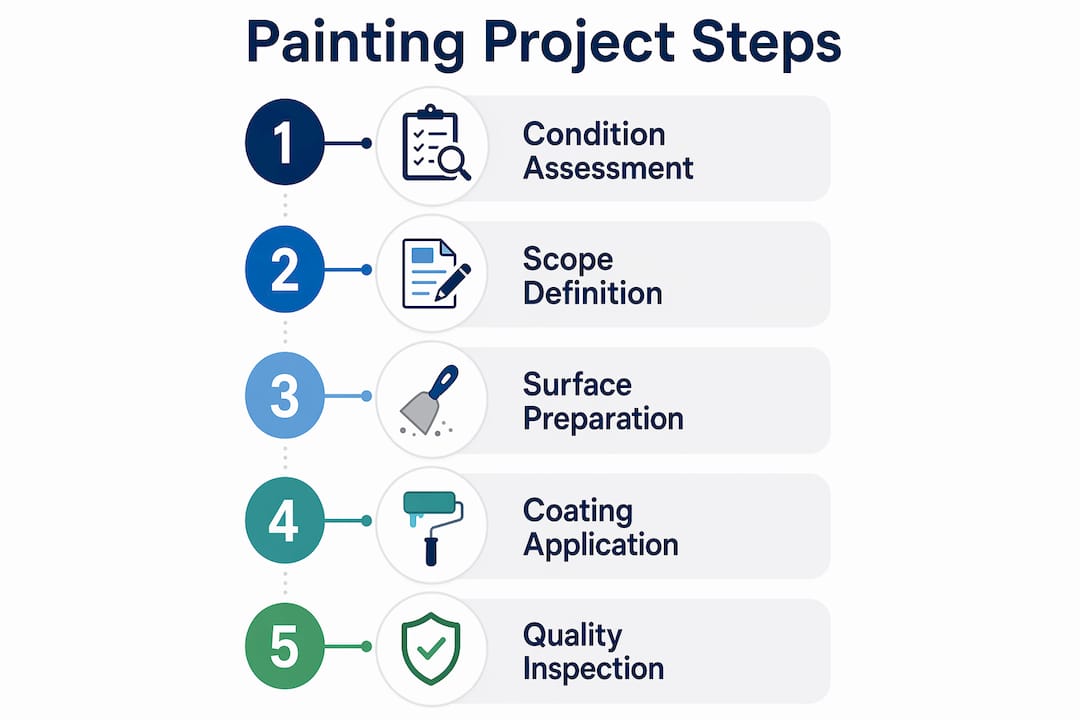
Successful facility painting starts with condition assessment, scope definition, coating selection, contractor vetting, safety planning, and quality control. Skipping any of these phases creates compounding problems that show up mid-project when they are most expensive to fix.
Condition assessment is the first physical step. Walk the entire surface and document every defect with photos: peeling paint, rust, cracks, stains, and impact damage. This record becomes the baseline for your scope of work and protects you during contractor disputes.
Scope definition follows assessment. Write a clear, detailed scope that specifies the service environment, coating system type, and maintenance goals. Vague scopes produce vague bids and vague results. Align the scope with your facility’s long-term asset protection program rather than treating the project as a one-time cosmetic fix.
Contractor selection requires verifying certifications, reviewing past project records, and checking references on comparable work. For industrial coatings, look for contractors certified under SSPC (Society for Protective Coatings) or NACE International standards. A contractor’s track record on water tanks or airport infrastructure tells you more than any sales pitch.
- Document all surface defects with timestamped photos before any prep work begins
- Write the scope to reference specific SSPC or manufacturer standards, not generic descriptions
- Verify contractor certifications and request proof of insurance and safety training records
- Plan safety compliance for elevated work, confined spaces, and environmental hazard controls
- Use construction scheduling software to sequence phases and track milestones from day one
Pro Tip: Assign a single on-site point of contact with authority to make minor field decisions. Projects stall when every small question requires a committee.
How to execute effective surface preparation for large scale painting
Inadequate surface preparation is the leading cause of premature coating failure. No coating system, regardless of cost or quality, adheres reliably to a contaminated or poorly profiled substrate.
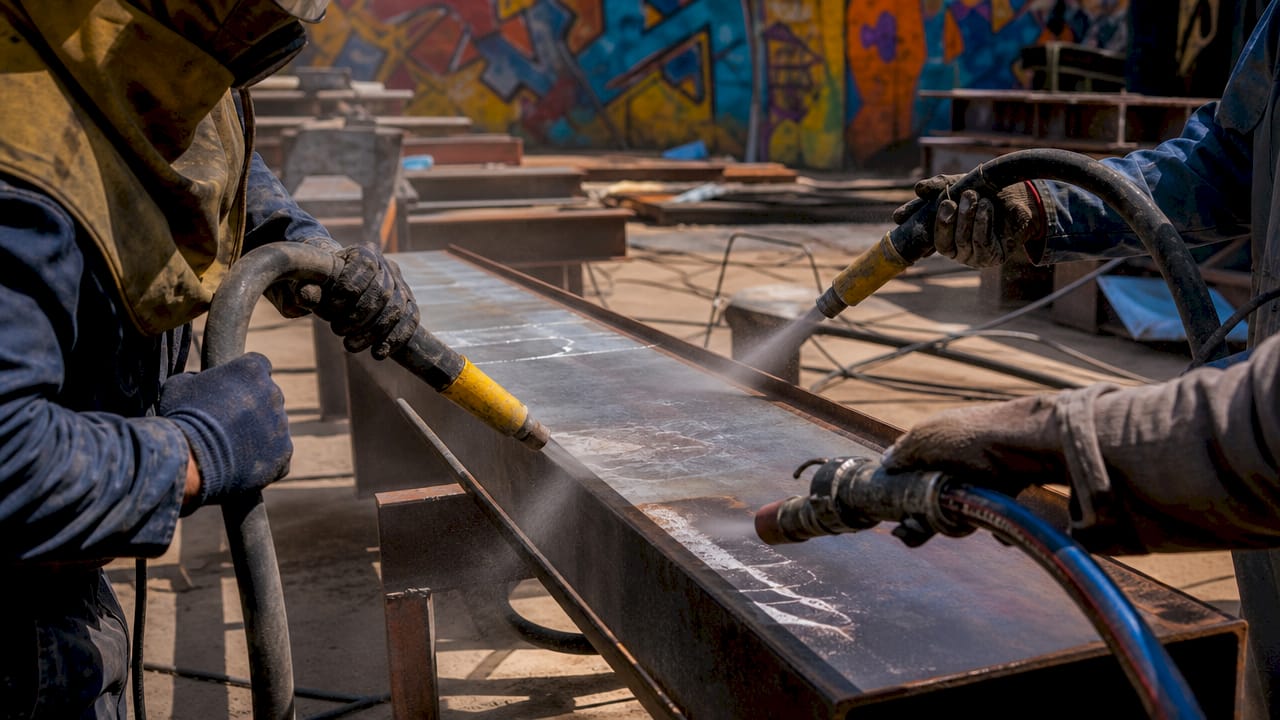
SSPC standards define preparation levels from SP1 (solvent cleaning) through SP5 (white metal blast cleaning). Each level specifies the degree of cleanliness required before primer application. Contracts must reference the exact SSPC standard required, not a general description, so inspectors have an objective acceptance criterion.
Matching the preparation method to the substrate and coating system is non-negotiable. Steel exposed to marine or chemical environments typically requires SP10 (near-white blast cleaning) before applying high-performance epoxy or urethane systems. Concrete surfaces may need SP13 (surface preparation of concrete) with profile depth verified by replica tape per ASTM D4541 standards.
| Preparation method | Best application | Key standard |
|---|---|---|
| Pressure washing | Removing loose paint, dirt, biological growth | SSPC SP12 |
| Abrasive blasting | Steel, removing rust and mill scale | SSPC SP6, SP10 |
| Grinding / scarifying | Concrete, weld seam smoothing | SSPC SP13 / ICRI 310.2 |
| Chemical cleaning | Solvent-soluble contaminants, grease | SSPC SP1 |
| Hand/power tool cleaning | Spot repairs, tight access areas | SSPC SP2, SP3 |
Inspection and documentation protocols must be embedded in the contract before prep work begins. Require written verification tests, including adhesion pull-off tests per ASTM D4541 and cleanliness checks, on representative areas before any primer coat is applied. This removes subjectivity from acceptance decisions and protects both parties.
Pro Tip: Never allow primer application to begin until written surface prep verification is signed off. Verbal approvals disappear when coating failures appear six months later.
What are the best techniques for scaling up large-format designs?
Scaling large artwork to a wall or oversized canvas requires a measurement system, not guesswork. The grid method is the industry standard for mural transfer because it provides a built-in quality control scaffold that catches proportion errors before paint is committed.
The process works in four steps:
- Divide the reference image into a grid. A practical grid density is 8–12 squares across the long edge for most subjects. Increase density for portraits or fine architectural details where small errors become obvious at scale.
- Calculate the scale factor by dividing the wall width by the number of grid columns. That result is your wall square size. Divide the wall square size by the reference square size to get the scale factor applied to every measurement.
- Transfer the grid to the wall using a laser level or plumb bob for vertical lines. Never use wall corners as reference points. Corners are rarely perfectly plumb, and a misaligned grid compounds errors across the entire composition.
- Verify proportions before painting by stepping back to approximately 1.5 times the wall height. At that distance, proportion errors that are invisible up close become immediately apparent.
For facilities requiring branded graphics or precise architectural imagery, projectors offer a faster transfer method. Stencils work well for repeating patterns or text-heavy designs. Both methods still require a plumb reference line before any marks are made on the wall.
Once the design is transferred, paint backgrounds and largest shapes first. This establishes the composition and prevents smearing when detail layers are added later. Use rollers for large field coverage and switch to smaller brushes only after large areas are dry enough to work against.
Pro Tip: Photograph the gridded wall before painting begins. If a proportion error is spotted later, the photo gives you a reference to diagnose where the transfer went wrong without stripping the entire surface.
How should timelines and workflows be managed for large projects?
Surface preparation takes 20–40% of total project duration and must not be compressed. Rushing prep to hit a coating date is the single most common cause of premature failure on large commercial projects.
Occupied buildings add another layer of complexity. Occupied facilities require 30–50% more calendar time than equivalent unoccupied structures. Tenant access restrictions, noise ordinances, and ventilation requirements all reduce productive work hours per day.
- Lock in color and product selections before contract signing. Late changes to coating products can invalidate surface prep specifications and void manufacturer warranties.
- Build recoat windows into the schedule as fixed milestones, not flexible buffers. Manufacturer-specified drying times are minimum requirements, not targets to beat.
- Schedule daily progress updates between the site supervisor and the facility point of contact. Unresolved field questions compound into multi-day delays.
- Add contingency days at each phase transition: after prep, after primer, and after finish coats. Phase transitions are where schedule slippage concentrates.
- Use industrial project timelines as a scheduling template to sequence surface prep, coating application, and inspection phases without overlap.
Scheduling recoat windows correctly is often the difference between a successful industrial coating project and cascading delays. A single skipped drying interval can require full reapplication of a coat, adding days and significant cost to the project.
What quality control strategies ensure lasting results?
Quality control on large-scale painting projects requires embedded checkpoints, not end-of-project inspections. Catching a surface prep deficiency after primer is applied costs far more than catching it before primer is mixed.
- Conduct adhesion pull-off tests per ASTM D4541 on representative areas after surface prep and again after primer application
- Verify surface cleanliness against the specified SSPC standard before each coat, not just before the first coat
- Photograph every inspection checkpoint with date stamps and GPS coordinates where possible
- Collect all product data sheets, batch numbers, and application records for the warranty file
- Develop a post-project maintenance schedule that specifies inspection intervals, touch-up criteria, and recoating triggers based on the coating manufacturer’s recommendations
Pro Tip: Treat the warranty documentation package as a deliverable equal in importance to the finished coating. Facilities that cannot produce application records lose warranty claims, even when the coating failure is clearly a product defect.
Facility managers should treat commercial painting as an asset protection program aligned to environmental exposure and long-term maintenance budgets. A coating system specified for a coastal water tank has a different service life expectation than one applied to an interior corridor wall. Matching scope to environment from the start prevents under-specified coatings from failing ahead of schedule.
Key Takeaways
Large-scale painting projects succeed when surface preparation, design scaling, and workflow management are each treated as structured, documented phases rather than informal tasks.
| Point | Details |
|---|---|
| Prep drives coating life | Inadequate surface preparation is the leading cause of premature coating failure on large projects. |
| Standards must be written into contracts | Reference specific SSPC standards in contracts so inspectors have objective acceptance criteria. |
| Grid method controls mural accuracy | Use 8–12 grid squares across the long edge and verify proportions at 1.5× wall height before painting. |
| Schedule prep as 20–40% of total time | Never compress surface preparation to accelerate coating application dates. |
| Documentation protects warranties | Collect batch numbers, application records, and inspection photos before the project closes out. |
What I’ve learned managing large-scale painting projects
The most expensive mistake I see facility managers make is treating surface preparation as a cost to minimize rather than a foundation to protect. A contractor who bids low by cutting prep time looks attractive on paper. Six months later, when the coating is delaminating from a steel structure, the true cost of that decision becomes clear.
Communication structure matters as much as technical specification. Projects with a single empowered on-site contact close out faster and with fewer disputes than projects managed by committee. The on-site contact does not need authority over major scope changes. They need authority to approve a paint color substitution or confirm a prep area is ready for inspection without waiting 48 hours for an email chain to resolve.
The grid method is underused in commercial mural work. Contractors default to projectors because they are faster at the transfer stage. But projectors fail in direct sunlight, require power access, and provide no built-in error-checking mechanism. A properly executed grid gives you a measurement scaffold you can verify at every square before a drop of paint is applied.
The facilities that get the most from their coating investments are the ones that align scope to environment from day one and build maintenance schedules into the project closeout package. A coating specified correctly for a Florida coastal environment, applied over properly blasted steel, with documented inspection records, will outperform a premium product applied over inadequate prep every time.
— Southernsandblastingandpainting
How Southernsandblastingandpainting supports large-scale painting projects
Southernsandblastingandpainting brings over 20 years of experience in industrial surface preparation and protective coating application across Central Florida. From water tanks and airport infrastructure to theme parks and municipal facilities, the team handles projects where coating failure is not an option.

Southern Sandblasting and Painting’s sandblasting services deliver the surface profiles required by SSPC SP6 through SP10 standards, matched to the specific coating system your project demands. The team also provides industrial coating application with full documentation packages for warranty compliance. Contact Southernsandblastingandpainting to discuss your project scope and get a consultation grounded in real field experience.
FAQ
What is large-scale painting in a commercial context?
Large-scale painting covers coating or mural work on commercial buildings, industrial structures, and oversized wall surfaces requiring systematic planning and documented quality control. Projects typically include water tanks, airport facilities, pipelines, and multi-story building exteriors.
Why does surface preparation matter so much for large projects?
Inadequate surface preparation is the leading cause of premature coating failure. Coatings applied over contaminated or improperly profiled substrates delaminate regardless of product quality, making prep the most critical phase of any large-scale painting project.
What grid density works best for large mural scaling?
A practical grid density is 8–12 squares across the long edge for most subjects. Increase the density for portraits or fine architectural details where small proportion errors become visible at scale.
How much time should surface preparation take in a project schedule?
Surface preparation typically takes 20–40% of total project duration. Occupied buildings require an additional 30–50% more calendar time due to access restrictions and operational constraints.
What documentation should be collected at project closeout?
Collect product data sheets, batch numbers, application records, adhesion test results, and timestamped inspection photos. This package supports warranty claims and provides the baseline for future maintenance planning.


