

TL;DR:
- Effective corrosion prevention for infrastructure involves an integrated approach combining protective coatings, cathodic protection, environmental controls, and structured inspections to ensure long-term asset safety. Proper system design, precise surface preparation, and ongoing monitoring are crucial to prevent premature failures and optimize asset longevity. Adhering to standards like ISO 12944 and AMPP SP21169, coupled with detailed specifications and regular inspections, transforms reactive maintenance into proactive asset management.
Infrastructure corrosion prevention is the strategic application of protective coatings, cathodic protection, environmental controls, and inspection protocols to extend the operational life and structural safety of municipal and industrial assets. In the field, this discipline is formally known as corrosion control engineering, governed by standards from NACE/AMPP, ISO 12944, and ISO 16674. Every infrastructure manager and civil engineer working with buried pipelines, water tanks, bridges, or industrial facilities needs a working infrastructure corrosion prevention guide that goes beyond product selection and addresses complete system design, specification, and verification. This article delivers exactly that.
How to select and apply protective coatings for infrastructure durability
Protective coatings are the first line of defense in any corrosion control program, and selecting the wrong system for your environment is one of the most expensive mistakes you can make. ISO 12944 ties atmospheric corrosivity categories, ranging from C1 (very low, indoor) to CX (extreme, offshore), directly to paint system selection, specifying required dry film thickness and surface preparation standards for each category. A water treatment facility in coastal Florida, for example, falls into C4 or C5, which demands a multi-coat system with significantly higher total dry film thickness than an inland warehouse.
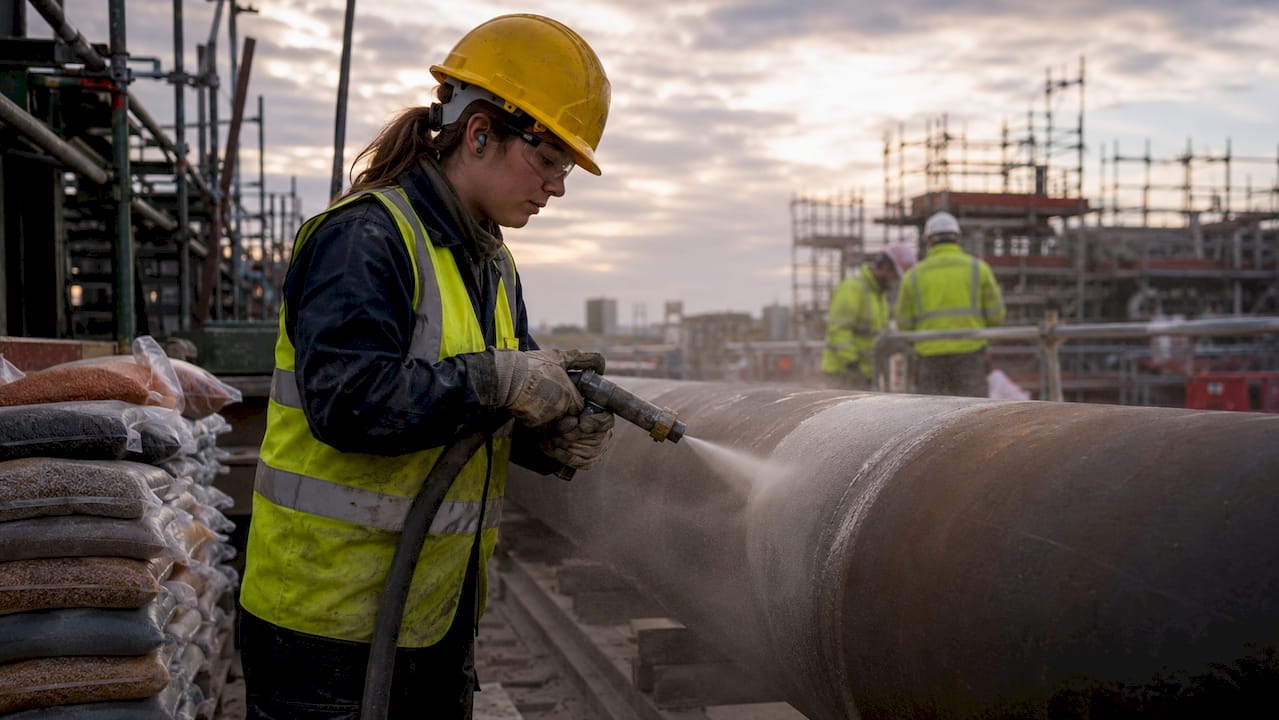
Surface preparation accounts for approximately 60 to 80% of coating system long-term performance. That figure means your coating budget is largely wasted if the substrate is not cleaned to the correct blast grade before application. ISO 8501-1 defines the blast cleaning grades, with Sa 2½ (near-white metal) required for most industrial environments and Sa 3 (white metal) for the most aggressive corrosivity categories.
Coating system components and DFT targets
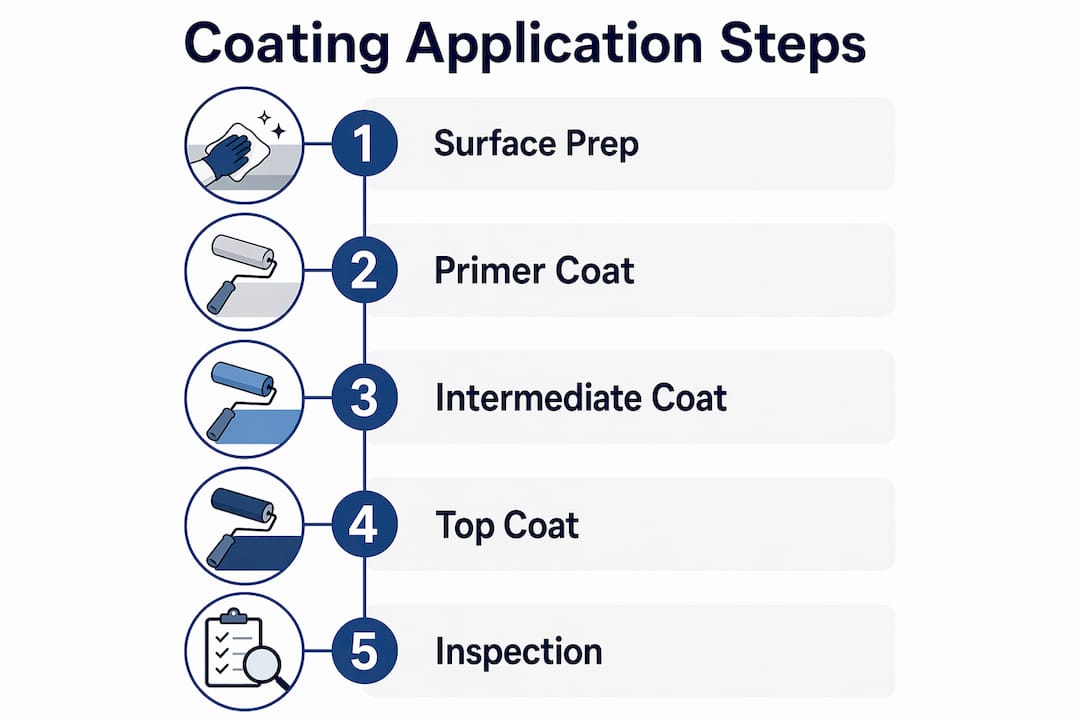
A complete coating system consists of a primer, one or more intermediate coats, and a topcoat. Each layer serves a distinct function: the primer bonds to the substrate and provides electrochemical inhibition, the intermediate builds film thickness and barrier resistance, and the topcoat resists UV, abrasion, and chemical exposure. Specifiers must define the coat count, individual layer thickness, and total dry film thickness in the specification document. Generic categories without complete system definitions cause approval delays and increase the risk of underperformance.
| Corrosivity Category | Typical Environment | Minimum DFT (µm) | Surface Prep Grade |
|---|---|---|---|
| C2 | Rural, low humidity | 80 | Sa 2 |
| C3 | Urban, moderate humidity | 160 | Sa 2½ |
| C4 | Industrial, coastal | 200 | Sa 2½ |
| C5 | Marine, chemical plants | 280 | Sa 2½ to Sa 3 |
| CX | Offshore, extreme | 320+ | Sa 3 |
Climatic conditions during application are equally critical. Substrate temperature must stay at least 3°C above the dew point, and relative humidity must remain below 85% to prevent condensation from forming under the wet film. Some offshore project specifications require a 5°C margin as additional insurance. Scheduling application windows around these parameters, rather than treating them as optional, is what separates durable coatings from premature failures.
Coating inspection closes the quality loop. Holiday and pinhole detection methods must match coating thickness: use a low-voltage wet sponge for films under 500 µm and a high-voltage spark tester for films above 500 µm, per NACE/AMPP SP0188. Voltage settings must be calibrated to the measured dry film thickness to avoid false negatives or coating damage. The correct workflow is mark, repair, and retest until the entire surface passes.
Pro Tip: Schedule coating application during morning hours when temperatures are rising. Rising temperatures reduce condensation risk and improve coating adhesion compared to evening applications when surfaces are cooling toward the dew point.
What are the best practices for cathodic protection systems?
Cathodic protection (CP) is an electrochemical corrosion control method that makes the metal structure the cathode of an electrochemical cell, stopping oxidation at the steel surface. Two system types exist: sacrificial anode systems, which use a more active metal like zinc or magnesium to provide protective current, and impressed current systems, which use an external power source to drive current through inert anodes. Sacrificial systems suit smaller or isolated structures; impressed current systems are standard for long pipelines and large buried tanks.
Effective CP design requires accurate soil resistivity data, proper anode sizing, and a clear understanding of the existing coating condition. A well-applied coating reduces the current demand on the CP system dramatically, which is why coatings and CP are always specified together rather than as alternatives. Cathodic protection prevents further corrosion but does not repair existing damage, which means early installation during construction maximizes the asset’s service life.
CP design criteria and protection standards
- Measure soil resistivity along the pipeline route using a Wenner four-pin test before finalizing anode type and spacing.
- Size anodes to deliver the required protective current density for the structure’s surface area and coating condition factor.
- Apply the −850 mV vs Cu/CuSO4 reference electrode criterion per AMPP SP21169, with IR drop correction applied to all readings.
- Install cathodic protection test stations at regular intervals to enable polarization measurement, current monitoring, and interference testing.
- Conduct close-interval potential surveys (CIPS) annually on critical pipelines to identify shielding zones or coating holidays that reduce CP effectiveness.
| CP System Type | Best Application | Key Design Parameter | Monitoring Method |
|---|---|---|---|
| Sacrificial anode | Short pipelines, tanks | Anode material and mass | Test station readings |
| Impressed current | Long pipelines, large structures | Rectifier output, anode bed | CIPS, rectifier logs |
Cathodic protection test stations enable measurement of polarization, current, insulation, and AC/DC interference, supporting compliance with NACE SP0169 and ISO 15589-1. Interpreting CP potential readings correctly requires attention to reference electrode type and IR drop correction. A reading that appears to meet the protection criterion without IR correction can mask an unprotected structure. Treat CP as an engineered, continuously monitored subsystem, not a one-time installation.
Pro Tip: When commissioning a new CP system, take baseline potential readings before energizing the system. These “native state” readings give you the reference point needed to verify that the system is actually shifting potential to the protection criterion rather than just adding voltage to an already-polarized structure.
How to implement inspection, maintenance, and environmental controls
Ongoing inspection is what converts a well-designed corrosion control system into a long-term asset protection program. Without structured verification, coating degradation and CP system drift go undetected until visible corrosion or structural failure forces reactive repairs that cost far more than prevention.
A practical inspection program for buried or immersed infrastructure covers four areas:
- Coating integrity assessment: Conduct visual inspection and holiday detection on accessible surfaces at intervals defined by the corrosivity category and coating durability class. Document all defects with location, size, and probable cause before repair.
- CP system verification: Read test station potentials quarterly at minimum, and conduct CIPS annually on critical assets. Compare readings against the protection criterion and flag any sections showing depolarization.
- Environmental factor monitoring: Track humidity, temperature, and drainage conditions at above-ground structures. Stray current interference from nearby DC transit systems or welding operations can disrupt CP systems and must be identified through interference testing.
- Defect repair and retest: Repair coating holidays using compatible materials, verify adhesion, and retest the repaired area before closing inspection records.
ISO 16674:2025 provides a corrosion control engineering life cycle framework that addresses design, installation, operation, maintenance, and disposal stages. Applying this framework means corrosion prevention is not retrofitted after problems appear. It is built into procurement specifications, construction hold points, and asset management systems from day one.
Record keeping is the least glamorous and most undervalued part of corrosion control. A corrosion database that logs inspection dates, potential readings, coating thickness measurements, and repair histories gives maintenance teams the trend data needed to predict failures before they occur. Without records, every inspection starts from zero.
- Use digital inspection platforms to capture GPS-tagged photos and measurements in the field.
- Link inspection records to asset management systems so maintenance scheduling is data-driven.
- Archive coating application records including batch numbers, DFT readings, and climatic conditions for warranty and compliance purposes.
- Review coating inspection records annually to identify recurring failure locations and adjust maintenance intervals accordingly.
Comparing corrosion prevention techniques: which approach fits your asset?
No single corrosion prevention technique covers every infrastructure scenario. The right strategy depends on the structure type, exposure environment, accessibility, budget cycle, and regulatory requirements. The table below summarizes the four primary methods and their optimal applications.
| Method | Best For | Key Strength | Primary Limitation |
|---|---|---|---|
| Protective coatings | All above-ground and buried structures | Barrier protection, cost-effective | Requires surface prep and periodic recoating |
| Cathodic protection | Buried and submerged metallic structures | Electrochemical control, continuous | Does not repair existing damage |
| Corrosion inhibitors | Closed systems, water treatment circuits | Easy to apply, adjustable dosing | Ineffective on external surfaces |
| Environmental controls | Indoor facilities, controlled environments | Addresses root cause | Limited applicability outdoors |
For most municipal and industrial infrastructure, the answer is an integrated system combining coatings and CP. Coatings reduce current demand on the CP system, and CP protects areas where coatings are damaged or holidays exist. Corrosion prevention works as a system combining barrier protection, electrochemical control, and inspection rather than relying on any single method.
Technology is advancing the field in measurable ways. Fiber-optic distributed sensing now monitors strain and temperature along pipeline corridors in real time. Thermal imaging identifies moisture ingress behind coatings before visible blistering appears. Electrochemical impedance spectroscopy (EIS) quantifies coating barrier properties without destructive testing. These tools are moving corrosion control from scheduled inspection toward continuous condition monitoring, which reduces both risk and long-term maintenance cost.
When selecting your approach, prioritize specifying complete systems over product categories. Naming an epoxy primer without specifying the coat count, DFT, surface prep grade, and application hold points leaves too much to interpretation. Experienced specifiers convert environment and durability targets into explicit system details that contractors can price, execute, and inspect against.
- Match corrosivity category to durability class before selecting any product.
- Specify inspection and application hold points in every coating specification.
- Require CP system commissioning reports and baseline potential data before project acceptance.
- Review corrosion prevention strategies for facilities to identify gaps in your current program.
Key takeaways
Effective infrastructure corrosion prevention requires an integrated system of protective coatings, cathodic protection, environmental controls, and structured inspection, all specified with explicit technical detail and verified through ongoing monitoring.
| Point | Details |
|---|---|
| Surface preparation drives performance | Blast cleaning to Sa 2½ or Sa 3 accounts for 60 to 80% of coating system longevity. |
| Coatings and CP work together | Coatings reduce CP current demand; CP protects coating holidays and damaged areas. |
| Climatic control prevents failures | Keep substrate temperature 3°C above dew point and humidity below 85% during application. |
| Inspection must be structured | Quarterly CP readings and annual CIPS surveys catch system drift before visible corrosion appears. |
| Specification clarity is non-negotiable | Define coat count, DFT, surface prep grade, and hold points in every system specification. |
What 20 years in the field taught me about corrosion control
The most common failure mode I see is not a bad product choice. It is an incomplete specification paired with inadequate inspection. A project team selects a reputable epoxy system, applies it to a marginally prepared surface during a humid afternoon, skips the holiday detection step, and then wonders why the coating is delaminating within three years. Every one of those failures was preventable with a tighter specification and a structured hold-point inspection.
The second lesson is that cathodic protection is treated as a checkbox far too often. Engineers install a rectifier, set the output, and move on. Two years later, nobody has read the test stations, the rectifier has drifted, and sections of the pipeline are unprotected. CP is a living system. It needs quarterly attention, annual surveys, and someone who understands what the numbers mean.
My strongest advice for infrastructure managers is to invest in your team’s ability to read and interpret corrosion data. Standards like ISO 12944, AMPP SP21169, and ISO 16674 are not just compliance documents. They are decision frameworks that tell you exactly what to specify, how to verify it, and when to act. Teams that internalize these frameworks stop reacting to failures and start preventing them. That shift, from reactive to proactive, is where the real cost savings and asset longevity gains are found. You can explore industrial corrosion prevention steps specific to Florida environments for additional regional context.
— Southernsandblastingandpainting
How Southernsandblastingandpainting supports your corrosion prevention program
Southernsandblastingandpainting brings over 20 years of specialized experience in surface preparation and industrial coatings to municipal, commercial, and government infrastructure projects across Central Florida. From water tanks and pipelines to airport facilities and city infrastructure, the team executes coating systems that meet ISO 12944, NACE/AMPP, and project-specific specifications with documented inspection at every hold point.

If your next project requires blast cleaning to Sa 2½ or Sa 3, multi-coat industrial coating application, or coating inspection services, Southernsandblastingandpainting has the equipment and certified personnel to deliver. Review the detailed industrial coating application steps guide to understand the full process, or explore surface prep best practices to see how proper preparation sets the foundation for coating performance. Contact Southernsandblastingandpainting directly to discuss your asset protection requirements and get a specification-aligned proposal.
FAQ
What is the primary standard for coating system selection?
ISO 12944 is the primary international standard for protective paint systems on steel structures, defining corrosivity categories from C1 to CX and specifying surface preparation grades and dry film thickness requirements for each.
What protection criterion applies to buried steel pipelines?
The industry-standard criterion per AMPP SP21169 is a polarized potential of −850 mV versus a Cu/CuSO4 reference electrode with IR drop correction applied, confirming adequate cathodic protection on buried metallic piping.
How does dew point affect coating application?
Substrate temperature must remain at least 3°C above the dew point during coating application. Applying coatings when this margin is not met causes condensation under the wet film, leading to adhesion failure and premature delamination.
When should holiday detection use high-voltage spark testing?
High-voltage spark testing is required for coating films thicker than 500 µm per NACE/AMPP SP0188. Films under 500 µm use a low-voltage wet sponge method, and voltage settings must match the measured dry film thickness to avoid false negatives or coating damage.
Why is early cathodic protection installation important?
Cathodic protection halts further corrosion but cannot reverse existing damage. Installing CP systems during construction, before corrosion initiates, maximizes the protective benefit and extends infrastructure service life significantly.


