
TL;DR:
- Proper protective coatings extend HVAC equipment lifespan and prevent corrosion in harsh environments. Effective coatings require thorough surface preparation and careful application, including stripe coating on edges and welds. Regular inspection and adherence to ISO 12944 standards ensure long-term performance and cost savings.
Protective coatings for HVAC units are defined as engineered barrier systems applied to heating, ventilation, and air conditioning equipment to prevent corrosion, chemical attack, and environmental degradation. Coating HVAC units in industrial settings is not optional maintenance. Corrosion onset in industrial HVAC coils typically occurs within 1–4 years, with aggressive environments accelerating damage to a matter of weeks. The right coating system, aligned with ISO 12944 durability standards, can triple equipment lifespan in harsh conditions. Facility managers who treat HVAC coatings as a capital investment rather than a maintenance afterthought consistently see lower replacement costs and fewer unplanned shutdowns.
What types of coatings are most effective for coating HVAC units in industrial settings?
The coating category you choose determines how long your HVAC equipment survives its environment. Two primary categories dominate industrial applications: permanent epoxy resin coatings and acrylic alternatives. Each serves a distinct purpose, and selecting the wrong one costs you years of service life.
Permanent epoxy resin coatings provide superior barrier integrity compared to acrylic alternatives, making them the standard choice for chemical plant environments. Epoxy coatings resist degradation without impacting heat transfer efficiency. Acrylic coatings are easier to apply and recoat, but they degrade faster in chemically aggressive or high-humidity environments. Coastal facilities and food processing plants require coatings specifically formulated for salt spray and grease exposure.
Protective coatings for HVAC serve as the first line of defense against salt, moisture, and chemical pollutants. The ROI is direct: a coated coil that lasts 15 years instead of 5 eliminates two full replacement cycles. Below is a comparison of the most common industrial HVAC coatings and their recommended applications.
| Coating type | Key feature | Durability | Best use case |
|---|---|---|---|
| Permanent epoxy resin | Barrier integrity, no heat transfer loss | High | Chemical plants, coastal sites |
| Acrylic polymer | Easy recoat, flexible | Moderate | Light industrial, low-humidity |
| Phenolic epoxy | Chemical and solvent resistance | Very high | Refineries, wastewater facilities |
| Polyurethane topcoat | UV and abrasion resistance | High | Rooftop units, outdoor exposure |
- Epoxy resin is the default for any environment with chemical exposure or salt air.
- Acrylic coatings work for lower-risk settings where periodic recoating is acceptable.
- Phenolic epoxy handles solvent and acid exposure that standard epoxies cannot.
- Polyurethane topcoats protect the outer layer from UV degradation on rooftop units.
Pro Tip: Specify coatings by their ISO 12944 corrosivity category, not just by product name. A coating rated for C4 (high industrial) or C5 (very high, marine or industrial) environments gives you a defensible specification and a warranty baseline.
How do you prepare and properly coat HVAC units in industrial environments?
Surface preparation is the single most important factor in coating performance. A coating applied to a contaminated or poorly prepared surface will fail at the substrate, not at the coating itself. Facility managers who skip or rush this step pay for it within two years.
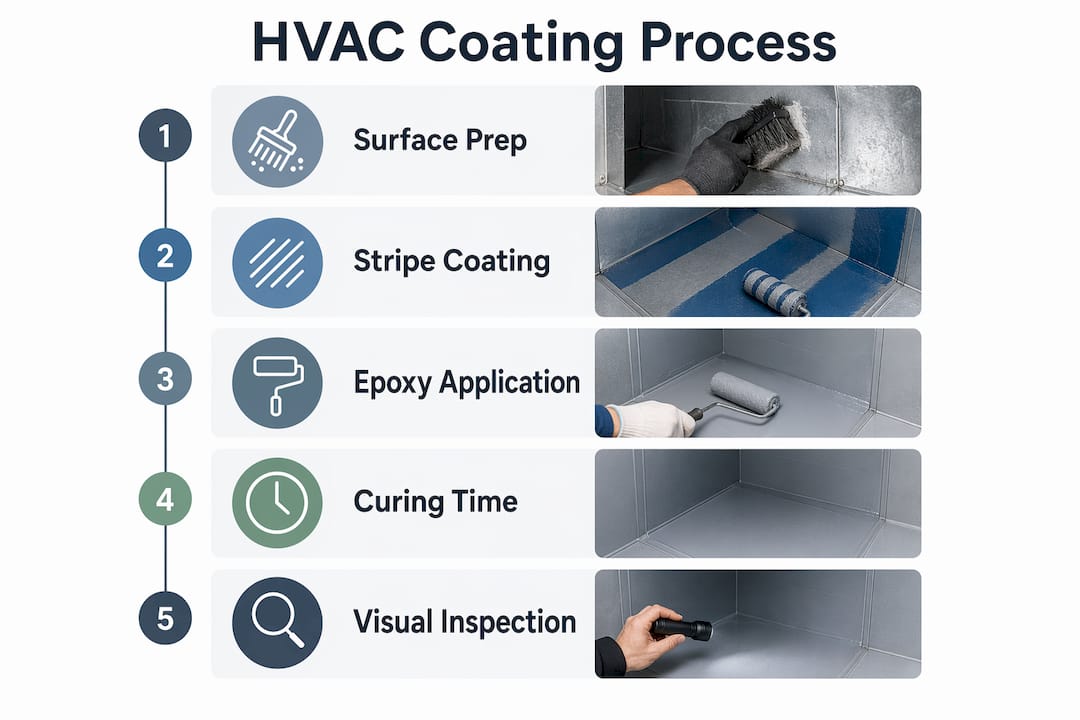
The standard preparation sequence for industrial HVAC coating follows these steps:
- Isolate and shut down the unit. Lock out the system and seal all air intakes, diffusers, and internal components. Sealing intakes and diffusers prevents overspray from contaminating internal components and degrading air quality.
- Remove existing coatings, rust, and contaminants. Sandblasting is the most effective method for achieving a clean, anchor-profile surface. Southernsandblastingandpainting uses abrasive blasting to reach bare metal on heavily corroded units, meeting SSPC-SP 6 or SSPC-SP 10 cleanliness standards depending on the environment.
- Apply stripe coat manually. Stripe coating on edges, welds, bolts, and crevices is mandatory. These areas corrode faster because spray passes deposit thinner films on sharp edges and complex geometry.
- Apply primer coat. The primer bonds to the prepared substrate and provides the foundation for the full system. Dry film thickness must meet the specification, not just look adequate.
- Apply intermediate coat. This layer builds total film thickness and adds chemical resistance. Allow full cure between coats per the manufacturer’s data sheet.
- Apply topcoat. The topcoat provides the final barrier against UV, abrasion, and chemical exposure. Polyurethane topcoats are standard for outdoor industrial units.
- Log environmental conditions throughout. Climate logs documenting temperature and humidity before and during application prevent defects like blistering and delamination. Surface temperature near the dew point causes condensation under the coating and guarantees failure.
| Step | Prerequisite | Standard or target |
|---|---|---|
| Surface blasting | Unit isolated, components sealed | SSPC-SP 6 minimum |
| Stripe coat | Bare metal confirmed | Manual brush application |
| Primer | Surface dry, within temperature range | Per product spec |
| Intermediate coat | Primer fully cured | Dry film thickness verified |
| Topcoat | Intermediate cured, humidity below 85% | Per ISO 12944 system |
| Environmental log | Thermometer and hygrometer on site | Recorded every 2 hours |
Pro Tip: High-performance epoxy coatings set up in 5–30 minutes and reach full cure in approximately one hour. Schedule coating work during planned shutdowns and you can return the unit to service the same day.
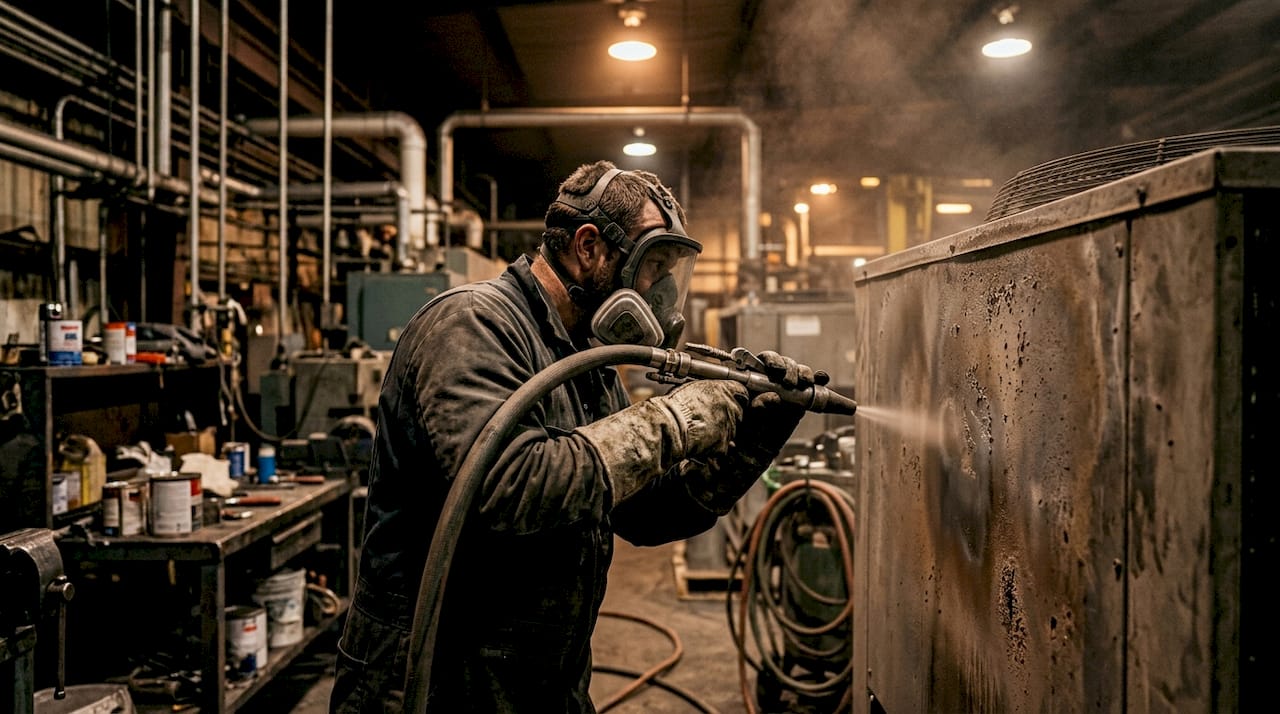
Good surface preparation practices are non-negotiable for any coating system to perform at its rated durability class. Cutting corners here voids manufacturer warranties and accelerates the exact failure you were trying to prevent.
What common mistakes cause coating failures on industrial HVAC units?
The most damaging mistake facility managers make is treating HVAC coating as a painting job rather than an engineered system. Purchasing paint without specifying a multilayer coating system with controlled dry film thickness leads to early failure, particularly at edges and welds. A single-coat application over a corroded surface is not a coating system. It is a temporary cosmetic fix.
Common failure points include:
- Skipping stripe coat. Edges, bolts, and welds receive thin coverage from spray application alone. Without a manual stripe coat, these areas corrode through first, undermining the entire system.
- Ignoring internal protection. Failing to seal HVAC internals during coating application introduces overspray into the airstream. This causes air quality problems and damages internal components, reversing the benefits of the coating work.
- Applying coatings in poor conditions. High humidity, low temperatures, or surface temperatures near the dew point cause adhesion failure. No amount of product quality compensates for bad application conditions.
- Using mismatched coating systems. Applying a polyurethane topcoat over an incompatible primer causes delamination. Every layer in the system must be specified together.
- Skipping post-application inspection. Dry film thickness gauges confirm that each coat meets specification. Visual inspection alone misses thin spots that will fail under service conditions.
“The difference between a coating that lasts 15 years and one that fails in 18 months is almost never the product. It is the system design, the surface preparation, and the application discipline. Facility managers who specify an engineered multilayer system and hold contractors to it get the service life they paid for. Those who buy paint and hope for the best replace equipment on a five-year cycle.”
Pro Tip: Require a written coating specification before any contractor starts work. The spec should name the coating system, the surface preparation standard, the required dry film thickness for each coat, and the environmental limits for application. If a contractor cannot provide this, find one who can.
How should you plan maintenance and re-coating schedules for HVAC units?
Maintenance intervals for industrial HVAC coatings should align with ISO 12944 service life bands: 7–15 years, 15–25 years, or 25 or more years. These bands are not guarantees. They are planning tools that tell you when to inspect and when to act before degradation becomes structural.
The goal is to catch coating wear before corrosion reaches the substrate. Once the substrate corrodes, you are no longer maintaining a coating. You are repairing metal, which costs significantly more.
Key maintenance practices for HVAC coating longevity:
- Inspect coatings annually in C3 (medium industrial) environments and every six months in C4 or C5 environments.
- Look for early indicators: chalking, cracking, blistering, or rust staining at edges and welds.
- Touch up damaged areas immediately. Small repairs cost a fraction of full recoating and prevent corrosion from spreading under the intact coating.
- Schedule full recoating before the coating reaches the end of its rated service life band, not after visible failure.
- Document every inspection. Photographic records and written condition reports create a defensible maintenance history and support warranty claims.
| Maintenance activity | Frequency | Trigger condition |
|---|---|---|
| Visual inspection | Every 6–12 months | Scheduled |
| Dry film thickness check | Annually | Coating age or visible wear |
| Spot repair | As needed | Any breach in coating |
| Full recoating | Per ISO 12944 service band | End of rated service life |
| Environmental condition review | Before any application | Temperature, humidity, dew point |
Balancing operational downtime with coating maintenance is a scheduling challenge, not a reason to delay. A planned two-day shutdown for recoating costs far less than an emergency replacement of a corroded coil. Industrial maintenance best practices consistently show that preventative coating cycles outperform reactive replacement on total cost of ownership.
Key Takeaways
Coating HVAC units in industrial settings with an engineered multilayer system, proper surface preparation, and ISO 12944-aligned maintenance schedules is the most cost-effective way to extend equipment life and prevent unplanned failures.
| Point | Details |
|---|---|
| Choose the right coating type | Epoxy resin outperforms acrylic in chemical, coastal, and high-humidity industrial environments. |
| Prepare the surface properly | Sandblasting to SSPC standards and sealing internal components are non-negotiable before any coating is applied. |
| Apply stripe coat on details | Edges, welds, and bolts corrode first; manual stripe coating these areas prevents early system failure. |
| Log environmental conditions | Temperature and humidity records during application prevent blistering, delamination, and warranty voids. |
| Schedule maintenance proactively | Align inspection and recoating intervals with ISO 12944 service life bands to catch wear before it reaches the substrate. |
What I have learned from specifying HVAC coatings in the field
After working on industrial coating projects across Central Florida, the pattern that stands out most is the gap between what facility managers think they are buying and what actually gets applied. A purchase order for “HVAC coating” means nothing without a written specification. I have seen units recoated with a single layer of industrial enamel, no stripe coat, no primer, and no environmental monitoring. Those units were back in corrosion within two years.
The facilities that get the best results treat the coating specification the same way they treat a structural engineering spec. They name the system, the standards, the dry film thickness, and the inspection protocol. They require climate logs. They hold the contractor to post-application thickness checks. That discipline is what separates a 15-year coating from a 3-year one.
The other thing I consistently see underestimated is edge and weld protection. Spray application looks complete. The surface looks covered. But a dry film thickness gauge on a weld or a bolt head tells a different story. Stripe coating those details manually is the step that most contractors skip when they are under time pressure. It is also the step that determines whether the system lasts.
If you are a facility manager evaluating a coating contractor, ask two questions: What is your surface preparation standard? And how do you handle stripe coating on complex geometry? The answers will tell you everything you need to know about whether that contractor will deliver a system that performs.
— Results
How Southernsandblastingandpainting supports industrial HVAC coating projects
Southernsandblastingandpainting brings over 20 years of industrial surface preparation and coating experience to HVAC protection projects across Central Florida. The team applies engineered multilayer coating systems using professional abrasive blasting for surface preparation, followed by primer, intermediate, and topcoat application that meets ISO 12944 and SSPC standards.
Every project includes environmental monitoring, stripe coating on all edges and welds, and post-application dry film thickness verification. Southern Sandblasting and Painting serves facility managers, municipalities, and contractors who need coating work done to specification, not just to appearance. For projects requiring thorough sandblasting and surface prep before coating, or full industrial coating services for HVAC and critical infrastructure, the team is ready to scope and execute the work.
FAQ
What is the best coating for industrial HVAC coils?
Permanent epoxy resin coatings provide the best barrier integrity for industrial HVAC coils in chemical, coastal, and high-humidity environments. Polyurethane topcoats are added for UV and abrasion resistance on outdoor units.
How long do industrial HVAC coatings last?
Service life depends on the coating system and environment. ISO 12944 durability classes project service lives of 7–15 years, 15–25 years, or 25 or more years when the system is correctly specified and applied.
Why does surface preparation matter so much for HVAC coatings?
A coating applied to a contaminated or corroded surface fails at the substrate, not the coating. Sandblasting to SSPC standards removes rust and contaminants, creating the anchor profile that allows coatings to bond and perform at their rated durability.
What happens if you skip stripe coating on HVAC units?
Edges, welds, and bolts receive thinner spray coverage than flat surfaces. Without a manual stripe coat, these areas corrode through first and allow moisture to undercut the surrounding coating, causing system-wide failure ahead of schedule.
How often should industrial HVAC coatings be inspected?
Inspect every six months in C4 or C5 (high to very high industrial) environments and annually in C3 (medium industrial) environments. Catch chalking, cracking, or rust staining early and repair immediately to prevent corrosion from reaching the substrate.


