
TL;DR:
- Blasting grit recycling transforms waste disposal costs into a reusable asset, significantly reducing abrasive expenses. Proper systems, including collection, separation, cleaning, and calibration, are essential to maximize media reuse and regulatory compliance. Organizational commitment and regular maintenance are critical for long-term success in Florida’s environmental and operational context.
Most facility managers assume that spent blasting grit is trash. You blast a water tank or pipeline, the abrasive hits the surface, and the used material goes straight to a waste bin. That assumption is costing Florida operations thousands of dollars per project. Blasting grit recycling flips this model entirely, turning what was a disposal cost into a reuse asset. This guide breaks down exactly what blasting grit recycling is, how it works in practice, and what it means for your facility’s budget and regulatory standing.
Table of Contents
- Understanding blasting grit recycling: what it is and how it works
- Why blasting grit recycling matters: cost savings and environmental benefits
- Types of blasting grit and systems optimized for recycling
- Implementing blasting grit recycling in Florida facilities: practical steps and considerations
- Common challenges and solutions in blasting grit recycling
- A facility manager’s perspective: maximizing grit recycling value in Florida operations
- Explore durable sandblasting solutions and expert services in Florida
- Frequently asked questions
Understanding blasting grit recycling: what it is and how it works
At its core, a blast media reclaim system collects spent abrasive after blasting, separates usable media from dust and degraded fines, and returns recovered media to the blast machine for reuse. That single sentence describes a process that, when executed properly, can reduce your abrasive spend by 80 percent or more.
The workflow moves through four stages: collection, separation, cleaning, and reuse. Understanding each stage helps you evaluate vendors and spot systems that cut corners.
Collection happens at the blast floor or containment area. Spent grit falls into floor grates or is swept into collection channels that feed a conveying system. In enclosed facilities, vacuum or screw conveyors transport the material automatically. In open field operations common in Florida municipal work, portable collection systems are used instead.
Separation is where the real work happens. The mixed material coming off the blast surface contains usable grit, dust, broken fragments called fines, and surface contaminants stripped from the substrate. A bucket elevator lifts the material to a separation unit above the blast machine.
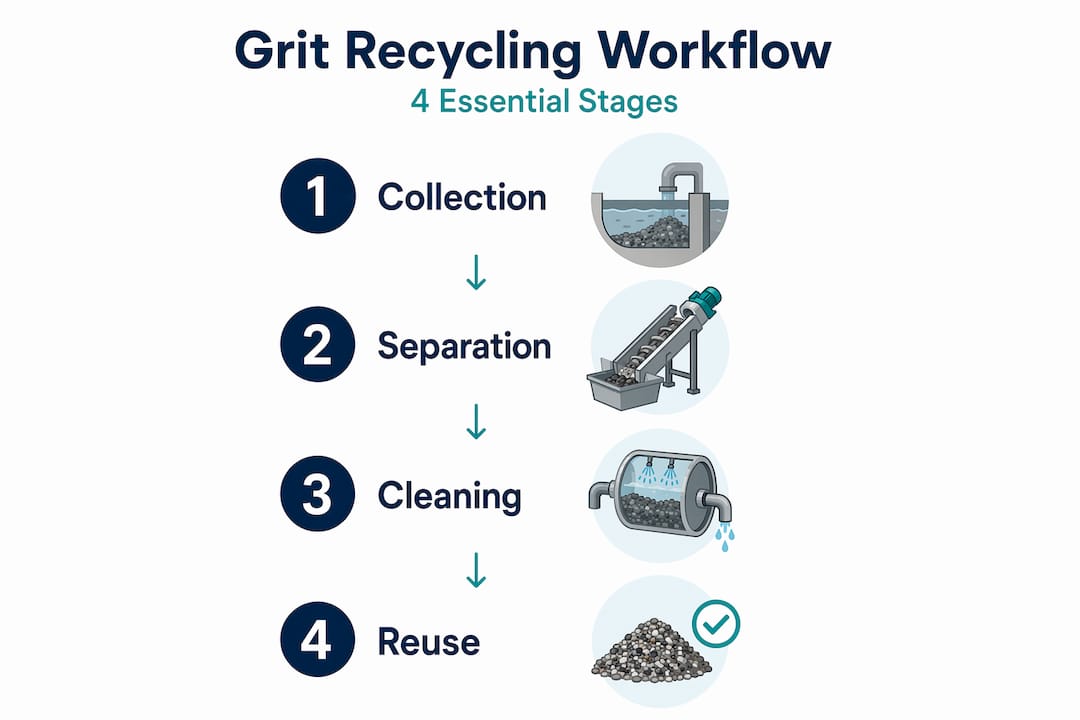
Cleaning uses air-wash separators to sort particles by weight and size. A controlled air stream blows lighter fines and dust out of the grit stream, sending them to a dust collector. Magnetic separators then pull ferrous contaminants out of non-metallic abrasives. What remains is clean, sized grit ready to blast again.
Reuse is the payoff. Clean grit drops back into the storage hopper and feeds directly into the blast machine. The loop closes. No new grit purchased, no waste bin filled.
The equipment chain in a complete reclaim system typically includes:
- Collection conveyors or floor hoppers
- Bucket elevator to lift media vertically
- Air-wash separator or cyclone unit
- Magnetic separator for ferrous contaminants
- Dust collector for fine particles and hazardous residue
- Storage hopper above the blast machine
If you want a full picture of how this integrates with surface preparation workflows, the industrial sandblasting guide from Southern Sandblasting covers the broader context for Florida facility operations.
Why blasting grit recycling matters: cost savings and environmental benefits
Understanding how blasting grit recycling works lays the foundation. Now let’s look at why these systems are critical for high-volume operations in Florida’s municipal and commercial sectors.
The financial case is stark. Steel grit costs $0.006 per effective blasting cycle with a reclaim system, compared to $0.12 per cycle for single-use copper slag, which is a 20x cost advantage. For a mid-size municipal project running 500 blast cycles, that’s the difference between spending $60 and spending $3,000 on abrasive alone. Multiply that across a year of operations and the numbers become impossible to ignore.
The environmental picture is equally compelling. Steel grit recycling systems cut costs, keep jobsites cleaner, and comply with EPA and OSHA waste control standards. In Florida, where environmental regulators watch industrial sites closely, this compliance advantage is not optional. Spent abrasive containing lead paint residue or heavy metal contamination from industrial coatings is classified as hazardous waste. Every pound you recycle is a pound you don’t pay to dispose of under RCRA hazardous waste rules.
The top benefits of implementing a grit recycling program include:
- Lower material costs from dramatically extended media life
- Reduced hazardous waste disposal fees from less spent abrasive leaving the site
- Cleaner job sites with less loose abrasive scattered across work areas
- Faster cleanup after blast operations
- Better dust control protecting workers and surrounding environments
- Regulatory compliance with EPA and OSHA waste standards
The operational advantages compound over time. When your municipal sandblasting workflow incorporates recycling from the start, procurement cycles simplify and project budgets become more predictable. You order media once rather than restocking constantly.
“Single-use abrasive programs create a false sense of simplicity. In reality, they shift costs to disposal, procurement, and downtime that recycling programs eliminate entirely.”
Understanding the full scope of environmental protection in sandblasting is especially important for Florida facilities operating near sensitive ecosystems or water sources.
Types of blasting grit and systems optimized for recycling
Knowing the benefits, let’s examine the specific abrasives best suited for recycling and what each one requires from a reclaim system.
Not all abrasive materials recycle equally. Here’s how the most common media types compare:
| Abrasive type | Reuse cycles (with reclaim) | System required | Best applications |
|---|---|---|---|
| Steel grit/shot | 200 to 300 cycles | Full closed-loop with elevator, air wash, magnetic separator, dust collector | Heavy industrial, water tanks, infrastructure |
| Aluminum oxide | 4 to 8 cycles | Air wash separator, dust collector | Tight-tolerance surfaces, aerospace |
| Garnet | 3 to 5 cycles | Cyclone or air wash, dust collector | Shipyards, pipelines |
| Glass bead | 3 to 6 cycles | Air wash separator, dust collector | Light cleaning, cosmetic finishes |
| Silicon carbide | 2 to 5 cycles | Air wash separator | Hard surfaces, ceramics |
Steel grit is the dominant choice for Florida municipal and commercial operations because it pairs maximum reuse cycles with the aggressive surface profile needed for industrial coatings. Steel grit requires a full closed-loop reclaim system with an elevator, air wash, magnetic separator, and dust collector for effective reuse. Running steel grit through anything less than a properly configured closed-loop system defeats the purpose.
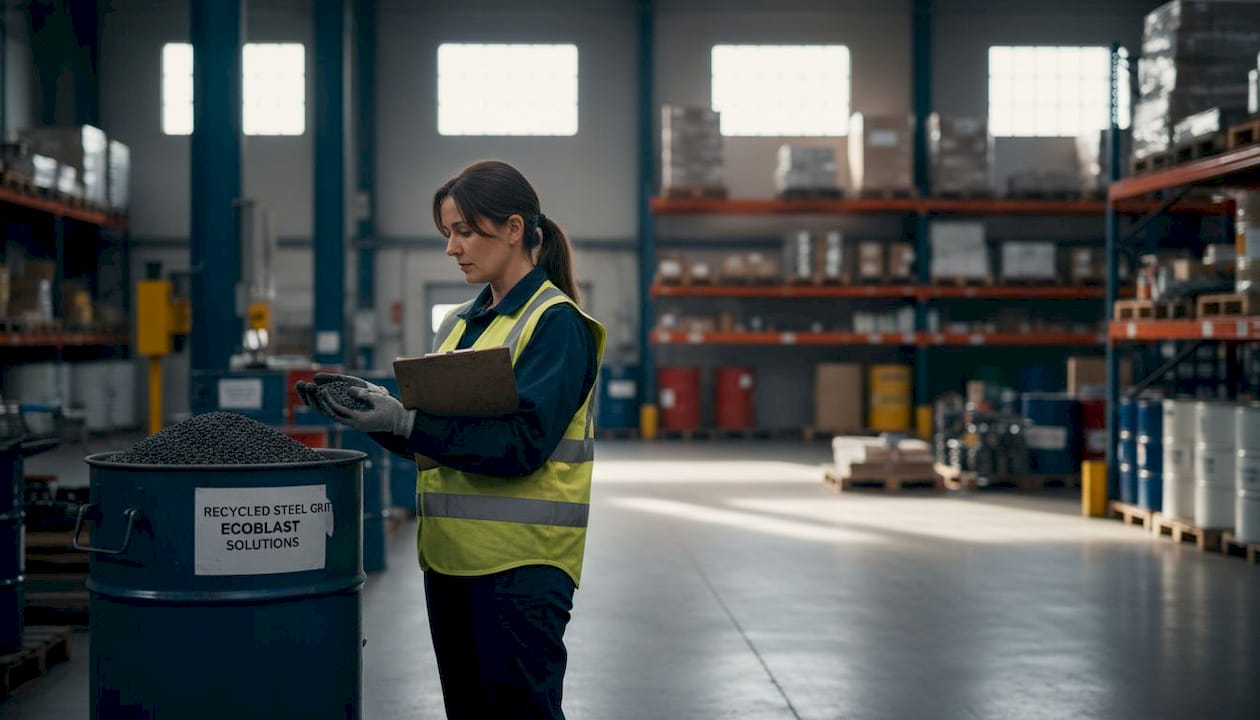
Garnet and steel shot are also well-suited to recycling systems. Airblast configures abrasive recycling systems for both garnet and steel shot or grit, improving performance and dust reduction across a range of project types.
The air-wash separator deserves special attention because it is the most critical calibration point in any reclaim system. Air velocity must be tuned precisely to the specific gravity of your abrasive. Too low and fines pass through, degrading your media quality and cutting performance. Too high and usable grit gets pulled into the dust collector as waste.
Pro Tip: Never purchase a reclaim system based on price alone. The air-wash calibration and separator build quality determine 80 percent of your long-term media recovery rate. A cheaper unit that passes fines back into circulation will destroy your blast profile consistency and shorten media life dramatically.
If you are evaluating which sandblasting methods work best for your Florida facility, the abrasive choice and reclaim compatibility should be evaluated together, not separately.
Implementing blasting grit recycling in Florida facilities: practical steps and considerations
With a grasp of system types, here is how Florida facility managers can actually adopt and maintain blasting grit recycling without operational disruption.
Step-by-step implementation:
- Assess your current abrasive volume and media type. Calculate your annual spend on abrasives and disposal. That figure becomes your baseline ROI comparison for any reclaim system investment.
- Select a system matched to your abrasive and blast volume. A low-volume operation running garnet has different reclaim needs than a high-volume steel grit operation blasting water tanks. Match system capacity to peak blast throughput, not average throughput.
- Install with proper containment infrastructure. In Florida’s humid climate, moisture infiltrating your media hopper accelerates grit clumping and corrosion of steel shot. Covered storage and sealed hopper systems are not optional here.
- Calibrate the air-wash separator to your specific media. Get this wrong and you either waste usable grit or contaminate your blast stream with fines.
- Train your blast operators on reclaim maintenance. The system is mechanical, and every mechanical system requires attention. Staff who understand why the reclaim system matters will maintain it more consistently than staff who see it as an extra chore.
- Schedule routine inspections and recalibrations. Separator wear, conveyor belt slippage, and dust collector filter saturation all degrade system performance gradually. Monthly checks prevent the slow creep of reduced efficiency.
Key considerations specific to Florida operations include:
- Heat and humidity accelerate wear on conveyor belts and elevator components
- Coastal salt air increases corrosion risk on ferrous system components
- Projects near protected wetlands face stricter residue disposal requirements that make recycling even more economically attractive
Without high-quality air-wash separators, media degradation accelerates, reducing reuse cycles and raising long-term costs. This is the single most common mistake facilities make when setting up a reclaim program.
Pro Tip: Add a media sizing screen downstream of your air-wash separator every 30 to 50 blast cycles. This catches undersized grit that passed the air wash and prevents it from building up in your hopper and causing inconsistent blast profiles on critical surfaces.
For a deeper look at equipment selection, the sandblasting equipment guide and surface preparation workflow resources from Southern Sandblasting provide detailed guidance aligned with Florida project requirements.
Common challenges and solutions in blasting grit recycling
Understanding proper implementation is one thing. Recognizing what goes wrong in practice is what keeps recycling programs delivering long-term value.
A cheap reclaim system often results in higher long-term costs due to rapid media breakdown and increased equipment wear. Every facility manager who has cut corners on reclaim infrastructure eventually learns this the hard way, usually when blast quality drops on a critical infrastructure project and rework costs exceed years of grit savings.
Common pitfalls and how to correct them:
- Poor air-wash calibration: Fines re-enter the blast stream and reduce surface profile consistency. Correct by recalibrating separator air velocity to current media specifications after any abrasive type change.
- Media contamination from substrate debris: Paint chips, rust flakes, and oils mix with recovered grit. Correct by ensuring containment barriers are in place and replacing dust collector filters on schedule.
- Elevator belt wear: Bucket elevators in high-cycle operations wear faster than operators expect. Correct by building elevator belt inspection into weekly maintenance rounds, not just annual shutdowns.
- Neglecting the dust collector: A saturated filter backs up the entire separation system, pushing fines into the clean grit stream. Replace filters based on pressure differential readings, not calendar schedules.
- Insufficient staff training: Operators who don’t understand reclaim system function skip maintenance steps under deadline pressure. Correct with clear written procedures and accountability tied to blast quality metrics.
The risk of skipping proper maintenance is not just efficiency loss. On municipal projects involving lead-based paint removal, contaminated grit that bypasses the dust collector can create a worker health hazard and a regulatory violation in the same moment. Understanding how to prevent coating failures starts with clean, correctly sized abrasive every single blast cycle.
A facility manager’s perspective: maximizing grit recycling value in Florida operations
Here is something most vendors won’t tell you: the reclaim system itself is not your primary challenge. The real obstacle is organizational. Facilities that get the most from grit recycling have aligned their procurement cycles, maintenance schedules, and project planning around the system’s requirements. Facilities that struggle treat the reclaim unit as a standalone piece of equipment sitting next to the blast machine.
When a facility manager integrates reclaim performance data into monthly procurement reviews, patterns emerge. Media consumption rates, separator efficiency readings, and dust collector cycle times together tell you whether your reclaim program is running at full efficiency or silently degrading. Most facilities never look at this data until something fails visibly.
The other factor that multiplies recycling benefits is staff buy-in. Blast operators who understand that poorly maintained reclaim systems directly affect their blast quality and their project timelines take maintenance seriously. Those who see it as administrative overhead do not. The difference in media recovery rates between engaged and disengaged crews is measurable, often 15 to 20 percent over a full project cycle.
Florida municipal contracts also have procurement timelines that interact with media supply decisions. If your reclaim program is running at 85 percent recovery, you need roughly 15 percent of your baseline abrasive volume in resupply orders. If recovery drops to 60 percent because of a degraded separator, your resupply orders spike mid-contract. That procurement disruption has a real cost in expedited shipping and schedule delays that never shows up in anyone’s grit recycling ROI calculation.
The municipal sandblasting workflow and industrial sandblasting insights available through Southern Sandblasting reflect 20-plus years of applying exactly this kind of integrated thinking to real Florida projects.
Explore durable sandblasting solutions and expert services in Florida
If this article clarified what grit recycling can do for your facility, the logical next step is seeing how those principles apply to your specific operations and asset types.
Southern Sandblasting & Painting LLC has spent over 20 years handling large-scale surface preparation and coating projects across Central Florida, from municipal water tanks to airport infrastructure. Our team understands how to build recycling-compatible sandblasting services into projects from the planning stage, not as an afterthought. Whether you are reviewing your sandblasting equipment setup or need a site assessment that accounts for Florida’s environmental and regulatory conditions, we can help. Reach out to discuss your project and explore how a sustainable municipal sandblasting workflow can reduce your costs and simplify compliance.
Frequently asked questions
What is blasting grit recycling?
Blasting grit recycling involves collecting spent abrasive media after sandblasting, removing dust and debris, and reusing the clean grit in subsequent blasting cycles. A complete reclaim system separates usable media from degraded fines and returns recovered material directly to the blast machine.
How many times can steel grit be reused with a recycling system?
With a proper reclaim system, steel grit can be reused 200 to 300 times, compared to just 3 to 5 cycles for garnet or glass bead, making it by far the most economical choice for high-volume operations.
What equipment is essential in a blasting grit reclaim system?
A complete reclaim system requires collection conveyors, a bucket elevator, an air-wash separator or cyclone, a dust collector, and a storage hopper to clean and return the abrasive media to the blast machine.
What are the main benefits of implementing a grit recycling system?
The primary benefits include dramatic cost reductions, less hazardous waste leaving the job site, improved dust control, and compliance with EPA and OSHA waste control standards, all of which are especially relevant for Florida municipal contracts.
What are common challenges when using blasting grit recycling?
The most frequent problems are poor separator calibration, media contamination, and maintenance neglect. A poorly configured reclaim system accelerates media breakdown and raises long-term costs far above what a quality system would require.
Recommended
- Grit Blasting Guide for Florida Infrastructure Projects
- Sandblasting for Florida infrastructure: a how-to guide
- Facility surface maintenance guide: strategies for Florida managers
- Step-by-step sandblasting guide for Florida facility managers
- Sandblasting Contractor Baldwin Park FL
- Sandblasting Services Oviedo FL


