
A food processing plant in Illinois paid over $150,000 in fines and lost revenue after failing to follow lead abatement guidelines. This shutdown wasn’t caused by equipment failure or market conditions. It resulted from inadequate contractor practices during a routine painting project. For Florida municipal infrastructure managers and industrial facility operators, the stakes are equally high. Choosing the right painting contractor isn’t about aesthetics. It’s about regulatory compliance, asset longevity, and avoiding financial disasters that can halt operations and drain budgets.
Table of Contents
- Understanding The Role Of Painting Contractors In Florida Infrastructure Projects
- Critical Importance Of Surface Preparation And Coating Quality
- Florida Specific Regulatory And Licensing Requirements For Painting Contractors
- Mitigating Risks: Costs And Consequences Of Non-Compliance And Failure
- Partner With Experienced Painting Contractors For Florida Infrastructure
Key takeaways
| Point | Details |
|---|---|
| Contractor compliance matters | Painting contractors ensure protective coatings meet OSHA and EPA standards, avoiding violations that can shut down operations. |
| Surface prep drives success | Proper preparation accounts for 30 to 50% of project costs but prevents failures costing 3 to 5 times more to fix. |
| Florida licensing protects you | Projects over $500 require general contractor licenses and minimum insurance of $300K bodily injury coverage. |
| Violations carry heavy penalties | OSHA fines exceed $16,000 per infraction while EPA violations reach $50,000 daily. |
Understanding the role of painting contractors in Florida infrastructure projects
Industrial painting is crucial for infrastructure protection, worker safety, and regulatory compliance. Painting contractors do far more than apply coatings to surfaces. They manage complex workflows involving surface preparation, material selection, environmental controls, and strict adherence to federal and state regulations.
Their work directly impacts asset lifespan and operational continuity. Water tanks, pipelines, bridges, and industrial facilities face constant exposure to Florida’s humid, salt laden environment. Without proper protective coatings, corrosion accelerates, structural integrity degrades, and replacement costs skyrocket.
The role of coating contractors extends to three critical areas:
- Managing hazardous materials according to EPA guidelines
- Implementing OSHA compliant safety protocols for workers and the public
- Ensuring coating systems meet manufacturer specifications and warranty requirements
Compliance failures don’t just risk fines. They threaten operational licenses, public safety, and community trust. A municipal water tank with failed coatings can contaminate drinking water supplies. An industrial facility with improper lead abatement procedures can expose workers to toxic substances.
“Proper industrial painting practices protect not only physical assets but also the workers who maintain them and the communities they serve.”
Contractors must coordinate with environmental agencies, obtain necessary permits, and document every phase of surface preparation and coating application. This documentation becomes critical during inspections and liability reviews. Florida’s regulatory environment demands contractors who understand local codes, climate challenges, and industry specific requirements for municipal and industrial projects.
Critical importance of surface preparation and coating quality
Surface preparation accounts for 30 to 50% of total coating project budgets, yet cutting corners here creates failures costing 3 to 5 times more to rectify. This isn’t an area where facility managers can afford to compromise.
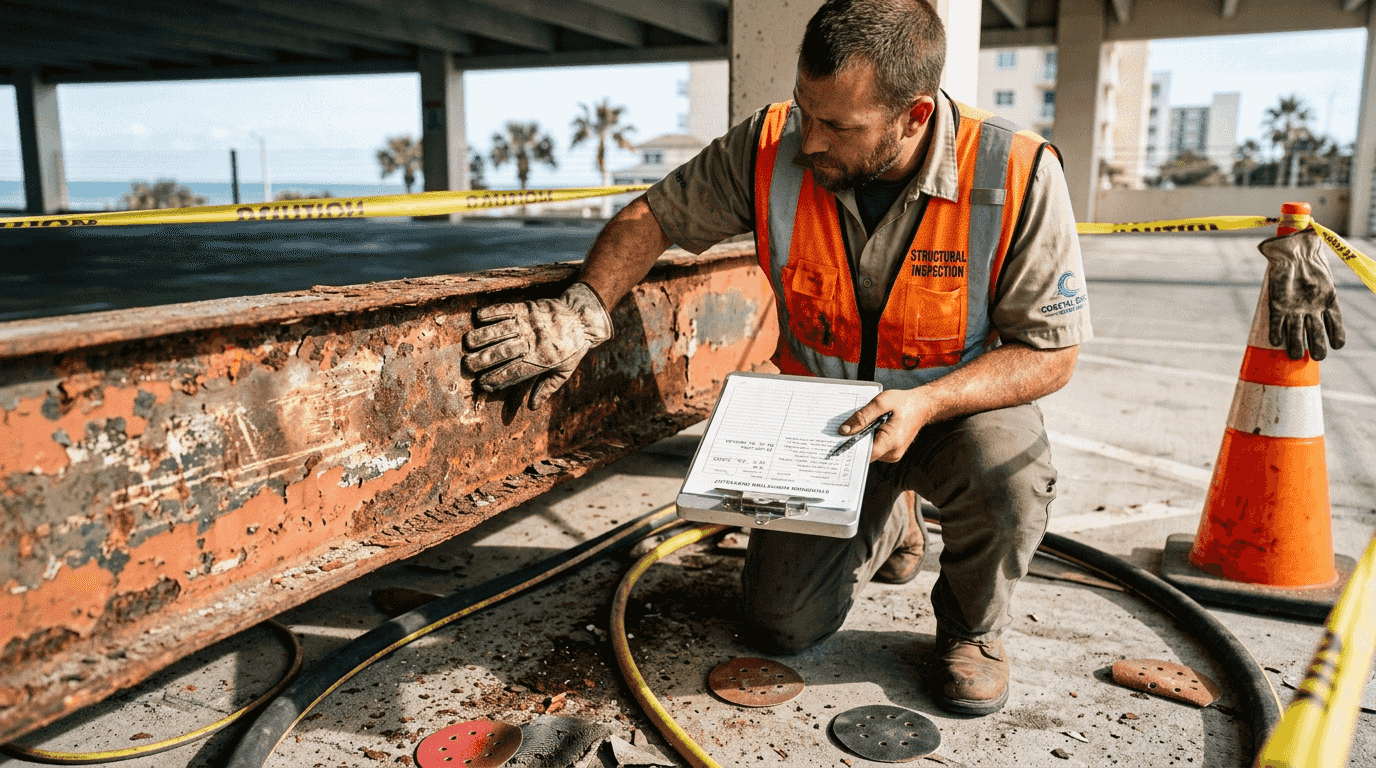
Poor surface preparation causes predictable, expensive defects. Blistering occurs when moisture or contaminants get trapped under coatings. Delamination happens when coatings can’t properly bond to unprepared substrates. Premature corrosion returns when rust and mill scale aren’t completely removed before coating application.
These failures cascade into operational disruptions. A municipal water storage tank with coating failure requires draining, cleaning, surface restoration, and recoating. During this process, water capacity drops and backup systems strain to meet demand. The surface prep best practices for coatings directly determine whether assets perform reliably for decades or fail within years.
Proper surface preparation follows this sequence:
- Inspect substrate for existing damage, contamination, and coating condition
- Remove all loose material, rust, mill scale, and previous failed coatings
- Clean surface to specified cleanliness standards using appropriate methods
- Profile substrate to manufacturer specifications for coating adhesion
- Verify environmental conditions meet application requirements before coating
Environmental factors during application matter as much as preparation. Temperature, humidity, and dew point all affect coating performance. Florida’s climate presents unique challenges. High humidity can prevent proper curing. Afternoon thunderstorms can contaminate freshly applied coatings. Experienced contractors monitor conditions continuously and adjust schedules to ensure optimal application windows.
| Preparation Method | Best For | Typical Cost Impact |
|---|---|---|
| Abrasive blasting | Heavy rust, mill scale, thick coatings | High initial cost, lowest lifecycle cost |
| Power tool cleaning | Light surface prep, maintenance coatings | Lower cost, limited effectiveness |
| Chemical stripping | Sensitive substrates, lead paint removal | Moderate cost, requires disposal management |
Manufacturer warranties require documented proof of proper surface preparation. Without this documentation, warranty claims get denied and facility managers absorb full replacement costs. The role of surface preparation in protecting your investment cannot be overstated.
Pro Tip: Always require contractors to provide surface preparation reports with photographic documentation before coating application. This creates accountability and protects your warranty coverage.
Florida specific regulatory and licensing requirements for painting contractors
Florida law protects facility managers through specific contractor licensing and insurance requirements. Painting contractors working on projects over $500 need a general contractor license. This threshold means virtually all municipal and industrial painting projects fall under licensing requirements.
Licensing verifies contractors have demonstrated competency through examination and experience requirements. It also creates accountability through the state licensing board, which can investigate complaints and enforce disciplinary actions.
Insurance requirements provide financial protection when accidents or failures occur. Florida requires general contractors to carry minimum general liability coverage of $300,000 for bodily injury and $50,000 for property damage. Many municipal and industrial projects require higher limits, often $1 million or more in aggregate coverage.
Additional insurance considerations for industrial painting projects include:
- Workers compensation coverage for all employees on site
- Environmental liability insurance for hazardous material handling
- Professional liability coverage for specification and engineering errors
- Commercial auto insurance for equipment and material transport
Florida contractor licenses renew every two years on August 31st of even numbered years and require 14 hours of continuing education to maintain. This continuing education ensures contractors stay current with code changes, safety updates, and evolving industry standards.
Verifying contractor credentials before project start protects you from liability. If an unlicensed contractor causes property damage or worker injury, you may face legal exposure. The state licensing board provides online verification tools to confirm license status, disciplinary history, and insurance coverage.
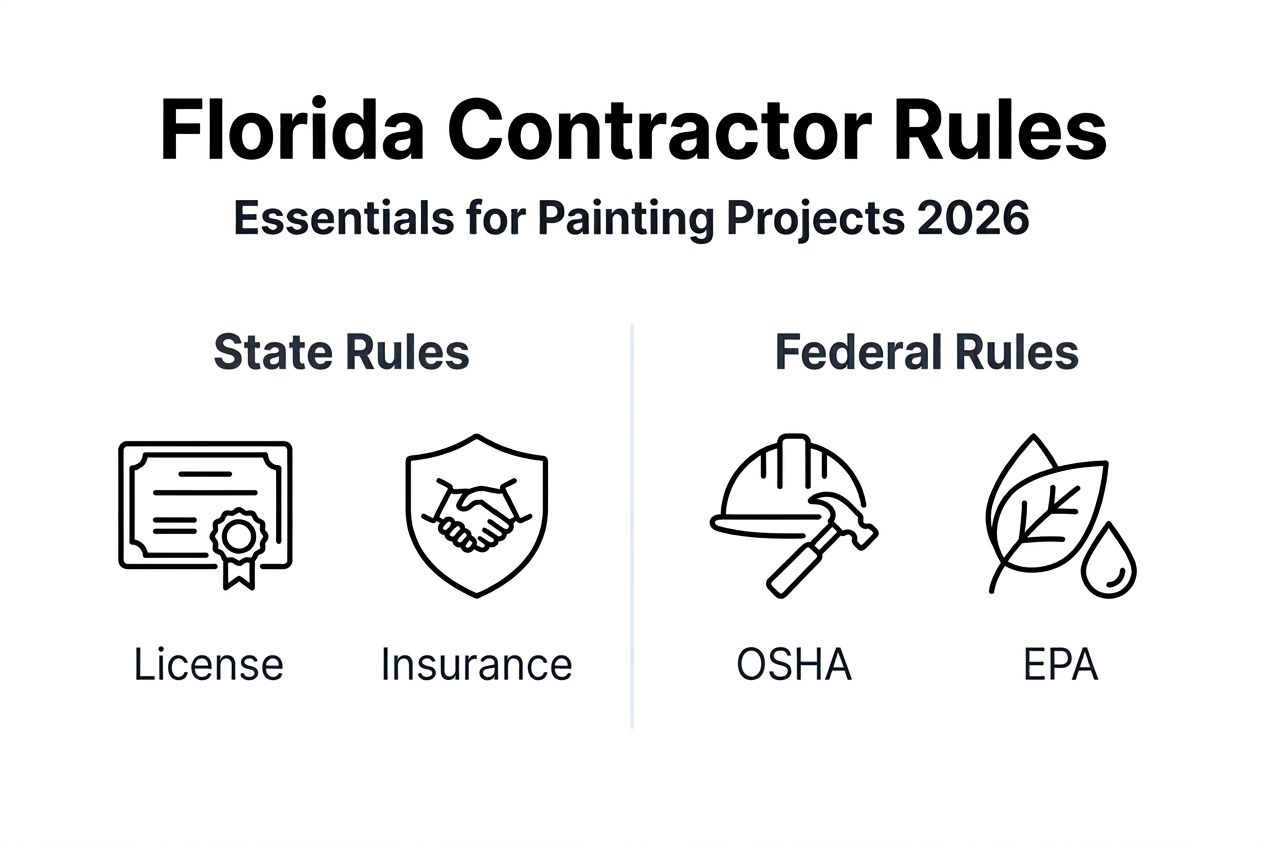
Compliance standards for industrial painting extend beyond basic licensing. Federal regulations from OSHA and EPA apply to most municipal and industrial projects. Contractors must demonstrate knowledge of these requirements and implement compliant practices throughout project execution.
Mitigating risks: costs and consequences of non-compliance and failure
OSHA fines for serious violations exceed $16,000 per infraction. These penalties apply per violation, so multiple safety failures on a single project can generate six figure fines. EPA violations related to hazardous materials mismanagement result in penalties up to $50,000 per day.
The financial impact extends beyond immediate fines. A food processing plant in Illinois shut down for two weeks after failing to follow lead abatement guidelines, costing over $150,000 in lost revenue and fines. For municipal facilities, shutdowns mean service disruptions affecting thousands of residents.
Regulatory violations create cascading consequences. Projects halt while violations get remediated. Contractors face stop work orders. Facility managers must hire specialized consultants to verify corrective actions. Insurance premiums increase. Public scrutiny intensifies.
Coating failures generate different but equally expensive problems. A failed coating system on a water storage tank requires complete removal and reapplication. This process costs 3 to 5 times more than proper initial application because it includes:
- Emergency service interruption planning and backup water supply coordination
- Complete coating removal from contaminated substrate
- Enhanced surface preparation to remove corrosion damage
- Expedited project scheduling to minimize service disruption
- Additional testing and quality verification
| Risk Type | Typical Cost Range | Prevention Strategy |
|---|---|---|
| OSHA safety violations | $16,000 to $150,000+ per incident | Verify contractor safety programs and training records |
| EPA environmental violations | $50,000 per day | Confirm hazardous material handling procedures and permits |
| Coating system failure | 3x to 5x original project cost | Require documented surface prep and application monitoring |
| Operational shutdown | Varies by facility size | Partner with experienced, compliant contractors |
Experienced contractors help you avoid these setbacks through proactive compliance management. They maintain current certifications, implement documented safety programs, and follow proven quality control processes. They understand that your reputation and operational continuity depend on their work quality.
Compliance standards for industrial painting provide frameworks that protect all stakeholders. When contractors follow these standards, projects finish on time, within budget, and without regulatory complications.
Pro Tip: Request contractor safety incident rates and compliance history before awarding contracts. Contractors with strong safety records reduce your risk exposure and project insurance costs.
Partner with experienced painting contractors for Florida infrastructure
Your infrastructure projects demand contractors who understand Florida’s unique challenges. Southern Sandblasting & Painting brings over 20 years of experience delivering compliant, durable coating solutions for municipal and industrial facilities across Central Florida.

Our certified team specializes in comprehensive sandblasting and painting services that address every phase from initial surface preparation through final coating application. We maintain full licensing, insurance, and safety certifications required for complex infrastructure projects.
Our approach prioritizes surface prep best practices for coatings that ensure long term performance. We document every step, maintain strict quality controls, and coordinate with regulatory agencies to keep your projects compliant and on schedule. Partnering with experienced contractors minimizes your regulatory, safety, and financial risks while maximizing asset lifespan and performance.
FAQ
What qualifications should Florida painting contractors have?
Painting contractors working on projects over $500 need a general contractor license and must carry insurance. Minimum insurance includes $300,000 bodily injury and $50,000 property damage coverage. Licenses renew biennially with 14 hours of continuing education. Verify credentials through Florida’s licensing board before awarding contracts to ensure compliance standards for industrial painting.
Why is surface preparation so important in industrial painting?
Surface preparation accounts for 30 to 50% of project cost yet prevents coating failures that can be 3 to 5 times more expensive. Proper prep ensures coating adhesion and longevity by removing contaminants and creating proper surface profile. Neglecting preparation leads to blistering, delamination, and premature corrosion. Manufacturer warranties require documented proof of proper surface preparation before honoring claims.
What are the risks of non compliance with OSHA and EPA regulations?
OSHA fines exceed $16,000 per violation while EPA penalties reach $50,000 daily. These fines are financially devastating and often accompanied by stop work orders and operational shutdowns. Non compliance exposes facility managers to legal liability and damages public trust. Ensuring contractor compliance with industrial painting standards reduces legal exposure and protects operational continuity.
How long should industrial coatings last on Florida infrastructure?
Properly applied industrial coatings typically last 15 to 25 years on Florida infrastructure when surface preparation and application follow manufacturer specifications. Florida’s humid, salt laden environment accelerates coating degradation, making quality application critical. Regular inspections every 3 to 5 years identify early deterioration signs. Maintenance coatings applied proactively extend lifespan and prevent expensive substrate damage requiring complete system replacement.
What documentation should contractors provide for industrial painting projects?
Contractors should provide surface preparation reports with photographic documentation, environmental condition logs during application, material data sheets and batch numbers, and compliance certifications for hazardous material handling. This documentation protects warranty coverage, demonstrates regulatory compliance, and creates accountability. Request digital copies stored in project management systems for easy access during inspections and future maintenance planning.
Recommended
- Infrastructure painting checklist for Florida 2026
- commercial painting orlando fl – Resources – Southern Sandblasting & Painting LLC
- Industrial Painting Safety Protocols in Florida Facilities
- Maintain painted surfaces in Florida for lasting protection
- Industrial Painting Services in Orlando, FL
- Sandblasting Services in Orlando, FL


