
Every municipal infrastructure manager knows a solid foundation decides the life and reliability of any project. In Central Florida, harsh weather and constant exposure test every protective coating applied to bridges, water tanks, and public assets. The real difference between a five-year failure and a twenty-five-year success comes down to proper substrate preparation, not just paint quality or labor. This article explores proven methods, debunks costly myths, and shows how thoughtful preparation ensures compliance and saves your municipality money over the long term.
Table of Contents
- Defining Substrate Preparation And Misconceptions
- Types Of Substrate Preparation Methods Used
- How Preparation Impacts Coating Performance
- Industry Standards And Regulatory Compliance
- Risks Of Improper Preparation And Cost Implications
Key Takeaways
| Point | Details |
|---|---|
| Importance of Substrate Preparation | Properly preparing surfaces directly influences the longevity of protective coatings, determining whether they last 5 years or 25 years. |
| Common Misconceptions | Believing minimal preparation is sufficient can lead to costly failures; thorough preparation is crucial for ensuring coating adhesion and durability. |
| Effectiveness of Methods | Utilizing a combination of mechanical, chemical, and visual methods enhances preparation quality, impacting overall asset lifespan. |
| Compliance with Standards | Adhering to industry standards protects public safety and asset integrity, providing legal safeguards against project failures. |
Defining Substrate Preparation and Misconceptions
Substrate preparation in infrastructure maintenance means removing and conditioning the surface to support protective coatings. Think of it like preparing drywall before painting—you strip, clean, and prime the surface so the finish actually lasts. For municipal assets like water tanks, bridge components, and equipment, this preparation layer determines whether your coating investment lasts 5 years or 25 years.
The core purpose is straightforward: create a clean, properly roughened surface that allows protective coatings to bond mechanically and chemically. Proper substrate preparation ensures removal of contaminants, corrosion products, and old coating materials that would otherwise prevent new protective systems from adhering properly.
What Substrate Preparation Actually Involves
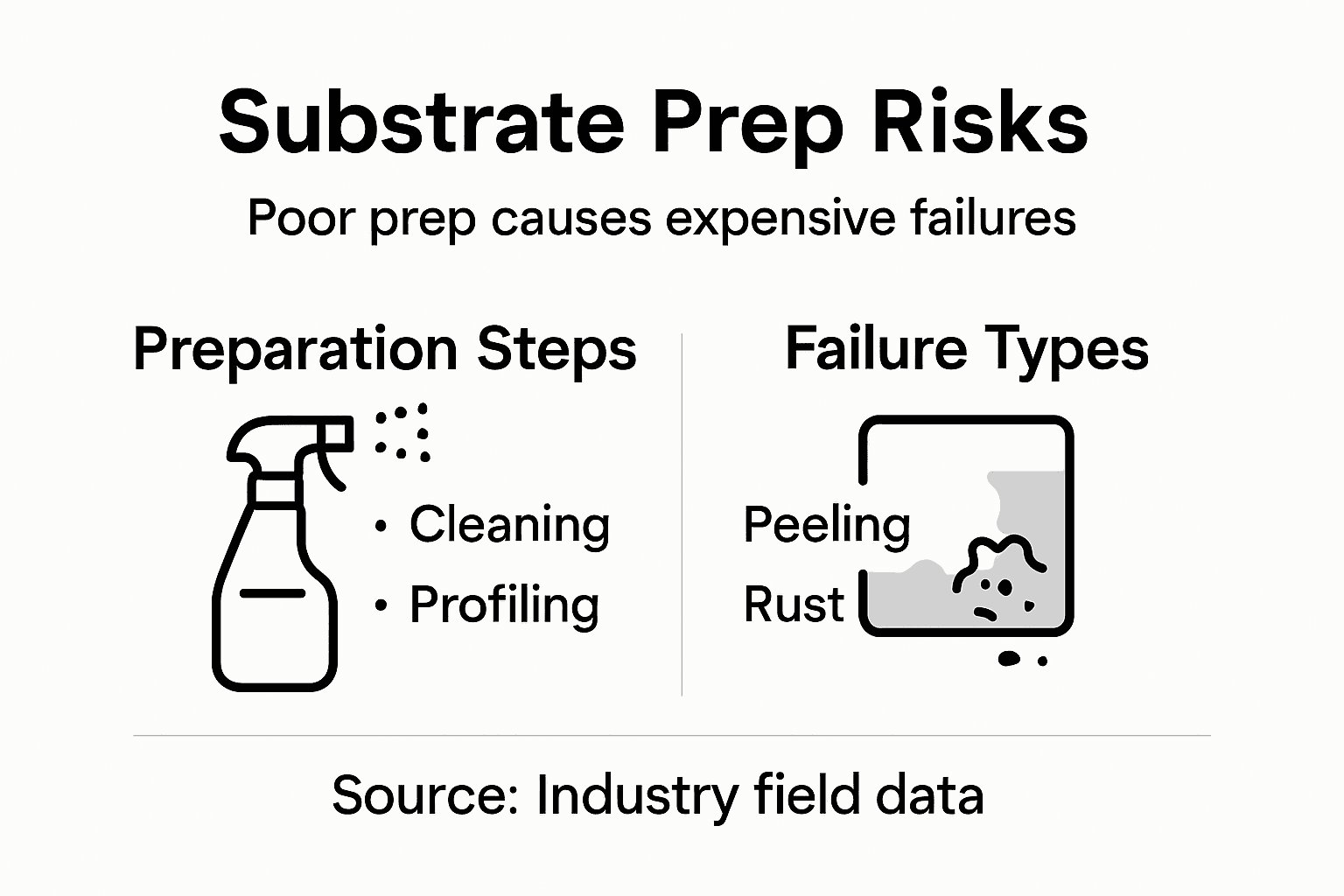
The process combines multiple critical steps:
- Surface cleaning: Removing loose rust, mill scale, dirt, and environmental contaminants
- Profiling: Creating the right surface texture (typically 2-3 mils for most industrial coatings)
- Decontamination: Eliminating salt deposits, oils, and residues that weaken coating bonds
- Visual inspection: Verifying the surface meets specification before coating application
Each step matters. Skip one, and your coating fails prematurely regardless of paint quality.
The Misconceptions That Cost Money
Most infrastructure managers hold at least one misconception that damages their assets:
“A quick power wash is enough preparation.” Power washing removes loose material, but it doesn’t create the profile your coatings need. Water pressure alone won’t remove rust scale or chemical contaminants. You need mechanical removal via sandblasting or similar processes.
“New paint covers old paint just fine.” Old coating acts as a barrier between your new paint and the substrate. When that old paint fails, your new coat goes with it. Complete removal prevents this cascade failure.
“Surface preparation adds unnecessary cost.” Understanding contamination effects reveals that improper substrate handling leads to coating failures within 2-4 years. One premature failure costs more than three proper preparation jobs combined.
“All surfaces need identical preparation.” Different substrates (steel, concrete, metal alloys) require different approaches. Treating concrete the same as steel guarantees failure on at least one material.
Underestimating substrate preparation is the single largest driver of coating failure in Florida’s harsh climate and municipal budgets.
Pro tip: Document your substrate condition before work begins with photos and written assessment—this creates accountability and protects against disputes about what was actually present when your contractor arrived.
Types of Substrate Preparation Methods Used
Infrastructure managers in Central Florida have several proven methods to condition surfaces before coating application. Each method works differently depending on substrate material, rust severity, and environmental conditions. Selecting the right approach directly impacts coating performance and asset lifespan.
Mechanical Removal Methods
Mechanical methods physically remove rust, scale, and old coatings through abrasive action or impact. These are the most common approaches for heavy industrial assets.
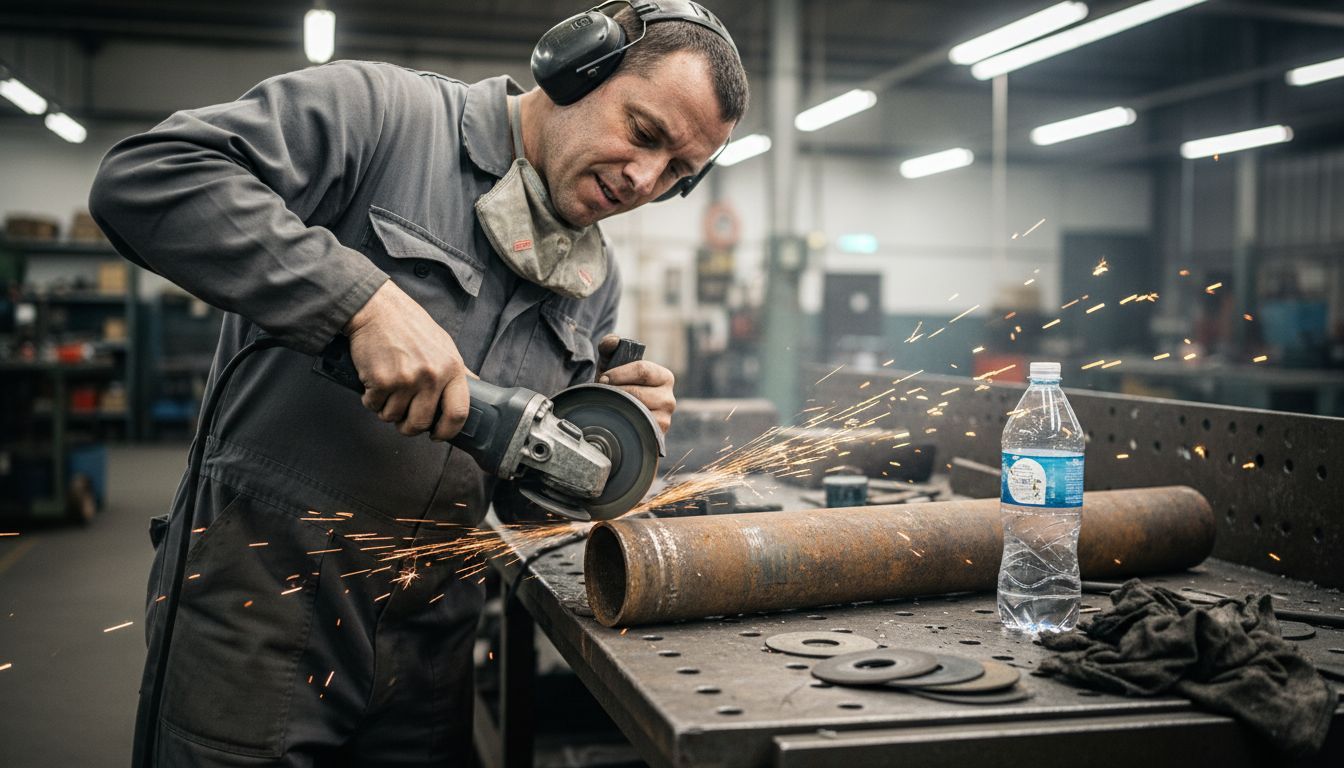
Sandblasting uses compressed air to propel abrasive particles (sand, garnet, or steel shot) at high velocity against the surface. This creates the aggressive profile needed for proper coating adhesion. Different substrate preparation methods achieve specific surface characteristics based on particle size and blasting pressure.
Wire brushing manually or mechanically removes loose rust and mill scale. It works best for light surface corrosion but cannot achieve the depth of material removal sandblasting provides.
Grinding uses rotating abrasive wheels to remove surface contaminants and create texture. It works well for targeted areas and precision applications.
Chemical and Thermal Methods
Some projects benefit from chemical or heat-based preparation:
- Pressure washing: Removes dirt and loose material but doesn’t achieve required profile
- Acid pickling: Chemical removal of rust scale (limited use due to environmental concerns)
- Thermal stripping: Heat application to loosen old coatings for removal
- Solvent cleaning: Removes oils and chemical residues before other methods
Combination Approaches
Most effective substrate preparation uses multiple methods sequentially. You might pressure wash first, then sandblast, follow with chemical decontamination, and finish with visual inspection.
This layered approach ensures complete contaminant removal and proper surface conditioning. Different materials often require different combinations. Steel tanks might need aggressive sandblasting followed by wash-off, while concrete structures might use gentler methods to avoid surface damage.
Here’s a quick comparison of substrate preparation methods and their ideal applications:
| Method | Ideal Substrate | Business Impact |
|---|---|---|
| Sandblasting | Steel, metal alloys | Maximizes coating lifespan |
| Wire Brushing | Lightly rusted steel | Fast, but less effective |
| Grinding | Targeted metal areas | Precise removal, higher labor cost |
| Chemical Pickling | Steel | Limited use, environmental concerns |
| Pressure Washing | Concrete, general | Removes dirt, but not surface profile |
The method you choose matters less than applying it thoroughly and consistently across the entire asset surface.
Pro tip: Match your preparation method to the substrate material and rust type before work begins—consult with your preparation contractor about which approach delivers the best cost-to-longevity ratio for your specific asset.
How Preparation Impacts Coating Performance
Substrate preparation directly controls whether your coating lasts 5 years or 25 years. Poor preparation is the number one reason protective coatings fail prematurely on municipal infrastructure. The relationship is simple: better preparation equals longer coating life.
The Adhesion Problem
Coatings bond to surfaces in two ways: mechanically and chemically. Mechanical bonding happens when the coating settles into surface texture created during preparation. Chemical bonding occurs when the coating chemically reacts with a clean substrate.
Skip preparation, and you lose both bonding mechanisms. Your coating sits on top of rust, old paint, and contaminants like a sticker on a dusty window. When that dust layer fails, your new coating goes with it.
Proper substrate preparation ensures a clean, uncontaminated surface that promotes adhesion and durability across the entire asset. This isn’t optional—it’s fundamental to coating performance.
What Happens Without Proper Preparation
Contamination causes specific, predictable failures:
- Peeling: Old coating or rust underneath causes new paint to lift and separate
- Blistering: Trapped moisture beneath the coating creates bubbles that expand
- Chalking: Surface contamination prevents proper hardening of protective layers
- Rust breakthrough: Contaminants act as corrosion starting points under the coating
- Weak adhesion: The coating releases at edges and corners first
Each failure type costs money to remediate and shortens asset life dramatically.
This summary links common coating failures to their root causes and remediation costs:
| Failure Type | Root Cause | Remediation Cost Impact |
|---|---|---|
| Peeling | Poor surface bonding | Full recoating, high expense |
| Blistering | Trapped moisture/salts | Partial repairs, ongoing issues |
| Chalking | Surface contamination | Reduced durability, repaint cost |
| Rust Breakthrough | Insufficient cleaning | Structural repairs, emergency fixes |
Real-World Impact on Lifespan
Consider two identical steel water tanks in Central Florida. Tank A receives proper sandblasting, degreasing, and surface profiling before coating. Tank B gets pressure washed and painted immediately.
Tank A coating lasts 20 years. Tank B coating fails in 4-5 years due to adhesion loss. The cost difference in preparation was maybe $2,000. The cost to strip and recoat Tank B is $15,000.
Effective preparation enhances coating uniformity and adhesion, whereas improper preparation reduces coating lifespan significantly. The investment in preparation pays for itself multiple times over.
Coating failure isn’t about paint quality—it’s about foundation quality. Preparation is your foundation.
Pro tip: Request your contractor’s surface preparation specification in writing before work begins, including cleanliness standards and surface profile requirements—this creates accountability and measurable quality standards.
Industry Standards and Regulatory Compliance
Central Florida municipalities must follow specific standards when preparing substrates for protective coatings. These standards protect public safety, ensure asset longevity, and demonstrate fiscal responsibility. Compliance also shields your municipality from liability when projects fail.
Key Industry Standards
Several standards govern substrate preparation for industrial coatings. The most relevant include NACE (National Association of Corrosion Engineers) standards, ASTM International specifications, and ISO guidelines.
NACE standards specify cleaning levels (NACE 1 through NACE 3) and surface profiles for different coating systems. Your contractor should reference the applicable NACE standard in the project specification.
ASTM standards define surface preparation methods, inspection procedures, and acceptance criteria. ASTM D3276 and ASTM D4417 are commonly referenced for surface cleanliness and profile measurement.
ISO 12944 addresses protective coatings for steel structures in different corrosion categories. This standard helps determine the preparation level needed based on environmental exposure.
Why Standards Matter for Your Assets
Standards exist because failures have real costs. A water tank coating failure in Florida’s coastal environment isn’t just cosmetic—it threatens structural integrity and public safety.
When your contractor meets established standards, you have documented proof that work was performed correctly. This creates legal protection if disputes arise and demonstrates professional execution.
Quality management system essentials include material and substrate handling procedures that ensure consistency and compliance across projects. Infrastructure projects benefit from this systematic approach.
Compliance in Florida’s Environment
Central Florida presents unique challenges: salt exposure near coastal areas, intense UV radiation, high humidity, and temperature cycling. Standard industrial coatings may not address these specific conditions without proper substrate preparation.
Your specification must account for Florida’s environment:
- Higher surface cleanliness requirements (NACE 2 or better)
- Specific surface profile ranges for humidity resistance
- Decontamination steps targeting salt deposits
- Extended cure times in high-humidity conditions
- Inspection intervals during the humid season
Meeting baseline standards isn’t optional—it’s the foundation of asset protection and regulatory compliance.
Pro tip: Include specific NACE, ASTM, or ISO standard references in your project contract before work begins—this ensures contractor accountability and creates measurable quality benchmarks your team can inspect against.
Risks of Improper Preparation and Cost Implications
Skipping or cutting corners on substrate preparation creates predictable, expensive failures. What looks like cost savings in month one becomes budget disasters in year two. The financial impact compounds quickly when assets fail prematurely.
Immediate Performance Failures
Improper preparation causes coatings to fail within months, not years. These failures are expensive to remediate and damage municipal credibility.
Adhesion failure happens when coating doesn’t bond properly to contaminated surfaces. The coating peels in sheets, exposing substrate to corrosion. You now need complete repainting at double the original cost.
Rust breakthrough occurs when contaminants trapped under the coating trigger corrosion. Rust expands beneath the coating, creating blisters that eventually burst. The entire coating system fails as rust spreads.
Moisture entrapment develops when residual contaminants hold water under the coating. Florida’s humidity makes this problem especially severe. Blistering and eventual coating separation follow within 12-24 months.
The True Financial Cost
Consider the math on a typical water tank project:
- Proper preparation: $15,000
- Coating application: $25,000
- Total investment: $40,000
- Expected lifespan: 20 years
- Annual cost: $2,000
Versus cutting preparation:
- Minimal preparation: $3,000
- Coating application: $25,000
- Total investment: $28,000
- Actual lifespan: 4 years
- Annual cost: $7,000
Improper substrate preparation introduces contaminants that jeopardize validity and create additional costs through increased testing and time delays. Infrastructure projects face similar cumulative expenses when failures require remediation work.
Hidden Costs Beyond Repainting
Coating failure costs extend beyond just repainting:
- Emergency repairs: Structural damage from untreated rust requires expensive reinforcement or replacement
- Operational downtime: Facilities shut down during emergency repainting, losing revenue or service capacity
- Staff time: Your team spends hours documenting failures, managing contractors, and coordinating remediation
- Liability exposure: Asset failure affecting public safety creates potential legal claims
- Contractor disputes: Poor results lead to payment disputes and potential litigation costs
One premature failure costs more than three proper preparation jobs combined.
Pro tip: Track actual coating lifespans on your municipal assets and calculate true annual costs—this data justifies proper preparation budgets and prevents short-term thinking that creates long-term expenses.
Protect Your Municipal Assets with Expert Substrate Preparation Solutions
Proper substrate preparation is the foundation of any long-lasting protective coating system. If you are struggling with premature coating failures, costly emergency repairs, or shortened asset lifespans due to poor surface conditioning, you are not alone. The challenge lies in fully removing rust, contaminants, and old coatings while achieving the precise surface profile that ensures strong mechanical and chemical adhesion. This article highlights why cutting corners on substrate preparation creates bigger expenses down the road and why a thorough, standardized approach is a must for Central Florida infrastructure.
Southern Sandblasting & Painting LLC offers over 20 years of trusted experience in professional surface preparation and sandblasting services designed specifically for municipal, industrial, and commercial projects. From steel water tanks and pipelines to complex public infrastructure, our expert team uses industry-compliant methods to remove contaminants and optimize coatings’ durability. Our local knowledge of Florida’s harsh environment helps prevent common failures like peeling, blistering, and rust breakthrough.
Don’t let inadequate substrate preparation risk your assets’ longevity and your budget. Visit Southern Sandblasting & Painting LLC today to explore how our comprehensive preparation and coating solutions create measurable value and peace of mind. Request a consultation now to ensure your next project stands the test of time with proven quality and professionalism.
Frequently Asked Questions
What is substrate preparation?
Substrate preparation involves removing and conditioning the surface to ensure protective coatings bond properly. It ensures a clean and properly textured surface that enhances the longevity of protective coatings on infrastructure assets.
Why is substrate preparation critical for coating performance?
Proper substrate preparation is essential because it creates the right conditions for both mechanical and chemical bonding. Without adequate preparation, coatings can fail prematurely, leading to costly repairs and reduced asset lifespan.
What are the key steps involved in substrate preparation?
The main steps include surface cleaning, profiling to create the right texture, decontamination to remove harmful residues, and visual inspection to ensure conformity to specifications before applying coatings.
What are the consequences of improper substrate preparation?
Improper substrate preparation can lead to various failures such as peeling, blistering, and rust breakthrough. These issues not only shorten the lifespan of coatings but also result in significant remediation costs and potential structural damage.


