
Rain showers in Central Florida can turn a planned coating project upside down in minutes, leaving managers scrambling to protect exposed assets. Predicting how solar radiation, temperature shifts, and wet weather work together is not just guesswork—it is a science at the core of municipal asset maintenance. By understanding the complex environmental interactions of coatings, you can make smarter choices that keep surfaces protected and infrastructure budgets intact, no matter what Florida’s climate throws your way.
Table of Contents
- Defining Weather Impact on Industrial Coatings
- Types of Weather Conditions Affecting Coatings
- How Weather Influences Application and Curing
- Best Practices for Weather-Related Coating Success
- Mistakes to Avoid in Unpredictable Climates
Key Takeaways
| Point | Details |
|---|---|
| Weather Factors Impact Coatings | Solar radiation, temperature fluctuations, moisture exposure, and wind can significantly degrade industrial coatings. Understanding these factors is essential for effective coating management. |
| Tailor Coatings to Environment | Selecting coatings specifically designed for regional weather conditions can enhance durability and performance. Consider local climate variables during the selection process. |
| Monitor Application Conditions | Environmental factors such as temperature and humidity play a critical role during coating application and curing. Accurate monitoring ensures optimal results. |
| Avoid Common Mistakes | Failing to prepare surfaces, improperly selecting coatings, and neglecting maintenance can lead to premature coating failure. Assess environmental conditions to mitigate risks. |
Defining Weather Impact on Industrial Coatings
Weather conditions represent a critical challenge for industrial coating performance, presenting complex interactions that dramatically influence material durability and protective capabilities. Understanding these environmental dynamics requires examining how different atmospheric elements systematically degrade coating surfaces over time.
The primary weather factors impacting industrial coatings include:
- Solar Radiation: Ultraviolet (UV) wavelengths break down polymer structures
- Temperature Fluctuations: Thermal expansion and contraction stress coating integrity
- Moisture Exposure: Rain, humidity, and condensation promote corrosion and hydrolysis
- Wind and Particulate Matter: Abrasive environmental particles cause surface erosion
Scientific research reveals that environmental interactions of coatings depend on complex chemical and physical phenomena. Polymers and pigments within industrial coatings must withstand significant environmental challenges, requiring sophisticated formulation strategies that anticipate potential degradation mechanisms.
Here is a summary of how key weather factors affect industrial coating performance:
| Weather Factor | Primary Effect | Typical Degradation Pathway |
|---|---|---|
| Solar Radiation | Breaks down polymers | Photochemical degradation |
| Temperature Fluctuation | Causes expansion and contraction | Thermal stress and cracking |
| Moisture Exposure | Promotes corrosion | Hydrolysis and rust formation |
| Wind & Particulates | Erodes surface | Mechanical abrasion |
| Chemical Pollutants | Reacts with coatings | Chemical breakdown of materials |
Municipal infrastructure managers must recognize that accelerated weathering testing provides critical insights into potential coating performance. Analytical weathering evaluations help predict long-term durability by simulating years of environmental exposure in compressed timeframes. These assessments typically analyze how coatings maintain key functions like aesthetic appearance, adhesive strength, corrosion resistance, and mechanical performance under simulated extreme conditions.
Pro tip: Select industrial coatings with demonstrated resistance to UV degradation, hydrolysis, and environmental erosion to maximize infrastructure protection and extend asset lifespans.
Types of Weather Conditions Affecting Coatings
Weather conditions present a complex array of challenges for industrial coatings, each introducing unique degradation mechanisms that can compromise material performance and longevity. Understanding these specific environmental factors is crucial for selecting and maintaining protective coating systems that can withstand diverse atmospheric stressors.
The primary weather conditions impacting coating durability include:
- Solar Radiation: Intense UV wavelengths that break down molecular structures
- Temperature Extremes: Rapid heating and cooling causing thermal stress
- Moisture Exposure: Rain, humidity, and condensation promoting corrosion
- Chemical Pollutants: Atmospheric contaminants causing chemical degradation
- Mechanical Stress: Wind-driven particulate matter causing surface abrasion
Chemical interactions of coatings reveal that different environmental conditions trigger specific degradation pathways. For instance, high humidity environments accelerate hydrolysis processes, while regions with intense solar radiation experience more pronounced photochemical breakdown of polymer structures.

Regional variations in weather patterns demand sophisticated coating formulations that can adapt to specific climatic challenges. Analytical weathering evaluations help predict coating performance by simulating concentrated environmental exposures. These assessments analyze how different coating compositions respond to critical factors like UV radiation, temperature fluctuations, moisture penetration, and chemical contamination.
Pro tip: Select industrial coatings engineered for your specific regional climate, considering local temperature ranges, humidity levels, and environmental pollutant concentrations to maximize protective performance.
How Weather Influences Application and Curing
Weather conditions play a critical role in industrial coating application and curing processes, presenting complex challenges that directly impact coating performance and long-term durability. Understanding these environmental interactions is essential for achieving optimal coating results across different atmospheric conditions.
Key weather factors affecting coating application and curing include:
- Temperature: Influences chemical reaction rates and film formation
- Humidity: Controls moisture transfer and curing kinetics
- Wind Speed: Impacts surface drying and contaminant introduction
- Atmospheric Pressure: Affects solvent evaporation and coating adhesion
- Ambient Moisture: Modifies chemical bonding and curing mechanisms
Moisture curing of polyurethane adhesives demonstrates how environmental conditions fundamentally transform coating performance. Hydrogen transfer catalyzed by water molecules accelerates curing processes, with humidity and temperature playing crucial roles in determining coating characteristics and final material properties.
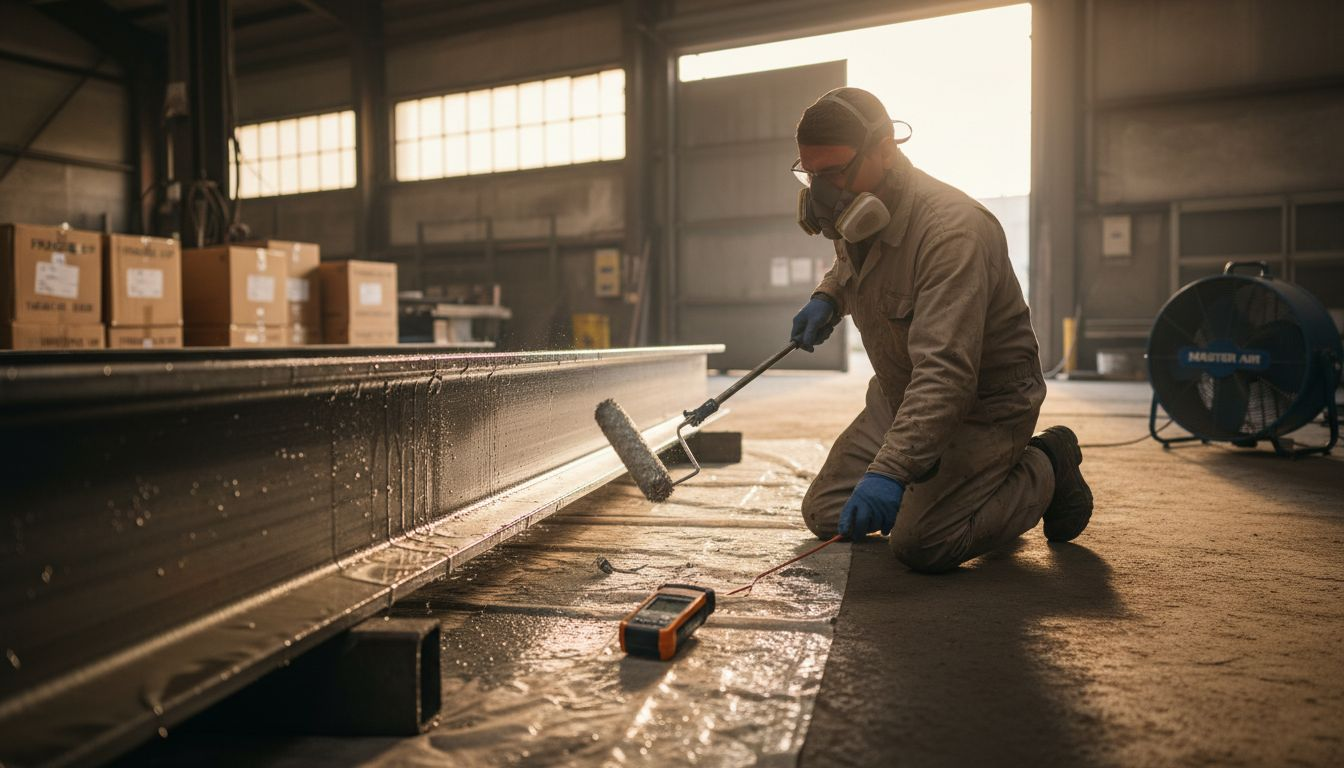
Coating and curing processes reveal that precise environmental control is paramount. Temperature significantly influences drying and curing kinetics, while humidity directly impacts film formation quality. Municipal infrastructure managers must carefully monitor these conditions to ensure consistent, high-quality coating applications that meet rigorous performance standards.
Pro tip: Invest in portable environmental monitoring equipment to track temperature, humidity, and wind conditions during coating applications, ensuring optimal curing environments for maximum coating effectiveness.
Best Practices for Weather-Related Coating Success
Achieving optimal coating performance requires a strategic approach that anticipates and mitigates environmental challenges specific to different weather conditions. Municipal infrastructure managers must develop comprehensive strategies that account for the complex interactions between coating materials and atmospheric variables.
Key best practices for weather-related coating success include:
- Comprehensive Environmental Assessment: Analyze local climate conditions before coating selection
- Material Compatibility: Choose coatings specifically formulated for regional weather challenges
- Precise Application Timing: Schedule coating applications during optimal environmental windows
- Accelerated Testing: Simulate extreme weather conditions to validate coating performance
- Regular Monitoring: Implement periodic inspections to track coating degradation
Durability and weathering strategies emphasize the critical importance of selecting coatings precisely engineered for specific environmental stresses. This approach requires understanding how factors like moisture, temperature fluctuations, and UV exposure systematically impact coating integrity over time.
Coating life cycle predictions demonstrate that successful coating management extends beyond initial application. Infrastructure managers must define location-specific failure criteria, select materials that withstand regional environmental challenges, and develop strategic maintenance schedules that proactively address potential degradation mechanisms.
Pro tip: Develop a comprehensive environmental database tracking local weather patterns, coating performance history, and material degradation rates to inform more precise coating selection and maintenance strategies.
To help infrastructure managers succeed, compare proactive versus reactive weather-related coating strategies:
| Approach | Key Activities | Long-Term Outcome |
|---|---|---|
| Proactive | Environment monitoring, tailored coatings, timely maintenance | Extended service life |
| Reactive | Address failures after damage, general coatings | Higher repair costs, downtime |
Mistakes to Avoid in Unpredictable Climates
Navigating the complex landscape of coating applications in unpredictable climates requires a strategic approach that anticipates potential failure points. Municipal infrastructure managers must recognize that environmental variability presents unique challenges that can dramatically compromise coating performance and asset longevity.
Common mistakes in challenging climate conditions include:
- Inadequate Surface Preparation: Skipping critical cleaning and surface treatment steps
- Inappropriate Coating Selection: Using generalized coatings instead of climate-specific formulations
- Ignoring Environmental Microclimates: Failing to account for localized environmental variations
- Overlooking Application Thickness: Applying inconsistent or insufficient coating layers
- Neglecting Ongoing Maintenance: Assuming coatings are permanent without periodic inspections
Coating failure mechanisms reveal that premature deterioration often stems from environmental influences beyond basic application errors. Heat, moisture, UV exposure, chemical interactions, and biological attacks can rapidly compromise even well-specified coating systems, underscoring the need for comprehensive environmental assessment.
Zinc coating life predictor guidelines emphasize that environmental parameters directly impact coating lifespan. Humidity, temperature extremes, and pollutant levels create complex degradation pathways that require sophisticated monitoring and proactive management strategies.
Pro tip: Develop a comprehensive environmental monitoring protocol that tracks localized climate variations, coating performance metrics, and potential degradation indicators to enable predictive maintenance interventions.
Protect Your Assets from Weather Damage with Expert Industrial Coatings
Weather conditions create serious challenges for industrial coatings by causing UV degradation, thermal stress, moisture corrosion, and surface erosion. When durability is on the line, relying on coatings that cannot withstand these factors puts your critical infrastructure at risk. Southern Sandblasting & Painting LLC understands the complexities of environmental impact on protective coatings. With over 20 years of experience, we offer tailored solutions combining professional sandblasting to prep surfaces and high-quality industrial painting that helps your assets resist weather-related deterioration.
Take control of your infrastructure’s longevity today with Southern Sandblasting & Painting LLC. Don’t wait until weather damage forces costly repairs. Contact us now by visiting our website and explore how our comprehensive sandblasting & painting services can deliver the critical protection your assets need to thrive through any climate.
Frequently Asked Questions
What weather factors most affect industrial coatings?
Weather factors that significantly impact industrial coatings include solar radiation, temperature fluctuations, moisture exposure, wind and particulate matter, and chemical pollutants. Each of these elements introduces unique degradation mechanisms that can compromise coating performance and longevity.
How do temperature fluctuations influence coating performance?
Temperature fluctuations can cause thermal expansion and contraction in coatings, leading to stress and potential cracking. Extreme temperature variations can compromise the integrity of the coating, affecting its adhesive strength and protective capabilities.
Why is moisture exposure critical to industrial coating durability?
Moisture exposure, through rain, humidity, or condensation, promotes corrosion and hydrolysis, which can accelerate coating degradation. This can lead to rust formation and reduced protective function of the coating over time.
What are best practices for ensuring successful coating application in unpredictable climates?
Best practices include conducting a comprehensive environmental assessment, selecting materials specifically formulated for local climate challenges, scheduling applications during optimal weather conditions, and implementing ongoing maintenance and monitoring to detect early signs of degradation.
Recommended
- Role of Coatings in Longevity – Extending Asset Lifespans
- 7 Key Protective Coating Advantages for Facility Managers
- Protective Coating Trends 2025: Innovations for Infrastructure
- How to Maintain Coatings for Long-Lasting Protection
- 7 materiale esențiale din liste materiale renovate apartament
- Sandblasting Contractor Baldwin Park FL
- Sandblasting Services Oviedo FL


