
Complex industrial painting projects across Central Florida present managers with high-stakes decisions that go far beyond color selection. Strict adherence to compliance standards is fundamental for safeguarding public infrastructure, protecting workers, and meeting environmental mandates. Recognizing how ASTM International and the Painting Contractors Association set the groundwork for safety, quality, and regulatory alignment will help you confidently navigate specifications, inspections, and the unique demands posed by the Florida climate.
Table of Contents
- Defining Compliance Standards in Industrial Painting
- Key Types of Painting Standards and Codes
- Regulatory Agencies Governing Florida Projects
- Critical Safety Protocols and Worker Training
- Environmental Controls and VOC Regulations
- Risks, Liabilities, and Common Compliance Errors
Key Takeaways
| Point | Details |
|---|---|
| Compliance Standards are Essential | Industrial painting compliance standards ensure safety, quality, and performance in projects, governed by organizations like ASTM International and PCA. |
| Rigorous Regulatory Framework in Florida | Florida’s unique environmental conditions necessitate strict adherence to regulatory requirements from agencies like FDEP and EPA, emphasizing safety and environmental compliance. |
| Importance of Safety Training | Comprehensive safety training and documented certifications for workers are crucial to mitigate risks and ensure compliance with safety protocols in industrial painting. |
| Monitoring VOC Emissions | Precise control of volatile organic compound emissions is vital in adhering to environmental standards, demanding the use of low-VOC materials and thorough documentation. |
Defining Compliance Standards in Industrial Painting
Compliance standards in industrial painting represent a critical framework ensuring safety, quality, and performance across complex infrastructure projects. These standards provide comprehensive guidelines that protect assets, workers, and public infrastructure from potential failures and environmental challenges. Specific industrial coating standards established by organizations like ASTM International help manufacturers and contractors maintain consistent quality and operational excellence.
At the core of industrial painting compliance are detailed specifications governing material selection, surface preparation, application techniques, and post-application inspection protocols. These standards address multiple dimensions including chemical composition, physical durability, environmental resistance, and workplace safety requirements. The Painting Contractors Association (PCA) plays a significant role in establishing clear procedural guidelines that reduce misunderstandings between contractors and clients, ensuring transparency and accountability throughout industrial coating projects.
Florida’s industrial painting landscape demands rigorous adherence to these compliance standards due to the state’s unique environmental challenges. Coastal humidity, extreme temperatures, and potential hurricane exposure necessitate specialized coating approaches that exceed standard industrial requirements. Contractors must understand substrate compatibility, corrosion resistance, and long-term performance metrics specific to Florida’s demanding infrastructure conditions.
Pro Tip: Always verify your industrial painting contractor’s certifications and their demonstrated compliance with ASTM and PCA standards before initiating any complex coating project.
Key Types of Painting Standards and Codes
Industrial painting standards encompass a comprehensive range of technical specifications and regulatory requirements designed to ensure quality, safety, and performance across diverse infrastructure projects. Comprehensive painting standards developed by organizations like ASTM International provide critical guidelines for material selection, application techniques, and performance evaluation that help contractors and manufacturers maintain consistent quality and operational excellence.
The primary categories of painting standards include material performance standards, application methodology standards, environmental compatibility standards, and safety compliance standards. Material performance standards specify required physical and chemical properties of coatings, addressing characteristics such as adhesion strength, chemical resistance, and durability under extreme conditions. Application methodology standards outline precise techniques for surface preparation, coating application, and quality control measures that ensure uniform and effective protection of industrial assets.
Environmental and safety compliance standards play a crucial role in industrial painting, particularly in regions like Florida with unique environmental challenges. These standards address critical factors such as volatile organic compound (VOC) emissions, corrosion resistance, weathering performance, and workplace safety protocols. Contractors must navigate complex regulatory requirements that balance performance needs with environmental protection and worker safety, making comprehensive understanding of these standards essential for successful industrial painting projects.
Pro Tip: Request detailed documentation of compliance certifications from your industrial painting contractor to verify their adherence to ASTM and industry-specific standards before project initiation.
Regulatory Agencies Governing Florida Projects
Industrial painting projects in Florida operate under a complex regulatory framework involving multiple state and federal agencies that enforce strict environmental and safety standards. Environmental protection regulations from the Florida Department of Environmental Protection (FDEP) establish comprehensive guidelines for industrial coating activities, addressing critical aspects of air quality, waste management, and environmental preservation across diverse infrastructure projects.
The United States Environmental Protection Agency (EPA) plays a pivotal role in setting and enforcing federal regulations that directly impact industrial painting practices. These regulations encompass critical areas such as volatile organic compound (VOC) emissions, lead paint management, and workplace safety protocols. Contractors must navigate intricate compliance requirements that include mandatory lead-safe work practices, detailed documentation of coating materials, and rigorous environmental protection standards specific to industrial painting applications.
Additional regulatory bodies such as the Occupational Safety and Health Administration (OSHA), the Florida Department of Agriculture and Consumer Services, and local municipal authorities contribute to the complex regulatory landscape. These agencies collaborate to ensure that industrial painting projects meet stringent safety, environmental, and performance standards. Contractors must maintain detailed records, obtain necessary permits, and demonstrate ongoing compliance through regular inspections and comprehensive documentation of their coating processes and materials.
The following table summarizes how primary regulatory agencies impact industrial painting projects in Florida:
| Agency | Key Focus Area | Impact on Painting Projects |
|---|---|---|
| Florida Department of Environmental Protection (FDEP) | Environmental compliance | Enforces air quality and waste management rules |
| US Environmental Protection Agency (EPA) | Federal environmental standards | Regulates VOC emissions and lead paint protocols |
| Occupational Safety and Health Administration (OSHA) | Worker safety regulations | Sets training, PPE, and safety process mandates |
| Florida Department of Agriculture and Consumer Services | Chemical oversight | Manages hazardous material handling compliance |
Pro Tip: Maintain a comprehensive compliance portfolio that includes all regulatory certifications, material safety data sheets, and inspection records to streamline potential agency reviews and audits.
Critical Safety Protocols and Worker Training
Industrial painting safety demands comprehensive protocols that protect workers from potential hazards inherent in complex coating environments. Process safety management standards establish rigorous guidelines for identifying, evaluating, and mitigating risks associated with industrial painting activities, emphasizing proactive approach to worker protection and accident prevention.
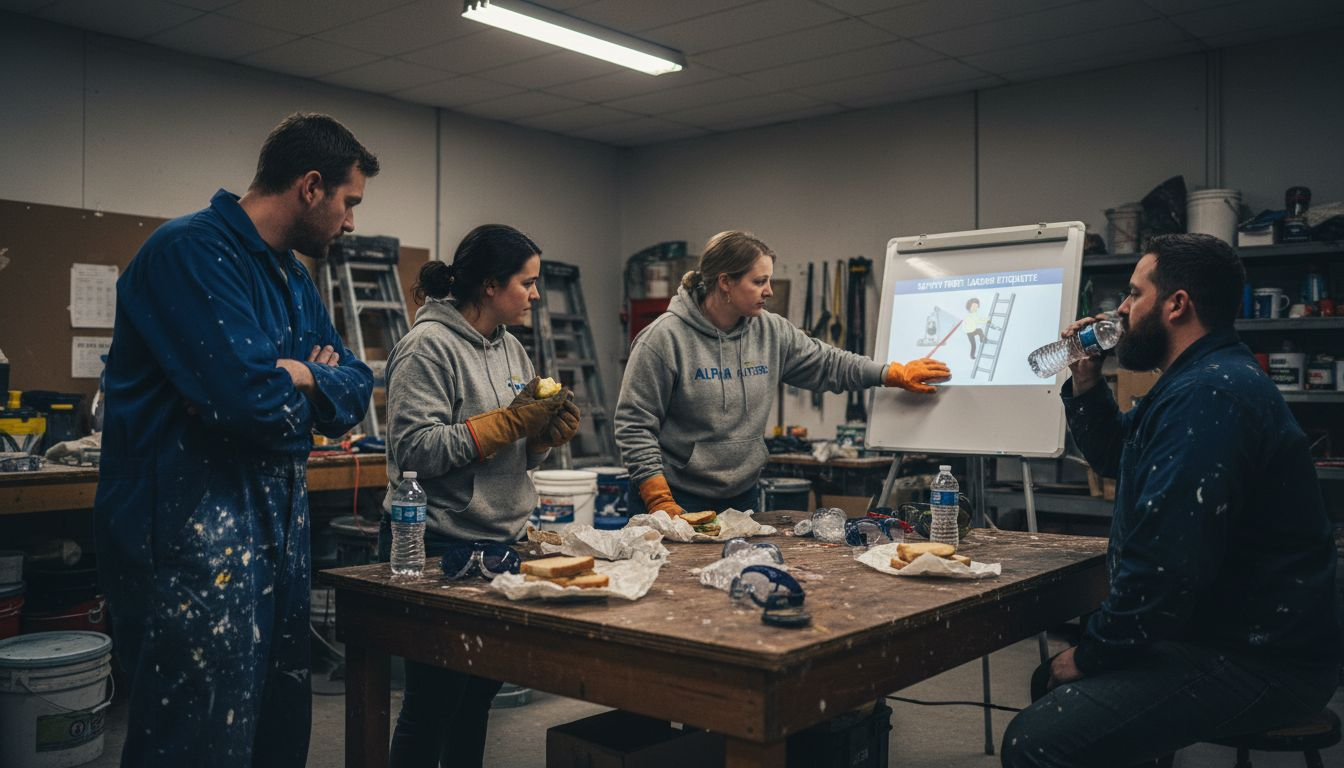
Training programs for industrial painting professionals must address multiple critical dimensions of workplace safety. These comprehensive educational initiatives cover essential areas such as personal protective equipment (PPE) usage, chemical handling procedures, respiratory protection, fall prevention, and emergency response protocols. Workers must demonstrate proficiency in recognizing potential workplace hazards, understanding material safety data sheets, and implementing proper containment and disposal techniques for hazardous coating materials.
Technical competency and safety certification represent fundamental requirements for industrial painting professionals in Florida. Contractors must provide documented evidence of specialized training, including certification in hazardous material handling, industrial coating application techniques, and compliance with state and federal safety regulations. Regular recertification and ongoing skills assessment ensure that workers maintain current knowledge of evolving safety standards, technological advancements, and regulatory requirements specific to industrial painting environments.
Pro Tip: Implement a comprehensive safety training log that tracks individual worker certifications, annual refresher courses, and specialized skill development to maintain regulatory compliance and workplace safety.
Environmental Controls and VOC Regulations
Volatile organic compound (VOC) regulations represent a critical environmental protection mechanism that directly impacts industrial painting practices in Florida. VOC regulatory standards establish stringent limits on chemical emissions to mitigate ground-level ozone formation, protect air quality, and minimize environmental and health risks associated with industrial coating applications.
Complex measurement and compliance protocols require manufacturers and contractors to carefully select coating materials and implement precise application techniques that minimize volatile organic compound emissions. The Environmental Protection Agency and state-level environmental agencies mandate comprehensive documentation and testing procedures, compelling industrial painting professionals to utilize low-VOC or zero-VOC coating technologies. These requirements necessitate ongoing investment in research, development of alternative coating formulations, and advanced application methodologies that balance performance requirements with environmental sustainability.
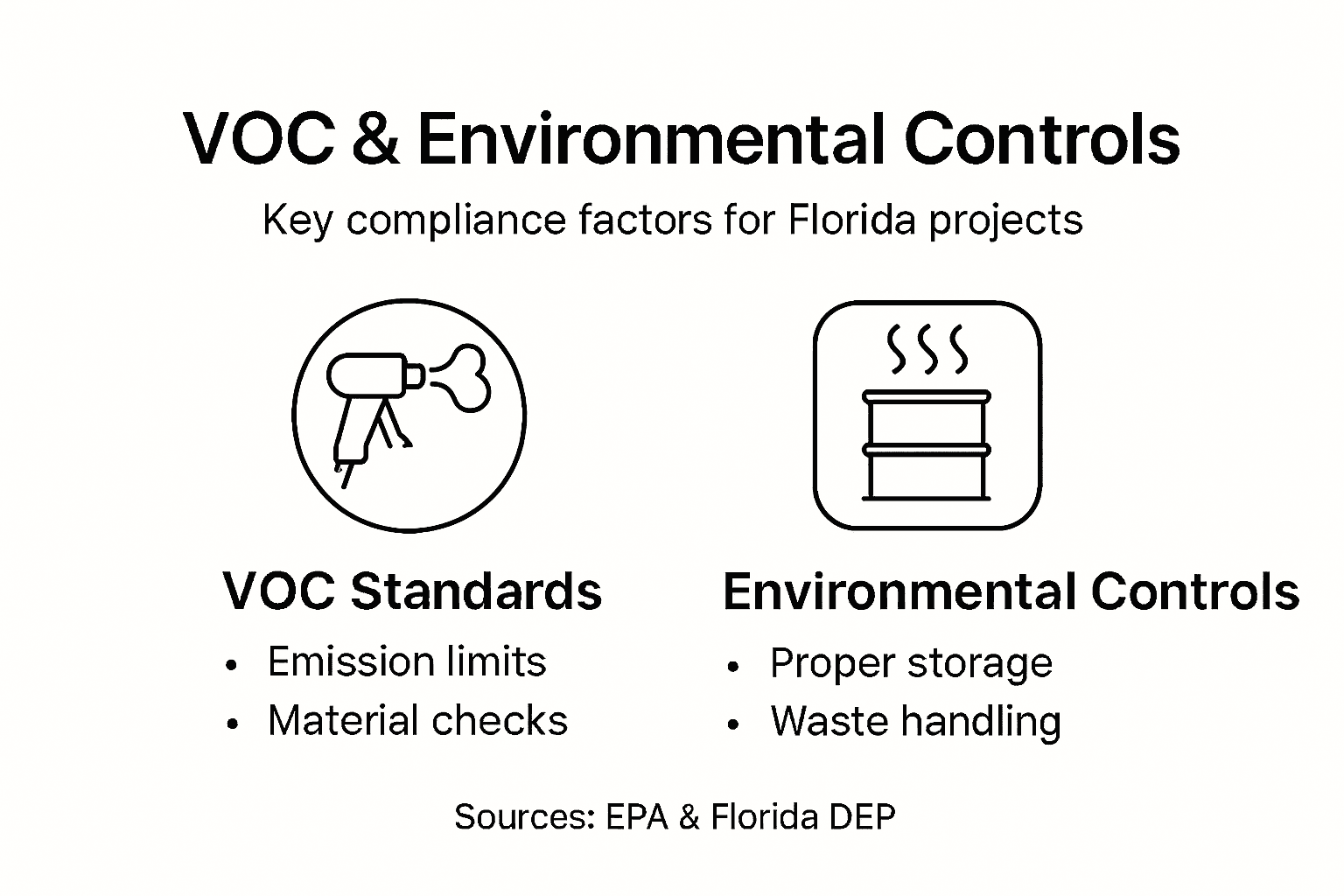
Florida’s unique environmental landscape amplifies the importance of rigorous VOC control measures. Coastal humidity, intense solar radiation, and sensitive ecological systems demand exceptionally high standards for industrial painting projects. Contractors must not only comply with federal and state regulations but also proactively develop strategies that minimize environmental impact while maintaining the durability and protective capabilities of industrial coatings. This includes selecting environmentally responsible products, implementing precise application techniques, and maintaining detailed records of material composition and emission levels.
Pro Tip: Develop a comprehensive VOC tracking system that documents material specifications, application methods, and emissions data to streamline regulatory compliance and demonstrate environmental responsibility.
Risks, Liabilities, and Common Compliance Errors
Industrial painting projects involve complex legal and financial risks that demand meticulous attention to regulatory compliance and operational standards. Compliance liability management requires comprehensive strategies that proactively identify, assess, and mitigate potential vulnerabilities throughout the project lifecycle, protecting contractors from significant financial and legal exposures.
Common compliance errors in industrial painting frequently stem from inadequate training, poor documentation, and misunderstandings of intricate regulatory requirements. These mistakes can range from improper surface preparation and inappropriate material selection to insufficient safety protocols and incomplete record-keeping. Each error represents a potential pathway to substantial legal liabilities, regulatory penalties, and potential project shutdowns, making rigorous procedural adherence crucial for operational success in Florida’s highly regulated industrial painting landscape.
Here is a comparison of common compliance errors and their typical consequences in industrial painting projects:
| Error Type | Typical Consequence | Prevention Strategy |
|---|---|---|
| Inadequate worker training | Increased accident risk | Implement annual certifications |
| Poor documentation | Regulatory fines or audits | Maintain digital compliance logs |
| Improper material selection | Reduced coating longevity | Consult certified specialists |
| Incomplete inspections | Hidden surface defects | Schedule third-party reviews |
Risk mitigation in industrial painting demands a multifaceted approach that integrates thorough staff training, robust quality control mechanisms, and comprehensive documentation practices. Contractors must develop systematic processes for identifying potential compliance gaps, conducting regular internal audits, and maintaining detailed records of all project activities. This proactive approach not only minimizes legal and financial risks but also demonstrates a commitment to professional excellence and regulatory compliance that can distinguish contractors in a competitive marketplace.
Pro Tip: Implement a comprehensive compliance checklist that includes detailed verification steps for each project phase, ensuring systematic documentation and risk assessment throughout the industrial painting process.
Ensure Compliance and Durability with Expert Industrial Painting Solutions
Meeting Florida’s rigorous industrial painting compliance standards requires more than just quality materials. It demands expert knowledge of local environmental challenges, strict adherence to ASTM and OSHA protocols, and precise application methods to protect your infrastructure for the long haul. If you face concerns about VOC regulations, surface preparation, and safety training in your industrial coating projects, Southern Sandblasting & Painting LLC offers trusted solutions backed by over 20 years of hands-on experience in Central Florida.
Take control of your project’s compliance and durability by partnering with industry-leading professionals specializing in Industrial Painting and Sandblasting & Painting. Visit Southern Sandblasting & Painting LLC now to request a consultation and secure peace of mind that your project meets every regulatory standard while extending asset life in Florida’s demanding environment.
Frequently Asked Questions
What are compliance standards in industrial painting?
Compliance standards in industrial painting are comprehensive guidelines that ensure safety, quality, and performance in coating projects. They govern material selection, surface preparation, application techniques, and inspection protocols to protect assets, workers, and the environment.
Why is Florida’s industrial painting industry subject to specific compliance standards?
Florida’s unique environmental challenges, including coastal humidity and extreme weather, require specialized industrial coating approaches that address corrosion resistance and substrate compatibility, making strict compliance essential for project success.
What role do regulatory agencies play in industrial painting compliance?
Regulatory agencies establish and enforce strict environmental and safety standards, impacting industrial painting practices by ensuring contractors adhere to guidelines related to air quality, waste management, workplace safety, and chemical handling.
How can contractors ensure they comply with safety protocols and training requirements?
Contractors can achieve compliance by implementing comprehensive training programs that address personal protective equipment (PPE) usage, chemical handling, and emergency response, while also maintaining detailed records of worker certifications and annual refresher courses.
Recommended
- Industrial Painting Safety Protocols in Florida Facilities
- Industry Standards for Coatings: Ensuring Compliance in 2026
- Industrial Painting Explained: Asset Protection in Florida
- Types of Industrial Coatings for Florida Infrastructure
- Sandblasting Contractor Baldwin Park FL
- Sandblasting Services Oviedo FL


