

Every Florida facility manager knows that moisture and salt air test your coatings daily. Ignoring routine inspections until visible failures appear doesn’t just threaten compliance, it can turn minor flaws into major repairs. Systematic and certified evaluation of coatings stands between asset longevity and spiraling costs. This article breaks down what regular inspections really require, clears up costly misconceptions, and shows how robust documentation protects your budget and infrastructure from the unique pressures of Central Florida.
Table of Contents
- Defining Regular Coating Inspections And Misconceptions
- Major Types Of Industrial Coating Inspections
- How Inspections Extend Asset Lifespans
- Legal Compliance And Industry Standards In Florida
- Cost Risks Of Skipping Inspections
Key Takeaways
| Point | Details |
|---|---|
| Importance of Regular Inspections | Regular coating inspections are essential for preventing costly failures in municipal infrastructure. They allow for early identification of degradation before it escalates into significant issues. |
| Systematic Evaluation | Employ both non-destructive and destructive testing methods for thorough assessments of coating integrity. This ensures compliance with industry standards and accurate documentation. |
| Cost-Effectiveness of Preventative Maintenance | Investing in routine inspections significantly reduces lifecycle costs by preventing unplanned failures, avoiding emergency repairs, and extending asset longevity. |
| Legal Compliance and Documentation | Adhering to Florida’s building codes and maintaining proper documentation protects municipalities from liability and demonstrates commitment to safety and quality. |
Defining Regular Coating Inspections and Misconceptions
Regular coating inspections in Florida’s infrastructure aren’t casual walk-arounds with a clipboard. They’re structured, methodical processes that combine visual assessment with precise measurements, documentation, and standards verification. For municipal infrastructure managers, understanding what actually constitutes a regular inspection separates effective maintenance programs from those that miss critical failures until assets are already compromised. Systematic checking using standardized procedures ensures coatings adhere to specified properties and application methods, which is particularly important when managing water tanks, bridges, and transportation infrastructure that face Florida’s aggressive moisture and salt-air environment.
The misconceptions around coating inspections run deep, and they cost municipalities real money. Many facility managers believe that visual inspection alone tells the complete story. You walk around a water tank or bridge support column, visually check for obvious flaking or corrosion, and assume the coating is performing as intended. Wrong. This approach misses coating failures happening beneath the surface, areas where adhesion is failing, or spots where the coating thickness has diminished to dangerous levels. The systematic and certified evaluation of coatings applies non-destructive and destructive testing methods to verify that protective properties remain intact. This includes measurement tools like dry film thickness gauges, adhesion testing equipment, and documented checklists that track parameters critical to coating quality and longevity. Regular inspections aren’t one person’s opinion. They’re evidence-based assessments conducted by trained inspectors who follow industry standards.
Another widespread misconception is that inspections only happen after problems appear. In reality, regular inspections function as preventative maintenance. You inspect quarterly, semi-annually, or annually (depending on your asset’s exposure level and coating type) to catch degradation before it accelerates. Florida’s climate makes this particularly critical. The combination of intense UV radiation, salt spray from coastal areas, high humidity, and temperature fluctuations creates conditions where coating failures can progress rapidly once they begin. A coating system that’s losing adhesion in February can become a full-blown corrosion problem by August without intervention. Documented daily reports and inspection checklists transform vague observations into actionable data. You know exactly where problems exist, how severe they are, and when you need remediation work scheduled.
Pro tip: Establish a baseline inspection in the first year of any coating application, then schedule subsequent inspections at intervals matching your asset’s exposure rating and location within Florida’s varying climate zones. This creates a reliable comparison point for tracking coating performance over time and justifies maintenance budgets with concrete data.
Major Types of Industrial Coating Inspections
Industrial coating inspections fall into two distinct categories, and knowing which type applies to your Florida infrastructure assets determines what problems you’ll catch and when you’ll catch them. Non-destructive testing methods allow you to evaluate coating condition without damaging the protective system itself, making them ideal for routine monitoring of operational assets. Destructive testing methods sacrifice small sections to gain definitive data about coating integrity, typically used for validation or troubleshooting specific failures. Dry film thickness measurement, holiday detection, and adhesion testing represent the core non-destructive approaches that municipal managers rely on repeatedly throughout an asset’s lifecycle.
For your water infrastructure and transportation assets in Florida’s climate, non-destructive inspections happen regularly during normal operations. Dry film thickness gauges measure coating depth to ensure the system provides adequate protection against the corrosion threats specific to your region. Holiday detection (also called pinhole testing) identifies defects in the coating film where moisture and corrosive elements can penetrate and attack the substrate beneath. Adhesion testing checks whether the coating bonds properly to the surface, which matters tremendously in Florida where moisture infiltration causes adhesion failure faster than in drier climates. These methods require trained inspectors and standardized procedures, but they don’t interrupt your asset’s function. You’re gathering real-time performance data without taking equipment offline.
Destructive testing methods provide the most definitive answers but involve removing coating samples for laboratory analysis. Cyclic corrosion testing, UV exposure tests, and salt fog resistance testing simulate Florida’s harsh environmental stresses to demonstrate how a coating system will perform over extended periods. These tests validate whether a coating product selection was correct for your specific exposure conditions and verify that application contractors met specification requirements. In practice, you conduct destructive testing when commissioning new coatings, investigating unexpected failures, or qualifying new coating products before large-scale application. The cost of removing and testing samples is offset by the certainty you gain about coating performance and the ability to prevent costly failures on the broader asset.
Your inspection strategy should layer both approaches. Non-destructive methods provide continuous monitoring data, while selective destructive testing validates your non-destructive results and answers critical questions about coating durability under Florida’s specific environmental pressures. This combination approach gives you early warning of degradation while maintaining the confidence that your protective systems actually deliver the longevity you’re counting on.
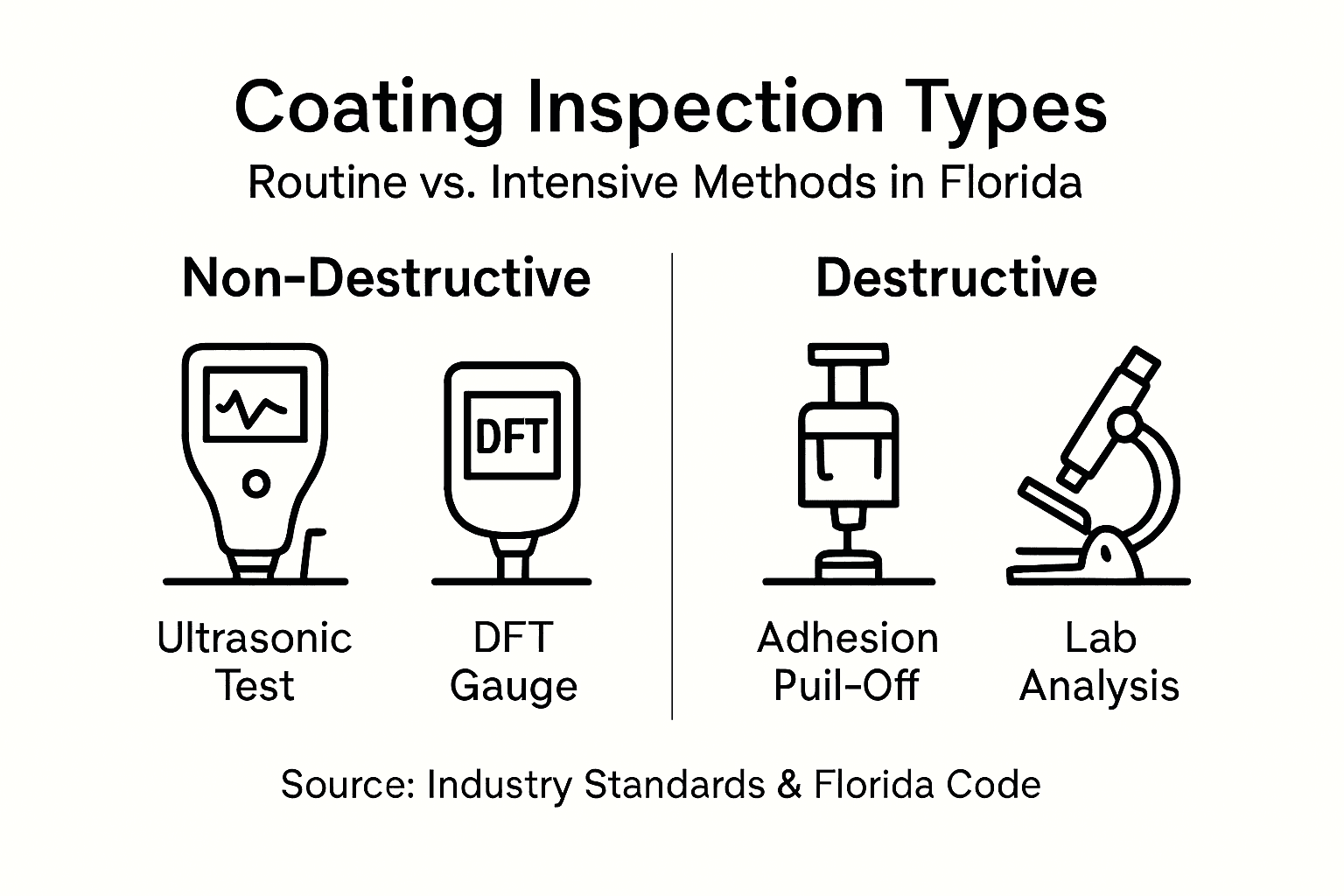
Here’s how non-destructive and destructive coating inspection methods compare in municipal infrastructure:
| Method Type | Typical Tools Used | Impact on Asset Operation | When Applied |
|---|---|---|---|
| Non-destructive | Thickness gauges, adhesion testers | No service interruption | Routine monitoring, preventive maintenance |
| Destructive | Sample removal, lab analysis | Partial disruption possible | Commissioning, failure investigation |
Pro tip: Schedule non-destructive inspections at fixed intervals (quarterly for high-exposure coastal assets, semi-annually for others) and use that baseline data to determine when destructive testing becomes necessary, rather than testing reactively after problems appear.
How Inspections Extend Asset Lifespans
Inspections don’t add years to your assets through magic. They do it through prevention. When you catch coating failures early, before corrosion penetrates the substrate, you’re stopping the clock on degradation. A water tank that loses coating integrity in one location might seem like a minor cosmetic issue until you realize that moisture and salt-laden Florida air are now attacking the steel beneath. Within months, that pinhole becomes a rust pocket. Within a year, structural strength is compromised. But if your inspection program identifies that same defect during a quarterly non-destructive test, you schedule localized recoating before serious damage starts. The difference between these two scenarios is years of additional asset life. Coating inspections validate that protective systems remain applied correctly and free of defects throughout service, ensuring your asset’s structural integrity is preserved and preventing unexpected failures that would otherwise cost far more to repair.
The math works because corrosion doesn’t progress linearly. In Florida’s environment, a compromised coating accelerates degradation exponentially once it begins. A coating system inspected and maintained regularly adds 15 to 25 years to typical infrastructure assets compared to assets that go uninspected until visible failure appears. Consider a bridge support column or a municipal water storage tank. The original coating might be specified for 20 years of protection. With regular inspections and targeted maintenance, that same coating system often delivers 35 to 45 years because you’re addressing micro-failures before they cascade. You’re also gathering data that informs smarter maintenance decisions. Advanced non-destructive testing methods optimize inspection intervals by providing quantitative data that allows dynamic adjustment of maintenance schedules, extending asset lifespans while maintaining safety and compliance. Instead of following a rigid inspection calendar that might be too conservative or too aggressive, you adjust based on actual coating condition data.
Inspections also reduce the total cost of ownership by preventing catastrophic failures that trigger emergency repairs, equipment downtime, or complete asset replacement. A planned maintenance intervention discovered through inspection costs a fraction of what emergency remediation costs when a coating failure leads to structural issues. Florida municipalities that invest in regular coating inspection programs report significantly lower lifecycle costs for their infrastructure. Your inspection data becomes a powerful budgeting tool. You can demonstrate to stakeholders exactly why maintenance spending is justified and when asset replacement becomes necessary, rather than arguing for funding based on vague concerns about deterioration.
The practical reality is simple: assets that are regularly inspected fail predictably and inexpensively. Assets without inspection programs fail unexpectedly and catastrophically. Every year you extend an asset’s functional life through preventative inspection is a year you avoid capital replacement costs.
Pro tip: Create a baseline inspection report for each critical asset within the first year of coating application, then compare subsequent inspection results against that baseline to track degradation rates and predict when major maintenance will be needed, allowing you to plan budgets two to three years in advance.
Legal Compliance and Industry Standards in Florida
Florida doesn’t leave coating applications and inspections to chance or personal preference. The state enforces building codes and safety standards that directly impact how you must conduct inspections and document results. Your municipality’s infrastructure must comply with Florida’s adopted building codes, which integrate national standards into a regulatory framework that governs everything from surface preparation to final coating thickness. Florida enforces the 2021 IECC and ASHRAE codes with amendments effective from December 2023, dictating minimum requirements for coatings in construction related to energy efficiency and material safety. These aren’t suggestions or best practices. They’re legal requirements. When an inspector evaluates a coating system on a municipal water tank or bridge, that inspector must verify compliance with these standards or your municipality faces potential liability if failures occur.
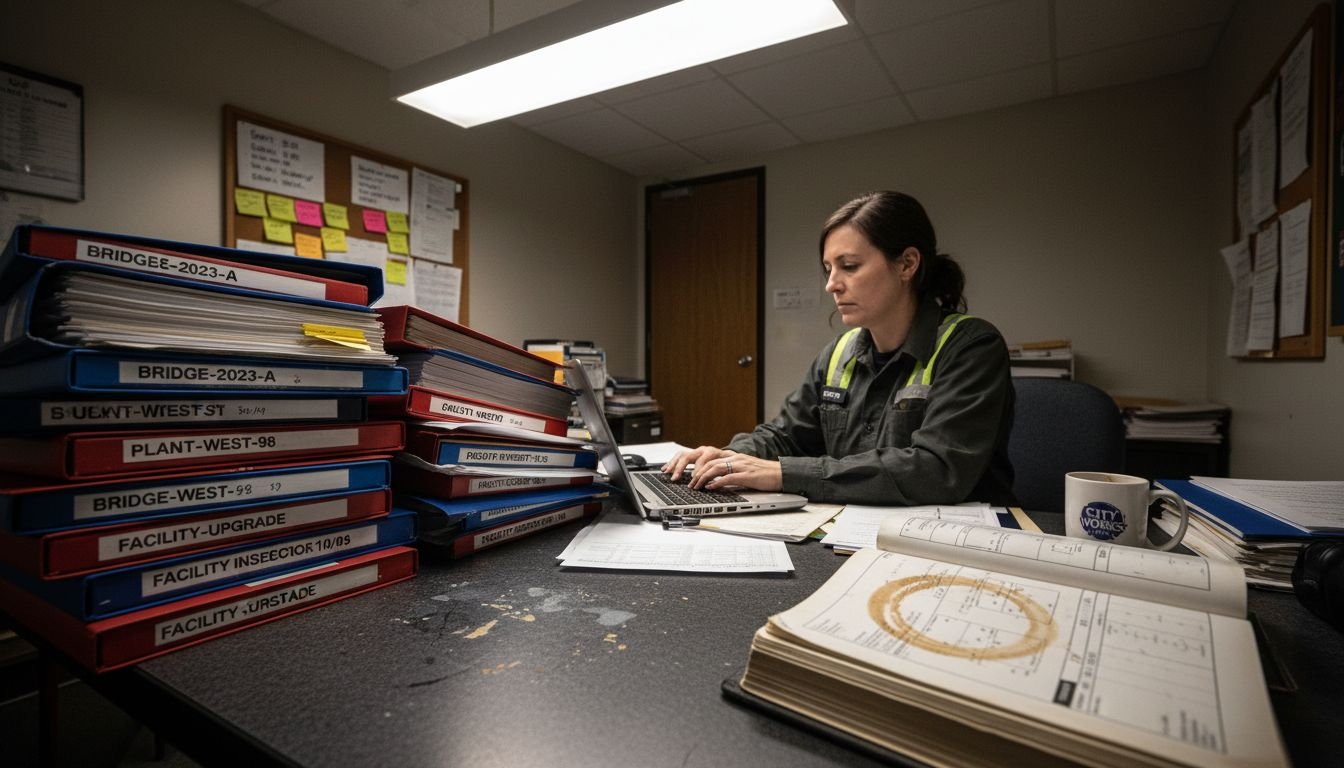
Beyond building codes, the coating inspection industry operates under rigorous standards developed by organizations like NACE International and SSPC (now part of AMPP). These standards define inspection procedures, documentation requirements, inspector certifications, and acceptance criteria for coating systems. When you hire inspectors or conduct inspections internally, compliance with these standards protects your municipality legally. If a coating failure occurs and causes property damage or safety issues, inadequate inspection documentation becomes evidence of negligence. Conversely, documented inspections following industry standards demonstrate due diligence. Your inspection reports become legally defensible records showing that you took reasonable steps to prevent failure. This matters tremendously when dealing with contractors, insurance claims, or regulatory inquiries.
Documentation itself carries legal weight in Florida. Inspection reports, certifications, and compliance records must meet state authentication requirements to be enforceable in contractual or regulatory contexts. Official documents related to coatings inspection certifications and compliance documentation require proper verification through state apostille and notarial services to ensure they’re legally recognized within Florida jurisdiction. This means your inspection records aren’t just maintenance logs. They’re legal documents that may be reviewed during audits, regulatory inspections, or litigation. Proper formatting, dated signatures, and professional documentation standards transform routine inspection data into legally credible evidence of your maintenance program’s rigor.
The practical implication is straightforward: inspections conducted according to industry standards and documented properly protect your municipality from liability while demonstrating regulatory compliance. Inspections conducted informally or without proper documentation expose you to risk. When budget constraints tempt you to skip inspections or reduce documentation rigor, remember that the cost of addressing a preventable coating failure is exponentially higher than the cost of conducting proper inspections.
Pro tip: Maintain inspection records in a centralized, organized system with clear dating, inspector credentials, and reference to specific industry standards followed (ASTM, NACE, SSPC guidelines), creating an auditable trail that demonstrates compliance and provides legal protection if failures occur.
Cost Risks of Skipping Inspections
Skipping coating inspections isn’t a cost savings strategy. It’s a financial gamble with terrible odds. Municipal infrastructure managers operating under tight budgets sometimes view inspection programs as discretionary spending that can be deferred when funds run short. This logic fails catastrophically when you understand what actually happens to coating systems without regular oversight. Field rework caused by insufficient inspection typically costs between 0.38% to 0.76% of a project’s contract value, translating to rework expenses that include added labor, material replacement, project delays, and eroded profit margins. But that’s just the immediate cost of fixing discovered problems. The real financial damage emerges over time as uninspected coatings fail silently beneath the surface.
Consider the lifecycle costs of a water tank or bridge structure. You purchase a coating system specified to provide 20 years of protection at a cost of, say, 500,000 dollars. Without inspections, you have no way of knowing whether that coating is actually delivering the protection you paid for. A defect in surface preparation, improper application thickness, or early adhesion failure might be progressing right now, but you won’t discover it until visible rust appears. By then, corrosion has penetrated deep into the substrate. What should have been a 50,000 dollar localized recoating intervention at year 5 becomes a 200,000 dollar structural repair at year 8 because you caught the failure too late. Neglecting coating inspections accelerates corrosion and shortens the effective lifespan of protective coatings, leading to earlier than anticipated repairs that greatly increase lifecycle costs. A coating system that should have delivered 25 years of service (with proper maintenance) instead fails catastrophically at 12 years, forcing premature replacement of the entire coating system or, worse, the entire asset.
The financial cascade doesn’t stop with repair costs. Unplanned failures trigger operational disruptions. A bridge with sudden structural concerns requires emergency closures or reduced load limits, disrupting commerce and emergency response. A water storage tank with unexpected corrosion might require immediate service interruptions or water quality concerns that expose your municipality to liability. These indirect costs dwarf the inspection expenses you tried to save. Insurance premiums increase after failures. Regulatory fines accumulate if failures compromise safety. Litigation costs emerge if property damage or injuries result from preventable failures. A municipality that invests 25,000 dollars annually in comprehensive coating inspections avoids 400,000 to 600,000 dollar emergency repairs and the downstream costs of operational disruption, liability exposure, and reputational damage.
The mathematics of deferred maintenance are brutal. The inspection program costs money upfront but prevents exponentially larger costs downstream. The program that seems expensive today prevents the catastrophic budget crisis tomorrow.
Summary of main cost risks associated with skipping coating inspections:
| Risk Category | Short-Term Effects | Long-Term Effects | Example Consequence |
|---|---|---|---|
| Increased Repair Cost | Rapid escalation in expenses | Premature asset failure | $200,000 emergency structural repair |
| Operational Disruption | Service interruptions | Lower reliability, lost revenue | Emergency closures, water outages |
| Legal Liability | Regulatory fines | Lawsuits, insurance hikes | Increased premiums, legal disputes |
Pro tip: Calculate the annual inspection cost per asset and compare it against the potential repair cost if a failure occurs undetected, then present that comparison to stakeholders to justify inspection budgets as insurance against far larger emergency expenditures.
Protect Florida Infrastructure with Expert Coating Inspection Support
The challenge municipal managers face is clear: Florida’s harsh climate demands vigilant, regular coating inspections to prevent costly failures and extend asset life. You need more than visual checks; you require professional surface preparation and certified industrial coating applications that withstand salt spray, humidity, and UV exposure. Southern Sandblasting & Painting LLC understands these critical pain points and offers expert solutions tailored to keep your infrastructure protected and compliant.
Act now to safeguard your city’s water tanks, bridges, and transportation assets with trusted sandblasting and industrial painting services from Southern Sandblasting & Painting LLC. Discover how our specialized surface preparation and coating expertise align directly with your inspection requirements. Visit our Industrial Painting and Sandblasting service pages for detailed solutions. Don’t wait for coating failures to escalate—partner with us today at https://southernsandblastingandpainting.com to preserve asset integrity and control maintenance costs with confidence.
Frequently Asked Questions
What are regular coating inspections?
Regular coating inspections are structured assessments that involve visual evaluations along with precise measurements and documentation to ensure the integrity of coatings on infrastructure, particularly in harsh environments.
Why are coating inspections important for municipal infrastructure?
Coating inspections help identify early signs of failure and prevent more serious problems such as corrosion and structural damage. They ensure that protective coatings are functioning as intended, thus extending the asset’s lifespan and reducing long-term costs.
How often should coating inspections be conducted?
Coating inspections are typically conducted quarterly, semi-annually, or annually, depending on the asset’s exposure level and the type of coating used. Regular intervals help catch degradation before it escalates.
What types of testing methods are used in coating inspections?
Coating inspections commonly use non-destructive testing methods (like dry film thickness gauges and adhesion testers) for routine monitoring, and destructive testing methods (like lab analysis) to validate specific failures or assess new coatings.


