

Corrosion quietly chips away at the value and safety of Central Florida’s water mains, bridges, and public buildings. Every municipal infrastructure manager must face the reality that corrosion is not just surface rust but a predictable scientific process driven by electrochemical reactions. The real challenge is cutting through common misconceptions to find solutions that actually work against the region’s unique humidity, soil, and weather conditions. This guide highlights proven strategies for controlling corrosion so public investments last longer and serve communities safely.
Table of Contents
- Corrosion Protection Fundamentals And Misconceptions
- Types Of Corrosion Affecting Infrastructure
- Key Methods For Industrial Corrosion Prevention
- Industry Standards And Compliance Requirements
- Risks, Costs, And Common Pitfalls In Protective Solutions
Key Takeaways
| Point | Details |
|---|---|
| Corrosion is a Predictable Process | Understanding the electrochemical dynamics of corrosion is essential to devise effective prevention strategies for infrastructure management. |
| Comprehensive Protection Strategies are Necessary | Superficial treatments like painting are insufficient; a multi-faceted approach is required to address various environmental challenges. |
| Economic Implications of Corrosion are Significant | Proactive corrosion management can prevent a substantial portion of estimated costs, underlining the importance of strategic planning and monitoring. |
| Adhere to Industry Standards | Compliance with established corrosion protection standards is crucial for ensuring robust infrastructure and avoiding costly failures. |
Corrosion Protection Fundamentals and Misconceptions
Corrosion represents a complex electrochemical process that systematically degrades critical infrastructure materials, particularly metals, through environmental interactions. Understanding its fundamental mechanisms is crucial for municipal infrastructure managers seeking to protect substantial public investments. While many assume corrosion is simply “rust”, the reality involves intricate electrochemical reaction dynamics that can compromise structural integrity.
The primary drivers of corrosion include environmental conditions, material composition, stress levels, and temperature variations. Metals undergo anodic and cathodic reactions when exposed to moisture, oxygen, and other reactive substances, gradually breaking down surface structures. These reactions create electrical currents that progressively weaken metallic components, potentially leading to catastrophic infrastructure failures if left unaddressed. Municipalities must recognize that corrosion is not random but a predictable scientific process that can be systematically managed through strategic protective interventions.
Common misconceptions about corrosion prevention often lead to ineffective protection strategies. Many infrastructure managers incorrectly believe that painting or superficial coating provides comprehensive protection. In reality, effective corrosion control requires a multifaceted approach involving comprehensive protective coating techniques that address specific environmental challenges. This means selecting appropriate materials, understanding electrochemical interactions, implementing regular monitoring protocols, and utilizing specialized industrial coatings designed for specific environmental conditions.
Pro Tip: Implement a proactive corrosion assessment program that includes quarterly inspections and detailed environmental risk mapping to identify potential degradation points before significant damage occurs.
Types of Corrosion Affecting Infrastructure
Infrastructure faces multiple complex corrosion challenges that can compromise structural integrity and public safety. Corrosion manifests through distinct mechanisms that municipal managers must understand to implement effective protection strategies. The primary types of corrosion include uniform, localized, and specialized degradation processes that interact differently with infrastructure materials.
Uniform corrosion represents the most straightforward form, where metal surfaces deteriorate evenly across exposed areas. In contrast, localized corrosion types like pitting and crevice corrosion create concentrated damage zones that can be particularly dangerous. Pitting corrosion creates small, deep holes in metal surfaces, potentially weakening critical structural components without obvious external signs. Crevice corrosion develops in tight spaces with limited air circulation, making it especially problematic for complex infrastructure systems with intricate geometric designs.
More specialized corrosion types include galvanic corrosion, which occurs when two dissimilar metals interact electrically, and microbial-induced corrosion, where microorganisms accelerate metal degradation. These advanced corrosion mechanisms require sophisticated anti-corrosion coating strategies that go beyond traditional surface treatments. Environmental factors like soil composition, humidity, temperature, and chemical exposure play crucial roles in determining corrosion progression, making comprehensive assessment and monitoring essential for infrastructure preservation.
Here is a summary of major corrosion types and their primary concerns for infrastructure:
| Corrosion Type | Typical Location | Main Risk | Monitoring Challenge |
|---|---|---|---|
| Uniform | Exposed surfaces | Gradual material loss | Easy to detect |
| Pitting | Under coatings or debris | Hidden localized damage | Hard to identify early |
| Crevice | Joints and overlaps | Accelerated attack in gaps | Requires close inspection |
| Galvanic | At metal junctions | Fast corrosion of less noble metal | Depends on material compatibility |
| Microbial-Induced | Damp or buried areas | Rapid metal degradation | Microorganism detection needed |
Pro Tip: Develop a detailed corrosion mapping system that categorizes infrastructure components by material type, environmental exposure, and potential corrosion risk to prioritize targeted protection interventions.
Key Methods for Industrial Corrosion Prevention
Industrial corrosion prevention demands a comprehensive and strategic approach that integrates multiple protective techniques. Corrosion Prevention and Control (CPC) strategies represent a holistic methodology for safeguarding critical infrastructure against progressive material degradation. These approaches go beyond simple surface treatments, encompassing systematic management principles that address corrosion challenges throughout an asset’s entire lifecycle.
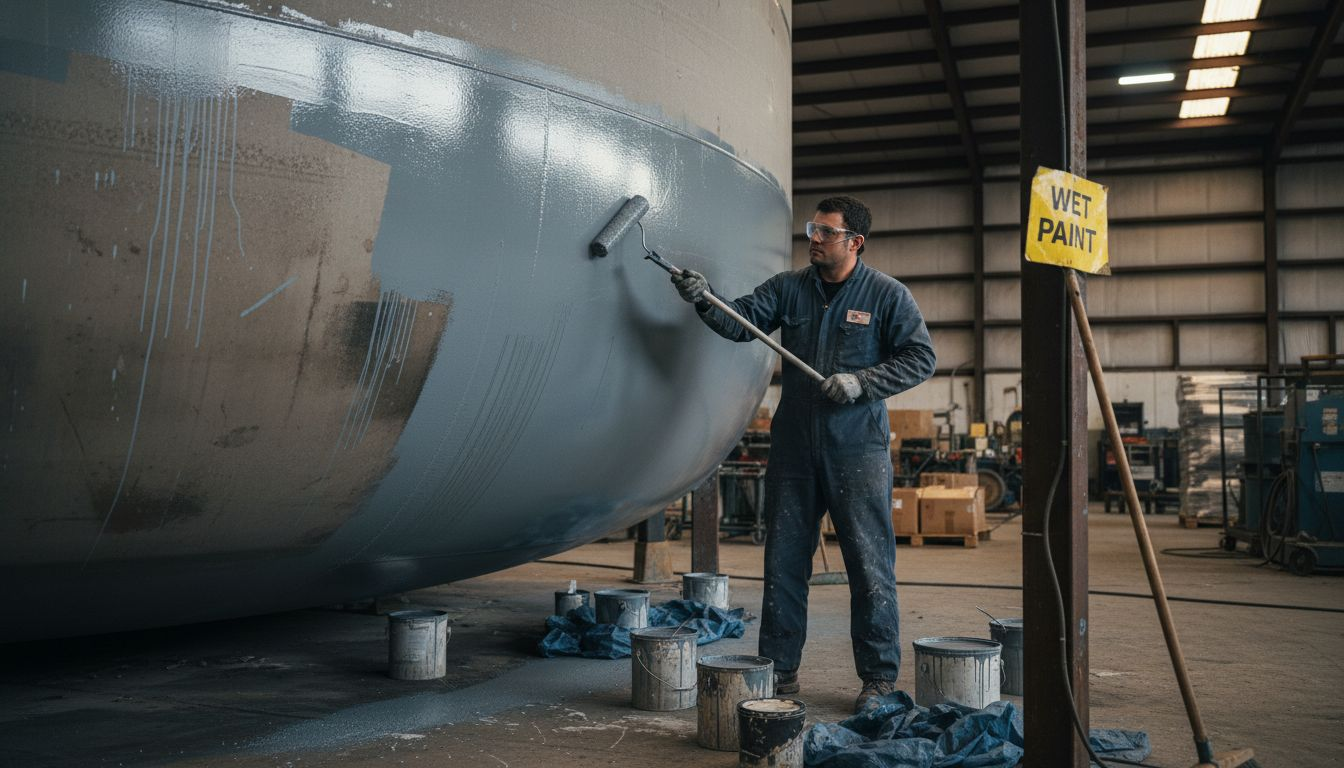
Key methods for industrial corrosion prevention include materials selection, protective coatings, cathodic protection, and chemical inhibition. Material selection involves choosing metals and alloys with inherent resistance to specific environmental conditions. Protective coatings create physical barriers that block corrosive agents from directly contacting metal surfaces. Cathodic protection employs electrical techniques to suppress corrosion reactions by introducing alternative electron flow, essentially neutralizing the electrochemical processes that drive metal deterioration.
Chemical inhibitors represent another critical technique, strategically reducing corrosion rates by forming protective molecular layers on metal surfaces. These inhibitors interact with metal substrates to create microscopic protective films that dramatically slow oxidation and degradation processes. Industrial coating application techniques have become increasingly sophisticated, allowing for precise, targeted protection that addresses the unique environmental challenges facing different infrastructure components.
The table below compares key industrial corrosion prevention methods and their unique advantages:
| Method | Primary Function | Optimal Use Case | Notable Limitation |
|---|---|---|---|
| Protective Coatings | Barrier against environment | Above-ground steel structures | Needs reapplication |
| Cathodic Protection | Suppresses electrochemical reactions | Underground pipelines | Requires external power or anodes |
| Material Selection | Uses corrosion-resistant alloys | Highly exposed or specialized sites | Higher initial cost |
| Chemical Inhibitors | Slows reaction at metal surface | Closed cooling systems | Continuous dosing required |
Pro Tip: Develop a comprehensive corrosion management database that tracks environmental conditions, material performance, and coating effectiveness for each critical infrastructure asset to enable predictive maintenance and targeted intervention strategies.
Industry Standards and Compliance Requirements
Industrial corrosion protection demands rigorous adherence to established standards that ensure consistent, reliable asset preservation. International corrosion protection standards provide comprehensive frameworks that guide engineers, contractors, and asset managers through complex environmental challenges. These standards establish critical benchmarks for material selection, coating performance, and long-term infrastructure durability.

The ISO 12944 standard represents a cornerstone of global corrosion management, categorizing environments by corrosivity levels and specifying precise coating system requirements. This standard addresses atmospheric, immersed, and buried environments, offering detailed guidance for different infrastructure types. Compliance involves comprehensive documentation, systematic testing, and verification processes that ensure protective measures meet stringent performance criteria across diverse operational conditions.
Government agencies like the Department of Defense have developed even more specialized Corrosion Prevention and Control (CPC) regulations that integrate corrosion management into acquisition, design, and maintenance lifecycles. These regulations mandate incorporating corrosion control requirements into system design documentation, requiring detailed trade studies, proper resource allocation, and explicit contractual provisions that prioritize long-term asset protection. Compliance is not merely a bureaucratic exercise but a critical strategy for maintaining infrastructure reliability, safety, and economic efficiency.
Pro Tip: Create a comprehensive compliance tracking system that maps each infrastructure component against relevant industry standards, ensuring systematic documentation and proactive monitoring of corrosion protection requirements.
Risks, Costs, and Common Pitfalls in Protective Solutions
Corrosion represents a massive economic challenge with global implications, estimated at an astronomical $2.5 trillion annually in potential damages and lost productivity. Corrosion management strategies reveal that 15-35% of these costs are preventable through systematic, proactive approaches. Infrastructure managers must understand the nuanced financial landscape of corrosion, which extends far beyond simple surface treatment expenses.
The economic impact of corrosion can be categorized into two critical domains: pre-failure and post-failure costs. Pre-failure expenses include design considerations, material selection, protective coating applications, and ongoing monitoring systems. Post-failure costs encompass catastrophic expenses like emergency repairs, production downtime, asset replacement, and potential safety-related litigation. These downstream costs can exponentially exceed initial prevention investments, making strategic corrosion management a critical financial imperative for municipal infrastructure managers.
Common pitfalls in protective solutions often stem from fragmented approaches and inadequate lifecycle planning. Many organizations make critical errors such as selecting inappropriate coating materials, neglecting environmental context, inconsistent maintenance protocols, and failing to integrate comprehensive corrosion control strategies across different infrastructure components. Asset longevity strategies require holistic thinking that considers environmental exposure, material compatibility, and long-term performance metrics beyond immediate cost considerations.
Pro Tip: Develop a standardized corrosion risk assessment framework that quantifies potential economic impacts and systematically prioritizes protective interventions based on criticality and potential failure consequences.
Protect Your Infrastructure with Expert Corrosion Solutions
Corrosion can silently compromise your critical infrastructure through complex electrochemical processes that many overlook. To effectively combat risks such as pitting, crevice, and microbial-induced corrosion, you need more than just surface coatings. You require comprehensive, industry-compliant solutions that address precise environmental challenges and extend asset lifespans.
At Southern Sandblasting & Painting LLC, we specialize in advanced sandblasting techniques to thoroughly prepare surfaces by removing rust, paint, and contaminants. Our expert team then applies premium industrial painting and protective coatings specifically engineered to shield your infrastructure against ongoing corrosion threats. With two decades of experience serving municipal, commercial, and government clients across Central Florida, we understand the urgency and complexity involved in safeguarding critical assets.

Don’t wait until corrosion causes costly failures and safety hazards. Take proactive control of your infrastructure’s longevity today by partnering with a proven industry leader. Visit Southern Sandblasting & Painting LLC to learn more about how our tailored corrosion prevention services can protect your valuable investments. Contact us now for a consultation and ensure your infrastructure remains strong and reliable for years to come.
Frequently Asked Questions
What are the primary types of corrosion that affect infrastructure?
The primary types of corrosion affecting infrastructure include uniform, pitting, crevice, galvanic, and microbial-induced corrosion. Each type manifests differently and poses unique challenges, requiring targeted protection strategies.
How can municipalities effectively prevent corrosion in critical infrastructure?
Municipalities can effectively prevent corrosion by implementing a comprehensive approach that includes materials selection, protective coatings, cathodic protection, and the use of chemical inhibitors. Regular monitoring and thorough environmental risk assessments are also vital for proactive management.
What role do coatings play in corrosion protection?
Coatings serve as physical barriers that protect metal surfaces from exposure to corrosive agents. Effective coatings must be selected based on specific environmental challenges, and they require periodic inspections and reapplications to maintain their protective capabilities.
What are some common misconceptions about corrosion prevention?
Common misconceptions about corrosion prevention include believing that painting or superficial coatings provide sufficient protection. Effective corrosion control requires a multi-faceted approach that includes proper material selection, understanding electrochemical interactions, and implementing ongoing monitoring protocols.


