
TL;DR:
- Environmental blasting involves controlled abrasive methods that reduce dust emissions, waste, and environmental harm during surface cleaning. It is essential for regulatory compliance and safe removal of hazardous coatings like lead and asbestos, especially in sensitive or construction sites. Employing wet, dustless, or contained dry techniques improves safety, minimizes contamination risks, and aligns with EPA and OSHA standards.
Environmental blasting is defined as the controlled use of abrasive media to clean, strip, or prepare surfaces while actively minimizing dust emissions, waste generation, and harm to surrounding ecosystems. Unlike conventional dry blasting, which releases uncontrolled particulate into the air, environmental blasting integrates containment systems, wet suppression technology, and regulatory compliance protocols from the start of every job. For construction and environmental professionals managing lead paint removal, asbestos abatement, or PCB-contaminated surface preparation, this distinction is not academic. It determines whether your project passes inspection or shuts down. Southernsandblastingandpainting has worked across Central Florida’s infrastructure sector for over 20 years, and the shift toward environmentally controlled blasting is the single biggest operational change in that time.
What is environmental blasting and why does it matter?
Environmental blasting is the industry’s answer to a regulatory and public health problem that conventional abrasive blasting created. Traditional dry blasting propels abrasive media at high velocity to strip coatings or corrosion from steel, concrete, and other substrates. The problem is the dust cloud it generates, which carries lead particles, asbestos fibers, silica, and other hazardous materials into the air and surrounding soil.
The term “environmental blasting” covers several controlled techniques, including wet abrasive blasting, dustless blasting, and precision-sequenced demolition blasting used in construction. Each method shares a core goal: achieve the surface preparation result without creating a secondary contamination problem. For facility managers and project engineers, understanding the environmental blasting definition is the first step toward selecting the right method for your site conditions and compliance obligations.
The practical stakes are high. EPA and OSHA both regulate airborne particulate from blasting operations, and violations carry project shutdowns and significant fines. Wet abrasive blasting, for example, reduces airborne dust by up to 92% compared to traditional dry blasting. That number means the difference between a compliant job site and a worker exposure incident.
What are the primary methods used in environmental blasting?
Environmental blasting methods fall into three main categories, each suited to different site conditions, substrate types, and contamination levels.
Wet Abrasive Blasting introduces water into the abrasive stream, either at the nozzle or within the blast pot. The water encapsulates dust particles before they become airborne. Systems like the ESCA Blast ClearBlast are purpose-built for this application, delivering consistent water-to-media ratios that maintain surface profile while suppressing particulate. This method is the recognized standard for lead paint and asbestos removal on bridges, water tanks, and industrial structures.
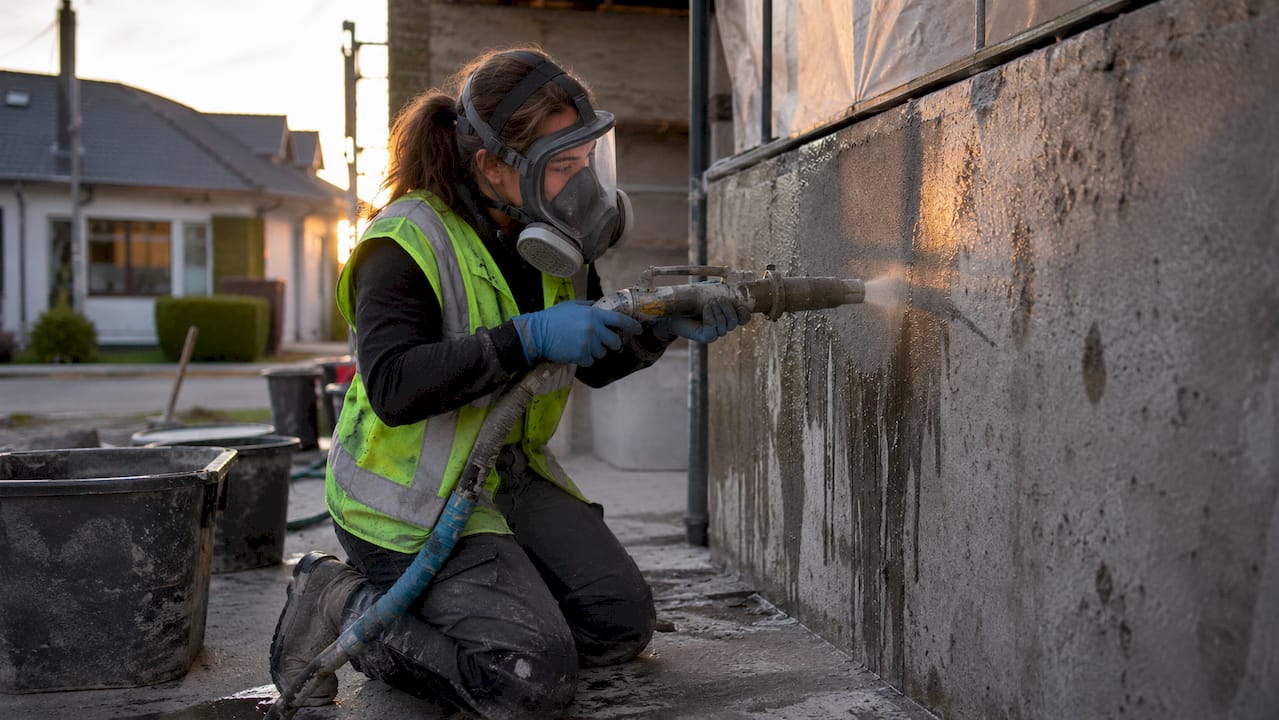
Dustless Blasting uses a water slurry mixed with abrasive media, producing a wet stream that hits the surface and falls as a contained slurry rather than a dust cloud. The slurry is easier to collect and dispose of as regulated waste. This approach works well on open job sites where full enclosure is impractical but containment mats and vacuum recovery systems can be deployed.
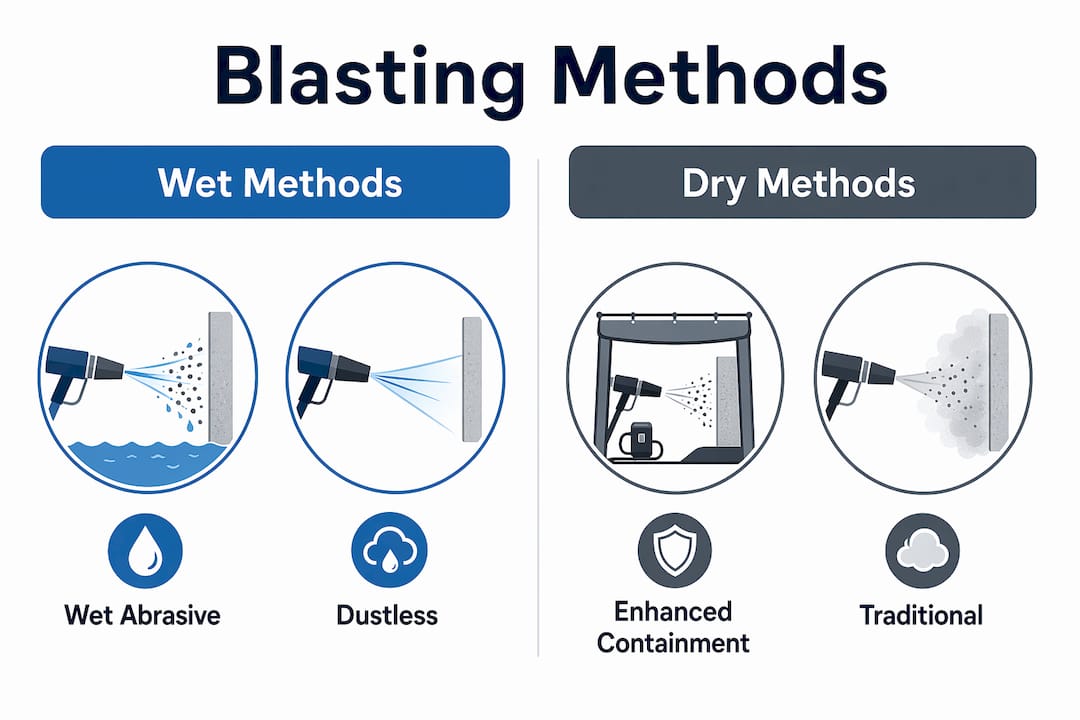
Dry Blasting with Enhanced Containment remains in use for interior applications where full enclosure, negative air pressure systems, and HEPA filtration can capture 100% of the blast residue. This is common in enclosed tank interiors or industrial facilities where wet methods would create corrosion or adhesion problems for subsequent coatings.
Common abrasive media in environmental applications include garnet, steel grit, and crushed glass. Silica sand is largely avoided due to silicosis risk. Garnet is preferred for many environmental jobs because it is recyclable and low in free silica, reducing both worker exposure and waste volume.
Pro Tip: Match your abrasive hardness to your substrate. Using steel grit on thin-walled or brittle structures causes substrate damage and generates excess hazardous waste. Garnet at lower pressures is the safer call on aged infrastructure.
How does environmental blasting compare to traditional blasting?
The core difference between traditional and environmental blasting is not the abrasive or the pressure. It is the system built around the blast to control what happens to the material after it leaves the nozzle.
| Factor | Traditional Dry Blasting | Environmental Blasting |
|---|---|---|
| Dust suppression | Minimal to none | Up to 92% reduction with wet methods |
| Waste containment | Passive collection only | Active vacuum recovery and slurry management |
| Regulatory compliance | High violation risk | Designed for EPA and OSHA compliance |
| Noise and vibration | Unmanaged | Monitored and controlled in sensitive areas |
| Abrasive recyclability | Single-use typical | Garnet and steel grit can be recycled |
| Hazardous coating removal | High exposure risk | Wet blasting suppresses fiber and particle release |
Traditional dry blasting moves faster on open sites with no sensitive receptors nearby. Environmental blasting costs more per square foot in setup and waste disposal. The tradeoff is straightforward: environmental blasting keeps your project running. A shutdown from an EPA notice of violation costs far more than the premium for wet suppression equipment.
Wet abrasive blasting is the recognized safest method for removing hazardous coatings like lead paint and asbestos, suppressing up to 92% of hazardous dust and fiber release. That performance level is why municipal clients and government agencies increasingly specify wet or dustless methods in their bid requirements.
Pro Tip: If your project involves any coating that tests positive for lead or asbestos, default to wet abrasive blasting regardless of site conditions. The containment cost is always lower than the remediation cost of a contamination event.
What regulatory requirements govern environmental blasting?
Regulatory compliance in environmental blasting operates across federal, state, and project-specific levels. Understanding all three layers before mobilizing equipment prevents costly mid-project corrections.
- EPA Standards for Hazardous Waste. Blast residue from lead paint or PCB-contaminated surfaces is classified as hazardous waste under RCRA. It requires manifested disposal through licensed hazardous waste contractors. Wet blasting slurry containing these contaminants must be collected, tested, and disposed of accordingly.
- OSHA Silica and Lead Standards. OSHA’s 29 CFR 1926.1153 limits worker exposure to respirable crystalline silica. Environmental blasting methods that suppress dust directly reduce personal air monitoring results and simplify compliance documentation. Lead exposure is governed by 29 CFR 1926.62, which mandates engineering controls, including wet methods, as the first line of defense.
- Continuous Debris Management. TasPorts guidelines require continuous cleaning and removal of abrasive blast residues throughout the workday using industrial vacuums and sweepers. This is not a post-shift cleanup requirement. It is a continuous operational mandate that prevents residue from migrating off-site via wind or stormwater.
- Weather-Based Operational Controls. Blasting operations must cease during adverse weather conditions, including high winds and rain, that threaten containment integrity. Wind can carry blast residue beyond the work zone perimeter, creating off-site contamination liability.
- Monitoring and Documentation. Real-time air monitoring at the perimeter of the work zone is standard practice on regulated projects. Results must be logged and retained as part of the project environmental record. Many municipal contracts now require third-party environmental monitors on site during blasting operations.
Achieving near-complete containment of blast residues requires multiple redundant systems, including enclosures, industrial dust collectors, and continuous vacuuming throughout the shift. Single-system approaches fail when equipment malfunctions or site conditions change.
What are the sustainability benefits and challenges?
Sustainability in blasting is now a core business requirement, not a marketing position. Project owners, government agencies, and insurance carriers all scrutinize environmental performance records before awarding contracts.
The primary sustainability benefits of environmental blasting include:
- Reduced hazardous waste volume. Wet blasting slurry, when properly collected, concentrates contaminants into a smaller waste stream than the diffuse dust cloud from dry blasting.
- Abrasive recycling. Garnet and steel grit can be separated from blast residue, cleaned, and reused. Recyclable abrasives combined with high-efficiency dust collectors reduce both material cost and landfill volume.
- Lower worker health liability. Suppressing dust at the source reduces long-term occupational disease claims, which directly affects project insurance costs.
- Ecosystem protection. Proper containment prevents heavy metals and coating fragments from entering stormwater systems, protecting waterways near infrastructure projects.
The challenges are real. Wet blasting generates slurry that requires testing and manifested disposal. Energy consumption for dust collection and water systems adds to project operating costs. Improper media selection remains a common failure point, with hard grit on brittle substrates causing structural damage and increasing hazardous waste generation. Site-specific geotechnical assessments are not optional on sensitive projects. They are the foundation of a defensible environmental blasting plan.
How is environmental blasting applied in construction projects?
Environmental blasting covers two distinct application categories: surface preparation for coatings and controlled demolition blasting in construction. Both share the same regulatory framework but use different equipment and techniques.
In surface preparation, the primary use cases include:
- Lead paint removal on bridges, water tanks, and historic structures where wet abrasive blasting suppresses lead dust to compliant levels
- Asbestos abatement on industrial facilities where wet methods prevent fiber release during coating removal
- PCB-contaminated surface preparation on electrical infrastructure and older industrial buildings
- Rust and mill scale removal on structural steel before protective coating application
In construction and demolition, controlled blasting uses precise initiation sequences and real-time vibration and noise monitoring to limit impact in urban or sensitive project areas. Mining engineers use advanced geotechnical modeling to predict vibration propagation before the first charge is set. This pre-blast analysis protects adjacent structures and underground utilities.
The most effective projects integrate blasting with mechanical methods such as hydraulic splitters and concrete demolition shears. This hybrid approach reduces vibration and noise in areas where pure blasting would exceed acceptable limits. A bridge demolition in an urban corridor, for example, might use controlled blasting for the main span and hydraulic shears for the abutments closest to occupied buildings. For more on how these techniques apply to infrastructure, the blasting techniques for infrastructure guide covers practical examples across project types.
Key takeaways
Environmental blasting is the controlled application of abrasive methods with integrated dust suppression, waste containment, and regulatory compliance systems that make it the required standard for hazardous coating removal and sensitive construction sites.
| Point | Details |
|---|---|
| Core definition | Environmental blasting combines abrasive cleaning with active dust suppression and waste containment. |
| Dust reduction performance | Wet abrasive blasting reduces airborne dust by up to 92% compared to dry blasting. |
| Regulatory compliance | EPA, OSHA, and project-specific guidelines require continuous debris management and weather-based operational controls. |
| Media selection matters | Choosing the wrong abrasive causes substrate damage and increases hazardous waste volume. |
| Hybrid methods win | Combining blasting with mechanical demolition methods delivers the best results near sensitive sites. |
What 20 years in the field has taught me about environmental blasting
The industry conversation around environmental blasting has shifted completely in the past decade. When Southernsandblastingandpainting started working on Central Florida’s water infrastructure and municipal projects, environmental controls were often treated as compliance checkboxes. Today, sophisticated project owners build environmental performance into the bid evaluation criteria, and that changes everything about how you mobilize.
The biggest mistake I see from contractors new to environmental work is treating wet blasting as a simple add-on to their existing dry blasting setup. It is not. Wet abrasive blasting requires different equipment calibration, different waste handling logistics, and different crew training. The water-to-media ratio affects both dust suppression and surface profile. Get it wrong and you either fail the air monitoring or fail the coating adhesion test.
The hybrid approach, combining blasting with mechanical pre-loosening, is underused in the surface preparation world even though it is standard practice in demolition. On aged infrastructure with brittle substrates, using a lower-pressure wet blast after mechanical scraping to remove the bulk of the coating produces better results with less waste. That combination also reduces the volume of hazardous slurry requiring manifested disposal, which directly cuts project cost.
My practical advice: invest in real-time perimeter air monitoring equipment before you need it. Waiting until a project specification requires it means you are learning the equipment during a regulated job. Know your numbers before the inspector arrives.
— Southernsandblastingandpainting
Trusted equipment and services for compliant blasting projects
Selecting the right equipment and service partner is as important as selecting the right blasting method. Southern Sandblasting and Painting has spent over 20 years refining its approach to environmentally responsible surface preparation across Central Florida’s water tanks, airports, pipelines, and municipal infrastructure.

Whether your project requires wet abrasive blasting for lead paint removal, dustless blasting on an active facility, or full containment setup for PCB abatement, the right equipment makes compliance achievable without sacrificing production rates. The sandblasting equipment guide covers equipment selection criteria for asset protection and regulatory compliance in detail. For project managers ready to discuss site-specific requirements, Southernsandblastingandpainting’s Orlando sandblasting services team is available to assess your project scope and recommend the right approach.
FAQ
What is the environmental blasting definition in simple terms?
Environmental blasting is the use of abrasive media to clean or strip surfaces while controlling dust, waste, and contamination through wet suppression systems, containment enclosures, and regulated disposal practices.
How does wet abrasive blasting reduce dust emissions?
Wet abrasive blasting introduces water into the abrasive stream at the nozzle, encapsulating dust particles before they become airborne and reducing dust emissions by up to 92% compared to dry blasting.
What abrasive media is best for environmental blasting?
Garnet is the preferred choice for most environmental blasting applications because it is low in free silica, produces a consistent surface profile, and can be recycled to reduce waste volume and disposal cost.
When must blasting operations stop for environmental reasons?
Operations must cease during high winds or rain that compromise containment systems, preventing blast residue from migrating off-site and causing soil or water contamination.
Is environmental blasting required for lead paint removal?
Wet abrasive blasting is the recognized standard for lead paint removal under EPA and OSHA regulations because it suppresses hazardous dust at the source, protecting both workers and the surrounding environment.


