

The highest-impact ways to extend asset lifespan combine the right maintenance strategy for each asset tier, continuous condition monitoring, correct surface protection and coatings, a criticality-tiered spares policy, and maintainability built into design from day one. Get those five levers right, and you can realistically double the service life of critical infrastructure, while cutting unplanned downtime costs by a significant margin.
Here are the eight tactics that move the needle most, in priority order:
- Match maintenance strategy to asset criticality — predictive for high-criticality assets, preventive/CBM for mid-tier, run-to-failure only for low-value, easily replaced items.
- Deploy condition monitoring and sensors — vibration, temperature, oil analysis, and runtime data catch degradation before it becomes failure.
- Apply correct surface preparation and protective coatings — properly prepped and coated metal infrastructure can achieve 25+ year service life; skipping prep is the single most common cause of early coating failure.
- Build a criticality-tiered spares strategy — the right part on the shelf prevents rushed, suboptimal replacements that shorten asset life.
- Use a CMMS or EAM platform — centralizing maintenance history and work orders is the foundation for every data-driven life-extension decision.
- Specify maintainability during design and procurement — access, standard fasteners, and modular components reduce lifecycle costs more than any retrofit can recover.
- Manage obsolescence proactively — structured refurbish/retrofit/replace decisions based on remaining useful life, not gut feel.
- Invest in workforce training and documented procedures — people and process are the multiplier that turns a maintenance plan into actual longer life.
Your first 30 days: (1) Audit your asset register and assign criticality tiers. (2) Pull MTBF and MTTR data for your top 20 assets and identify the three with the worst unplanned failure rate. (3) Schedule a surface condition inspection on any metal infrastructure over 10 years old.
Key Takeaways
Extending asset lifespan requires pairing the right maintenance strategy to each asset’s criticality tier, maintaining surface protection systems to SSPC standards, and measuring MTBF and PM compliance as the leading indicators of program effectiveness.
| Point | Details |
|---|---|
| Match strategy to criticality | Use predictive maintenance for high-criticality assets; preventive or CBM for mid-tier; run-to-failure only for low-value, non-critical items. |
| Surface prep determines coating life | High-performance coatings achieve 25+ year service life only when surface prep meets SSPC-SP5 or SSPC-SP10 standards; skipping prep is the leading cause of early failure. |
| Reactive maintenance costs multiple times more | Planned maintenance programs pay back against reactive approaches; lifecycle cost, not purchase price, is the correct investment metric. |
| Refurbishment leads life-extension practice | Approximately 56% of industrial life-extension cases use refurbishment; it typically costs less than 50% of replacement and restores near-OEM performance. |
| Southernsandblastingandpainting for surface protection | For metal infrastructure in Central Florida, Southernsandblastingandpainting provides SSPC-compliant surface prep and industrial coating application to extend asset service life. |
Table of Contents
- Why a lifecycle view is the foundation of every life-extension decision
- Core maintenance strategies: which one fits your assets?
- Which tools actually enable predictive and condition-based programs?
- Daily-to-quarterly tactical practices that cut wear and prevent premature failure
- How surface protection and industrial coatings extend asset life
- When to refurbish, retrofit, remanufacture, or replace
- A spares strategy that prevents downtime from cutting asset life short
- People and process: the multiplier that turns plans into longer asset life
- KPIs and the business case for life-extension investment
- Your 30/90/365-day roadmap to measurable life-extension results
- Prioritizing life extension when budgets and schedules are real constraints
- Southernsandblastingandpainting delivers the surface prep and coating work that makes life extension real
- Sources
Why a lifecycle view is the foundation of every life-extension decision
Extending equipment life is not a collection of isolated tactics. It is a discipline that runs across the full asset lifecycle: plan, acquire, operate, maintain, renew, and dispose. Without that organizing framework, maintenance teams optimize locally and miss the decisions that matter most, such as specifying maintainability at procurement or timing a refurbishment before a failure forces a full replacement.
ISO 55000 is the reference standard for asset management in the United States and globally. It defines the principles of value, alignment, leadership, and assurance that underpin any serious life-extension program. The standard does not prescribe tactics; it provides the decision logic for connecting maintenance choices to organizational objectives and risk tolerance.
For building and plant systems, ASHRAE’s Operation and Maintenance Management guidance establishes that design-phase maintainability and commissioning drive long-term reliability and reduce lifecycle costs. Retrocommissioning, the process of verifying that an existing building or plant system still performs to its original design intent, is one of the most cost-effective interventions available for aging facilities.
Prioritizing assets for life-extension investment comes down to four variables:
- Criticality: What is the consequence of failure on safety, production, and compliance?
- Failure likelihood: How close is the asset to its expected end of life, and what does condition data say?
- Cost to monitor vs. cost of failure: Is the monitoring investment justified by the downtime cost it prevents?
- Remaining useful life vs. refurbishment cost: Does the asset have enough life left to justify the investment?
Three lifecycle decisions that change the repair/refurbish/replace calculus: (1) Whether maintainability was specified at procurement — assets designed for access and modularity cost far less to maintain over their life. (2) Whether a commissioning baseline was established — without it, you cannot measure degradation. (3) Whether obsolescence was tracked — parts availability and regulatory compliance often force replacement decisions before the asset is physically worn out.
Core maintenance strategies: which one fits your assets?
The direct answer: pair your strategy to asset criticality. Predictive maintenance for your highest-criticality assets, preventive or condition-based maintenance (CBM) for mid-tier, and run-to-failure only for low-value, non-critical items where the cost of monitoring exceeds the cost of replacement.
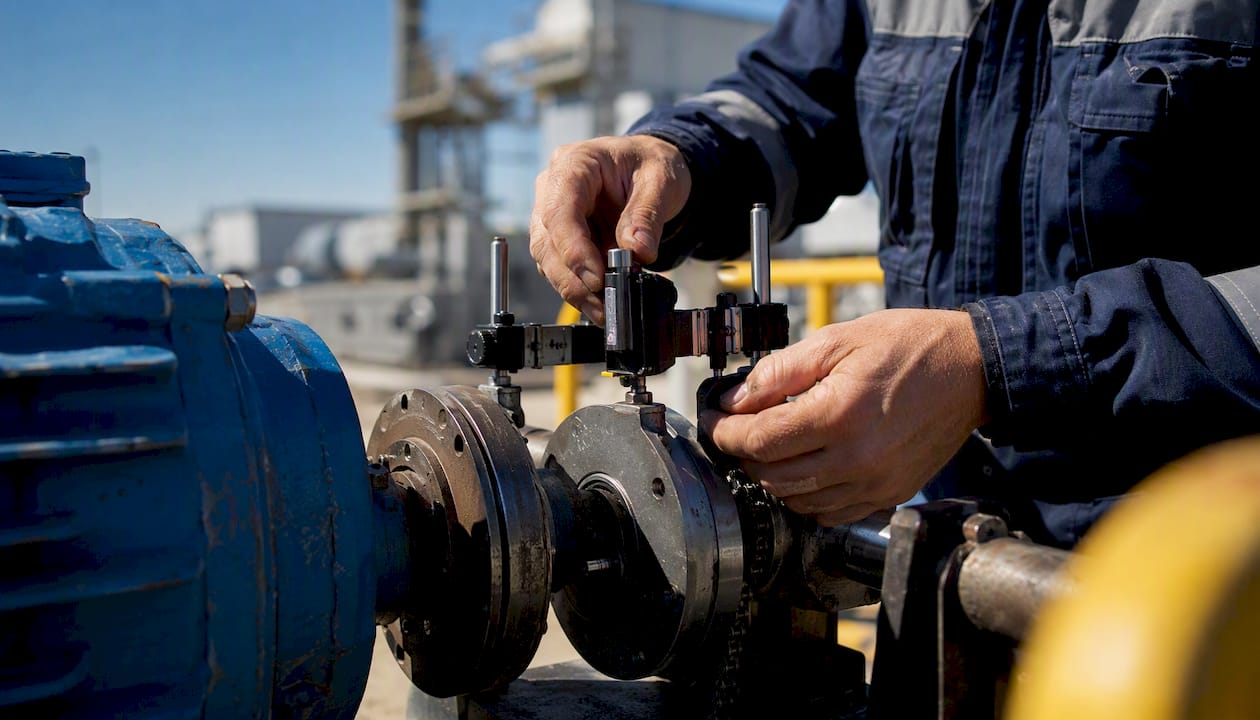
According to Siemens’ 2026 Asset Maintenance Guide, 91% of organizations use asset lifecycle management (ALM) to schedule preventive maintenance, and 81% report that preventive routines reduce costs compared to reactive methods. That is a strong signal that the industry has largely moved past purely reactive approaches — but many organizations stop at scheduled PM and never make the jump to condition-based or predictive programs.
| Strategy | Best use case | Pros | Cons | Resource needs | ROI signal |
|---|---|---|---|---|---|
| Run-to-failure | Low-value, non-critical, easily replaced | Zero monitoring cost | Unpredictable downtime | Minimal | Negative for critical assets |
| Preventive (time-based) | Mid-tier assets with predictable wear | Predictable schedule, low complexity | Over-maintenance risk; misses random failures | PM labor, parts inventory | Positive vs. reactive for most assets |
| Condition-based (CBM) | Assets with measurable degradation indicators | Maintenance only when needed | Requires sensors and data discipline | Sensors, CMMS, trained technicians | Strong for rotating equipment |
| Predictive (PdM) | High-criticality, high-consequence assets | Maximizes component usage; catches failures early | Higher upfront investment; data quality demands | Analytics platform, ML models, skilled analysts | Highest long-term ROI for critical assets |
Programs typically evolve in one direction: reactive → preventive → CBM → predictive. Skipping stages rarely works. A team that has not yet mastered PM compliance will not get value from a predictive analytics platform because the underlying data will be too dirty.
Pro Tip: When piloting a predictive program, start with one asset class where you already have 12+ months of clean sensor history. Vibration on rotating equipment (pumps, fans, compressors) is the most common successful entry point because failure signatures are well-understood and false-positive rates are manageable.
Which tools actually enable predictive and condition-based programs?
Data and a CMMS or EAM platform are table stakes. Without centralized maintenance history, work orders, and asset records, you are making life-extension decisions on anecdote. Sensors and analytics unlock the next level.
IBM’s research on CMMS and asset lifecycle management confirms that CMMS/EAM platforms centralize maintenance data and are the key enabler for shifting from scheduled PM to CBM and predictive maintenance. The platform itself does not extend asset life; the data discipline it enforces does.
Key tool classes and what each delivers:
- CMMS/EAM (IBM Maximo, SAP PM, Infor EAM, Fiix): work order management, PM scheduling, asset history, parts inventory, and the data foundation for analytics.
- IoT sensors and condition-monitoring instruments: vibration analyzers, infrared thermometers, ultrasonic leak detectors, oil analysis kits, and runtime meters feed real-time degradation data into the CMMS.
- Analytics and ML platforms: pattern recognition on sensor streams to predict failure windows and optimize maintenance timing.
- Digital twins: virtual replicas of physical assets that simulate degradation scenarios and test maintenance strategies before committing resources.
Minimum sensor specs for common monitoring applications:
- Vibration (rotating equipment): accelerometer sampling at 10–20 kHz minimum; trend data logged at least daily, with alarm thresholds set to ISO 10816 or OEM specs.
- Temperature (motors, bearings, electrical panels): infrared or contact sensors with ±1°C accuracy; baseline established at commissioning.
- Oil analysis (gearboxes, hydraulics): quarterly sampling minimum; particle count, viscosity, and water content as standard parameters.
- Pressure (hydraulic and pneumatic systems): continuous monitoring with 0.1% full-scale accuracy; log at 1-minute intervals minimum.
- Runtime meters: cumulative hours logged per asset; essential for time-based PM triggers and remaining useful life calculations.
Selection criteria: Match tool investment to asset criticality and failure consequence. A $50,000 predictive analytics deployment on a $30,000 pump with a two-hour replacement time is a poor investment. The same investment on a $2M turbine with a six-week lead time for parts pays back in the first avoided failure.
Daily-to-quarterly tactical practices that cut wear and prevent premature failure
Consistent basics yield large life gains when done reliably. Misalignment alone accounts for a significant share of premature bearing failures in rotating equipment; a $200 laser alignment check prevents a $15,000 bearing replacement and days of downtime.
Prioritized tactical checklist by frequency:
Daily:
- Visual inspection for leaks, unusual noise, vibration, or heat on critical rotating equipment.
- Check fluid levels (hydraulic, lubrication, coolant) on high-use assets.
- Verify that safety guards and interlocks are in place and functional.
Weekly:
- Lubrication of bearings, chains, and sliding surfaces per OEM schedule (over-lubrication is as damaging as under-lubrication).
- Torque checks on fasteners subject to vibration (conveyor drives, pump flanges, compressor mounts).
- Belt tension and alignment check on drive systems.
Monthly:
- Infrared scan of electrical panels and motor connections to catch hot spots before they cause failures.
- Filter inspection and replacement (compressed air, hydraulic, HVAC).
- Coupling alignment verification on rotating equipment using dial indicators or laser tools.
Quarterly:
- Full vibration analysis on rotating equipment; compare to baseline and trend data.
- Oil sampling and analysis on gearboxes and hydraulic systems.
- Comprehensive inspection of structural connections, anchor bolts, and support frames.
- Review PM compliance rate and close out overdue work orders.
Common failure modes each practice prevents: misalignment causes bearing and seal failure; inadequate lubrication causes surface fatigue and spalling; loose fasteners cause fretting corrosion and fatigue cracking; contaminated filters cause hydraulic component erosion.
Pro Tip: Use a PM task template in your CMMS that includes a “found condition” field for every inspection. Technicians who record what they found — not just “completed” — generate the failure-mode data that makes your predictive program work two years from now.
How surface protection and industrial coatings extend asset life
Correctly selected coatings and proper surface preparation are among the highest-leverage interventions available for slowing corrosion and wear on metal infrastructure. A coating system that fails at year three because of inadequate surface prep costs more than doing the job right the first time, and the asset underneath has been corroding the entire time.
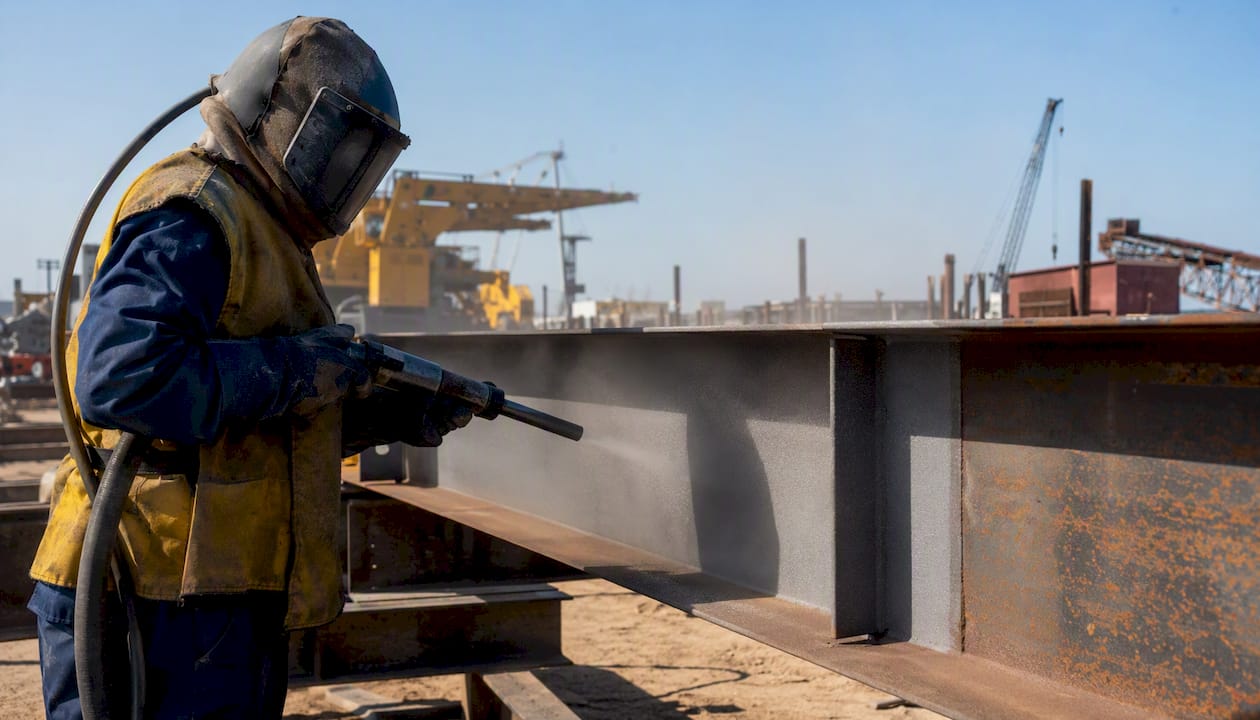
The relationship between surface preparation and coating performance is deterministic, not probabilistic. MontiPower’s industrial coatings guide makes this explicit: failing to meet the prep specification is the single most common cause of early coating failure. For thermally sprayed aluminum (TSA) or thermally sprayed zinc (TSZ) systems, SSPC-SP5 / Sa 3 (white metal blast) is mandatory. For most high-performance epoxy and polyurethane systems, SSPC-SP10 / Sa 2½ (near-white metal blast) is the minimum acceptable standard.
What correct surface prep and coating selection delivers:
- TSA and TSZ systems applied to correctly prepared surfaces can achieve 25+ year service life in demanding environments, including offshore splash zones and chemical exposure.
- High-build epoxy systems on properly prepared steel infrastructure typically deliver 15–20 year service intervals before major maintenance is required.
- Coating failure on a water tank or pipeline that forces early replacement can cost 5–10 times the original coating investment when you factor in structural repair, downtime, and regulatory compliance.
A typical coating intervention scenario: A municipal water tank shows pinpoint rust and coating delamination at year 12 of a projected 20-year coating life. The correct response is abrasive blasting to SSPC-SP10, application of a zinc-rich primer, an intermediate epoxy coat, and a polyurethane topcoat. Done correctly, this restores the asset to a new-coating baseline and extends service life by another 15–20 years. Done incorrectly — surface wiped down and painted over — the new coating fails within two to three years and the corrosion underneath accelerates.
Post-application inspection and maintenance practices to protect the coating system:
- Conduct a holiday (pinhole) test on immersion-service coatings before return to service.
- Establish a coating inspection schedule tied to environment severity: annual for coastal or chemical exposure, biennial for sheltered industrial environments.
- Document dry film thickness (DFT) readings at application; use them as the baseline for future condition assessments.
- Address mechanical damage (chips, abrasion) within 90 days to prevent undercutting corrosion from spreading.
The role of coatings in asset longevity is not just corrosion prevention. Coatings also reduce surface friction, resist chemical attack, prevent biofouling on submerged structures, and maintain regulatory compliance on potable water and food-contact assets.
Statistic callout: High-performance coating systems applied to correctly prepared surfaces can deliver 25+ year service life in suitable environments — but only when surface prep meets SSPC-SP5 / Sa 3 or SSPC-SP10 / Sa 2½ standards, per MontiPower’s industrial coatings technical guidance.
When to refurbish, retrofit, remanufacture, or replace
Use structured decision protocols, not gut feel. The variables that matter are remaining useful life, refurbishment cost as a percentage of replacement cost, downtime impact, spare parts availability, and regulatory or safety drivers.
A systematic review published in MDPI Electronics found that refurbishment is the most common life-extension strategy in industry, accounting for approximately 56% of cases studied, followed by remanufacturing at 28%, retrofitting at 11%, and upgrading at 6%. Refurbishment often restores performance close to OEM specifications when executed with proper testing and quality controls, and it is typically more economical than full replacement.
Decision flow: refurbish vs. retrofit vs. replace
- Assess remaining useful life (RUL): If RUL is less than 20% of original design life, replacement is usually the better investment unless the asset is irreplaceable or has long lead times.
- Calculate refurbishment cost vs. replacement cost: If refurbishment costs less than 40–50% of replacement and restores the asset to acceptable performance, refurbishment is generally preferred.
- Check parts availability: If OEM spare parts are no longer available or lead times exceed acceptable downtime windows, a retrofit (replacing obsolete subsystems with current-generation components) may be the only viable path.
- Evaluate regulatory and safety drivers: Safety-critical changes mandated by code updates may require replacement regardless of physical condition.
- Apply a decision-support framework: The DSF Core algorithm integrates sensor data, maintenance history, and production specs to recommend optimal life-extension timing, reducing KPI penalties from stops and production inefficiency by approximately 30–40% in pilot applications.
When each strategy is typically used:
- Refurbishment: Asset is physically worn but structurally sound; OEM parts are available; cost is well below replacement.
- Remanufacturing: Core components are rebuilt to OEM specs using new subcomponents; common for pumps, motors, gearboxes, and hydraulic cylinders.
- Retrofitting: Obsolete control systems, drives, or subsystems are replaced with current-generation equivalents while the structural asset is retained.
Pro Tip: *Schedule refurbishment projects during planned production shutdowns, not in response to failures.
A spares strategy that prevents downtime from cutting asset life short
A criticality-tiered spares policy minimizes downtime and prevents the rushed, suboptimal replacements that shorten asset life. The wrong bearing installed under pressure because the right one is on a six-week lead time is one of the most common causes of premature failure in industrial facilities.
| Criticality tier | Stocking policy | Reorder trigger | Supplier arrangement |
|---|---|---|---|
| A — Critical (failure stops production or creates safety risk) | On-site stock + vendor consignment | Reorder immediately on use | Preferred supplier agreement; obsolescence clause in contract |
| B — Important (failure degrades output; workaround exists) | Centralized regional stock or distributor-held | Reorder at minimum stock level | Blanket purchase order; delivery SLA |
| C — Non-critical (failure has minimal impact; easy to source) | Reorder on failure | As needed | Standard purchase order |
Basic reorder point calculation: Reorder Point = (Average daily demand × Lead time in days) + Safety stock. For a Tier A bearing with an average consumption of 0.1 units per day and a 30-day lead time, the reorder point is (0.1 × 30) + 5 = 8 units. That safety stock of 5 units covers demand variability during the lead time window.
Two supplier practices that protect long-life outcomes: (1) Include an obsolescence clause in contracts for long-lead or specialized parts, requiring the supplier to notify you 12 months before discontinuation and offer a last-time buy option.
People and process: the multiplier that turns plans into longer asset life
People and documented processes are what separate a maintenance plan that sits in a binder from one that actually extends asset life. The ASHRAE O&M Management chapter is explicit: appropriate maintainability requires up-front planning, integration into design, and disciplined implementation. You cannot retrofit good maintainability into an asset that was designed without it.
Core documentation every asset should have:
- OEM operation and maintenance manuals (current revision, accessible to technicians).
- Baseline condition report established at commissioning (vibration signature, DFT readings, alignment data, fluid analysis baseline).
- Written PM procedures with task steps, tools required, safety precautions, and acceptance criteria.
- Safe work instructions (SWIs) for all high-risk maintenance tasks (confined space, LOTO, working at height).
- Failure history log with root cause and corrective action for each significant failure.
Commissioning and retrocommissioning are not one-time events. Commissioning at installation establishes the performance baseline. Retrocommissioning, applied to existing assets, verifies that the asset still performs to its original design intent and identifies degradation that has accumulated over time. For building and plant systems, ASHRAE guidance recommends retrocommissioning on a 3–5 year cycle for critical systems.
Maintainability-by-design should be a procurement specification, not an afterthought. Specify minimum access clearances, standard fastener sizes, modular component design, and maximum allowable maintenance time for critical tasks. Assets that fail these criteria during procurement review will cost more to maintain over their entire life than the price difference at purchase.
Training checklist for maintenance teams:
- Equipment-specific OEM training for all technicians assigned to critical assets.
- Condition monitoring interpretation (vibration analysis, oil analysis, infrared thermography).
- Proper lubrication techniques and contamination control.
- Coating inspection and minor repair procedures.
- Root cause analysis (RCA) and failure mode and effects analysis (FMEA) methods.
The Cryotos 2026 Asset Maintenance Guide frames this as a people-process-technology triad: baseline KPI measurement (MTTR, MTBF, PM compliance) and a structured approach across all three dimensions are the essential first steps when improving any maintenance program.
KPIs and the business case for life-extension investment
Track MTBF, MTTR, availability, maintenance cost per unit of output, and lifecycle cost. Those five metrics tell you whether your life-extension program is working and give you the numbers to justify investment to leadership.
KPI definitions and how to compute them:
- MTBF (Mean Time Between Failures): Total operating time ÷ number of failures in the period. Rising MTBF means your assets are failing less often.
- MTTR (Mean Time to Repair): Total repair time ÷ number of repairs. Falling MTTR means your team is resolving failures faster.
- Availability: (MTBF ÷ (MTBF + MTTR)) × 100. The percentage of scheduled time the asset is available for production.
- Maintenance cost per unit of output: Total maintenance spend ÷ units produced. Connects maintenance investment directly to production economics.
- Lifecycle cost: Acquisition cost + total maintenance cost + energy cost + disposal cost over the asset’s life. The only metric that captures the full financial impact of life-extension decisions.
Statistic callout: Reactive maintenance can cost multiple times more than preventive approaches, according to Oxand’s lifecycle investment analysis. That multiplier is the core business case for any planned maintenance program.
Simple ROI decision rule: If the cost of a refurbishment or life-extension intervention is less than the net present value of avoided replacement cost plus avoided downtime cost over the extended life period, the investment pays. A worked example: a pump refurbishment costs $12,000. Replacement costs $45,000. The refurbishment extends life by five years. Avoided downtime during a replacement is estimated at $8,000. Net benefit of refurbishment: ($45,000 + $8,000) − $12,000 = $41,000 over five years, before discounting.
PM compliance rate is the leading indicator to watch first. Fix compliance before adding complexity.
Your 30/90/365-day roadmap to measurable life-extension results
Start within 30 days. Show measurable results within 12 months.
| Timeframe | Action items | Expected outcome | Owner | Success metric |
|---|---|---|---|---|
| 30 days | Audit asset register; assign criticality tiers (A/B/C); pull MTBF/MTTR for top 20 assets; inspect surface condition of metal infrastructure over 10 years old | Prioritized asset list; baseline KPI data; coating condition report | Maintenance manager + reliability engineer | Asset register complete; KPI baseline documented |
| 30 days | Identify top 3 assets with worst unplanned failure rate; initiate RCA on most recent failure for each | Root cause identified; targeted PM or CBM plan drafted | Reliability engineer | RCA reports completed |
| 90 days | Implement criticality-tiered PM schedules in CMMS; deploy sensors on top 5 critical assets; establish spares policy for Tier A assets | PM compliance rate tracked; first sensor data stream live; Tier A parts on hand | Maintenance planner + procurement | PM compliance high; sensor data logging confirmed |
| 90 days | Schedule surface prep and coating inspection for all metal infrastructure flagged at 30-day audit; initiate refurbishment planning for assets approaching end of useful life | Coating condition scored; refurbishment projects scoped and budgeted | Facilities/asset manager | Inspection reports filed; project budgets submitted |
| 365 days | Analyze 6–12 months of sensor and PM data; launch CBM or predictive pilot on highest-criticality asset class; complete first refurbishment project | MTBF trending upward; first predictive maintenance alert validated; refurbished asset back in service | Reliability engineer + maintenance manager | MTBF improvement documented; predictive pilot results reviewed |
| 365 days | Conduct retrocommissioning on critical building/plant systems; update PM procedures based on failure history; deliver condition monitoring training to all technicians | Systems performing to design intent; procedures current; team competency confirmed | Facilities manager + training coordinator | Retrocommissioning report complete; training records updated |
Owner-assignment template: Assign each action item to a named individual, not a department. Set a completion date and a single success metric. Review progress at weekly maintenance planning meetings. Escalate overdue items at the 30-day mark, not the 90-day mark.
Prioritizing life extension when budgets and schedules are real constraints
The conventional wisdom in asset management is that you should build a comprehensive program before doing anything. In practice, that approach stalls most organizations for 18 months while they wait for perfect data, perfect buy-in, and a perfect CMMS implementation.
The more useful frame: pick the two or three interventions with the highest consequence-of-failure and the lowest cost-to-act, and do those first. A surface inspection and coating repair on a 15-year-old water tank costs a fraction of an emergency replacement and buys years of additional service life. A laser alignment check on your most critical pump takes two hours and prevents a bearing failure that could take the asset offline for a week.
What gets underestimated consistently is the compounding effect of deferred basics. A facility that runs five years behind on lubrication schedules, alignment checks, and coating maintenance does not just have five years of wear to recover. It has accelerated degradation that compounds: a misaligned shaft wears its bearing faster, which increases vibration, which damages the seal, which allows contamination into the lubrication system, which accelerates wear on every surface the lubricant touches. The cost of catching up is always higher than the cost of staying current.
The other thing worth saying plainly: surface protection is not a cosmetic decision. On steel infrastructure — tanks, pipelines, structural steel, bridges — the coating system is a structural maintenance intervention. When it fails, the steel corrodes, and corroded steel loses section thickness and load-carrying capacity. A coating project that looks like a line item in the maintenance budget is actually protecting the capital value of an asset that may cost 50 to 100 times more to replace.
Southernsandblastingandpainting delivers the surface prep and coating work that makes life extension real
Surface protection is only as good as the preparation behind it. For municipal, industrial, and commercial assets across Central Florida, Southern Sandblasting and Painting brings 20+ years of experience in abrasive blasting, surface preparation, and industrial coating application to projects where getting it right the first time is the only acceptable outcome.

When your asset register flags aging metal infrastructure — water tanks, pipelines, structural steel, airport facilities, or city infrastructure — the path to extended service life runs through correct surface prep and a coating system specified for the environment. Southern Sandblasting and Painting works to SSPC/NACE standards, selects coating systems matched to substrate and exposure conditions, and manages project safety and schedule so your facility stays operational.
What Southernsandblastingandpainting delivers on every project:
- Abrasive blasting to SSPC-SP5, SP10, or SP6 as specified, with documented anchor profile and cleanliness verification.
- Coating system selection and application for corrosion protection, chemical resistance, and regulatory compliance.
- DFT measurement and inspection documentation at every coat.
- Project management that coordinates with your maintenance schedule to minimize downtime.
Ready to scope a surface prep or coating project? Request a project assessment or review industrial coating types and specifications to identify the right system for your assets.
Sources
- CHAPTER 39. OPERATION AND MAINTENANCE MANAGEMENT
- From Reactive to Predictive: A Guide to Next-Gen Asset Maintenance (Siemens, 2026)
- DSF Core: Integrated Decision Support for Optimal Scheduling of Lifetime Extension Strategies for Industrial Equipment – PMC
- Life extension strategies (LES) in industry — remanufacturing/refurbishment examples (MDPI)
- Industrial Coatings: Types, Systems & Surface Preparation Guide | MontiPower
- Maximizing asset lifespan with CMMS (IBM)


