
TL;DR:
- Industrial coatings protect exterior surfaces with systems designed to withstand UV, moisture, and physical wear for decades. Proper surface preparation and application follow strict standards to ensure longevity and curb appeal, reducing maintenance costs over time. Regular inspections and scheduled repairs are essential to prevent failure and maintain the visual and protective qualities of industrial coating systems.
Industrial coatings are defined as high-performance protective systems that bond to exterior surfaces, delivering both corrosion resistance and a consistent, finished appearance. Improving curb appeal with industrial coatings means more than a fresh coat of paint. It means applying a system, typically a primer, intermediate coat, and topcoat, engineered to withstand UV exposure, moisture, and physical wear for decades. High-performance coating systems cost 20–35% more upfront but require only 1–2 recoats over 25 years, compared to 3–4 recoats for low-cost alternatives. That gap in recoat frequency translates directly into reduced labor costs, less operational disruption, and a property that looks maintained year after year. Property owners and managers who treat exterior coatings as asset protection, not cosmetic refresh, consistently get better financial and visual outcomes.
What types of industrial coatings best enhance curb appeal and durability?
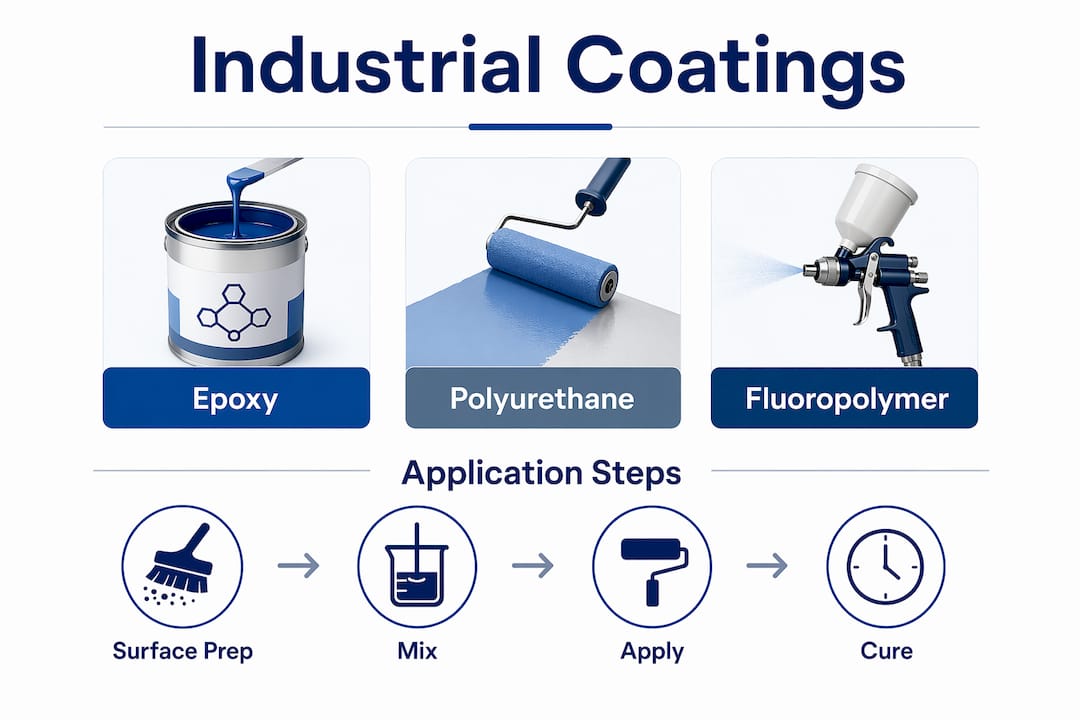
The three most common industrial paint solutions for exterior surfaces are epoxy, polyurethane, and fluoropolymer coatings. Each serves a distinct role in a layered coating system, and selecting the wrong type for your substrate or climate is one of the fastest ways to waste a coating budget.
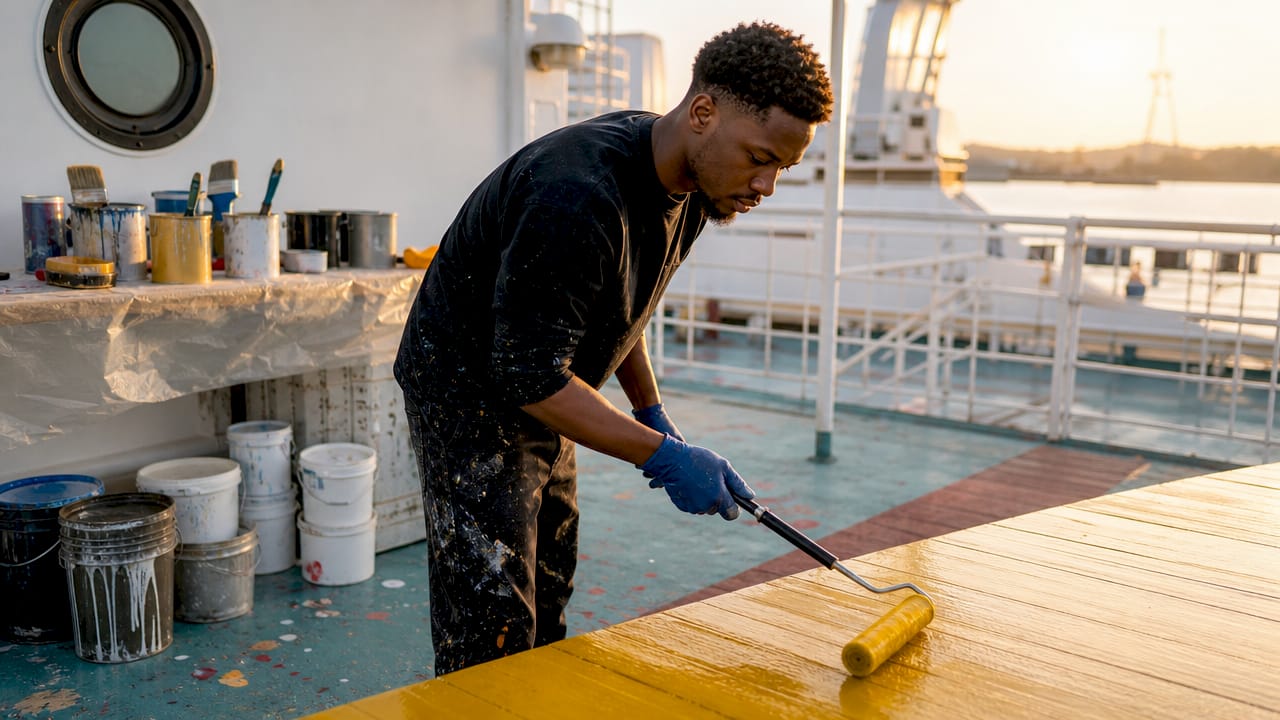
Epoxy coatings form the foundation of most industrial systems. They bond tightly to steel, concrete, and masonry, resist moisture and chemical exposure, and provide the adhesion base that topcoats need to perform. Epoxy is rarely used as a standalone topcoat because UV exposure causes it to chalk and lose color over time.
Polyurethane coatings go on top of epoxy as a finish layer. They resist UV degradation, hold color well, and produce the gloss or satin finish that drives visual curb appeal. For property managers in coastal or high-humidity environments like Central Florida, polyurethane topcoats are the standard choice for enhancing exterior aesthetics.
Fluoropolymer coatings, such as PVDF-based systems, represent the highest tier. Standard high-performance coatings provide approximately 34 years of maintenance-free service life in typical environments. Fluoropolymers push that ceiling even further in aggressive industrial or coastal zones. They are cost-effective industrial coatings when measured over a full asset lifecycle rather than a single budget cycle.
How to choose the right coating for your property
Substrate type, local climate, and exposure category all drive coating selection. The ISO 12944 standard defines coating durability as “time to first major maintenance,” which gives property managers a measurable benchmark for specifying systems rather than guessing. A steel fence in an urban environment needs a different system than a concrete parking structure near saltwater.
| Surface type | Recommended system | Key benefit |
|---|---|---|
| Structural steel | Epoxy primer + polyurethane topcoat | Corrosion resistance, color retention |
| Concrete facades | Penetrating primer + polyurethane finish | Moisture block, UV stability |
| Aluminum cladding | Self-priming polyurethane or fluoropolymer | Adhesion without heavy prep |
| Coastal steel structures | Zinc-rich primer + epoxy + polyurethane | Maximum corrosion protection |
- Match the coating’s corrosion category to your site’s exposure level per ISO 12944.
- Specify dry film thickness (DFT) in writing before any contractor begins work.
- Confirm substrate compatibility with the coating manufacturer’s technical data sheet.
- Account for Florida’s heat and humidity when selecting cure time windows.
For a deeper look at coating types by substrate, the selection criteria become even more specific by project type.
How should you prepare surfaces before applying industrial coatings?
Surface preparation is the single most important factor in coating performance. Coating failures predominantly result from insufficient surface preparation and improper environmental controls during application, not from material defects. A premium polyurethane topcoat applied over a contaminated or poorly blasted surface will fail within months, regardless of its rated service life.
The preparation sequence follows a fixed order for a reason. Each step removes a specific type of contamination or surface defect that would otherwise block adhesion.
- Degrease and clean. Remove oil, grease, and soluble salts using appropriate solvents or detergent washing. Salts are invisible and will cause blistering under the coating if left behind.
- Abrasive blast. Surface preparation includes cleaning, blasting, and inspection tasks that are critical before applying coatings for long-lasting protection. Blasting to SSPC-SP 6 (commercial blast) is the minimum for most industrial systems. SSPC-SP 10 (near-white blast) is required for high-performance or immersion-service coatings.
- Inspect the profile. Measure surface anchor profile with a testex tape or replica tape. Most industrial coatings require a profile of 1.5–3.0 mils for proper mechanical adhesion.
- Remove blast debris. Vacuum or blow off all dust and spent abrasive before priming. Any residue left on the surface acts as a contamination layer.
- Apply primer within the recoat window. Steel begins to flash-rust within hours of blasting in humid conditions. Prime within the time window specified by the coating manufacturer, typically 4–8 hours in Florida’s climate.
Pro Tip: Ask your contractor to provide written documentation of the blast profile measurement and surface cleanliness grade before any primer is applied. This single record protects you if a coating failure dispute arises later.
Hiring a qualified contractor with SSPC or NACE certification removes the guesswork from prep quality. Southernsandblastingandpainting brings over 20 years of surface preparation experience to commercial and infrastructure projects across Central Florida, where humidity and salt air make prep standards non-negotiable.
What is the step-by-step process for applying industrial coatings?
A properly applied industrial coating system follows a strict sequence. Skipping or compressing any step reduces the system’s service life and creates visible defects that undermine the property’s appearance.
- Apply the stripe coat first. Stripe coating means applying extra layers at edges, welds, and crevices before the full coat. These geometric details hold less coating film than flat surfaces and are the first places corrosion appears. A brush-applied stripe coat on all edges and welds before rolling or spraying the primer is a non-negotiable best practice.
- Apply the primer coat. Spray or roll the primer to the specified DFT. Measure wet film thickness during application and dry film thickness after cure to confirm compliance.
- Apply the intermediate coat. The intermediate coat builds total film thickness and adds a secondary barrier layer. It also improves topcoat adhesion on high-build epoxy systems.
- Apply the topcoat. The topcoat delivers the final color, sheen, and UV protection that drives visual curb appeal. Apply in two passes if required to reach specified DFT.
- Inspect and document. Measure DFT at multiple points per SSPC-PA 2 guidelines. Record readings and flag any areas below minimum thickness for touch-up before the coating cures fully.
Pro Tip: Schedule coating application for early morning in Florida. Humidity rises sharply in the afternoon, and environmental control during application is critical to prevent adhesion failures and surface defects like blushing or pinholing.
Environmental controls matter as much as product selection. Temperature should stay between 50°F and 95°F during application and cure. Relative humidity should remain below 85%, and the substrate temperature must stay at least 5°F above the dew point. Violating any of these conditions creates adhesion failures that show up as peeling or bubbling within the first year.
- Confirm ambient and substrate temperature before each coat.
- Check dew point with a sling psychrometer or digital meter.
- Never apply coatings over damp or wet surfaces.
- Allow full cure between coats per the manufacturer’s recoat window.
For a complete walkthrough of application steps and quality checkpoints, the process becomes repeatable across a full property portfolio.
What mistakes cause coating failures when improving curb appeal?
Most coating failures are preventable. Poor prep leads to early coating failure even with premium products. The pattern is consistent: a property manager accepts the lowest bid, the contractor cuts prep time, and the coating begins peeling within 18 months.
- Inadequate surface preparation. Skipping blast cleaning or accepting a lower cleanliness grade than specified is the leading cause of premature failure.
- Wrong product for the environment. Using an interior-grade epoxy on an exterior surface, or specifying a standard polyurethane in a high-UV coastal zone, shortens service life dramatically.
- Ignoring environmental controls. Applying coatings in direct afternoon sun or during a rain event creates moisture entrapment and adhesion loss.
- Under-specifying film thickness. Applying less than the minimum DFT reduces barrier protection and accelerates corrosion under the coating.
- No maintenance plan. Lowest-cost coating bids often lead to higher total cost of ownership due to frequent repairs and downtime. A coating without a scheduled inspection and touch-up program degrades faster than one that receives annual attention.
Signs of failure include peeling at edges or welds, chalking on topcoat surfaces, uneven color or sheen, and rust bleed-through at fasteners. Catching these early allows spot repairs that preserve the full system. Waiting until failure is widespread means full removal and reapplication.
Repainting before visible failure is the defining discipline of a well-managed coating program. Successful lifecycle planning means scheduling recoats based on inspection data, not on how bad the surface looks. Properties that wait for obvious deterioration pay two to three times more per square foot to restore the substrate than those that maintain on schedule.
Effective coating programs reduce maintenance cycles and stabilize production by treating coatings as asset protection, not cosmetic refresh. That shift in thinking is what separates property managers who control maintenance costs from those who react to them.
Key Takeaways
Industrial coatings deliver the best curb appeal results when the right system is specified, surfaces are properly prepared, and application follows a documented process with environmental controls in place.
| Point | Details |
|---|---|
| System selection matters | Match epoxy, polyurethane, or fluoropolymer to your substrate and exposure category per ISO 12944. |
| Prep determines performance | Blast cleaning to SSPC-SP 6 or higher is required before any industrial coating system. |
| Stripe coat first | Apply extra coating to edges, welds, and crevices before full coats to prevent early failure points. |
| Environmental controls are non-negotiable | Temperature, humidity, and dew point must be within spec during application and cure. |
| Plan maintenance proactively | Schedule inspections and touch-ups before visible failure to avoid full system replacement costs. |
Why I think most property managers are solving this problem backwards
Property managers typically call a coating contractor after something looks bad. A fence is rusting. A facade is chalking. A parking structure has visible spalling. By that point, the coating system has already failed, and the substrate has likely taken damage that requires remediation before any new coating can be applied.
The more effective approach is to treat exterior coatings the way you treat a roof. You do not wait for water to come through the ceiling before you inspect the membrane. You schedule inspections, document condition, and act on data. Industrial coatings impact financial decisions by protecting net operating income and liability in harsh environments. That framing changes the conversation from “how do we fix this” to “how do we protect this.”
The second mistake I see consistently is treating all coating bids as equivalent. A bid that skips SSPC-SP 10 blast cleaning and substitutes a single-coat system for a three-coat specification is not a lower price for the same outcome. It is a different outcome entirely. Specifying the system in writing, including DFT requirements, blast profile, and recoat windows, is the only way to compare bids accurately. Facility managers who view coatings as portfolio-wide asset protection programs, rather than individual repair events, consistently achieve lower total maintenance costs and better visual consistency across their properties.
The properties that look the best five years after a coating project are not the ones that spent the most. They are the ones that specified correctly, prepared thoroughly, and followed a maintenance schedule. That discipline is available to any property owner or manager willing to plan ahead.
— Results
How Southernsandblastingandpainting delivers lasting exterior results
Southernsandblastingandpainting has spent over 20 years applying industrial coating systems to commercial facilities, municipal infrastructure, and large-scale properties across Central Florida. The work covers everything from surface preparation and abrasive blasting to full multi-coat application on steel, concrete, and specialty substrates.
For property owners and managers who want coatings that hold up in Florida’s heat, humidity, and coastal exposure, Southern Sandblasting and Painting brings the specification knowledge and field experience to get the system right the first time. The team handles sandblasting and painting services for projects of all scales, from single structures to portfolio-wide repainting programs. Contact Southernsandblastingandpainting to discuss a coating specification and maintenance plan built around your property’s actual exposure conditions and long-term goals.
FAQ
What is the best industrial coating for exterior curb appeal?
Polyurethane topcoats over an epoxy primer system deliver the best combination of color retention, UV resistance, and durability for most exterior applications. Fluoropolymer systems are the top choice for coastal or high-UV environments where maximum service life is required.
How long do industrial coatings last on exterior surfaces?
Standard high-performance coatings provide approximately 34 years of maintenance-free service life in typical environments when properly specified and applied. Service life shortens significantly if surface preparation or environmental controls are inadequate during application.
What surface preparation standard is required before coating?
Most industrial coating systems require blast cleaning to SSPC-SP 6 (commercial blast) at minimum, with SSPC-SP 10 (near-white blast) required for high-performance or immersion-service applications. The surface anchor profile must also meet the coating manufacturer’s specified range, typically 1.5–3.0 mils.
Can industrial coatings be used to boost curb appeal on concrete?
Yes. Penetrating primers followed by polyurethane or elastomeric topcoats work well on concrete facades, parking structures, and masonry walls. The key is confirming moisture content in the concrete before application, as trapped moisture causes blistering and adhesion failure.
How often should industrial coatings be inspected and maintained?
Annual visual inspections are the standard practice for most exterior industrial coating systems. Touch-up repairs at early failure points, such as edges, fasteners, and welds, extend the full system’s service life and prevent the substrate damage that makes full reapplication necessary.
Recommended
- Industrial Coating Application Steps for Lasting Protection
- Industrial-Grade Paint: Lasting Protection for Infrastructure
- Why Industrial Coatings Matter for Florida Infrastructure
- 7 Top Industrial Painting Methods for Long-Lasting Results
- Sandblasting Contractor Baldwin Park FL
- Sandblasting Services Oviedo FL


