
TL;DR:
- Primer is a crucial bonding and sealing layer that prepares surfaces for durable paint adhesion and stain blocking. Using the correct type of primer tailored to the surface ensures longevity, prevents failures, and reduces the need for additional coats or repairs. Skipping or misusing primer leads to uneven color, peeling, stain bleed-through, and overall poor paint performance, making proper surface preparation essential.
Primer is defined as a preparatory undercoat that chemically bonds to a surface and creates a stable base for paint to grip. The role of primers in painting goes far beyond adding an extra layer. Primer seals porous materials, blocks stains, and prevents the most common paint failures: peeling, flashing, and blotchy color. Brands like Zinsser have built entire product lines around solving these exact problems. Skip this step, and even the most expensive topcoat will underperform. Get it right, and your paint job lasts years longer than it otherwise would.
What role does primer play in a paint project?
Primer functions as a chemical bonding agent between the surface and your paint. It contains higher resin concentrations than standard paint, which is what gives it that gripping power. Without it, water-based paint applied over an oil-based finish can peel within weeks.
The four core jobs primer performs are:
- Sealing porous surfaces. Drywall, bare wood, and masonry absorb paint unevenly. Primer fills those pores so the topcoat sits on a uniform surface instead of soaking in at different rates.
- Blocking stains. Tannins from cedar or redwood, smoke residue, and water stains bleed through standard paint. A dedicated stain-blocking primer like Zinsser BIN stops that bleed before it starts.
- Improving adhesion. Glossy or slick surfaces give paint nothing to hold onto. Primer creates the mechanical and chemical grip that keeps paint in place.
- Extending paint life. Premature peeling within 6–12 months is a documented outcome on unprimed drywall and patched walls. One coat of primer eliminates that risk.
Pro Tip: If you are painting over a dark color with a lighter one, tinting your primer toward the new topcoat color reduces the number of finish coats you need. This saves both time and money.
Primer also creates a consistent sheen across the surface. Without it, areas of bare drywall absorb paint faster than taped joints, leaving visible dull patches called flashing. That is nearly impossible to fix without stripping back and starting over.
Which types of primers work best for different surfaces?
Matching primer type to substrate is the single most important decision in any paint project. Using the wrong primer is almost as bad as using none at all.
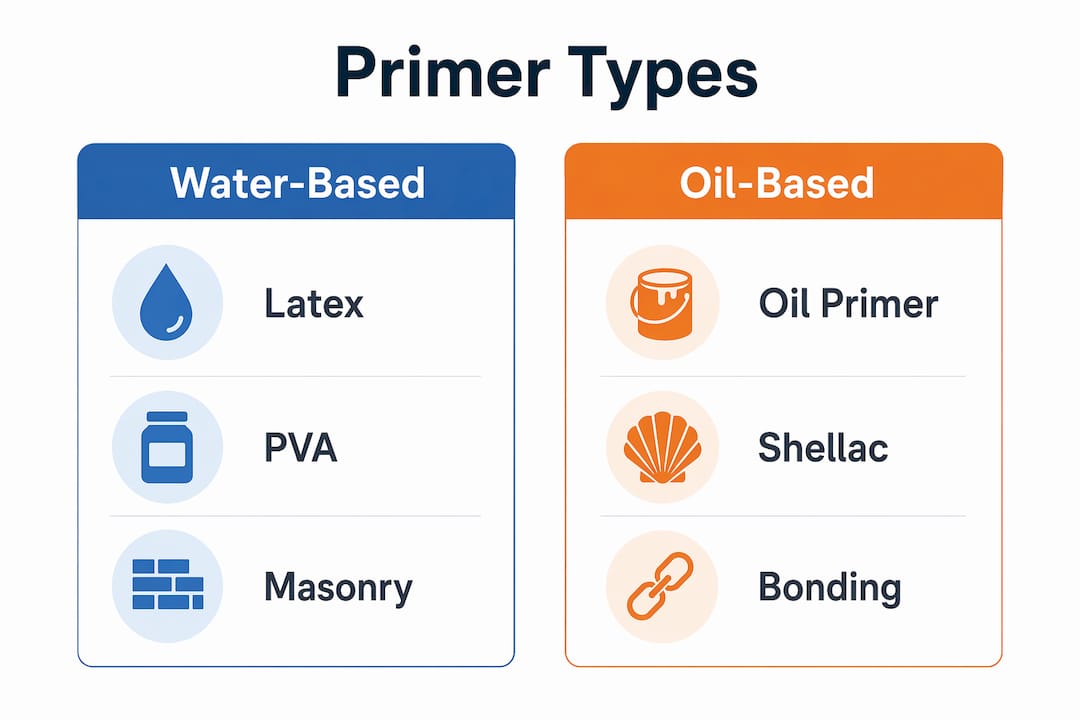
Here is a breakdown of the four main categories:
| Primer Type | Best For | Coverage | Approx. Cost (2026) |
|---|---|---|---|
| Latex / PVA | New drywall, masonry, plaster | 300–450 sq ft/gal | $20–$50/gal |
| Oil-based | Bare wood, tannin-rich species | 300–400 sq ft/gal | $30–$60/gal |
| Bonding primer | Glossy, slick, or non-porous surfaces | 250–400 sq ft/gal | $35–$65/gal |
| Shellac (e.g., Zinsser BIN) | Severe stains, smoke, water damage | 300–400 sq ft/gal | $50–$80/gal |
Water-based PVA primers cover 300–450 square feet per gallon and cost $20–$50 per gallon. Shellac and specialty primers cost more but deliver results that no other product can match on extreme stain problems.
Latex and PVA primers
Latex primers are the go-to for new drywall and most interior masonry. They dry fast, clean up with water, and provide a solid base for latex topcoats. PVA (polyvinyl acetate) primers are specifically formulated for fresh drywall because they seal the paper facing without raising the grain.
Oil-based primers
Oil-based primers penetrate bare wood deeply and block tannins from species like cherry, teak, and cedar. Matching primer chemistry to wood porosity prevents the splotching and adhesion failures that plague DIYers who grab whatever is on the shelf. These primers take longer to dry, but the penetration depth is worth it on raw timber.
Bonding primers
Bonding primers on glossy surfaces prevent peeling and deliver uniform coverage where standard primers simply fail. They work on PVC trim, glazed cabinetry, ceramic tile, and any surface that has been previously painted with a high-gloss finish. If you are repainting kitchen cabinets without sanding them to bare wood, a bonding primer is not optional.
Pro Tip: For hardwood species like teak or cherry, always use an oil-based primer regardless of what topcoat you plan to apply. The tannin content in these woods will bleed through latex primer and ruin your finish.
What happens if you skip primer or use the wrong type?
Skipping primer is the most common and most costly mistake in DIY painting. The consequences are predictable, and they show up fast.
“Homeowners often misunderstand primer as just extra paint, but it functions as a vital adhesive undercoat that chemically bonds paint to surfaces.” — Industry consensus from professional painting contractors
The most frequent failures include:
- Blotchy, uneven color. Unprimed surfaces absorb paint at different rates. The result is a finish that looks patchy no matter how many coats you apply.
- Peeling and chipping. Without the resin-rich bonding layer, paint has no mechanical grip. Peeling often starts at edges and corners within months.
- Stain bleed-through. Water stains, smoke, and wood tannins migrate through standard paint. They reappear even after three or four coats if no stain-blocking primer was used first.
- Flashing. Repaired patches on walls absorb paint differently than the surrounding surface. The result is visible dull spots that catch light at every angle.
The “paint and primer in one” category deserves special attention here. These combination products do not replace a dedicated primer for raw porous surfaces, major repairs, stain blocking, or drastic color changes. They work acceptably for minor color shifts on already-sealed surfaces. Using them on bare drywall or over a water stain is a guaranteed callback.
The financial cost of skipping primer is real. Repainting a room because of peeling or stain bleed-through means buying more paint, spending more time, and often hiring someone to fix the prep work that should have been done first. A $30 gallon of primer protects a $200 paint job.
How to apply primer the right way
Proper primer application follows a clear sequence. Rushing any step undermines the whole system. Here is the process that delivers professional results:
- Clean the surface. Remove all grease, dust, and loose material. A solution of trisodium phosphate (TSP) works well for kitchen walls. Rinse thoroughly and let the surface dry completely.
- Sand where needed. Scuff glossy surfaces with 120-grit sandpaper to give the primer something to grip. Fill holes and cracks with spackling compound, let it cure, then sand smooth.
- Choose the right primer. Match your primer to the substrate using the guide above. Do not default to whatever is cheapest.
- Apply evenly. Use a brush for edges and corners, then a roller for flat surfaces. A 3/8-inch nap roller works well on smooth drywall. For large exterior projects, an airless sprayer speeds up the process significantly.
- Respect the drying window. Oil-based primers require 24+ hours before recoating. Latex primers can accept a topcoat in 1–2 hours. Ignoring these windows causes primer lifting and poor adhesion.
- Tint toward your topcoat. Ask your paint store to tint the primer toward your final color. Tinting primer toward deeper colors can cut the number of finish coats in half, which matters on large rooms or deep color changes.
- Inspect before painting. Once the primer dries, look for any areas that appear to have soaked in unevenly. A second thin coat on those spots costs almost nothing and prevents visible flashing in the final finish.
Proper surface preparation before priming is what separates a paint job that lasts five years from one that lasts fifteen. Cleaning and sanding are not optional steps you can skip to save an afternoon.
Pro Tip: Never apply primer over a wet or damp surface. Moisture trapped beneath primer causes bubbling and adhesion failure. In humid climates like Florida, give washed surfaces at least 24 hours to dry before priming.
Key takeaways
Primer is the single step that determines whether your paint job lasts one year or ten, and choosing the right type for your surface is as important as applying it correctly.
| Point | Details |
|---|---|
| Primer is a bonding agent | It chemically grips surfaces so paint adheres instead of peeling or flaking. |
| Match primer to substrate | Use latex for drywall, oil-based for bare wood, bonding primer for glossy surfaces, and shellac for severe stains. |
| Skipping primer costs more | Premature peeling within 6–12 months on unprimed surfaces means repainting the entire job. |
| Paint-and-primer combos have limits | They work for minor color shifts on sealed surfaces but fail on raw, porous, or stained substrates. |
| Tint primer to save money | Tinting toward your topcoat color reduces finish coats needed, cutting material costs on large projects. |
Why primer is the step most diyers get wrong
After years of watching paint jobs fail, the pattern is always the same. The homeowner bought quality paint, used good tools, and applied two careful coats. Then the finish peeled off a bathroom wall six months later, or the water stain from a roof leak bled through three coats of expensive eggshell. The primer step was skipped, or a paint-and-primer combo was used on raw drywall.
The primer vs. topcoat relationship is not complicated, but it is misunderstood. Topcoat is designed for color, sheen, and surface protection. Primer is designed for adhesion and sealing. They do different jobs, and no single product does both perfectly under demanding conditions.
What I find most frustrating is the false economy. A gallon of quality Zinsser primer costs $30–$50. The paint job it protects costs ten times that. Skipping the primer to save an hour and $40 is a decision that costs $400 to fix. That math never works out in the homeowner’s favor.
The other mistake I see constantly is using the wrong primer for the surface. Someone grabs a latex PVA primer for a bare cedar fence because it was on sale. The tannins bleed through within weeks, and the whole fence looks stained. An oil-based primer would have cost the same and solved the problem entirely. Knowing the types of primers for different surfaces is not advanced knowledge. It is the basic information that turns a frustrating project into a satisfying one.
Invest in the right primer. Read the label. Respect the drying time. That is the entire formula for a paint job that looks professional and holds up for years.
— Southernsandblastingandpainting
Get professional surface prep and primer application right the first time
Surface preparation and primer selection are where most paint jobs are won or lost before a single drop of topcoat is applied. Southern Sandblasting and Painting brings 20+ years of surface treatment expertise to every project in the Orlando, Florida area. Whether you need expert guidance on preparing a challenging substrate or a full professional coating application, the team at Southernsandblastingandpainting delivers results built to last.

From residential prep work to large-scale industrial coating systems, Southernsandblastingandpainting handles the full process. Explore the complete range of surface prep and painting services to see how professional preparation protects your investment for the long term.
FAQ
What is the main purpose of primer in painting?
Primer seals porous surfaces, improves paint adhesion, and blocks stains so the topcoat bonds correctly and lasts longer. Without it, paint is prone to peeling, flashing, and uneven color.
Do i need a primer before every paint job?
Not always. Primer is required for bare drywall, raw wood, stained surfaces, drastic color changes, and glossy substrates. Previously painted walls in good condition with a minor color shift may not need a full primer coat.
What is the difference between latex and oil-based primer?
Latex primers dry in 1–2 hours, clean up with water, and work well on drywall and masonry. Oil-based primers take 24+ hours to dry but penetrate bare wood deeply and block tannins that latex primers cannot stop.
Can i use paint and primer in one instead of a separate primer?
Paint and primer in one products work for minor color changes on already-sealed surfaces. They do not replace a dedicated primer on raw drywall, bare wood, water-stained walls, or any surface with adhesion challenges.
How long should primer dry before painting?
Latex primers are ready for a topcoat in 1–2 hours under normal conditions. Oil-based primers require at least 24 hours. Always check the manufacturer’s label, since applying paint before the primer fully cures causes lifting and poor adhesion.


