

Bold promises about water tank protection rarely survive a humid Central Florida summer. For municipal infrastructure managers, the real challenge lies in spotting hidden coating problems before corrosion or costly failures take hold. Professional coating inspectors rely on established documentation standards and checklists, bringing clarity and consistency to every evaluation. This article untangles common coating myths and reveals practical inspection strategies so you can safeguard compliance and stretch your asset budget further.
Table of Contents
- Defining Coating Inspections And Common Myths
- Types Of Coating Inspections For Infrastructure
- How Inspections Protect Asset Lifespan
- Compliance Standards And Regulatory Requirements
- Roles, Risks, And Avoiding Costly Failures
Key Takeaways
| Point | Details |
|---|---|
| Coating Inspections Are Essential | Regular coating inspections prevent costly failures and extend asset lifespan by catching degradation early. |
| Myths About Coating Durability | Coatings do not last forever; they degrade due to environmental factors, necessitating periodic evaluations. |
| Types of Inspections Matter | Understanding various inspection types ensures effective asset management and timely detection of issues. |
| Compliance Is Critical | Adhering to regulatory standards for coatings is vital to avoid legal liabilities and ensure public safety. |
Defining Coating Inspections and Common Myths
Coating inspections are systematic evaluations of protective coatings on infrastructure surfaces to assess their condition, identify defects, and determine remaining service life. For municipal infrastructure managers in Central Florida, these inspections represent your first line of defense against corrosion, deterioration, and costly emergency repairs on water tanks, bridges, and transportation assets.
A coating inspection goes beyond a casual visual walkthrough. It involves standardized procedures, documented measurements, and trained personnel who understand how coatings fail. Professional coating inspectors rely on established documentation standards and checklists to ensure consistency and accuracy across every assessment. This structured approach means your team gets reliable data, not guesswork.
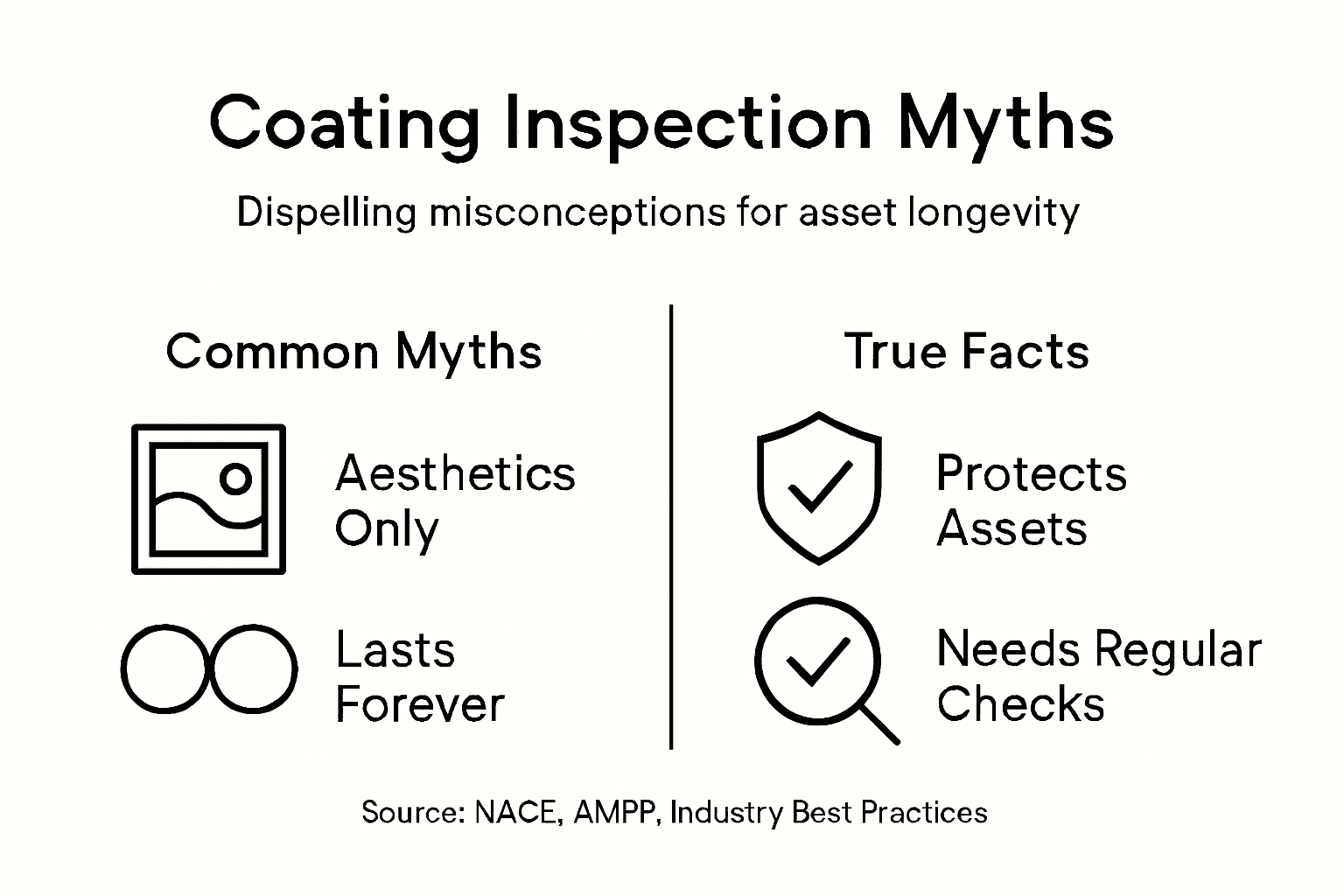
Now, let’s address some persistent myths. The first misconception is that coatings last forever once applied. Reality check: coatings age. UV exposure, temperature fluctuations, salt spray from coastal environments, and moisture penetration gradually degrade protective layers. Your water tank coating isn’t a “set it and forget it” investment. It requires periodic evaluation to catch problems before they become expensive catastrophes.
Another common myth is that only visible damage matters. Small hairline cracks, pinhole corrosion, or early adhesion loss might look minor, but they’re entry points for corrosion. Professional inspections detect these early-stage issues that the naked eye misses. Catching a problem when it affects 5% of your tank surface beats discovering it after 50% is compromised.
Some facility managers believe coating inspections are mainly for aesthetics. Wrong. This is about asset protection. A failed coating on a potable water tank creates health and safety liabilities. A corroded bridge coating compromises structural integrity. These inspections directly impact your regulatory compliance, insurance coverage, and public safety obligations.
Pro tip: Schedule coating inspections on a fixed cycle (typically every 2 to 3 years for Florida’s climate) rather than waiting for visible problems, and maintain detailed records of each inspection to track coating degradation patterns and plan future maintenance budgets accordingly.
Types of Coating Inspections for Infrastructure
Coating inspections come in several distinct types, each serving a specific purpose in your asset management strategy. Understanding which inspection type applies to your situation helps you allocate resources effectively and catch problems at the right time.
Visual inspections form the foundation of most coating assessment programs. This involves trained inspectors examining coatings for obvious defects like chalking, peeling, blistering, and color changes. For your water tanks and transportation infrastructure, visual inspections provide a quick baseline assessment. However, they have limitations. What looks acceptable on the surface might hide subsurface adhesion failures or early corrosion spreading beneath the coating.
Film thickness measurements represent the next level of detail. Professional inspectors measure coating thickness at multiple points across your infrastructure to verify that protective layers meet specifications. A coating applied too thin fails prematurely. Too thick, and you waste resources. Central Florida’s humidity means your coatings work harder than in drier climates, making thickness verification critical for long asset life.
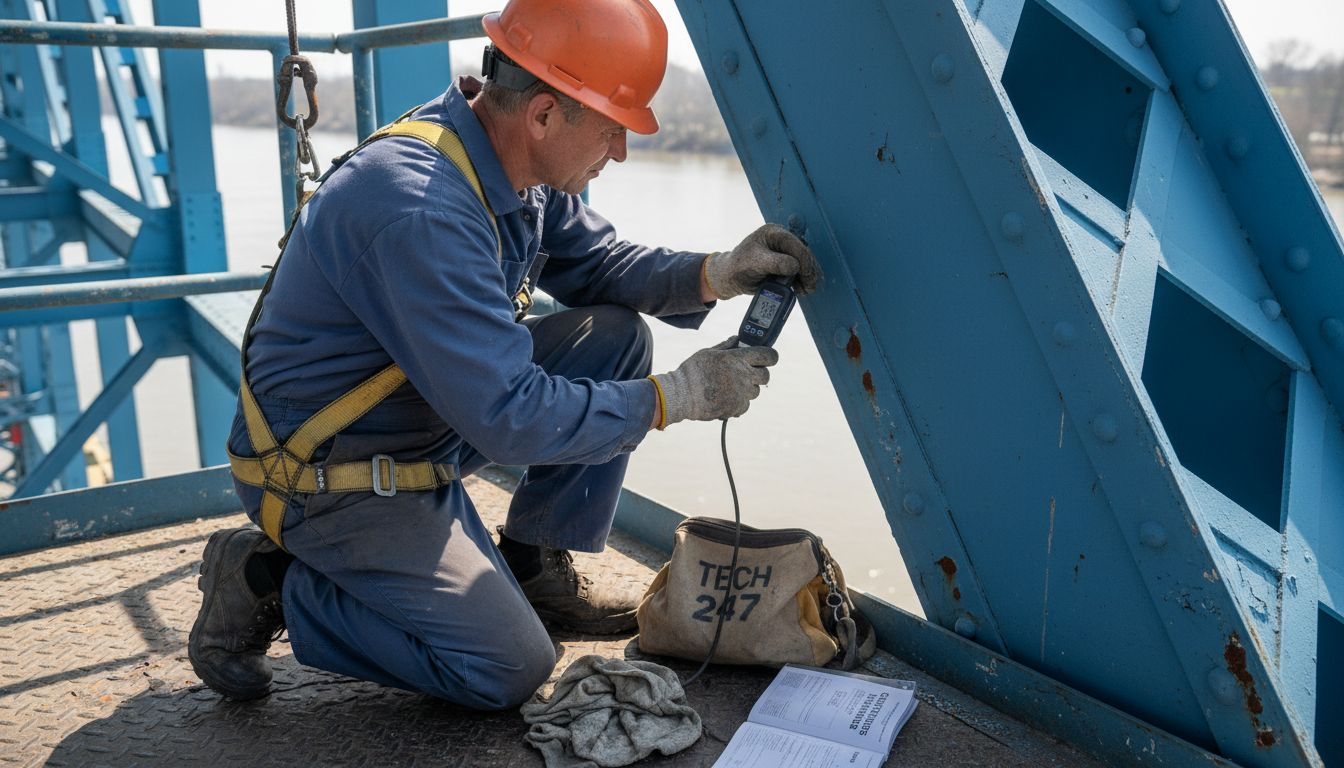
Condition surveys go deeper still. These comprehensive evaluations assess surface contamination, material compatibility, and environmental factors affecting coating performance. Your inspector documents adhesion strength, investigates any corrosion activity, and evaluates whether existing coatings can accept new applications or require complete removal.
Pre application inspections occur before fresh coatings go on. These ensure substrate preparation is adequate and environmental conditions support proper curing. Skipping this step invites coating failure regardless of product quality.
Ultra high frequency (UHF) inspections use advanced technology to detect moisture intrusion and adhesion loss without surface damage. This non destructive method proves valuable for scheduled maintenance assessments when you need data without disrupting operations.
Pro tip: Combine visual inspections with film thickness measurements annually, and perform full condition surveys every three years to catch degradation trends before they require emergency intervention on critical assets.
Here’s a summary of the key coating inspection types and their main value for municipal infrastructure:
| Inspection Type | Primary Focus | Unique Advantage |
|---|---|---|
| Visual | Surface defects, discoloration | Quick baseline assessment |
| Film Thickness | Layer thickness measurement | Ensures coating durability |
| Condition Survey | Adhesion, contamination, corrosion | Guides long-term maintenance planning |
| Pre-Application | Substrate prep, environment | Prevents premature coating failure |
| UHF (Technology) | Hidden moisture, adhesion loss | Detects subsurface issues non-invasively |
How Inspections Protect Asset Lifespan
Coating inspections directly translate into extended asset life. This is not theoretical. When you catch corrosion in its first stages, you prevent catastrophic failure. Your infrastructure lasts years longer, and your maintenance budgets stay predictable instead of hemorrhaging money on emergency repairs.
Here’s the mechanism at work. Corrosion doesn’t happen overnight. It progresses through stages. Early detection allows targeted interventions before damage spreads. Certified coating inspectors identify failures early by recognizing subtle signs that untrained eyes miss. A small adhesion failure today becomes a massive rust patch in six months if ignored. Catching it during inspection prevents that cascade.
Consider your water tank scenario. The coating protects the steel substrate from moisture and oxygen. Once that coating compromises, rust starts spreading exponentially. A 2 percent compromised area might cost $5,000 to repair. That same area left unchecked for two years could cost $50,000 or force complete tank replacement at $200,000 plus. Inspections are your early warning system.
Systematic inspections also guide maintenance spending intelligently. Rather than replacing coatings on a schedule, you replace them when data shows degradation. Some sections might need attention in year three. Others stay protected until year six. This targeted approach stretches your budget across more assets and prevents wasteful over maintenance.
Periodic inspections verify coating condition and guide timely repairs, which directly extends functional lifespan. Your infrastructure stays compliant with safety regulations. Insurance companies appreciate documented maintenance. You avoid liability exposure from failed infrastructure.
Beyond finances, there’s the operational reality. A failed coating on a bridge creates structural risk. A compromised water tank coating affects water quality and public health. Transportation infrastructure with coating failures becomes unsafe. Inspections prevent these scenarios entirely by keeping coatings performing their intended function.
Pro tip: Document inspection results in a centralized asset management system with photo evidence and measurements, allowing you to track degradation rates and predict exactly when recoating will be needed rather than scrambling reactively.
Compliance Standards and Regulatory Requirements
Compliance is not optional for municipal infrastructure managers. Federal, state, and local regulations mandate specific coating standards for water systems, bridges, and transportation assets. Falling short creates legal liability, failed inspections, and potential safety hazards that expose your municipality to costly litigation.
The foundation of American coating standards rests on ASTM International standards for paints and coatings. These standards specify testing procedures, application methods, performance criteria, and durability benchmarks. When your coating contractor applies materials and follows procedures aligned with ASTM standards, you have documented evidence of compliance. Inspectors verify that applied coatings meet these benchmarks through measurement and testing.
For water infrastructure specifically, the Safe Drinking Water Act and EPA regulations govern coating materials. Potable water tanks require food-grade or drinking-water-approved coatings that prevent contamination. Using a standard industrial coating on a water tank, regardless of cost savings, violates federal law and creates public health liability. Compliance inspections verify you are using approved materials.
ISO 12944 provides the global standard for corrosion protection through coating systems, defining environmental categories and maintenance requirements. Many American infrastructure projects adopt ISO 12944 classifications because they provide clear guidance on coating selection for specific environmental conditions. Florida’s coastal salt spray and high humidity environments typically require higher protection categories than inland regions.
Bridge and transportation infrastructure fall under additional standards. The American Association of State Highway and Transportation Officials (AASHTO) specifies coating requirements for bridges and roadways. Your inspection documentation proves compliance with these standards.
Local building codes and city ordinances add another layer. Orlando and surrounding Central Florida municipalities may have specific requirements for public infrastructure coatings. Your inspection reports become the official record demonstrating compliance with municipal codes.
Pro tip: Request that your coating contractor provide ASTM or ISO certifications and material data sheets before work begins, then have inspections document compliance against these standards so you maintain a defensible compliance record for audits and liability protection.
Roles, Risks, and Avoiding Costly Failures
Coating inspectors are not bureaucratic overhead. They are risk managers protecting your assets from catastrophic failure. Understanding their role clarifies why investing in professional inspections prevents far larger expenses down the road.
Coating inspectors assess quality, ensure specification compliance, and detect early degradation that prevents costly infrastructure failures. These professionals have specialized training in coating systems, corrosion mechanisms, and failure modes. They know what healthy coatings look like and what warning signs precede failure. This expertise saves municipalities hundreds of thousands in emergency repairs.
Without proper inspections, risks multiply quickly. Poor coating applications create hidden defects. Substrate contamination beneath coatings triggers early corrosion. Improper film thickness allows moisture penetration. None of these problems announce themselves loudly until structural damage occurs. By then, repair costs explode exponentially.
Consider the financial scenario. A 500,000 gallon water tank costs approximately $200,000 to replace. Recoating that same tank costs roughly $30,000 to $50,000. A minor coating repair caught during inspection costs $5,000. Skip inspections, and you are gambling that nothing fails. When something does fail, you pay the $200,000 replacement cost. The math is brutal.
Inadequate inspection protocols allow premature failure and corrosion that compromise infrastructure safety. Beyond financial impact, there is safety risk. A corroded water tank poses public health hazards. A compromised bridge coating endangers transportation users. These are not abstract concerns in Central Florida where salt spray accelerates corrosion and humidity creates moisture challenges.
The inspector’s role also includes documentation and corrective action recommendations. They do not just identify problems. They explain what caused them and specify remediation. This creates a roadmap for targeted repairs that prevent recurrence.
The following table highlights common coating risks, inspector actions, and business impacts:
| Risk/Failure Type | Inspector Detection Method | Financial/Operational Impact |
|---|---|---|
| Adhesion Loss | Thickness, adhesion testing | Early targeted repair saves thousands |
| Substrate Contamination | Condition surveys | Prevents accelerated corrosion |
| Incorrect Coating Spec | Standards verification | Avoids non-compliance fines |
| Moisture Intrusion | UHF inspection | Reduces emergency repair expenses |
Pro tip: Hire certified coating inspectors with credentials from NACE or AMPP who follow documented inspection protocols, ensuring consistent quality assessments and defensible evidence of due diligence if regulatory issues arise.
Protect Your Infrastructure with Expert Surface Preparation and Coatings
The article highlights the critical role of coating inspections in extending the life of municipal assets by preventing corrosion, adhesion loss, and costly failures. If you manage water tanks, bridges, or transportation infrastructure in Central Florida, you understand the urgency of maintaining protective coatings before small issues escalate. Key challenges include ensuring proper substrate preparation, verifying coating thickness, and selecting certified materials that meet ASTM or ISO standards.
At Southern Sandblasting & Painting LLC, we specialize in addressing these exact pain points with over 20 years of experience in heavy-duty industrial services tailored for complex infrastructure projects. Our professional Sandblasting & Painting services remove rust, old coatings, and contaminants to create the perfect surface for long-lasting protective films. Combined with our precision Industrial Painting applications, we help municipalities and industrial clients protect assets against Florida’s harsh environment effectively.

Don’t wait until early-stage coating failure turns into an expensive emergency. Act now to secure your infrastructure’s longevity. Contact Southern Sandblasting & Painting LLC to schedule a consultation or learn how our expert team can support your next project with reliable surface preparation and coating solutions that comply with all relevant regulations.
Frequently Asked Questions
What is a coating inspection?
A coating inspection is a systematic evaluation of protective coatings on infrastructure surfaces to assess their condition, identify defects, and determine their remaining service life.
Why are coating inspections important for infrastructure?
Coating inspections are crucial as they help catch corrosion and deterioration early, protecting the asset from costly emergency repairs and ensuring compliance with safety regulations.
How often should coating inspections be conducted?
It is recommended to schedule coating inspections every 2 to 3 years to accurately monitor the condition of the coatings and address any issues before they escalate.
What types of coating inspections are available?
Common types of coating inspections include visual inspections, film thickness measurements, condition surveys, pre-application inspections, and ultra-high frequency (UHF) inspections, each serving a specific purpose in asset management.


