

TL;DR:
- Equipment maintenance involves inspecting, repairing, and documenting assets to ensure safety and efficiency. Proper strategies reduce costs, extend asset lifespan, and improve operational reliability, with preventive and predictive maintenance being more cost-effective than reactive repairs. Building a structured program with regular reviews and a proactive culture enhances facility performance and reduces downtime.
Equipment maintenance is the process of systematically inspecting, servicing, repairing, and documenting physical assets to keep them operating safely and efficiently. For facility managers and operational leaders, this discipline, formally called asset maintenance management, determines whether infrastructure performs at full capacity or drains budgets through avoidable failures. The role of equipment maintenance extends beyond fixing broken parts. It shapes operational costs, workforce safety, regulatory compliance, and the long-term value of every asset under your care. Preventive, predictive, and corrective approaches each serve a distinct function, and knowing when to apply each one separates high-performing facilities from those in constant crisis mode.
What are the main types and functions of equipment maintenance?
Equipment maintenance divides into three core strategies: preventive, predictive, and corrective. Each targets a different point in an asset’s failure cycle, and each carries a different cost profile.
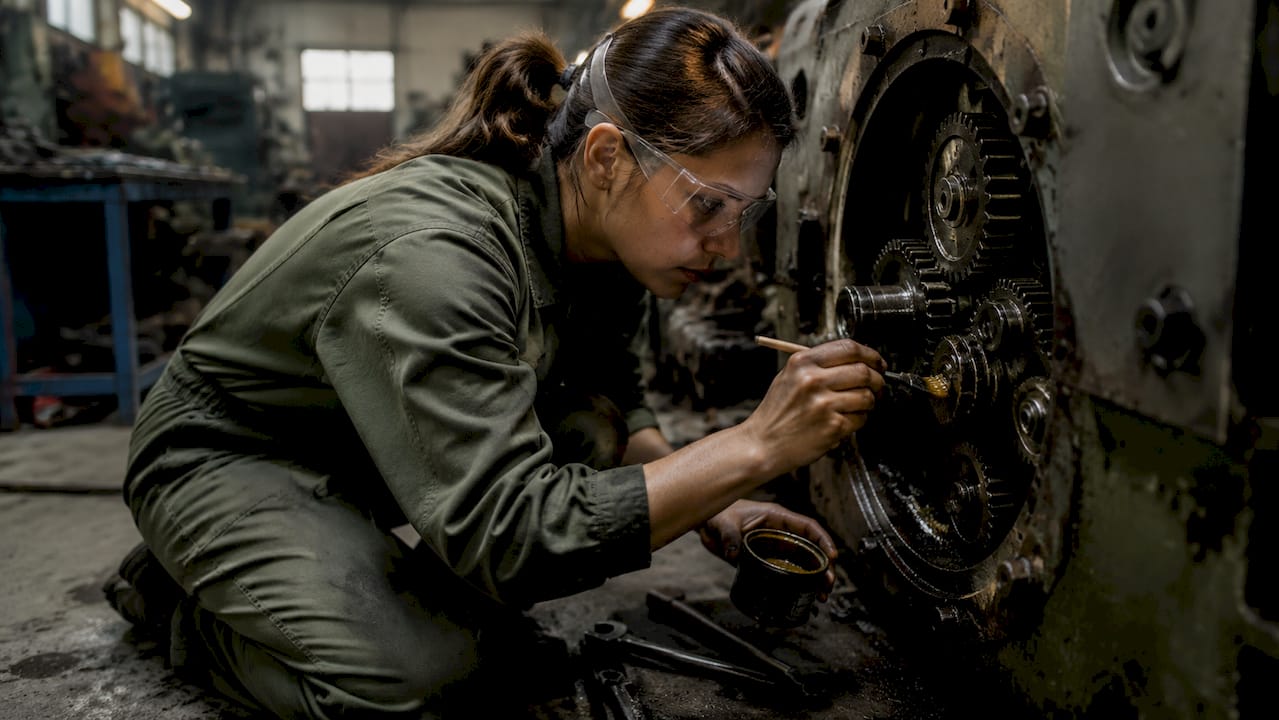
Preventive maintenance follows a fixed schedule based on time or usage intervals. Technicians replace filters, lubricate bearings, calibrate sensors, and inspect structural integrity before problems appear. Daily habits like zeroing brake testers or resetting calibration points fall into this category. These tasks seem minor, but skipping them creates anomalous results that compound into larger failures.
Predictive maintenance uses real-time data from sensors, vibration analysis, thermal imaging, or oil sampling to detect early signs of wear. The goal is to intervene only when data signals an actual problem, not on a fixed calendar. This approach reduces unnecessary part replacements and keeps assets running longer between service events.
Corrective maintenance addresses failures after they occur. It is unavoidable for low-criticality assets where the cost of prevention exceeds the cost of repair. The problem arises when corrective maintenance becomes the default strategy for critical equipment.
| Maintenance Type | Primary Benefit | Typical Cost Driver |
|---|---|---|
| Preventive | Reduces unplanned failures | Labor and scheduled parts |
| Predictive | Targets real wear, not calendar dates | Sensor technology and data analysis |
| Corrective | Addresses confirmed failures | Emergency labor and expedited parts |
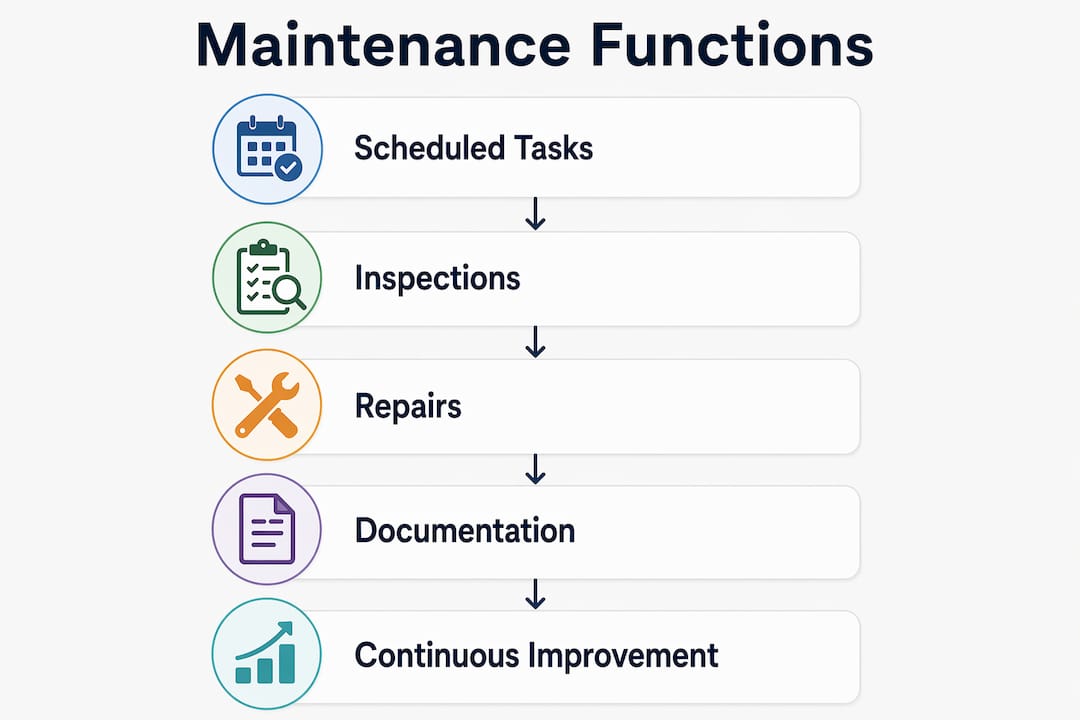
Beyond these three types, effective asset maintenance management includes five operational functions: scheduled preventive tasks, corrective repairs, formal inspections, resident technical support, and emergency response. Facilities that treat all five as equally important build the most resilient maintenance programs.
Pro Tip: Match your maintenance strategy to each asset’s criticality and failure mode. A water pump serving a municipal system warrants predictive monitoring. A storage shelf does not. Tailored maintenance strategies consistently outperform uniform schedules on both cost and reliability.
How does equipment maintenance impact operational performance and cost?
Reactive maintenance is the most expensive approach a facility can take. Run-to-failure maintenance costs manufacturers an average of $2 million per downtime event when lost productivity, emergency parts, and missed sales are combined. That figure makes a compelling case for any operational leader reviewing a maintenance budget.
Planned maintenance reduces unscheduled outages by addressing wear before it becomes failure. Preventive maintenance cuts emergency repairs and lowers total repair costs over time by catching small problems while they are still inexpensive to fix. The financial benefit compounds: fewer emergency callouts mean lower overtime labor costs, less expedited shipping for parts, and more predictable budget cycles.
The benefits of maintenance services extend well beyond direct repair costs:
- Reduced downtime: Scheduled service windows replace unpredictable shutdowns that halt entire operations.
- Lower labor costs: Planned work is faster and cheaper than emergency repairs performed under pressure.
- Extended asset life: Regular servicing delays capital replacement cycles, deferring major expenditures.
- Higher resale value: Detailed service records command higher prices at resale and are often required to keep manufacturer warranties valid.
- Regulatory compliance: Regular maintenance supports safety inspections and keeps documentation current for regulatory audits.
- Workforce confidence: When workers trust their equipment, they focus better and safety incidents decline, directly improving productivity.
Maintenance data also serves a forecasting function. Each preventive visit generates records that reveal wear patterns, failure frequencies, and parts consumption rates. Preventive maintenance visits create data that allows better prediction of future failures, more efficient labor scheduling, and clearer reporting to stakeholders. Facilities that treat maintenance records as operational intelligence, not just paperwork, gain a measurable planning advantage.
How to build an effective equipment maintenance program
A structured maintenance program starts with a complete asset inventory. List every piece of equipment, its age, its criticality to operations, and its manufacturer-recommended service intervals. Without this foundation, scheduling decisions default to guesswork.
Follow these steps to build a program that holds up under real operational pressure:
- Audit your asset inventory. Document every asset, its location, its condition, and its failure history. Use a computerized maintenance management system (CMMS) like IBM Maximo, UpKeep, or Fiix to centralize records.
- Classify assets by criticality. Rank each asset by the operational and safety impact of its failure. High-criticality assets get predictive or preventive programs. Low-criticality assets may tolerate a corrective approach.
- Build schedules from manufacturer guidelines and usage data. Manufacturer service intervals are a starting point, not a ceiling. Adjust based on actual operating hours, environmental conditions, and historical failure data.
- Assign trained technicians to specific asset classes. Generalist technicians miss failure signals that specialists catch early. Invest in training programs aligned to the equipment your facility actually operates.
- Document every service event. Record what was done, what was found, what parts were used, and who performed the work. This documentation supports warranty claims, regulatory inspections, and future planning.
- Review and adjust quarterly. Maintenance programs drift out of alignment with operational reality. Quarterly reviews catch scheduling gaps, recurring failures, and training needs before they become crises.
Integrating a facility maintenance checklist into daily operations keeps technicians consistent and creates an auditable record without adding administrative burden. The checklist format works because it removes reliance on memory during high-pressure situations.
Pro Tip: Use maintenance data as a continuous improvement tool, not just a compliance record. Track mean time between failures (MTBF) for critical assets and set targets for improvement each quarter. Facilities that treat maintenance data for forecasting reduce unplanned downtime faster than those relying on technician intuition alone.
Common challenges and best practices in equipment maintenance
Facility managers face predictable obstacles when building or improving maintenance programs. Recognizing them early prevents the most costly mistakes.
Technician availability is the most common constraint. Skilled maintenance technicians are in short supply across industrial sectors. Facilities that rely on a single expert for critical equipment create a single point of failure in their own operations. Cross-training and documented procedures reduce this risk.
Parts logistics creates delays that turn minor repairs into extended outages. Facilities without a managed spare parts inventory spend more time waiting for components than performing actual repairs. A tiered parts stocking strategy, with critical spares on-site and secondary parts on short-order, cuts average repair time significantly.
Data management is where many programs fail silently. Maintenance logs stored in spreadsheets or paper binders cannot support trend analysis or failure prediction. Migrating to a CMMS platform is the single most impactful administrative change a facility manager can make.
| Common Pitfall | Best Practice |
|---|---|
| Reactive fix-on-failure default | Schedule preventive tasks for all critical assets |
| Uniform maintenance schedules | Match strategy to asset criticality and failure modes |
| Incomplete service records | Document every task in a centralized CMMS |
| Undertrained technicians | Invest in asset-specific training programs |
| No parts inventory management | Maintain a tiered spare parts stocking plan |
Culture is the factor that determines whether best practices stick. A proactive maintenance culture trains staff to detect equipment issues early and treat reporting problems as a professional responsibility, not an admission of failure. When technicians and operators share ownership of equipment reliability, breakdown incidents drop and operational standards rise. Leadership sets this tone. Facility managers who visibly prioritize maintenance, fund training, and act on reported issues build teams that sustain programs without constant supervision.
For facilities exploring industrial maintenance trends in 2026, digital tools including IoT sensors, AI-assisted diagnostics, and mobile CMMS platforms are reshaping how maintenance teams collect and act on asset data.
Key takeaways
Effective equipment maintenance is the single most controllable factor in reducing unplanned downtime, extending asset life, and protecting operational budgets.
| Point | Details |
|---|---|
| Match strategy to asset criticality | Apply predictive or preventive programs to critical assets; reserve corrective maintenance for low-risk equipment. |
| Reactive maintenance is the costliest option | Run-to-failure events average $2 million in losses per incident across manufacturing operations. |
| Maintenance records protect business value | Detailed service logs support warranty claims, regulatory audits, and higher resale prices. |
| Culture drives program success | Training staff to report issues early and treat reliability as shared ownership reduces breakdown frequency. |
| Data turns maintenance into a planning tool | Each service event generates records that improve failure forecasting and labor scheduling. |
What facility managers often get wrong about maintenance
The most persistent mistake I see in facility operations is treating maintenance as a cost center rather than a performance function. Budgets get cut, schedules slip, and the consequences show up six months later as a catastrophic failure that costs ten times what the deferred maintenance would have. The math is not complicated, but the organizational pressure to cut short-term costs is real and relentless.
What actually works is building maintenance into the operational identity of the facility, not just the budget line. When worker confidence in equipment reliability is high, safety incidents decline and productivity improves. That connection between maintenance quality and workforce performance is underappreciated in most operational planning conversations.
The shift from reactive to proactive maintenance does not happen through software alone. It requires leadership that treats a technician’s early warning report as valuable intelligence, not a nuisance. Facilities that make this cultural shift stop running emergency fire drills and start running predictable, manageable operations. The industrial maintenance best practices that deliver the best long-term results are the ones embedded in daily habits, not annual audits.
Digital tools accelerate the shift, but they do not replace judgment. A CMMS is only as useful as the data entered into it. Invest in training technicians to document accurately, and the system pays for itself in planning accuracy within the first year.
— Southernsandblastingandpainting
Protecting your assets with professional surface maintenance
Surface degradation is one of the most overlooked threats to equipment longevity. Corrosion, rust, and coating failure accelerate structural wear on water tanks, pipelines, airport infrastructure, and municipal assets, often faster than mechanical wear.

Southern Sandblasting and Painting brings over 20 years of experience in industrial surface preparation and protective coating application across Central Florida. From sandblasting services that remove rust and contaminants down to bare metal, to industrial-grade coating systems that seal assets against corrosion for years, the team works with facility managers and municipal clients on projects where surface integrity directly affects operational life. Explore the sandblasting equipment guide to see how professional surface preparation fits into a complete asset protection program.
FAQ
What is the role of equipment maintenance in facility management?
Equipment maintenance keeps physical assets operating safely, reliably, and within regulatory requirements. It reduces unplanned downtime, extends asset lifespan, and controls total operational costs through structured preventive, predictive, and corrective programs.
How does preventive maintenance reduce costs?
Preventive maintenance addresses wear before failure occurs, eliminating emergency labor costs, expedited parts shipping, and lost productivity. Over time, it lowers total repair expenditure compared to reactive fix-on-failure approaches.
Why do maintenance records matter for warranties and resale?
Detailed service records are required by many manufacturers to keep warranties valid on heavy industrial equipment. At resale, documented maintenance history commands higher asset values and gives buyers confidence in equipment condition.
What is the biggest obstacle to effective equipment maintenance?
The most common obstacle is a reactive organizational culture that defaults to fixing failures rather than preventing them. Shifting to a proactive culture requires leadership commitment, technician training, and consistent documentation practices.
How often should facility managers review their maintenance programs?
Quarterly reviews are the minimum standard for active facilities. Reviews should assess scheduling gaps, recurring failure patterns, parts inventory levels, and technician training needs to keep programs aligned with actual operational conditions.


