
Upgrading bridges, water systems, and transportation assets across Central Florida demands decisions that protect both budgets and long-term performance. Severe humidity and salt exposure can turn untreated steel into a costly maintenance burden, which is why many public works leaders trust zinc coatings to secure their investments. These coatings offer a blend of robust barrier protection and sacrificial corrosion defense, dramatically slowing the rate of degradation and helping essential infrastructure last for decades.
Table of Contents
- What Are Zinc Coatings And How They Protect
- Types Of Zinc Coatings For Infrastructure
- How Zinc Coatings Are Applied And Tested
- Service Life, Costs, And Maintenance Factors
- Comparing Zinc Coatings To Other Solutions
- Common Issues And Selection Mistakes To Avoid
Key Takeaways
| Point | Details |
|---|---|
| Dual Protection Mechanism | Zinc coatings utilize both barrier and sacrificial protection to effectively reduce corrosion rates. |
| Selection of Coating Methods | Different zinc coating methods should be chosen based on specific environmental conditions to ensure optimal performance. |
| Cost and Maintenance Planning | Consider lifecycle costs and environmental factors when planning for maintenance and application to extend the service life of infrastructure. |
| Avoid Selection Mistakes | Carefully assess environmental factors and coating specifications to prevent costly errors in the selection of zinc coatings. |
What Are Zinc Coatings and How They Protect
Zinc coatings represent a sophisticated protective technology designed to shield critical metal infrastructure from devastating corrosion. These specialized coatings provide a robust defense mechanism for steel and iron components, utilizing two primary protection strategies that make them invaluable for municipal and industrial applications.
At its core, zinc coating operates through two fundamental mechanisms of corrosion protection. First, it creates a physical barrier coating that prevents direct environmental contact with underlying metal surfaces. Second, and perhaps more ingeniously, zinc provides sacrificial protection – a process where the zinc material intentionally corrodes first, effectively preserving the base metal underneath. Zinc coatings form a protective barrier that dramatically slows corrosion rates, often reducing degradation by 10 to 100 times compared to unprotected steel.
The protection strategy varies depending on the specific zinc coating method applied. Municipal infrastructure managers can choose from several zinc coating techniques, each offering unique advantages:
- Hot-Dip Galvanizing: Creates a thick, metallurgically bonded zinc layer
- Thermal Spray Coating: Provides flexible protection for complex geometries
- Zinc-Rich Paint Systems: Offers cost-effective corrosion resistance
- Mechanical Plating: Delivers uniform coverage for precision components
The effectiveness of zinc coatings depends critically on selecting the right application method for specific environmental conditions. Coastal regions with high salt exposure, industrial zones with chemical pollutants, and areas with extreme temperature fluctuations each demand tailored zinc coating approaches.
Pro tip: Always conduct a comprehensive environmental assessment before selecting a zinc coating method to ensure maximum long-term protection and asset longevity.
Types of Zinc Coatings for Infrastructure
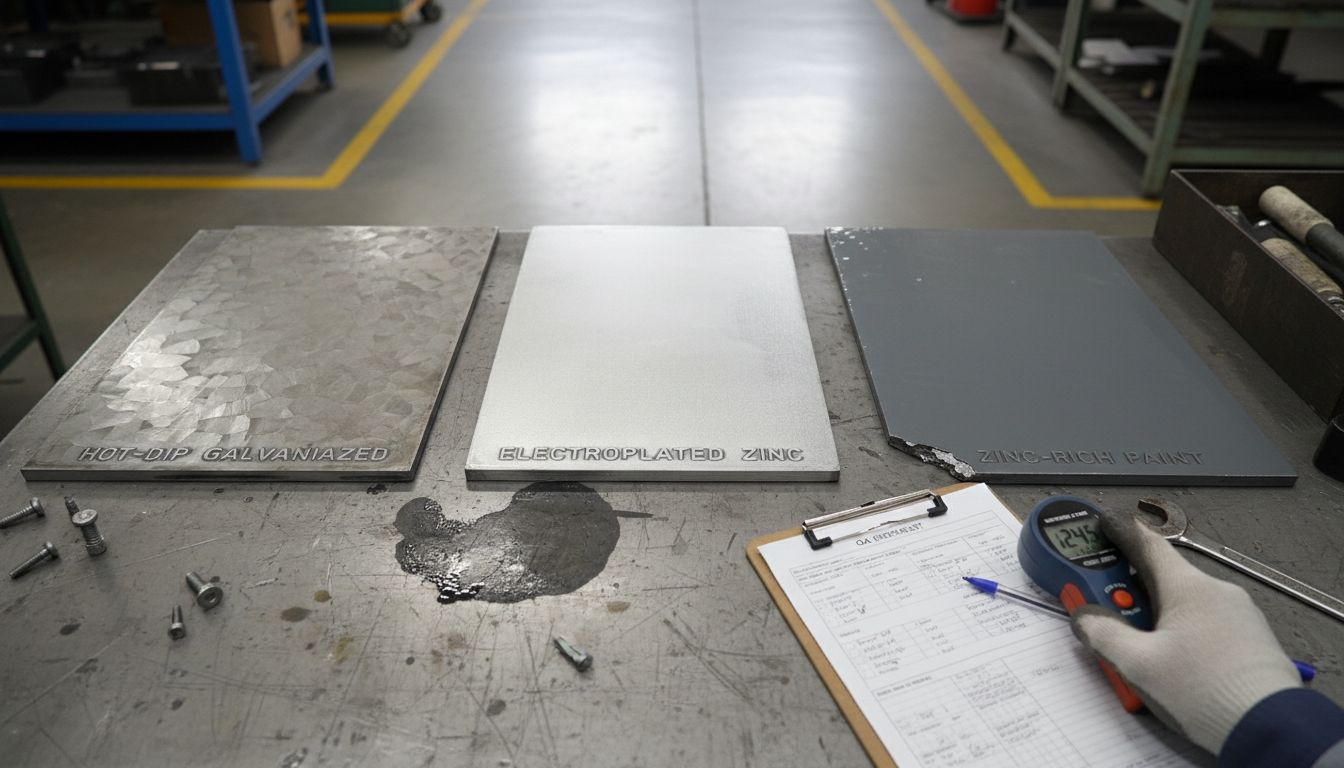
Zinc coatings have evolved into a diverse array of protective technologies, each designed to address specific infrastructure challenges. Zinc coating techniques vary significantly in their application methods, protective characteristics, and suitability for different environmental conditions, making selection a critical engineering decision for municipal and industrial projects.
The primary zinc coating methods for infrastructure protection include several sophisticated approaches:
- Hot-Dip Galvanizing:
- Batch process creating thick, durable zinc layers
- Continuous method for high-volume manufacturing
- Provides robust protection for steel structures
- Electrogalvanizing:
- Thin, uniform coating applied through electrical current
- Ideal for precision components
- Excellent for smooth, aesthetic finishes
- Zinc-Rich Paint Systems:
- Flexible coating for complex geometries
- Cost-effective corrosion protection
- Suitable for repair and maintenance applications
- Thermal Spray Metallizing:
- Applies zinc through high-temperature spray method
- Excellent for difficult-to-coat surfaces
- Provides exceptional adhesion and coverage
Moreover, advanced coating technologies like zinc flake coatings have emerged as innovative solutions for specialized applications. These non-electrolytic coatings offer remarkable corrosion resistance while addressing environmental concerns, particularly in automotive and fastener industries.
The selection of a zinc coating method depends on multiple factors including environmental exposure, structural requirements, economic constraints, and long-term performance expectations. Municipal infrastructure managers must carefully evaluate these considerations to ensure optimal protection and asset longevity.
Pro tip: Conduct a comprehensive environmental assessment and performance simulation before selecting a zinc coating method to maximize protection and minimize long-term maintenance costs.
How Zinc Coatings Are Applied and Tested
Zinc coating application requires meticulous preparation and precise technical execution to ensure comprehensive corrosion protection. Zinc coating standards define rigorous application methods that transform raw metal surfaces into resilient, long-lasting infrastructure components.
The primary zinc coating application techniques include:
- Hot-Dip Galvanizing:
- Immersion of metal parts in molten zinc
- Forms metallurgical zinc/iron alloy layers
- Creates thick, uniform protective coating
- Electroplating:
- Uses electrical current to deposit zinc
- Produces thin, precise coating
- Ideal for complex geometric surfaces
- Thermal Spray Metallizing:
- Applies zinc through high-temperature spray
- Excellent for hard-to-coat surfaces
- Provides exceptional surface coverage
- Mechanical Plating:
- Mechanical bonding of zinc particles
- Suitable for smaller precision components
- Ensures uniform coating distribution
Quality testing for zinc coatings involves comprehensive evaluation across multiple parameters. Experts assess coating performance through rigorous examinations including:
- Coating thickness measurements
- Adhesion strength tests
- Corrosion resistance assessments
- Salt spray exposure simulations
- Visual and microscopic surface inspections
The testing process ensures that zinc coatings meet stringent industrial standards, providing municipal infrastructure managers confidence in long-term asset protection and durability.
Here’s a practical summary comparing popular zinc coating application methods:
| Application Method | Typical Thickness | Best for Surface Types | Usual Service Life (years) |
|---|---|---|---|
| Hot-Dip Galvanizing | High (50-200 μm) | Large/simple structures | 30-70 |
| Electroplating | Low (5-25 μm) | Small, detailed parts | 5-20 |
| Thermal Spray Metallizing | Medium (50-150 μm) | Complex/rough geometries | 20-50 |
| Zinc-Rich Paint Systems | Variable (20-150 μm) | Irregular, in-field repairs | 10-30 |
Pro tip: Always request detailed coating application and testing documentation to verify the comprehensive quality assurance process for your infrastructure projects.
Service Life, Costs, and Maintenance Factors
Understanding the long-term performance and economic implications of zinc coatings is crucial for municipal infrastructure managers seeking cost-effective corrosion protection solutions. Zinc Coating Life Predictor tools enable precise forecasting of service life and maintenance requirements based on complex environmental parameters.
Key factors influencing zinc coating service life and maintenance costs include:
- Environmental Conditions:
- Atmospheric pollution levels
- Temperature variations
- Humidity and rainfall exposure
- Salinity and coastal proximity
- Sheltering and structural positioning
- Coating Characteristics:
- Initial coating thickness
- Application method
- Zinc coating composition
- Surface preparation quality
- Metallurgical bonding strength
Maintenance planning for zinc-coated infrastructure requires a strategic approach that considers multiple economic and performance variables. The linear relationship between coating thickness and service life means that initial investment in higher-quality zinc coatings can significantly reduce long-term maintenance expenses.
Infrastructure managers should develop comprehensive lifecycle cost analyses that account for:
- Initial coating application expenses
- Predicted maintenance intervals
- Potential environmental degradation rates
- Replacement or rehabilitation costs
- Operational disruption expenses
Thicker zinc coatings generally provide extended protection, often reducing maintenance frequency and overall lifecycle expenses.
Pro tip: Utilize advanced predictive modeling tools to simulate coating performance and optimize maintenance scheduling for maximum infrastructure longevity and cost efficiency.
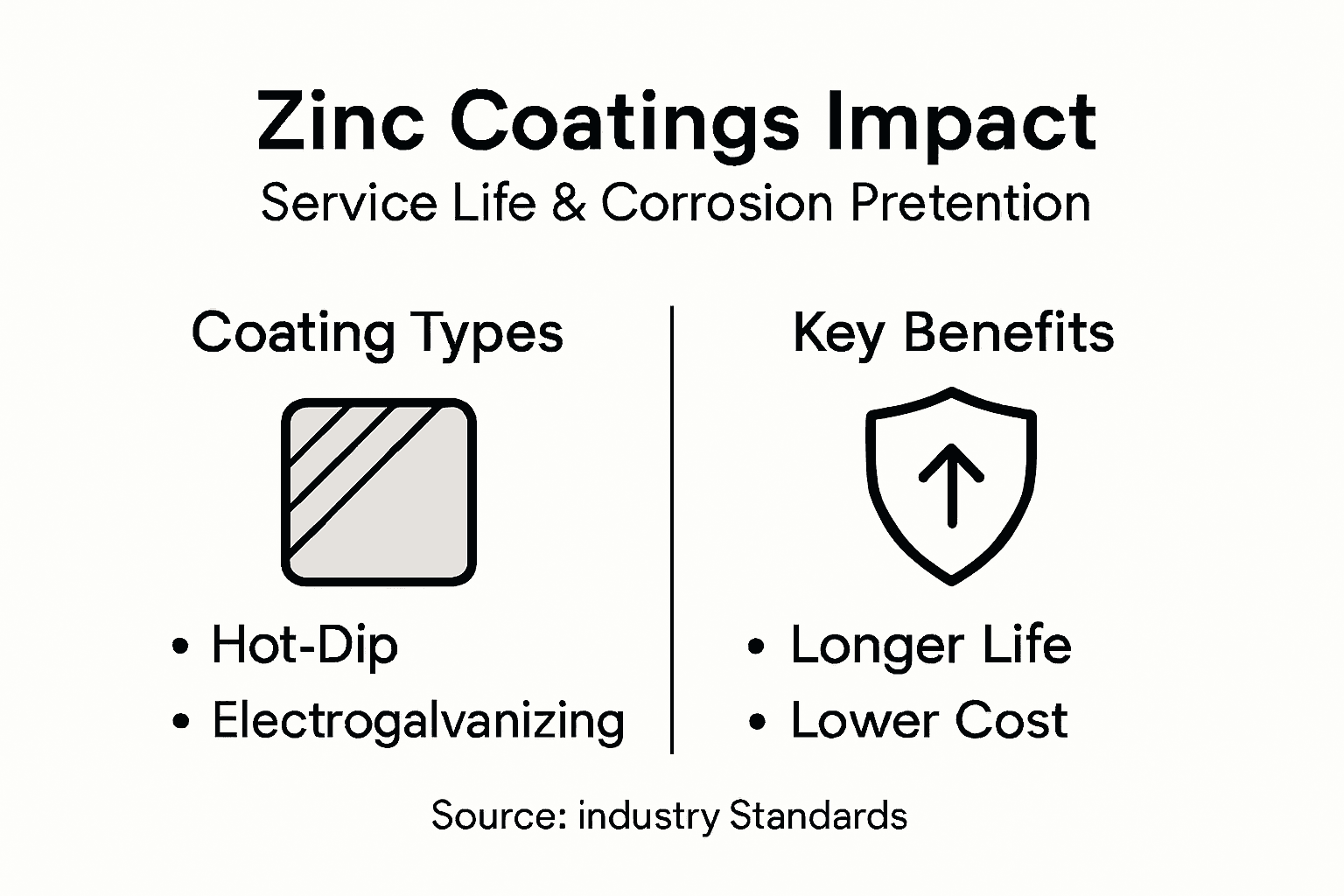
The table below summarizes key cost and maintenance factors for zinc coatings:
| Cost Factor | Impact on Lifecycle | Influence on Maintenance |
|---|---|---|
| Initial Application Cost | Determines upfront budget | Affects total project costs |
| Coating Thickness | Extends service life | Reduces frequency of repairs |
| Environmental Severity | Drives faster wear | Demands earlier interventions |
| Predictive Monitoring | Lowers unexpected costs | Enables proactive scheduling |
Comparing Zinc Coatings to Other Solutions
Corrosion mitigation strategies vary significantly across different industrial and infrastructure applications, with zinc coatings emerging as a particularly robust and cost-effective solution. Municipal infrastructure managers must carefully evaluate the comparative advantages of various protective technologies to ensure optimal long-term asset performance.
Key comparison points between zinc coatings and alternative corrosion protection methods include:
- Zinc Coatings:
- Dual protection mechanism
- Sacrificial corrosion prevention
- Cost-effective for large structures
- 10-100 times slower corrosion rate
- Stainless Steel:
- Higher initial material costs
- Limited sacrificial protection
- Complex fabrication requirements
- Better for specific chemical environments
- Organic Coatings:
- Less durable barrier protection
- Requires frequent maintenance
- Susceptible to environmental degradation
- Lower long-term cost-effectiveness
- Polymer Composites:
- Complex application process
- Higher manufacturing expenses
- Variable performance characteristics
- Limited widespread industrial adoption
Zinc coatings consistently demonstrate superior performance across multiple environmental conditions, making them a preferred choice for large-scale infrastructure protection.
Economic considerations play a crucial role in selecting corrosion mitigation strategies. While alternative solutions might offer specialized benefits, zinc coatings provide a compelling balance of durability, cost-efficiency, and broad-spectrum protection that makes them particularly attractive for municipal infrastructure projects.
Pro tip: Conduct comprehensive environmental exposure assessments to determine the most appropriate corrosion protection strategy for your specific infrastructure requirements.
Common Issues and Selection Mistakes to Avoid
ISO guidelines highlight critical zinc coating selection challenges that municipal infrastructure managers must carefully navigate to ensure long-term asset protection. Understanding and avoiding common selection mistakes can significantly impact the performance and durability of corrosion protection strategies.
The most prevalent selection errors include:
- Environmental Mismatches:
- Incorrectly assessing local corrosivity levels
- Overlooking specific environmental exposure conditions
- Failing to account for temperature and humidity variations
- Ignoring chemical pollution and industrial proximity
- Coating Specification Errors:
- Selecting inappropriate coating thickness
- Misunderstanding coating method limitations
- Neglecting structural load requirements
- Underestimating maintenance complexity
- Technical Application Mistakes:
- Poor surface preparation
- Inconsistent coating application
- Ignoring hydrogen embrittlement risks
- Inadequate quality control processes
- Economic Miscalculations:
- Prioritizing initial cost over long-term performance
- Underestimating maintenance and replacement expenses
- Failing to consider lifecycle cost implications
- Overlooking potential operational disruption costs
Proper zinc coating selection requires a holistic approach that balances technical performance, environmental conditions, and economic considerations.
Infrastructure managers must develop a comprehensive evaluation framework that considers multiple interconnected factors. This approach helps prevent costly mistakes and ensures the selection of zinc coating solutions that provide optimal long-term protection.
Pro tip: Develop a structured evaluation matrix that systematically assesses environmental exposure, coating performance requirements, and lifecycle cost implications before finalizing zinc coating specifications.
Protect Your Infrastructure with Expert Zinc Coating Preparation and Application
Corrosion can severely undermine the lifespan of critical infrastructure, but zinc coatings offer powerful dual protection that prevents rust and degradation. To achieve the full benefits of these advanced coatings, precise surface preparation and high-quality industrial painting are essential. At Southern Sandblasting & Painting LLC, we understand the importance of proper sandblasting, rust removal, and coating application for infrastructures such as water tanks, pipelines, and municipal assets exposed to harsh environmental conditions.
Discover how our 20+ years of experience in Industrial Painting and surface preparation can extend the service life of your assets by ensuring optimal zinc coating adhesion and performance. Don’t let improper application or poor surface prep lead to costly maintenance or early coating failure. Contact us today at https://southernsandblastingandpainting.com to schedule a consultation and protect your investment with proven corrosion protection solutions tailored to Central Florida’s unique environmental challenges.
Frequently Asked Questions
What are zinc coatings used for?
Zinc coatings are primarily used to protect steel and iron components from corrosion, ensuring the longevity of infrastructure and equipment in various municipal and industrial applications.
How do zinc coatings protect against corrosion?
Zinc coatings protect against corrosion by creating a physical barrier that prevents environmental contact with the underlying metal, and by providing sacrificial protection, where the zinc corrodes first, preserving the base metal underneath.
What are the different types of zinc coating methods available?
Key zinc coating methods include hot-dip galvanizing, electrogalvanizing, zinc-rich paint systems, thermal spray metallizing, and mechanical plating, each with specific advantages and suitability for different applications.
How can I ensure the correct zinc coating is selected for my project?
Selecting the appropriate zinc coating involves assessing environmental exposure conditions, structural requirements, and economic factors. It’s essential to conduct a thorough environmental assessment and consider the longevity and maintenance needs of the coating.
Recommended
- 7 Key Protective Coating Advantages for Facility Managers
- What Is Anti-Corrosion Coating and Why It Matters
- Role of Coatings in Longevity – Extending Asset Lifespans
- What Is Protective Coating and Why Asset Longevity Depends On It
- Sandblasting Contractor Baldwin Park FL
- Sandblasting Services Oviedo FL


