
Most American public infrastructure in Central Florida faces relentless wear from humidity, salt air, and daily operations. For facilities managers and procurement officers, industrial painting is more than a fresh coat—it is a strategic defense for long-term asset value. Nearly 60 percent of coating failures are traced to poor surface preparation. Understanding the full painting process helps agencies choose methods that maximize protection, minimize risk, and deliver reliable performance for critical assets.
Table of Contents
- Defining The Industrial Painting Process
- Key Stages From Preparation To Application
- Types Of Coatings And Their Uses
- Compliance With Safety And Environmental Standards
- Common Pitfalls And Long-Term Maintenance
Key Takeaways
| Point | Details |
|---|---|
| Importance of Surface Preparation | Thorough surface preparation is crucial for optimal paint adhesion and durability, and involves techniques like sandblasting and chemical treatments. |
| Coating Selection Criteria | Selecting the right coating involves understanding environmental conditions and compatibility with substrate materials to ensure long-term performance. |
| Regulatory Compliance | Professionals must adhere to safety and environmental regulations, focusing on worker protection and ecological impacts, which requires regular training and documentation. |
| Proactive Maintenance Strategies | Implementing systematic inspection and long-term maintenance plans helps in early detection of issues, ensuring integrity and performance of coatings over time. |
Defining the Industrial Painting Process
The industrial painting process represents a critical approach to protecting and preserving metal surfaces from environmental degradation. At its core, this specialized technique involves systematically preparing, coating, and treating industrial assets to extend their functional lifespan and structural integrity. Professionals utilize spray painting techniques that atomize coating materials through compressed gas, creating an even protective layer across large surface areas.
Structural components require meticulous assessment before painting, considering factors like exposure conditions, environmental challenges, and specific coating requirements. Industrial painting goes beyond aesthetic improvements, serving as a strategic defense mechanism against corrosion, wear, and environmental stress. Different industries demand unique approaches, with painting specifications varying based on the material, intended use, and potential exposure risks.
The painting process typically involves several key stages: surface preparation, primer application, main coating deployment, and final protective layer implementation. Surface preparation might include sandblasting, chemical treatments, or mechanical cleaning to ensure optimal paint adhesion. Each step requires precision and specialized equipment to guarantee comprehensive coverage and long-term protection. Coating selection depends on multiple variables, including temperature resistance, chemical exposure, and expected environmental conditions.
Pro tip: Always conduct a comprehensive surface assessment and moisture measurement before initiating any industrial painting project to prevent potential coating failure.
Key Stages From Preparation to Application
Industrial painting involves a strategic, multi-step process that transforms raw surfaces into protected assets. Surface preparation methods play a critical role in ensuring long-term coating performance and durability. These initial steps are not merely cosmetic but represent a fundamental approach to preventing corrosion, wear, and environmental degradation.
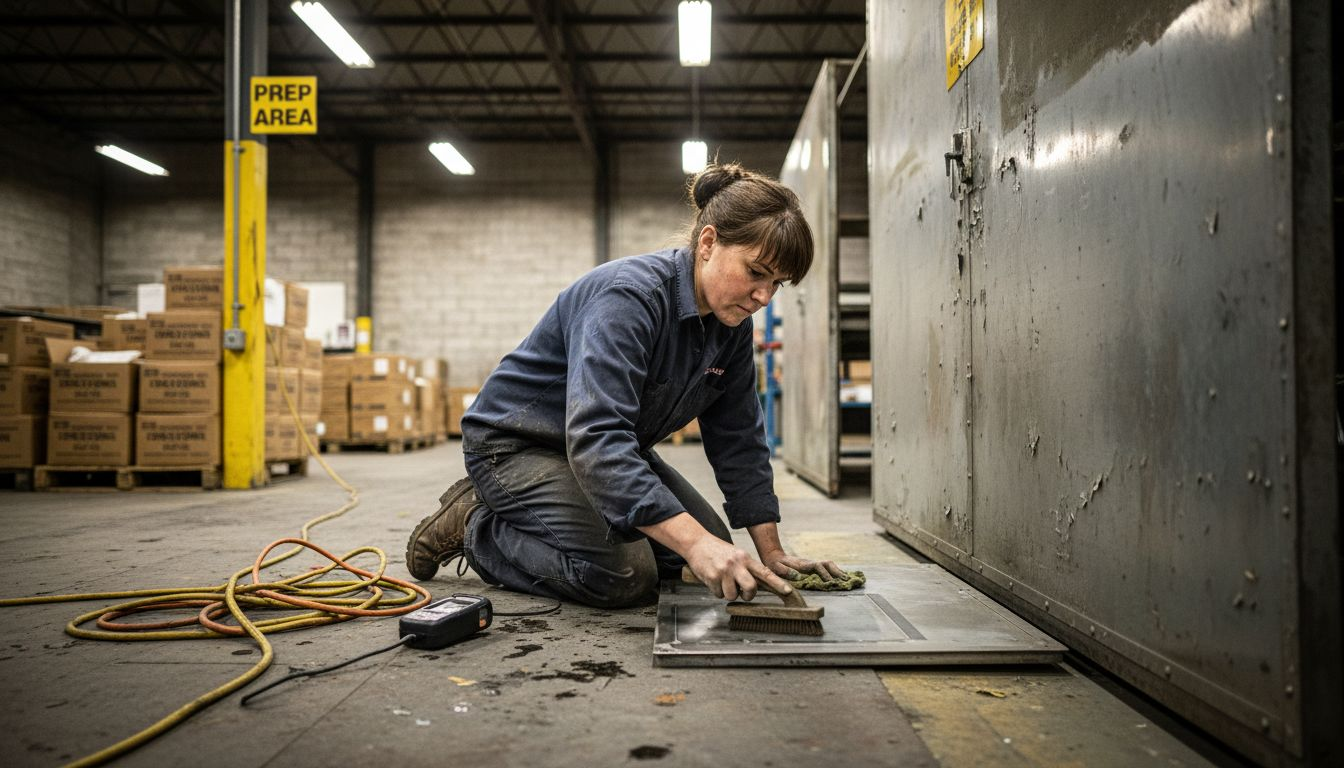
The comprehensive process typically encompasses four primary stages. First, surface preparation involves meticulous cleaning and treatment, which might include mechanical abrasion, chemical treatments, or specialized blasting techniques to remove contaminants, rust, and old coatings. Professionals utilize methods like solvent cleaning, sandblasting, and mechanical sanding to create an optimal substrate that enables maximum paint adhesion. This stage requires precision instrumentation and expert assessment to guarantee surface readiness.
Subsequent stages include primer application, intermediate coating, and final finish coat deployment. Each layer serves a specific protective function, with paint system selection carefully considering environmental exposure, temperature variations, and potential chemical interactions. Thickness measurements, application techniques, and curing conditions are meticulously controlled to ensure comprehensive coverage and long-term performance. Professional painters must understand material compatibility, environmental constraints, and industry-specific coating requirements.
Pro tip: Invest in professional moisture and surface profile testing before painting to eliminate potential adhesion failures and ensure maximum coating longevity.
Types of Coatings and Their Uses
Industrial coating technologies represent a sophisticated approach to protecting and enhancing various surfaces across multiple sectors. Coating types range from purely decorative applications to highly specialized functional solutions designed to address specific environmental and structural challenges. These protective layers serve critical purposes beyond simple aesthetic improvements, offering advanced performance capabilities for diverse industrial requirements.
The industrial coating landscape encompasses several primary categories, each engineered for unique applications. Architectural coatings protect building surfaces, while original equipment manufacturer (OEM) coatings provide functional protection for manufactured goods. Specialized categories include automotive refinish coatings, infrastructure protective layers, and high-performance industrial applications. These coatings can be applied as liquids, powders, or gases, with each method offering distinct advantages in terms of durability, coverage, and specific protective characteristics.
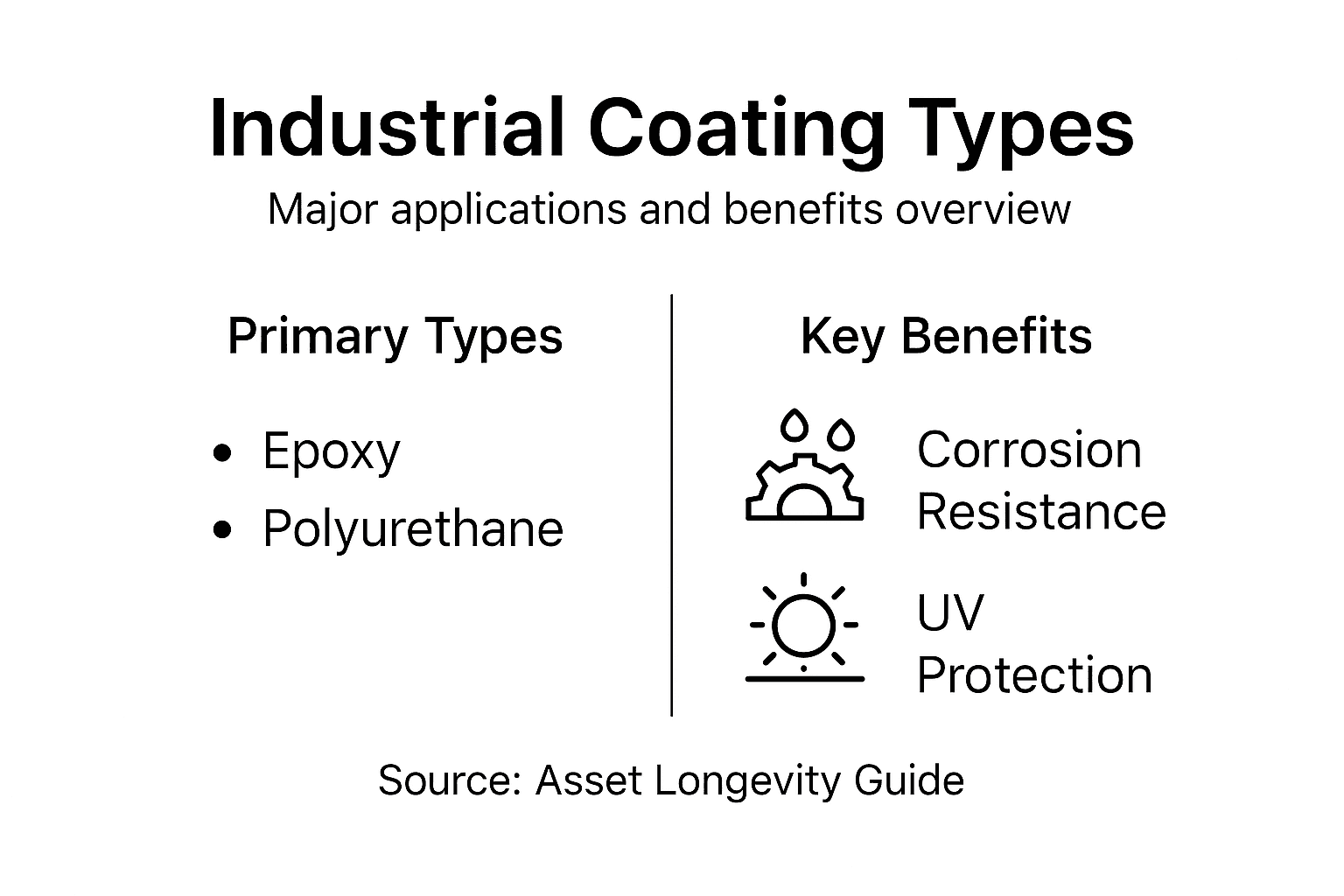
Functional coatings are particularly critical in industrial settings, where industrial coating purposes extend far beyond surface appearance. These advanced materials can modify surface properties, enhance electrical conductivity, provide corrosion resistance, and even add entirely new characteristics to base materials. Professionals carefully select coating types based on environmental exposure, temperature variations, chemical interactions, and specific performance requirements. Key considerations include substrate compatibility, expected wear conditions, and the precise protective attributes needed for each unique application.
Pro tip: Always conduct comprehensive material compatibility testing before selecting an industrial coating to ensure optimal performance and longevity.
Here’s a summary comparing common industrial coating types and their primary applications:
| Coating Type | Main Purpose | Typical Application Sector | Key Performance Benefit |
|---|---|---|---|
| Architectural | Protect building exteriors | Construction & infrastructure | Weather resistance |
| OEM | Shield manufactured goods | Automotive & manufacturing | Enhanced durability |
| Automotive Refinish | Restore vehicle finishes | Transportation & repair | Improved aesthetic & protection |
| Infrastructure Protective | Safeguard public assets | Bridges, pipelines, utilities | Corrosion prevention |
| High-Performance Industrial | Defend against harsh conditions | Heavy industry, oil & gas | Extreme chemical resistance |
Compliance With Safety and Environmental Standards
Industrial painting practices must navigate a complex landscape of regulatory requirements designed to protect workers, environments, and public health. Renovation safety regulations establish critical guidelines that mandate specific protocols for painting projects, particularly in environments with potential hazardous material exposure. These standards extend beyond simple procedural checklists, representing comprehensive frameworks that ensure comprehensive worker protection and environmental safety.
Key regulatory bodies like the Environmental Protection Agency (EPA) and Occupational Safety and Health Administration (OSHA) provide detailed frameworks for industrial painting compliance. Workplace safety standards require employers to implement rigorous training programs, provide appropriate personal protective equipment, and establish precise chemical handling protocols. These regulations cover multiple dimensions of industrial painting, including chemical exposure management, proper ventilation requirements, waste disposal procedures, and worker health monitoring.
Compliance involves a multifaceted approach that integrates technical expertise, regulatory knowledge, and proactive safety management. Industrial painting professionals must stay current with evolving federal and state regulations, which can vary significantly based on project location, scale, and specific environmental conditions. Critical compliance elements include documenting safety procedures, maintaining comprehensive training records, conducting regular risk assessments, and implementing robust protective measures that exceed minimum regulatory requirements. Environmental considerations now play an increasingly sophisticated role, with regulations emphasizing reduced chemical emissions, sustainable practices, and minimized ecological impact.
Pro tip: Develop a comprehensive compliance checklist that gets updated quarterly to ensure your industrial painting practices remain current with the latest safety and environmental regulations.
Here is a comparison of key safety and compliance factors in industrial painting:
| Regulation Area | Governing Body | Typical Requirements | Business Impact |
|---|---|---|---|
| Worker Safety | OSHA | PPE, training, chemical handling | Reduces injury risk |
| Environmental Protection | EPA | Waste disposal, emission control | Prevents costly violations |
| Ventilation Standards | OSHA/EPA | Proper airflow installation | Safer, healthier workplace |
| Documentation & Reporting | Federal/State agencies | Maintain records, update protocols | Demonstrates legal compliance |
Common Pitfalls and Long-Term Maintenance
Industrial painting requires strategic foresight and meticulous attention to detail to avoid common operational challenges. Spray painting risks encompass a range of technical and safety considerations that can significantly impact coating performance and worker protection. Professionals must navigate complex technical requirements while maintaining strict safety protocols and performance standards.
The most prevalent pitfalls in industrial painting often stem from inadequate surface preparation, inappropriate material selection, and inconsistent application techniques. Surface contamination, improper equipment calibration, and insufficient environmental controls represent critical failure points that can compromise coating integrity. Technicians must meticulously clean surfaces, select coating systems compatible with specific environmental conditions, and maintain precise application parameters to ensure optimal performance and longevity.
Long-term maintenance strategies demand proactive monitoring and systematic inspection protocols. Paint system maintenance involves regular assessment of coating conditions, timely identification of potential degradation signs, and strategic touch-up interventions. Critical maintenance considerations include monitoring environmental exposure, tracking coating thickness, detecting early corrosion indicators, and implementing preventative repair strategies before significant asset deterioration occurs. Successful long-term maintenance requires comprehensive documentation, periodic professional assessments, and a commitment to understanding each asset’s unique environmental challenges.
Pro tip: Implement a digital tracking system to log coating applications, environmental exposures, and maintenance interventions for comprehensive asset performance monitoring.
Protect Your Assets With Expert Industrial Painting Solutions
Industrial painting plays a crucial role in extending the lifespan of your valuable infrastructure by preventing corrosion and environmental damage. If you are facing challenges with surface preparation, coating failures, or complying with strict safety standards, Southern Sandblasting & Painting LLC has the expertise to help. Our comprehensive approach addresses key pain points like precise surface cleaning, durable industrial coating application, and adherence to regulatory compliance for long-term asset protection.

Explore our dedicated Industrial Painting services and professional Sandblasting solutions that prepare your surfaces for optimal coating adhesion. With over 20 years of experience in Central Florida, we specialize in protecting critical assets such as water tanks, pipelines, and city infrastructure. Don’t wait until corrosion or wear shortens your asset’s life. Contact us now at Southern Sandblasting & Painting LLC to schedule an assessment and safeguard your investment with proven, industry-compliant painting processes.
Frequently Asked Questions
What are the main stages of the industrial painting process?
The industrial painting process typically involves four key stages: surface preparation, primer application, main coating deployment, and final protective layer implementation. Each stage is crucial for ensuring optimal adhesion and long-term performance of the coating.
Why is surface preparation crucial in industrial painting?
Surface preparation is essential as it involves cleaning and treating surfaces to remove contaminants, rust, and old coatings. Proper preparation ensures maximum paint adhesion, which is vital for preventing defects and extending the lifespan of the coating.
How do I choose the right type of industrial coating for my application?
Selecting the right industrial coating involves considering factors such as environmental exposure, temperature variations, chemical interactions, and specific performance requirements. Each coating type offers distinct benefits, so assess your application needs carefully before making a selection.
What are common pitfalls to avoid during the industrial painting process?
Common pitfalls include inadequate surface preparation, inappropriate material selection, and inconsistent application techniques. These can lead to coating failure and reduced asset longevity, so attention to detail is paramount throughout the process.
Recommended
- Role of Coatings in Longevity – Extending Asset Lifespans
- Industrial Coating Terminology: Keys for Asset Longevity
- Role of Surface Preparation in Asset Longevity
- 7 Top Industrial Painting Methods for Long-Lasting Results
- What is Waterproofing Paint? Understanding Its Importance
- Industrial Painting Services in Orlando, FL
- Sandblasting Services Orlando FL


