
Most American cities lose millions each year to premature infrastructure repairs. For municipal managers in Central Florida, using reliable industrial coating processes is not just about protecting budgets. It means safeguarding bridges, water facilities, and public spaces from costly decay while staying compliant with local standards. Discover critical steps for lasting results and learn how accurate surface preparation and quality assurance can transform the durability of your essential projects.
Table of Contents
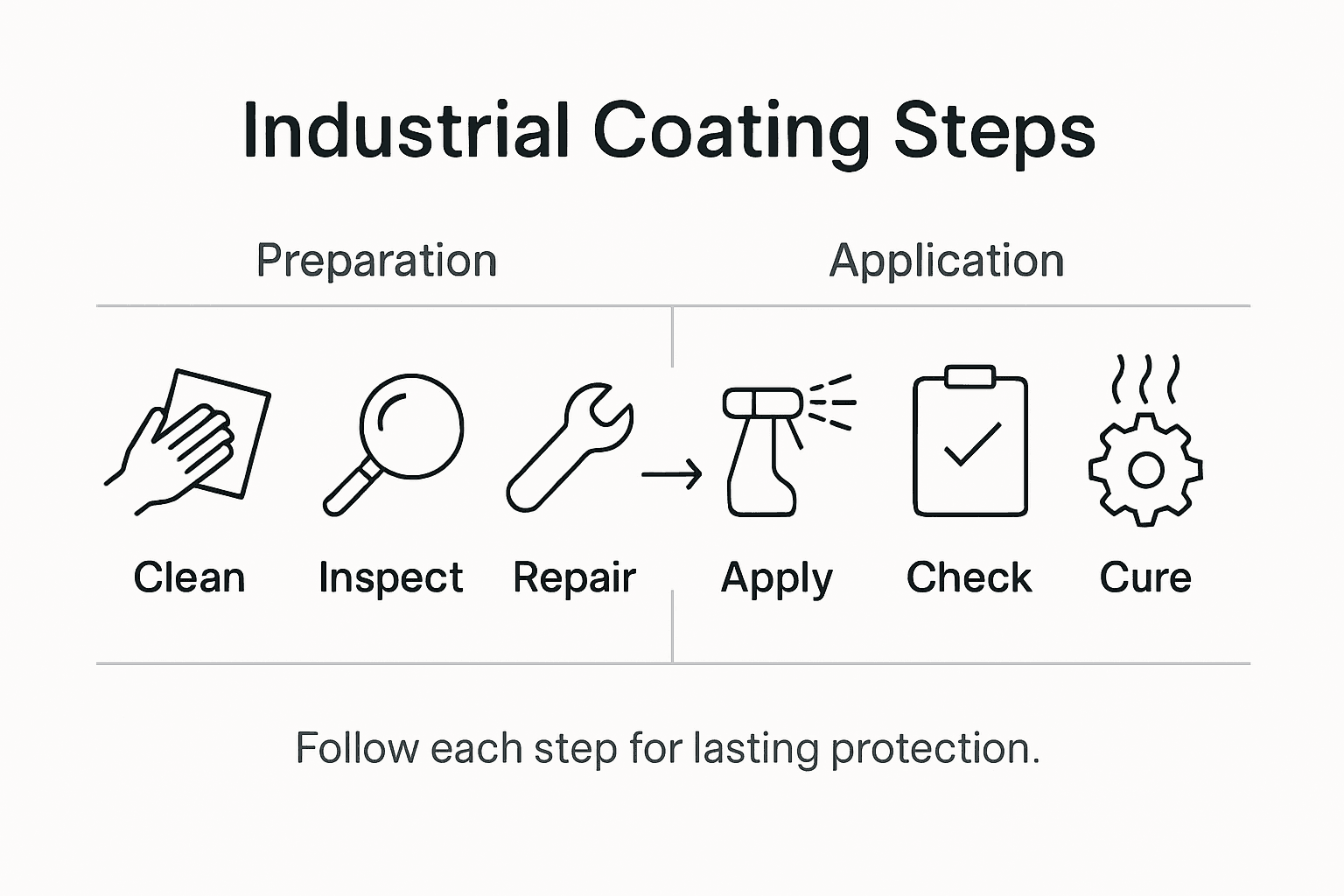
- Step 1: Assess and Prepare the Surface
- Step 2: Select and Mix the Coating Materials
- Step 3: Apply the Industrial Coating System
- Step 4: Monitor and Control Application Conditions
- Step 5: Inspect and Verify Coating Quality
Quick Summary
| Key Point | Explanation |
|---|---|
| 1. Thoroughly assess surface condition | Examine for contaminants and damage to ensure proper coating adhesion and long-term protection. |
| 2. Follow surface preparation standards | Utilize proper cleaning methods to create a clean, roughened surface ideal for bonding industrial coatings. |
| 3. Select appropriate coating materials | Match coatings to environmental and structural requirements, considering factors like exposure and composition. |
| 4. Apply coatings with precision | Use appropriate application techniques and conditions to achieve a uniform, durable protective layer on the surface. |
| 5. Conduct thorough quality inspections | Verify coating integrity through testing for adhesion strength, thickness, and surface defects to ensure long-term performance. |
Step 1: Assess and Prepare the Surface
Successful industrial coating starts with rigorous surface assessment and preparation. Your goal here is to create an ideal foundation that ensures maximum coating adhesion and long-term protection.
Begin by thoroughly examining the surface for existing contaminants, rust, and damage. Professional surface preparation involves multiple critical steps, including comprehensive cleaning and profiling. Surface preparation standards are fundamental to ensuring a coating project’s ultimate success. This means identifying and removing oils, greases, mill scale, and any loose rust or paint that could compromise coating performance.
Careful mechanical or chemical cleaning methods will help create the optimal surface profile. Depending on your specific infrastructure project, you might use techniques like solvent cleaning, hand tool cleaning, or industrial blasting. SSPC surface preparation standards provide detailed guidance for removing contaminants and creating the right surface conditions. The key is achieving a clean, roughened surface that allows industrial coatings to bond effectively and provide maximum protection.
Here is a summary of common industrial surface preparation methods and their typical applications:
| Preparation Method | Best For | Surface Result |
|---|---|---|
| Solvent Cleaning | Removing oils and grease | Clean, residue-free surface |
| Hand Tool Cleaning | Minor rust and paint removal | Moderately profiled surface |
| Industrial Blasting | Heavy rust, mill scale | Highly profiled, clean surface |
| Chemical Cleaning | Stubborn contaminants | Homogeneous, contaminant-free |
Pro Tip: Always document your surface preparation process meticulously, including initial surface condition, cleaning methods used, and final surface profile measurements to ensure quality control and future maintenance tracking.
Step 2: Select and Mix the Coating Materials
Selecting the right coating materials is a critical step that determines the long-term performance and protection of your industrial infrastructure. Your goal is to match coating materials precisely to your project’s specific environmental and structural requirements.
ASTM paint and coating standards provide comprehensive guidelines for choosing materials that meet specific performance criteria. Understanding these standards helps you identify coating systems with the appropriate physical and chemical properties for your application. When selecting materials, consider factors like environmental exposure, substrate composition, and expected service conditions.
Industrial coating systems typically involve multiple layers, each serving a specific protective function. This usually includes a primer for initial surface adhesion, intermediate coats for building thickness and corrosion resistance, and a topcoat for environmental protection. Carefully mix these materials according to manufacturer specifications, paying close attention to mixing ratios, temperature requirements, and induction times to ensure optimal coating performance.
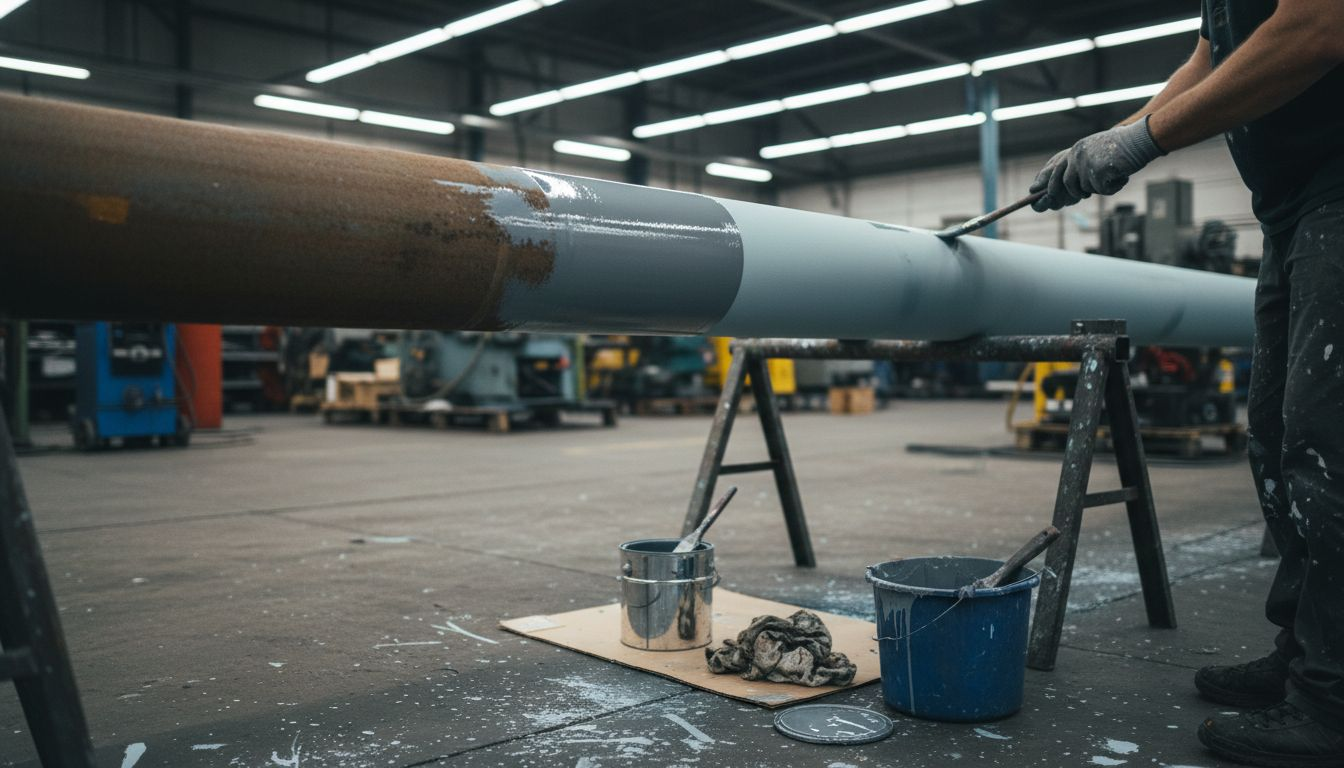
Pro Tip: Always store coating materials in a controlled environment and verify batch consistency before mixing to prevent potential performance variations that could compromise your protective system.
Step 3: Apply the Industrial Coating System
Applying the industrial coating system requires precision, skill, and careful attention to environmental conditions. Your objective is to create a uniform, durable protective layer that will shield your infrastructure from corrosion and environmental damage.
Industrial coating application techniques demand strict adherence to professional standards. Professional applicators typically use specialized equipment like spray guns, rollers, and brushes to ensure consistent coverage. Select your application method based on the specific coating material, surface geometry, and environmental conditions. Pay close attention to factors such as ambient temperature, humidity, and surface temperature, as these can significantly impact coating performance and adhesion.
Coating application procedures emphasize the importance of maintaining proper film thickness and avoiding common application errors. Apply coatings in thin, even layers to prevent runs, sags, and uneven coverage. Between each coat, allow sufficient drying time and inspect the surface for any imperfections. Proper technique involves maintaining a consistent distance from the surface, using overlapping strokes, and ensuring complete coverage without excessive buildup.
Pro Tip: Always keep detailed application logs documenting environmental conditions, coating batch numbers, and application parameters to help troubleshoot any future performance issues.
Step 4: Monitor and Control Application Conditions
Monitoring and controlling application conditions is crucial for ensuring the quality and longevity of your industrial coating system. Your goal is to maintain consistent environmental and application parameters that guarantee optimal coating performance.
Online surface inspection systems provide advanced technologies for detecting coating defects in real-time. These systems help identify potential issues like voids, streaks, and uneven coating thickness before they become critical problems. Implement comprehensive monitoring protocols that track key parameters such as temperature, humidity, surface profile, and coating thickness throughout the application process.
Statistical Process Control methods offer powerful tools for maintaining consistent coating quality. By using control charts and statistical analysis, you can identify and address variations that might compromise coating performance. Regularly collect and analyze application data, paying close attention to environmental conditions, material consistency, and application techniques. This proactive approach allows you to make immediate adjustments and prevent potential coating failures before they occur.
Pro Tip: Invest in digital monitoring tools that provide real-time data logging and automated alerts to catch potential application issues before they impact your coating system’s integrity.
Step 5: Inspect and Verify Coating Quality
Inspecting and verifying coating quality is the critical final step that ensures your industrial coating system will deliver the protection and performance you expect. Your primary objective is to confirm that every aspect of the coating meets stringent quality standards.
Qualification testing procedures provide comprehensive methods for evaluating coating performance. This involves a systematic approach to testing key characteristics including adhesion strength, coating thickness, surface uniformity, and chemical resistance. Use specialized equipment like electronic thickness gauges, pull-off adhesion testers, and microscopic inspection tools to measure these critical parameters with precision.
Quality assurance inspection protocols require trained professionals who understand the nuanced requirements of industrial coating systems. Conduct thorough visual inspections to identify any signs of holidays, pinholes, or surface irregularities. Cross-reference your findings against project specifications and industry standards, documenting each measurement and observation carefully. Pay special attention to environmental conditions during inspection, as temperature and humidity can significantly impact coating performance and test results.
This table outlines key inspection tools and their roles in verifying coating quality:
| Tool Type | Main Function | Business Impact |
|---|---|---|
| Thickness Gauge | Measures coating thickness | Ensures durability and compliance |
| Adhesion Tester | Evaluates layer bonding strength | Prevents premature coating failures |
| Digital Microscope | Detects fine surface defects | Improves long-term structural integrity |
| Environmental Meter | Tracks temperature, humidity | Mitigates risks of application errors |
Pro Tip: Create a comprehensive inspection checklist that includes specific measurement tolerances and documentation requirements to standardize your quality verification process across different projects.
Achieve Lasting Protection with Expert Industrial Coating Services
The success of your industrial coating project depends on meticulous surface preparation and precise application techniques to prevent premature coating failures and ensure durable protection. If you are facing challenges such as removing rust, achieving proper surface profiles, or selecting the right coating system for harsh environments, Southern Sandblasting & Painting LLC offers solutions tailored to your needs. With over 20 years of experience in handling complex projects for municipal, commercial, and industrial clients across Central Florida, we understand the critical importance of compliance, quality, and environmental control in every phase of your project.
Explore our Sandblasting services to effectively eliminate contaminants and prepare your infrastructure for coatings that last. Follow that with our precision Industrial Painting techniques to apply high-performance coatings designed to resist corrosion and wear. Visit our main site at Southern Sandblasting & Painting LLC to learn how our team can help you achieve reliable industrial coating results that protect your assets and extend service life.
Ready to enhance the performance of your industrial coating projects with trusted surface preparation and application expertise? Contact Southern Sandblasting & Painting LLC today and secure your long-term infrastructure protection with our proven services.
Frequently Asked Questions
What is the first step in preparing for industrial coating application?
Successful industrial coating application starts with assessing and preparing the surface. Begin by examining the surface for contaminants, rust, and damage, and then remove any oils or loose materials to create a clean surface for coating adhesion.
How do I select the right coating materials for my project?
Select coating materials by matching them to your project’s environmental and structural requirements. Consider factors such as substrate composition and expected service conditions, and ensure the materials meet all relevant performance standards.
What are the key techniques for applying industrial coatings?
Key techniques for applying industrial coatings include using specialized equipment like spray guns or rollers to ensure even coverage. Apply coatings in thin layers while monitoring conditions such as temperature and humidity to achieve optimal bonding.
How can I ensure quality during the coating application process?
To ensure quality during the coating application process, monitor and control application conditions diligently. Document critical parameters such as temperature, humidity, and coating thickness to maintain consistency and prevent potential issues.
What tools should I use to inspect the quality of the applied coating?
Use inspection tools like thickness gauges and adhesion testers to verify coating quality. Regular checks with these tools help ensure adherence to required standards and can prevent premature failures in the coating system.
How can I effectively document the entire coating application process?
Effectively document the coating application process by keeping thorough logs of surface preparation, material mixing, application conditions, and inspection results. A detailed checklist will help standardize your documentation and improve future project outcomes.
Recommended
- Role of Coatings in Longevity – Extending Asset Lifespans
- Industrial Coating Terminology: Keys for Asset Longevity
- 7 Industrial Coating Best Practices for Durable Results
- Protective Coating Trends 2025: Innovations for Infrastructure
- Industrial Painting Services in Orlando, FL
- Sandblasting Services Orlando FL


