

Nearly $300 billion is lost each year to corrosion damage in the American infrastructure sector, making asset durability a top concern for facility managers in Central Florida. High humidity, salt exposure, and strong ultraviolet rays pose daily threats to metal structures, driving up maintenance costs and risking public safety. This guide highlights how advanced anti-corrosion coatings can protect and extend the life of critical municipal assets while controlling expenses and meeting regulatory demands.
Table of Contents
- Defining Anti-Corrosion Coatings and Their Importance
- Comparing Types and Materials for Corrosion Control
- How Anti-Corrosion Coatings Work in Harsh Environments
- Best Practices For Municipal and Industrial Application
- Compliance Standards, Durability, and Cost Considerations
Key Takeaways
| Point | Details |
|---|---|
| Importance of Anti-Corrosion Coatings | They serve as a vital protective barrier against environmental degradation, significantly extending the lifespan of critical municipal infrastructure. |
| Material Selection | Choosing the right coating material based on environmental conditions is essential to ensure effectiveness and longevity. |
| Application Best Practices | Thorough surface preparation and proper application techniques are crucial for maximizing durability and performance of anti-corrosion coatings. |
| Cost-Benefit Analysis | A comprehensive evaluation of initial and long-term costs can reveal significant savings by preventing premature infrastructure failure. |
Defining Anti-Corrosion Coatings and Their Importance
Anti-corrosion coatings represent a sophisticated protective technology designed to shield critical metal infrastructure from destructive environmental degradation. These specialized protective layers are engineered to interrupt and prevent the complex chemical processes that cause metal surfaces to deteriorate over time. Corrosion prevention strategies are essential for municipal infrastructure managers seeking to extend asset lifespans and reduce long-term maintenance expenses.
At its core, an anti-corrosion coating functions as a critical barrier that physically isolates metal substrates from potentially harmful environmental elements. Protective coatings work by creating a thin layer that prevents moisture, oxygen, and chemical contaminants from directly interacting with metal surfaces. These coatings can be engineered from various materials including polymers, epoxies, and metallic compounds, each selected based on specific environmental challenges and infrastructure requirements.
The importance of anti-corrosion coatings extends far beyond simple surface protection. For municipal infrastructure in Central Florida’s challenging climate – characterized by high humidity, salt exposure, and intense ultraviolet radiation – these coatings represent a critical investment in asset durability. By interrupting corrosion pathways, these advanced treatments can dramatically extend the operational lifetime of expensive infrastructure like water tanks, bridges, pipelines, and public facilities.
- Barrier coatings physically block corrosive agents
- Inhibitive coatings chemically neutralize potential corrosion triggers
- Sacrificial coatings provide an additional layer of metallic protection
Pro tip: Before selecting an anti-corrosion coating, always conduct a comprehensive environmental assessment of your specific infrastructure location to ensure maximum protection and longevity.
Comparing Types and Materials for Corrosion Control
Corrosion control technologies have evolved dramatically, offering municipal infrastructure managers increasingly sophisticated options for protecting critical assets. Advanced corrosion control coatings now encompass complex material systems that go far beyond traditional protective layers, incorporating innovative approaches tailored to specific environmental challenges.
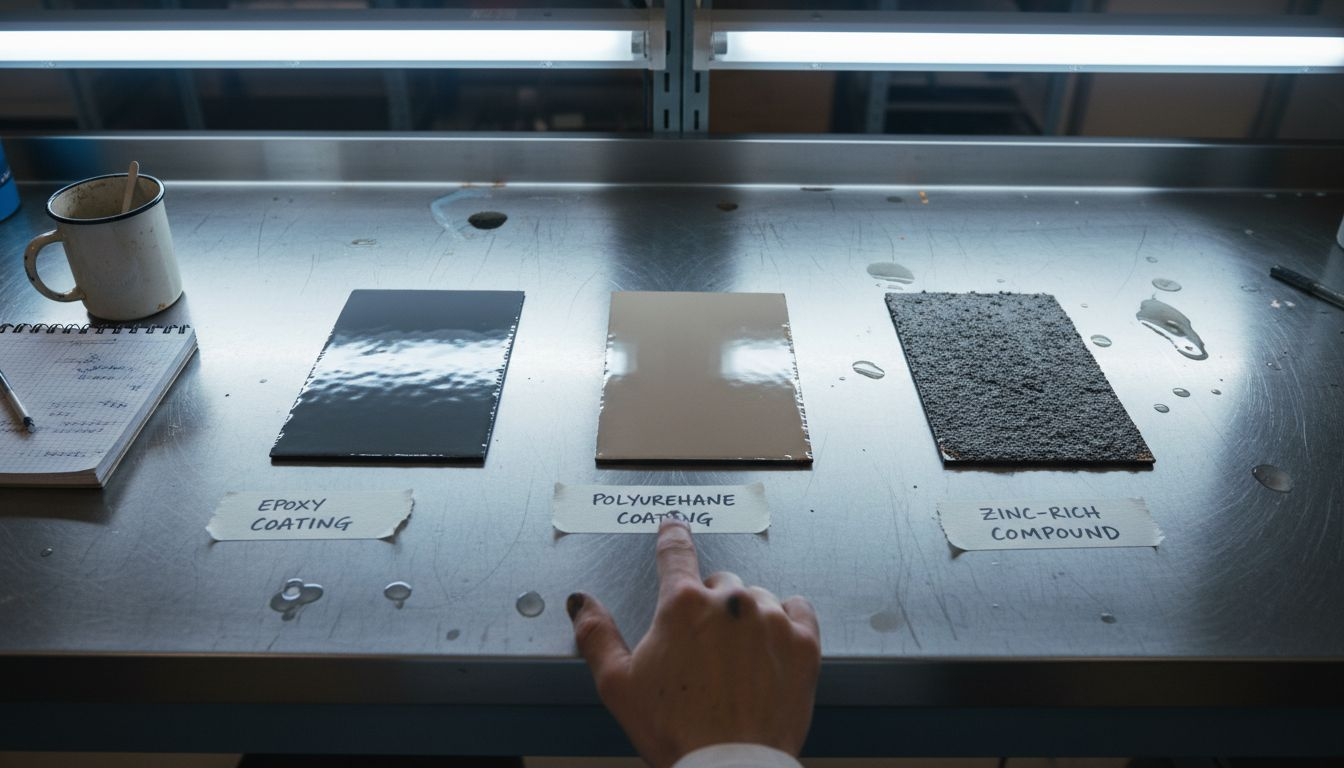
The landscape of anti-corrosion materials includes several distinct categories, each designed to address unique infrastructure protection requirements. Epoxy-based coatings remain a fundamental choice for many applications, offering robust chemical resistance and strong adhesion properties. Polyurethane coatings provide exceptional UV resistance, making them ideal for outdoor infrastructure exposed to intense sunlight. Zinc-rich coatings deliver sacrificial protection, actively preventing corrosion through electrochemical mechanisms that shield underlying metal substrates.
Cutting-edge developments in corrosion control now include sophisticated technologies like self-healing coatings and nanocomposite materials. These advanced solutions can actively detect and repair microscopic damage, dramatically extending infrastructure lifespan. Specialized coatings featuring embedded nanoparticles can enhance mechanical strength, improve barrier properties, and provide multi-layered protection against environmental degradation.
Here’s a quick comparison of common anti-corrosion coating materials and their typical advantages:
| Material Type | Best For | Key Benefit |
|---|---|---|
| Epoxy | Chemical exposure zones | Strong adhesion, durability |
| Polyurethane | Sun-exposed infrastructure | Superior UV resistance |
| Zinc-rich | Steel structures | Sacrificial metal protection |
| Nanocomposite | Harsh environments | Self-healing capabilities |
| Hybrid Systems | Mixed-condition assets | Multi-layered protection |
Key coating types for municipal infrastructure protection:
- Barrier coatings: Physically block corrosive agents
- Inhibitive coatings: Chemically neutralize corrosion triggers
- Sacrificial coatings: Provide electrochemical protection
- Hybrid coatings: Combine multiple protective mechanisms
Pro tip: Always select anti-corrosion materials specifically rated for Central Florida’s unique environmental conditions, considering factors like humidity, salt exposure, and temperature fluctuations.
How Anti-Corrosion Coatings Work in Harsh Environments
In the challenging environmental conditions of Central Florida, anti-corrosion coatings serve as a critical defense mechanism for infrastructure exposed to extreme weather and chemical stressors. Nano-coatings enhance corrosion resistance by improving hydrophobic properties and creating advanced barrier systems that protect metal substrates from destructive electrochemical reactions. These sophisticated protective layers work by interrupting the fundamental mechanisms that trigger metal degradation.
The effectiveness of anti-corrosion coatings depends on their ability to withstand multiple environmental challenges simultaneously. Coating performance is determined by critical quality metrics like adhesion, thickness, and weather resistance, which must remain stable under temperature fluctuations, moisture exposure, mechanical stress, and chemical interactions. Municipal infrastructure in regions like Central Florida requires coatings that can maintain protective integrity despite intense ultraviolet radiation, high humidity, and salt-laden atmospheric conditions.
Advanced coating technologies employ multiple protective strategies to combat corrosion. Some sophisticated approaches include:
- Barrier protection: Physically blocking corrosive agents
- Chemical inhibition: Neutralizing potential corrosion triggers
- Electrochemical interference: Disrupting electron transfer processes
- Sacrificial protection: Providing alternative metal surfaces for oxidation
These multilayered defense mechanisms work in concert to create a comprehensive shield against environmental degradation, significantly extending the operational lifespan of critical metal infrastructure.
Pro tip: Conduct periodic professional inspections of anti-corrosion coatings to detect early signs of wear and ensure continuous protection against environmental challenges.
Best Practices For Municipal and Industrial Application
Successful anti-corrosion coating implementation requires a strategic approach tailored to the unique challenges of municipal and industrial infrastructure. Compliance with established industry standards like ISO 12944 ensures comprehensive protection by providing detailed guidelines for coating selection, surface preparation, and long-term maintenance. These standards create a systematic framework for protecting critical assets against environmental degradation.
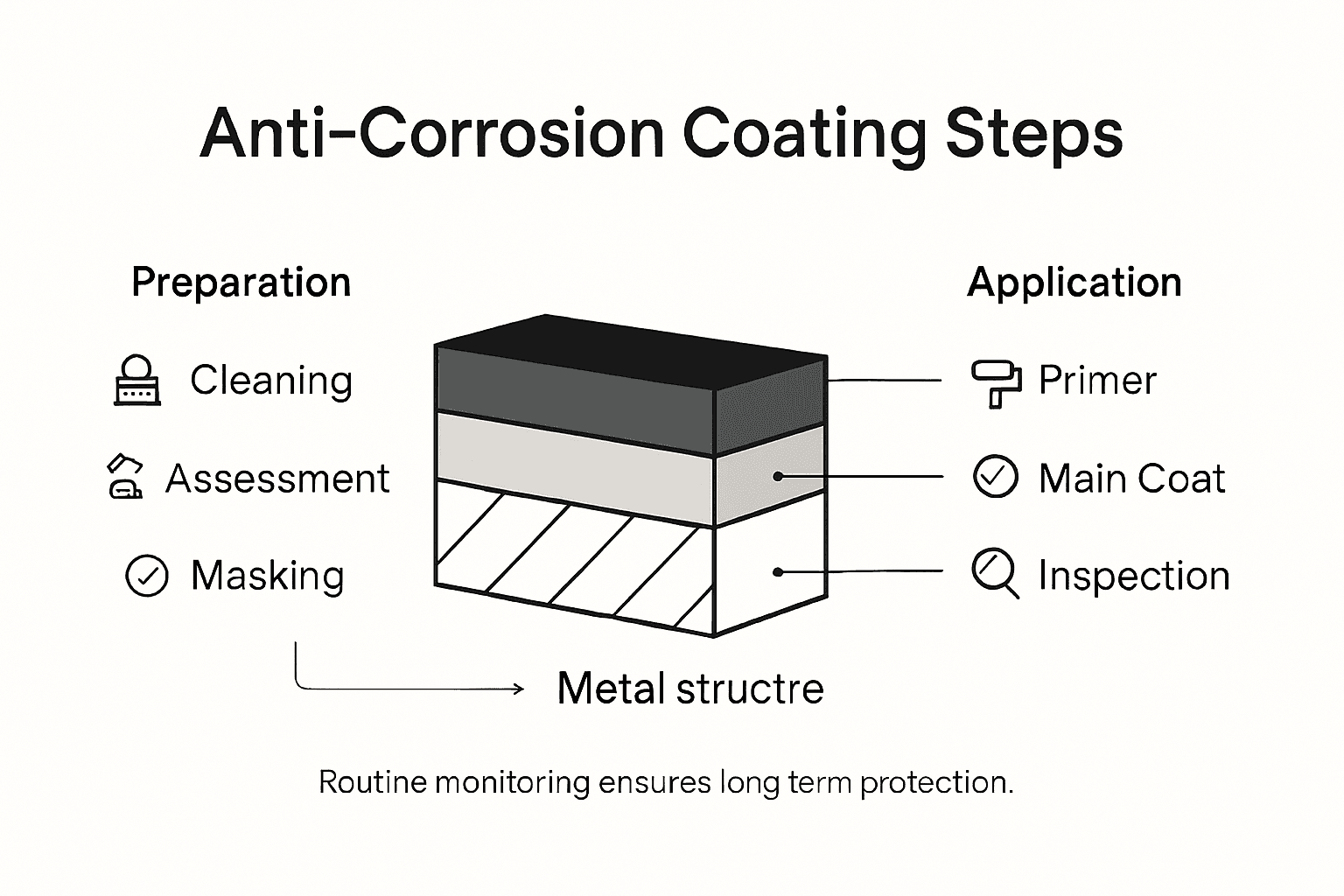
The coating selection process demands careful consideration of multiple environmental factors specific to Central Florida’s challenging climate. Municipal infrastructure managers must evaluate exposure conditions, including humidity levels, salt concentration, ultraviolet radiation intensity, and potential chemical interactions. Key considerations include substrate material, expected service lifetime, maintenance accessibility, and budget constraints. Professional assessment typically involves comprehensive surface analysis, material compatibility testing, and predictive modeling of potential degradation scenarios.
Critical best practices for anti-corrosion coating application include:
- Thorough surface preparation: Complete removal of contaminants, rust, and existing coatings
- Precise environmental conditioning: Controlling temperature and humidity during application
- Proper material selection: Matching coating properties to specific environmental challenges
- Multi-layer application techniques: Creating comprehensive protective systems
- Regular inspection schedules: Monitoring coating performance and detecting early wear indicators
Successful implementation requires understanding that anti-corrosion coating is not a one-time solution but an ongoing maintenance strategy designed to protect critical infrastructure investments.
Pro tip: Develop a comprehensive documentation system tracking coating application details, environmental conditions, and inspection results to optimize future protective strategies.
Compliance Standards, Durability, and Cost Considerations
Understanding compliance standards is crucial for municipal infrastructure managers seeking reliable anti-corrosion protection solutions. ISO 12944 standards provide comprehensive guidelines for evaluating coating performance and environmental classifications, establishing a critical framework for assessing long-term durability and economic feasibility. These standards help decision makers balance initial investment costs with anticipated lifecycle performance of protective coating systems.
Cost considerations extend far beyond initial application expenses, encompassing a holistic view of infrastructure protection economics. Municipal projects must analyze multiple financial factors, including material costs, application complexity, expected service lifetime, maintenance requirements, and potential economic losses from premature infrastructure failure. A comprehensive cost-benefit analysis typically reveals that investing in high-quality anti-corrosion coatings can reduce long-term maintenance expenses by preventing extensive structural degradation.
Key factors influencing durability and cost-effectiveness include:
Below is a summary of major cost and durability factors to consider when selecting anti-corrosion coatings:
| Factor | Impact on Durability | Impact on Total Cost |
|---|---|---|
| Surface Preparation | Ensures long-lasting adhesion | Raises upfront labor expense |
| Environmental Fit | Maximizes service lifespan | May require premium materials |
| Application Expertise | Prevents premature failure | Higher cost for skilled labor |
| Maintenance Frequency | Extends system life | Reduces long-term expenses |
| Compliance Standards | Guarantees consistent quality | May increase project budget |
- Material compatibility: Matching coating properties to specific environmental conditions
- Surface preparation quality: Ensuring optimal adhesion and protective performance
- Application expertise: Professional installation techniques
- Environmental stress factors: Considering humidity, temperature, and chemical exposure
- Long-term maintenance requirements: Predictive assessment of future inspection and repair needs
Successful infrastructure protection demands a strategic approach that prioritizes both immediate financial constraints and future operational reliability.
Pro tip: Develop a comprehensive lifecycle cost model that includes not just initial coating expenses, but projected maintenance, potential failure risks, and infrastructure replacement costs.
Protect Your Infrastructure with Expert Anti-Corrosion Coating Solutions
Understanding the critical role of anti-corrosion coatings means recognizing the threats that humidity, salt exposure, and chemical contaminants pose to your metal infrastructure. If you manage municipal assets or industrial facilities in Central Florida, you face the ongoing challenge of preventing costly corrosion damage that shortens the lifespan of your investments and raises maintenance expenses. Southern Sandblasting & Painting LLC delivers over 20 years of trusted experience in professional surface preparation and industrial-grade coating applications designed to create durable, long-lasting protective barriers against corrosion and environmental wear.

Don’t wait until corrosion compromises your infrastructure integrity. Take action now by partnering with proven specialists who understand the unique demands of your environment. Visit Southern Sandblasting & Painting and explore how our expert sandblasting and protective coating services can safeguard your critical assets today. Learn about our comprehensive surface preparation and sandblasting solutions and discover the difference professional protective coatings make for water tanks, pipelines, bridges, and more. Contact us to schedule your consultation and keep your infrastructure strong and corrosion-free for years to come.
Frequently Asked Questions
What are anti-corrosion coatings?
Anti-corrosion coatings are protective layers designed to shield metal infrastructure from deterioration caused by environmental factors. They prevent corrosion by blocking moisture, oxygen, and chemical contaminants from coming into contact with metal surfaces.
Why are anti-corrosion coatings important for infrastructure?
Anti-corrosion coatings are essential for extending the lifespan and durability of critical infrastructure. They help reduce maintenance costs and protect assets like water tanks, bridges, and pipelines from environmental degradation that can cause structural failure.
What types of materials are used in anti-corrosion coatings?
Common materials used in anti-corrosion coatings include epoxies, polyurethanes, zinc-rich compounds, and nanocomposites. Each material offers different benefits based on specific environmental challenges, such as chemical exposure or UV radiation.
How do anti-corrosion coatings work in harsh environments?
Anti-corrosion coatings work by employing multiple protective strategies, including barrier protection to block corrosive agents, chemical inhibition to neutralize corrosion triggers, and sacrificial methods that redirect oxidation processes away from metal surfaces.


