
Most American infrastructure assets lose up to half their potential service life without proper surface preparation. For municipal managers in Central Florida, overlooking these technical steps can mean higher repair costs and frequent safety concerns. Understanding why advanced surface treatments matter will help you increase longevity, meet strict industry standards, and safeguard the public investment in your city’s concrete and steel structures.
Table of Contents
- Defining Surface Preparation And Its Importance
- Methods And Techniques Used In Industry
- Impact On Coating Performance And Durability
- Meeting Safety, Regulatory, And Industry Standards
- Common Pitfalls And Preventing Asset Failure
Key Takeaways
| Point | Details |
|---|---|
| Importance of Surface Preparation | Proper surface preparation is essential for maximizing the effectiveness of protective coatings and extending the lifespan of infrastructure assets. |
| Selection of Techniques | Techniques must be chosen based on substrate type and environmental conditions to ensure optimal coating adhesion and durability. |
| Impact on Coating Performance | Inadequate surface preparation can lead to poor adhesion and premature asset failure, significantly increasing maintenance costs. |
| Regulatory Compliance | Adherence to safety and industry standards is critical for effective surface preparation and protecting personnel during maintenance processes. |
Defining Surface Preparation and Its Importance
Surface preparation represents a critical technical process for protecting and extending the operational lifespan of industrial and municipal infrastructure assets. At its core, surface preparation involves systematically readying a substrate to receive protective coatings by removing contaminants, assessing structural integrity, and creating optimal conditions for coating adhesion. Surface treatment methods are designed to address specific material challenges and environmental conditions that could compromise long-term asset performance.
The fundamental objectives of surface preparation include creating precise surface conditions that enable maximum coating effectiveness. These conditions typically involve establishing appropriate surface cleanliness, achieving the correct surface profile, and eliminating potential impediments to coating adhesion such as rust, scale, old paint residues, or microscopic surface contaminants. Municipal infrastructure managers must recognize that inadequate surface preparation can dramatically reduce coating performance, potentially leading to premature asset deterioration and significantly increased maintenance expenses.
Professional surface preparation techniques vary depending on the specific substrate and intended protective coating. For concrete and steel infrastructure, methods might include mechanical abrasion, chemical treatments, power washing, or specialized blasting techniques that carefully remove surface imperfections while maintaining the underlying material’s structural integrity. Targeted preparation approaches ensure that each asset receives a customized treatment strategy aligned with its unique material characteristics and environmental exposure conditions.
Pro tip: Always conduct a comprehensive substrate assessment before initiating any surface preparation process to identify specific material conditions and potential preparation challenges.
Methods and Techniques Used in Industry
Surface preparation encompasses a diverse array of industrial techniques designed to optimize substrate conditions for protective coatings and enhanced asset durability. Surface finishing methods include mechanical, chemical, and thermal approaches tailored to specific material requirements and performance objectives. These techniques range from abrasive blasting and grinding to sophisticated chemical treatments that systematically remove contaminants and prepare surfaces for optimal coating adhesion.
Municipal infrastructure managers must understand the nuanced selection of surface preparation techniques, which depend critically on substrate composition, environmental exposure, and intended protective coating. Mechanical methods like shot blasting, power washing, and mechanical abrasion effectively remove surface contaminants and create precise surface profiles for concrete and steel infrastructure. Chemical treatments provide complementary approaches, utilizing specialized solutions to eliminate microscopic impurities, oxidation layers, and embedded contaminants that could compromise coating performance.
Advanced surface engineering processes encompass sophisticated techniques such as vapor diffusion, electroplating, and precision grinding. These methods allow for extremely precise surface modifications, enabling infrastructure managers to achieve microscopic surface preparations that dramatically enhance coating durability and resistance to environmental degradation. By selecting targeted techniques matched to specific substrate characteristics, professionals can significantly extend asset lifespans and reduce long-term maintenance requirements.
Pro tip: Always consult industry-specific surface preparation guidelines and conduct preliminary substrate testing to determine the most appropriate preparation technique for your specific infrastructure material and environmental conditions.
Here’s a quick comparison of common surface preparation methods and their core advantages:
| Method | Typical Application | Key Advantage | Main Limitation |
|---|---|---|---|
| Abrasive Blasting | Steel, concrete surfaces | Excellent contaminant removal | Potential substrate damage |
| Chemical Treatment | Delicate substrates | Targets microscopic impurities | May require hazardous handling |
| Power Washing | Large infrastructure | Fast, covers broad areas | Limited profile creation |
| Mechanical Abrasion | Concrete, small parts | Precise profiling and cleaning | Labor-intensive for large areas |
Impact on Coating Performance and Durability
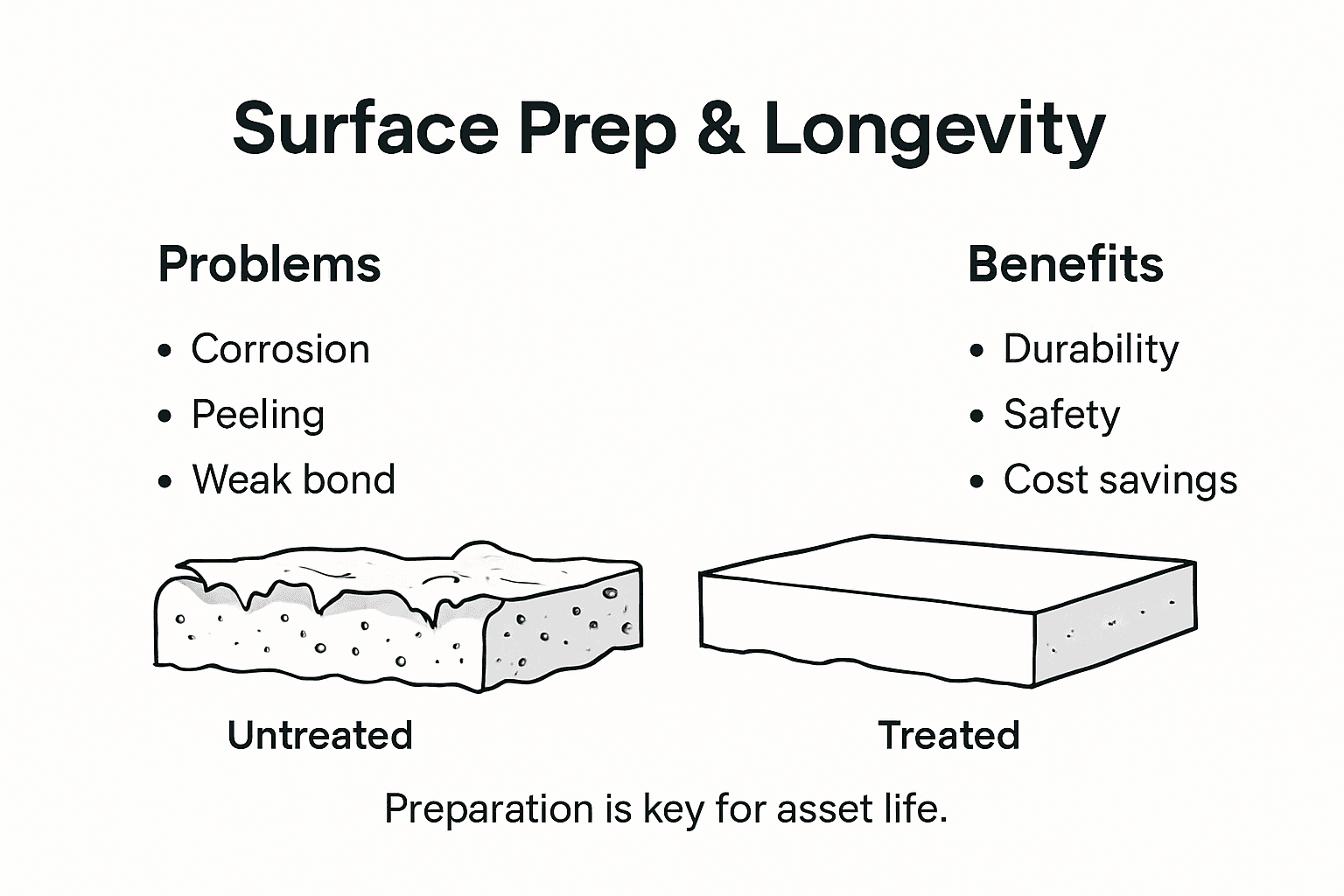
The effectiveness of protective coatings is fundamentally dependent on meticulous surface preparation, with even minor surface imperfections potentially compromising long-term asset performance. Surface profile and cleanliness represent critical factors that directly influence coating adhesion, corrosion resistance, and overall durability. Inadequate surface preparation can create microscopic barriers that prevent proper bonding, leading to premature coating failure and exponentially increased maintenance costs for municipal infrastructure assets.

Coating performance metrics are dramatically impacted by the quality of surface preparation. Contaminants like oils, rust, scale, and previous coating residues can create weak interface layers that significantly reduce adhesion strength. Professional surface preparation techniques systematically eliminate these potential failure points by creating a clean, mechanically roughened surface that provides optimal mechanical and chemical bonding conditions. The surface profile’s texture, measured through parameters like peak count and average roughness, plays a crucial role in determining coating performance and long-term protective capabilities.
Multiple failure mechanisms can emerge from insufficient surface preparation, including delamination, premature corrosion, reduced chemical resistance, and accelerated material degradation. Municipal infrastructure managers must recognize that investing in comprehensive surface preparation directly correlates with extended asset lifespans and reduced long-term maintenance expenses. Advanced surface preparation techniques create microscopically engineered surfaces that maximize coating performance, ensuring robust protection against environmental stressors, chemical exposure, and mechanical wear.
Below is a summary of the main failure mechanisms linked to poor surface preparation:
| Failure Mechanism | Cause of Failure | Consequence for Asset |
|---|---|---|
| Delamination | Weak adhesion due to contamination | Coating peeling, early repair |
| Premature Corrosion | Residual rust or scale | Reduced lifespan, corrosion |
| Chemical Breakdown | Incomplete contaminant removal | Lower chemical resistance |
| Material Degradation | Inadequate surface profiling | Accelerated structural aging |
Pro tip: Invest in professional surface roughness testing and microscopic surface analysis to validate preparation quality before applying protective coatings, ensuring maximum adhesion and performance.
Meeting Safety, Regulatory, and Industry Standards
Surface preparation processes must simultaneously satisfy complex technical requirements and stringent safety regulations governing industrial infrastructure maintenance. International surface preparation standards establish comprehensive protocols that extend beyond mere technical specifications, incorporating critical worker safety considerations, environmental protection guidelines, and precise performance expectations for protective coatings.
Municipal infrastructure managers must navigate a complex landscape of regulatory requirements that vary significantly across different asset types and environmental conditions. These standards encompass multiple dimensions, including worker protection equipment, environmental contamination prevention, chemical handling protocols, and specific technical performance metrics. Key regulatory frameworks mandate detailed documentation, precise measurement protocols, and systematic verification processes that ensure both the technical effectiveness of surface preparation and the safety of personnel conducting these specialized treatments.
Industry consensus standards provide comprehensive guidance for surface preparation techniques, establishing clear benchmarks for quality, safety, and performance across diverse infrastructure assets. These standards address critical considerations such as surface profile specifications, contaminant removal protocols, coating compatibility requirements, and environmental exposure assessments. Professional surface preparation teams must demonstrate rigorous compliance with these multi-dimensional regulatory frameworks, which demand sophisticated technical expertise and meticulous execution of preparation techniques.
Pro tip: Develop a comprehensive compliance checklist that integrates technical performance standards with safety regulations, ensuring both optimal coating performance and workplace protection during surface preparation processes.
Common Pitfalls and Preventing Asset Failure
Surface preparation failures represent a critical vulnerability in infrastructure maintenance, with seemingly minor preparation errors potentially leading to catastrophic asset deterioration. The most common pitfalls stem from incomplete contaminant removal, inadequate surface profiling, and inconsistent preparation techniques that compromise coating adhesion and long-term protective performance. Municipal infrastructure managers must recognize that these preparation deficiencies can transform a potentially decades-long asset lifespan into a costly, premature replacement scenario.
Specific preparation failures manifest through multiple problematic mechanisms, including insufficient rust and mill scale removal, improper surface roughness, inadequate cleaning protocols, and inconsistent preparation across complex infrastructure surfaces. Technical assessments reveal that microscopic contamination layers, residual oils, or inconsistent surface profiles can create weak bonding interfaces that progressively undermine coating integrity. These subtle preparation deficiencies might not immediately manifest, but they inevitably lead to accelerated corrosion, coating delamination, and structural compromise.
Preventing asset failure requires a systematic, comprehensive approach to surface preparation that goes beyond basic cleaning protocols. Municipal managers must implement rigorous inspection processes, utilize advanced diagnostic technologies, and maintain strict adherence to industry preparation standards. This includes employing precise measurement techniques for surface profile, implementing comprehensive contaminant removal strategies, and developing detailed documentation protocols that track every stage of the surface preparation process. Successful prevention demands a proactive, detail-oriented methodology that anticipates potential failure points and systematically mitigates them through expert-level preparation techniques.
Pro tip: Implement a multi-stage verification process that includes microscopic surface analysis, precise profile measurement, and comprehensive contamination testing before applying protective coatings.
Enhance Asset Longevity with Expert Surface Preparation Solutions
Keeping your critical infrastructure free from premature corrosion and coating failures demands meticulous surface preparation. The challenges discussed in the article such as eliminating contaminants, achieving optimal surface profile, and ensuring compliance with industry standards are exactly what Southern Sandblasting & Painting LLC specializes in. Our proven sandblasting and protective coating services tackle these pain points head on to extend the lifespan of your assets and avoid costly repairs.

Don’t let inadequate surface preparation undermine your asset’s durability. Partner with us for professional services designed to remove rust, old paint, and scale with precision. Visit Southern Sandblasting & Painting to learn how we apply advanced surface treatment methods tailored to your infrastructure’s unique needs. Protect your investment today by requesting a consultation and stepping into a future of lasting performance.
Frequently Asked Questions
What is surface preparation and why is it important?
Surface preparation is a technical process that readies a substrate for protective coatings by removing contaminants and creating optimal adhesion conditions. It is crucial for extending the lifespan of infrastructure assets.
What are some common methods used for surface preparation?
Common methods include mechanical abrasion, chemical treatments, power washing, and specialized blasting techniques, each tailored to the material and intended protective coating.
How does surface preparation impact coating performance?
Surface preparation significantly influences coating performance by ensuring surface cleanliness and profile, which are critical for proper adhesion and resistance to corrosion and environmental degradation.
What are the potential consequences of inadequate surface preparation?
Inadequate surface preparation can lead to issues like delamination, premature corrosion, reduced chemical resistance, and ultimately, costly asset deterioration and increased maintenance expenses.


