

Most American industries now rely on protective coatings to shield valuable infrastructure, especially as global corrosion protection is projected to surpass USD 99.8 billion by 2035. Rising industrial demands and climate challenges make advanced coatings more vital than ever for extending asset lifespans. This overview highlights the latest innovations and smart technologies in protective coatings for 2025, helping you understand how American projects can benefit from improved durability, safety, and sustainability.
Table of Contents
- Defining Protective Coatings for 2025
- Emerging Technologies and Material Advances
- Sustainability and Environmental Compliance
- Key Applications in Infrastructure Projects
- Cost, Maintenance, and Lifecycle Impacts
Key Takeaways
| Point | Details |
|---|---|
| Emerging Innovations | Advanced protective coatings now feature nanotechnology, self-healing mechanisms, and embedded sensors to enhance durability and extend asset lifespans. |
| Sustainability Focus | The industry is shifting towards low-VOC, solvent-free, and bio-based coatings that comply with stringent environmental regulations. |
| Economic Efficiency | Next-generation coatings reduce long-term maintenance costs by providing superior durability and lowering the frequency of reapplication. |
| Strategic Selection | Choose protective coatings based on long-term performance and environmental conditions rather than initial cost to maximize ROI. |
Defining Protective Coatings for 2025
Protective coatings are specialized surface treatments designed to shield critical infrastructure from environmental degradation, corrosion, and mechanical stress. As industrial demands evolve, these advanced materials represent a strategic defense mechanism for extending asset lifespans and maintaining structural integrity. Corrosion protection coatings are projected to become a massive global market, expected to exceed USD 99.8 billion by 2035.
Modern protective coatings in 2025 are characterized by sophisticated chemical compositions that go far beyond traditional paint applications. These next-generation solutions incorporate nanotechnology, environmentally friendly formulations, and specialized polymers engineered to withstand extreme temperatures, chemical exposure, and mechanical stress. Key performance attributes now include enhanced durability, rapid curing times, lower volatile organic compound (VOC) emissions, and improved adhesion properties across diverse substrate materials.
The technological landscape of protective coatings is witnessing significant transformations driven by sustainability demands and industrial safety requirements. Industries ranging from oil and gas to marine engineering are prioritizing low-VOC, solvent-free, and bio-based coating technologies that minimize environmental impact while delivering superior protection. Advanced coatings now integrate smart technology capabilities, such as self-healing properties, corrosion monitoring sensors, and adaptive responses to environmental changes.
Pro Tip – Strategic Selection: When choosing a protective coating, prioritize solutions that match your specific environmental conditions, substrate composition, and long-term performance requirements rather than selecting based solely on initial cost.
Here’s a summary of innovative features distinguishing advanced protective coatings in 2025:
| Innovation Type | Key Function | Business Impact |
|---|---|---|
| Nanotechnology | Boosts durability and resistance | Reduces maintenance frequency |
| Self-healing Mechanisms | Repairs micro-cracks autonomously | Extends service life of assets |
| Embedded Sensors | Enables real-time corrosion tracking | Prevents costly infrastructure damage |
| Low-VOC Formulations | Minimizes environmental emissions | Facilitates regulatory compliance |
Emerging Technologies and Material Advances
The protective coating industry is experiencing a technological revolution driven by advanced materials science and innovative engineering approaches. Researchers are developing groundbreaking solutions that dramatically enhance coating performance, durability, and functional capabilities. Superlattice thin film technologies represent one such cutting-edge advancement, with researchers introducing multilayered architectural designs that simultaneously improve hardness and damage resistance in protective coating systems.
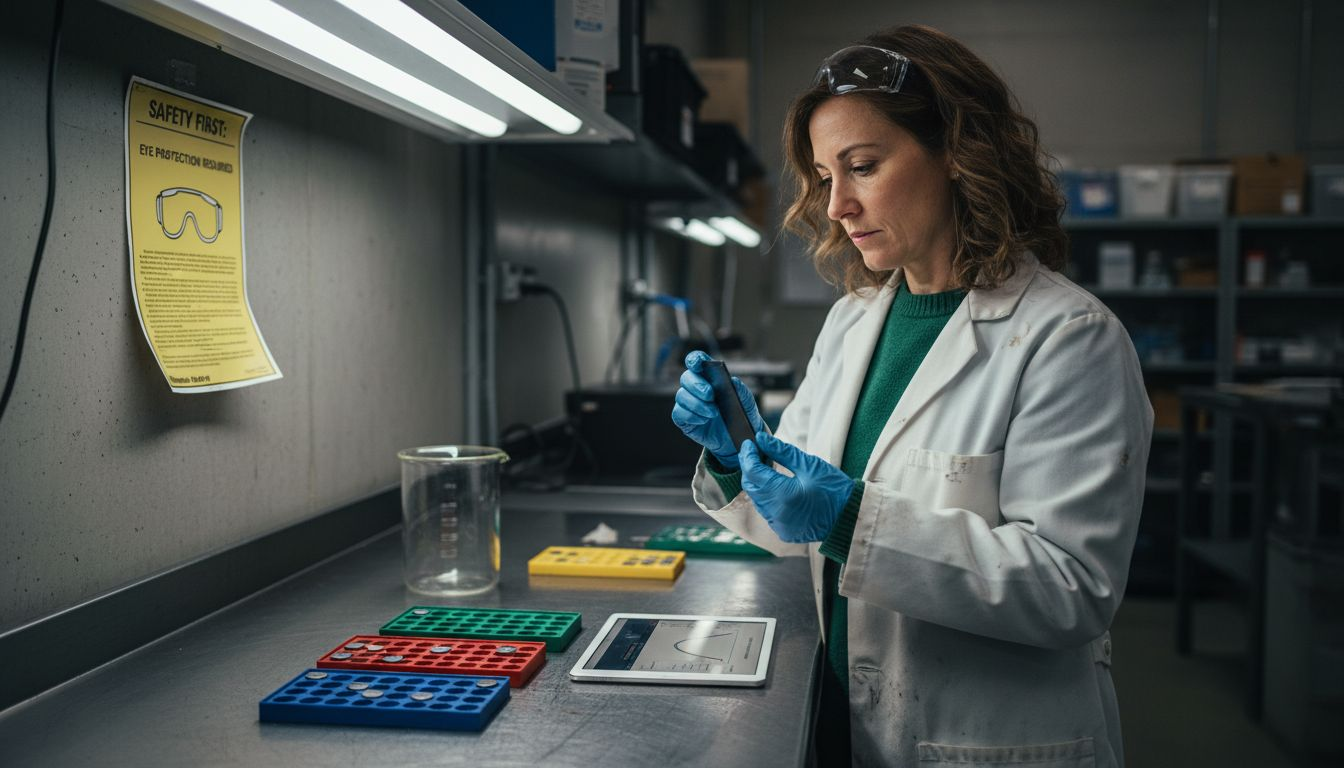
Nanotechnology and machine learning are converging to transform coating development processes. Autonomous scanning platforms now enable rapid electrodeposition and real-time characterization of multicomponent alloy coatings, accelerating materials research through integrated automation and intelligent data analysis. These technological innovations allow engineers to design more complex, adaptive coating formulations that can respond dynamically to environmental stressors and mechanical challenges.
Emerging protective coating technologies now incorporate intelligent features such as self-healing mechanisms, embedded sensor networks, and adaptive chemical responses. These advanced systems go beyond traditional passive protection, offering active monitoring and autonomous repair capabilities. Key developments include polymer composites with integrated nanoparticles that can detect and seal microscopic damage, thermal-responsive coatings that adjust properties under different temperature conditions, and electrically conductive layers that enable real-time corrosion tracking.
Pro Tip – Research Integration: Stay informed about emerging coating technologies by regularly reviewing academic publications, attending industry conferences, and engaging with materials science research networks to understand the latest breakthrough developments in protective coating innovation.
Sustainability and Environmental Compliance
The protective coating industry is undergoing a profound transformation, driven by increasingly stringent environmental regulations and a global commitment to sustainable infrastructure solutions. Surface protection technologies are now being developed with a critical focus on digitalization, intelligence, and ecological responsibility, marking a significant shift from traditional coating approaches that prioritized performance over environmental impact.
Manufacturers are responding to market demands by developing innovative coating solutions that dramatically reduce environmental footprints. Low-volatile organic compound (VOC), solvent-free, and bio-based coating technologies are rapidly becoming the industry standard, replacing conventional petroleum-based formulations. Market projections indicate that these sustainable coating technologies are expected to capture significant market share, driven by regulatory pressures and corporate sustainability commitments.
Environmental compliance in protective coatings now encompasses a holistic approach that considers the entire lifecycle of the coating material. This includes evaluating raw material sourcing, manufacturing processes, application techniques, performance durability, and end-of-life disposal or recycling potential. Advanced coating technologies are being designed to minimize carbon emissions, reduce waste generation, and provide extended protection that reduces the frequency of reapplication and associated environmental costs.
Pro Tip – Sustainable Selection: Prioritize coating solutions that provide third-party environmental certifications and transparently document their sustainability metrics, ensuring both regulatory compliance and genuine ecological responsibility.
Key Applications in Infrastructure Projects
Protective coatings have become mission-critical solutions across diverse infrastructure sectors, addressing complex challenges related to durability, safety, and performance. Advanced fire protection coating systems now provide unprecedented levels of structural resilience, with innovative technologies capable of delivering comprehensive protection against environmental and mechanical stresses.
The application spectrum for protective coatings encompasses multiple critical infrastructure domains, including transportation, energy, municipal, and industrial infrastructure. Bridges, highways, pipelines, water treatment facilities, power generation plants, and manufacturing complexes represent key sectors where advanced protective coating technologies deliver transformative performance improvements. These specialized coatings offer multifunctional benefits such as corrosion resistance, thermal insulation, fire protection, electrical conductivity, and structural reinforcement, enabling infrastructure components to withstand extreme operational conditions.
Intelligent protective coating technologies are revolutionizing infrastructure maintenance strategies by integrating diagnostic and self-healing capabilities. Modern coating systems now incorporate embedded sensor networks, real-time monitoring technologies, and adaptive chemical responses that can detect and automatically mitigate potential structural vulnerabilities. These advanced materials can signal impending structural issues, prevent progressive damage, and significantly extend the operational lifespan of critical infrastructure assets through proactive maintenance approaches.
Pro Tip – Strategic Assessment: Conduct comprehensive performance evaluations and compatibility tests before implementing protective coating solutions to ensure optimal adhesion, long-term durability, and alignment with specific infrastructure project requirements.
Cost, Maintenance, and Lifecycle Impacts
The economic landscape of protective coating technologies is undergoing a significant transformation, driven by advanced materials that deliver substantial long-term value and operational efficiency. Manufacturers are strategically investing in next-generation coating solutions that dramatically reduce maintenance requirements and extend asset lifecycles, shifting the traditional cost paradigm from short-term expense to strategic infrastructure investment.
Total lifecycle cost analysis now encompasses a comprehensive evaluation of coating performance beyond initial application expenses. Advanced protective coatings minimize ongoing maintenance interventions through enhanced durability, corrosion resistance, and self-healing capabilities. By reducing frequency of reapplication, these innovative technologies can generate substantial long-term savings, with some high-performance coating systems demonstrating potential maintenance cost reductions of up to 40% over traditional approaches. Critical factors include material longevity, environmental resilience, application complexity, and performance consistency under challenging operational conditions.
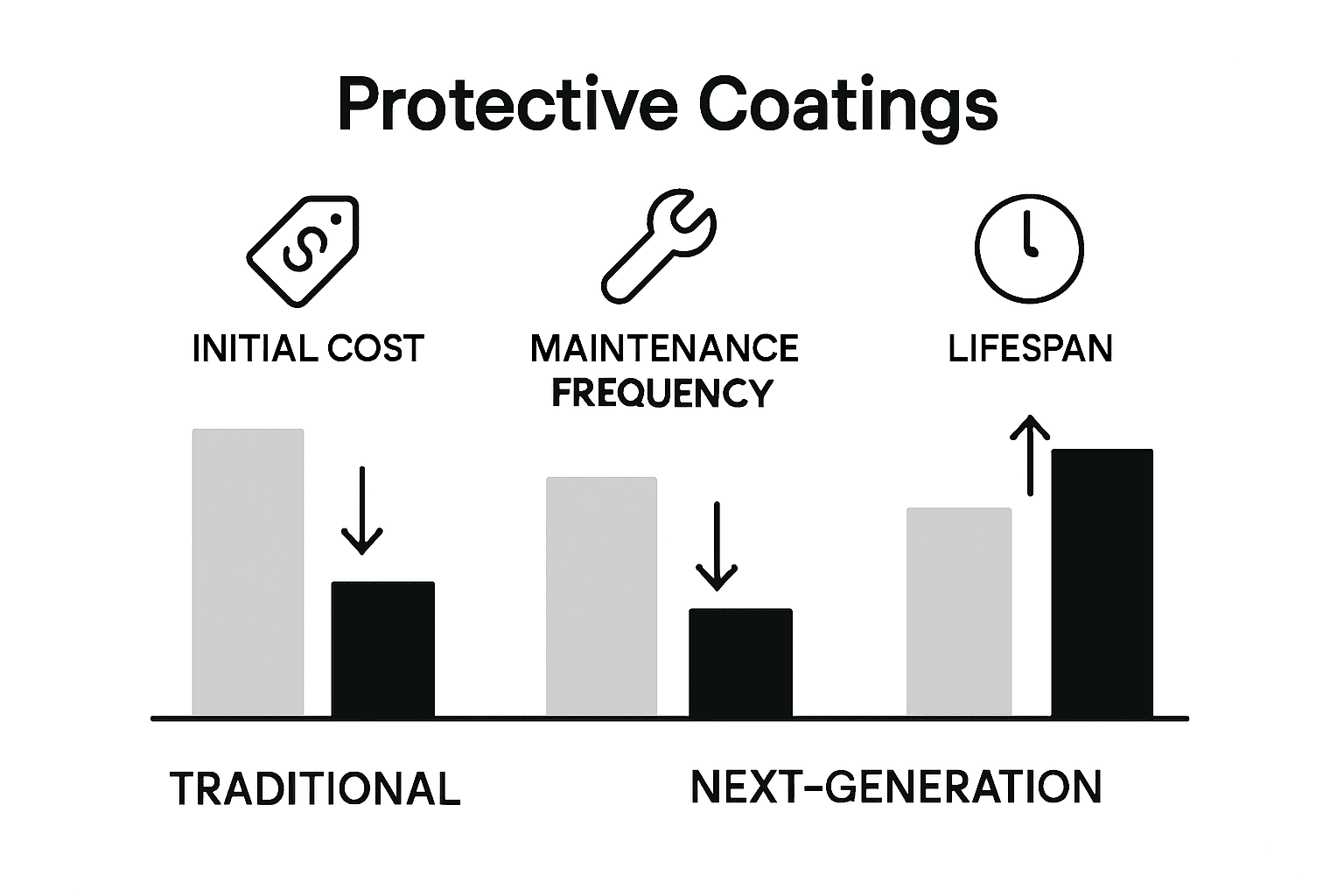
Economic optimization strategies for protective coatings now integrate predictive maintenance technologies, real-time monitoring systems, and data-driven performance analytics. Intelligent coating solutions provide actionable insights into asset degradation patterns, enabling proactive maintenance interventions that prevent catastrophic failures and extend infrastructure lifespans. This approach transforms protective coatings from passive protective layers into dynamic, intelligent systems that actively contribute to infrastructure management and financial planning.
The following table compares traditional vs. next-generation protective coating approaches:
| Feature | Traditional Coatings | Next-Generation Coatings |
|---|---|---|
| Environmental Impact | Higher emissions, solvent-based | Low-VOC, bio-based, greener |
| Monitoring Capability | Passive, no diagnostics | Active sensing, real-time alerts |
| Maintenance Needs | Frequent reapplication required | Fewer interventions with self-repair |
| Functional Benefits | Basic protection | Multifunctional (thermal, fire, sensors) |
Pro Tip – Economic Evaluation: Conduct comprehensive lifecycle cost modeling that considers not just initial coating expenses, but long-term maintenance, performance degradation, replacement intervals, and potential operational disruption costs when selecting protective coating technologies.
Protect Your Infrastructure with Next-Generation Protective Coatings Today
The rise of advanced protective coatings in 2025 highlights the critical need to shield infrastructure from corrosion, environmental damage, and mechanical wear. If you manage commercial or municipal assets, you understand the challenge of selecting durable, low-VOC coatings that deliver long-term performance and align with sustainability goals. Southern Sandblasting & Painting LLC has over 20 years of experience specializing in heavy-duty surface preparation and industrial coatings designed to extend the life of your critical infrastructure. From professional sandblasting to remove rust and contaminants to expert application of innovative protective coatings, we tailor solutions that match the specific environmental and operational demands of your project.

Secure your assets with coatings that combine durability, environmental compliance, and intelligent performance. Connect with Southern Sandblasting & Painting LLC to leverage proven expertise in industrial coating services that meet and exceed 2025 protection standards. Visit our Landing Page today to learn more about how we can help you minimize maintenance costs while maximizing asset lifespan. Don’t wait for costly damage to appear take action now and partner with a trusted local leader in surface preparation and protective coatings.
Frequently Asked Questions
What are protective coatings and their importance in infrastructure?
Protective coatings are specialized surface treatments designed to shield infrastructure from environmental degradation, corrosion, and mechanical stress, significantly extending asset lifespans and maintaining structural integrity.
What innovations are shaping protective coatings in 2025?
Innovations include the use of nanotechnology, self-healing mechanisms, embedded sensors for real-time monitoring, and low-VOC formulations that are more environmentally friendly compared to traditional coatings.
How do next-generation protective coatings differ from traditional coatings?
Next-generation coatings feature lower emissions, active sensing capabilities, and reduced maintenance needs, along with multifunctional benefits such as thermal insulation and fire protection, making them more efficient than traditional coatings.
Why should I prioritize sustainability when selecting protective coatings?
Prioritizing sustainability helps ensure compliance with environmental regulations and reduces the ecological footprint of your infrastructure projects, as modern coatings are designed to minimize emissions and promote responsible material sourcing.


