

TL;DR:
- Maintaining city infrastructure reduces long-term costs and protects public safety through proactive upkeep. Deferred maintenance can increase repair expenses by up to 100 times and cause major failures. Cities that prioritize routine maintenance are better positioned to access federal funds and extend asset longevity.
City infrastructure maintenance is defined as the systematic practice of preserving roads, bridges, water systems, and public buildings through routine care, inspection, and repair to prevent deterioration and failure. The U.S. faces a $1.03 trillion backlog in deferred repairs, a figure that makes the question of why maintain city infrastructure not just relevant but urgent. Every year of delay compounds costs and multiplies risk. City planners and local officials who treat maintenance as a core budget priority protect public safety, preserve asset value, and avoid the far steeper price of emergency response.
Why maintain city infrastructure: the economic case
Deferred maintenance is not a neutral budget decision. Each dollar of maintenance postponed functions like compounding interest on a hidden debt, growing the future repair bill while rarely appearing on official municipal balance sheets. That invisibility creates a false sense of fiscal health that misleads both elected officials and the public.
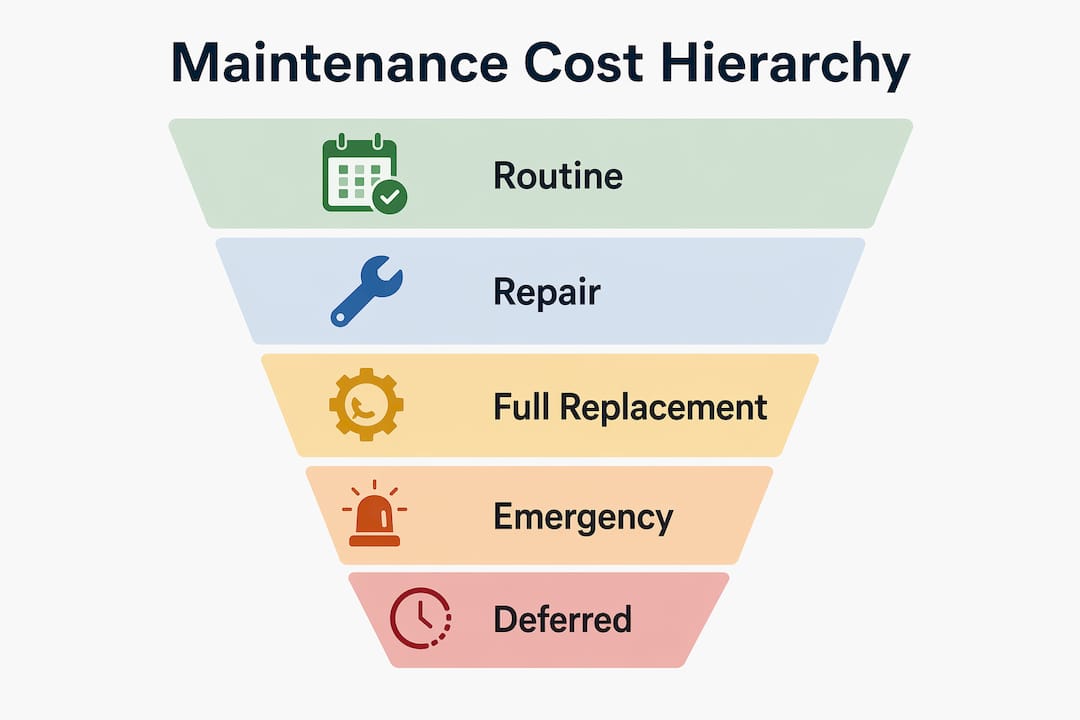
The maintenance hierarchy makes the financial logic clear. Timely maintenance costs 1x, repairs cost roughly 10x, and full replacement can cost 100x the original maintenance price. That ratio means a $10,000 annual coating and inspection program on a water tank can prevent a $1,000,000 replacement project a decade later.
Emergency repairs make the cost problem worse in a second way. When a failure forces immediate action, cities lose the ability to competitively bid contracts. Emergency repairs require premium labor rates, rushed material sourcing, and after-hours work, all of which strip purchasing leverage and drive costs well above planned maintenance rates. The urgency eliminates the time needed to negotiate, plan, or stage work efficiently.
Despite fiscal pressure, cities are recognizing this reality. 32% of U.S. cities maintained or increased infrastructure spending in 2025, even under severe budget constraints, and only 3% cut it. That behavior signals a growing understanding that maintenance spending is not discretionary. It is the lowest-cost form of capital preservation available to a municipality.
| Maintenance stage | Relative cost multiplier |
|---|---|
| Routine preventive maintenance | 1x |
| Repair after deterioration | 10x |
| Full asset replacement | 100x |
Pro Tip: Build your maintenance budget around the whole-life cost of each asset, not its annual repair line item. A bridge that costs $500,000 to maintain over 20 years costs far less than one that requires a $15 million replacement at year 15 because inspections were skipped.
How does infrastructure maintenance benefit public safety?
Well-maintained infrastructure is the physical foundation of public safety. Roads with intact surfaces reduce vehicle accidents. Bridges with current inspection records and treated steel reduce catastrophic failure risk. Water systems with protected pipes deliver clean water without contamination events. Each of these outcomes depends on consistent upkeep, not one-time construction.
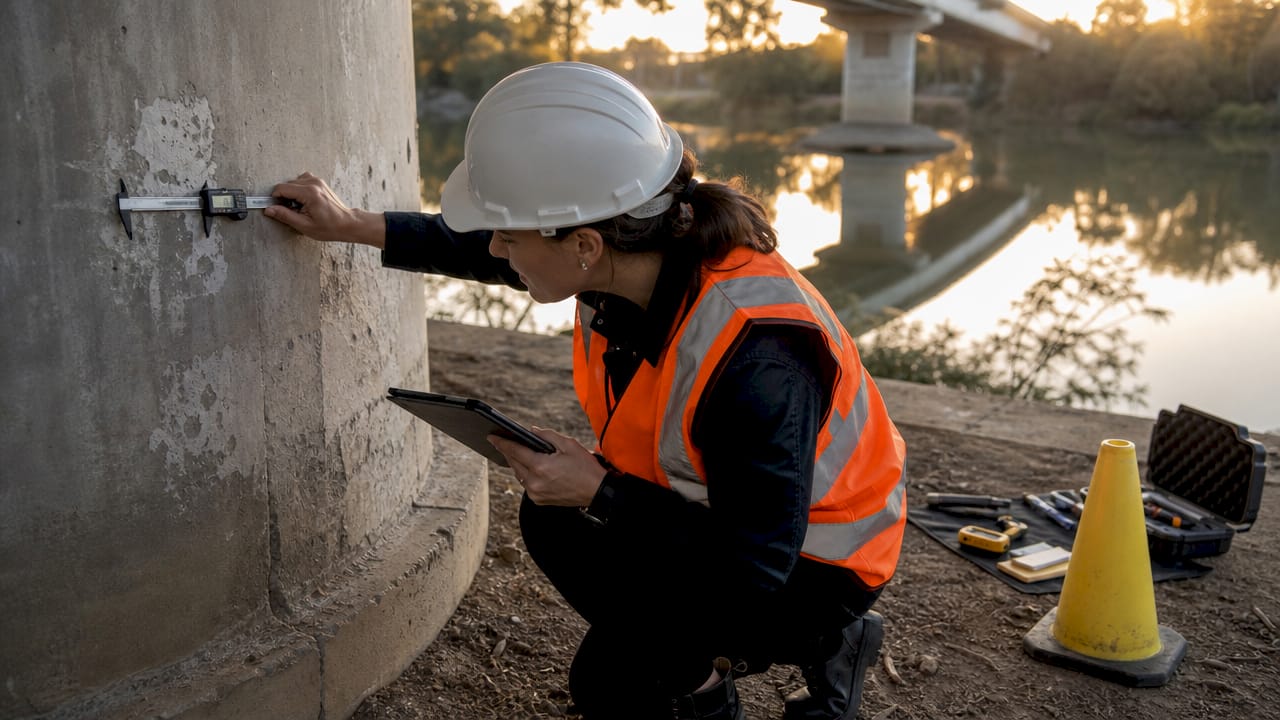
Infrastructure failures cause disruption far beyond the immediate repair site. A failed water main shuts down businesses, displaces residents, and can close schools and clinics for days. A collapsed bridge reroutes freight and emergency vehicles, adding time and cost to every trip in the affected corridor. These ripple effects multiply the economic damage well beyond the cost of the physical repair itself.
Community trust is also at stake. Residents who see crumbling sidewalks, rusted bridges, or persistent potholes lose confidence in local government’s ability to manage public resources. Proactive upkeep signals competence and care. It builds the social contract between a city and its residents in a way that reactive emergency repairs never can.
The benefits of consistent city infrastructure upkeep include:
- Accident prevention: Smooth road surfaces and structurally sound bridges reduce vehicle and pedestrian injuries.
- Service continuity: Maintained water, sewer, and utility systems keep hospitals, schools, and businesses running without interruption.
- Emergency response reliability: Well-maintained roads and bridges allow fire, police, and ambulance services to reach residents without detours.
- Economic stability: Local businesses depend on reliable access for customers, deliveries, and employees.
- Equity: Maintained infrastructure in all neighborhoods, not just high-income ones, distributes public safety benefits fairly.
“Describing maintenance as a firewall against catastrophe builds the political and public support needed for sustained funding.” — City officials cited in infrastructure fiscal analysis
What are the best strategies for city infrastructure maintenance?
Effective infrastructure maintenance programs share four characteristics: they use whole-life cost budgeting, they secure diverse funding sources, they communicate value clearly to stakeholders, and they apply proven physical treatments that extend asset life.
Adopt whole-life cost budgeting
Short-run cost-cutting models treat maintenance as a line item to reduce when budgets tighten. Whole-life cost budgeting treats each asset as a long-term investment with a predictable cost curve. Planners who model the full 30-year or 50-year cost of a bridge, water tank, or road segment make better decisions about when to maintain, repair, or replace. This approach also makes it easier to justify maintenance spending to city councils and finance committees.
Secure federal and local funding
More than 1,600 U.S. cities have secured $12.7 billion in federal infrastructure funding as of may 2026. That figure proves that strong local asset management and grant-writing capacity translate directly into maintenance dollars. Cities that document asset conditions, track deferred maintenance backlogs, and present clear maintenance plans are better positioned to access federal programs.
Frame maintenance as risk mitigation
Reframing maintenance budgets as risk mitigation builds support from stakeholders who would otherwise see maintenance as routine spending. When officials present a $2 million annual maintenance program as the alternative to a $40 million emergency replacement, the return on investment becomes undeniable. Risk framing also resonates with insurance and bonding agencies, which can affect a city’s borrowing costs.
Apply preventive physical treatments
Protective coatings, surface preparation, and scheduled inspections are the physical tools that make maintenance programs work. Industrial-grade coatings applied to bridges, water tanks, and steel structures prevent corrosion, the leading cause of premature asset failure in humid and coastal environments. Proper surface preparation before coating application is not optional. It determines whether a coating lasts 5 years or 25 years.
Pro Tip: Schedule coating inspections on a fixed cycle, not just when visible deterioration appears. Corrosion under a coating is invisible until it causes structural damage. Annual or biannual inspections catch failures before they become expensive.
The four-step maintenance cycle that high-performing cities follow:
- Inventory and condition assessment: Document every asset, its age, condition rating, and estimated remaining service life.
- Prioritization by risk and cost: Rank assets by failure consequence and maintenance cost to allocate limited budgets where they matter most.
- Preventive treatment application: Apply coatings, sealants, and surface treatments on schedule before deterioration begins.
- Inspection and adjustment: Inspect treated assets on a fixed cycle and adjust maintenance intervals based on observed condition.
How do regulatory incentives shape infrastructure upkeep decisions?
Regulatory frameworks have a direct effect on whether cities invest in long-term asset health or defer maintenance to meet short-term financial targets. Current regulatory structures often reward short-term cost cutting over long-term reliability, which creates a systematic bias toward deferred maintenance. That bias is not a failure of city leadership. It is a predictable response to the incentives in place.
The solution is outcome-based incentives tied to asset reliability and resilience. When regulators reward cities for maintaining high asset condition scores and penalize deferred maintenance backlogs, the financial calculus shifts. Cities that invest in upkeep gain regulatory advantages, while those that defer face higher compliance costs and reduced access to funding.
Maintenance is also an intergenerational equity issue. Infrastructure built today will serve residents for 50 to 100 years. Deferring maintenance transfers costs to future taxpayers who had no say in the original budget decision. Recognizing maintenance as an intergenerational investment changes how city leaders frame the obligation. It moves the conversation from “can we afford this?” to “who pays if we don’t?”
Multi-period funding allowances and risk-sharing mechanisms in federal policy are beginning to reflect this shift. Cities that participate in these programs gain access to funding that rewards proactive maintenance rather than emergency response. The policy direction is clear: federal and state governments are moving toward rewarding cities that manage assets well, not just those that build new ones.
Key Takeaways
Maintaining city infrastructure is the lowest-cost, highest-return investment a municipality can make, with preventive maintenance costing as little as 1% of what full asset replacement demands.
| Point | Details |
|---|---|
| Deferred maintenance compounds costs | Each skipped maintenance cycle multiplies future repair and replacement costs by a factor of 10 to 100. |
| Emergency repairs eliminate savings | Unplanned failures require premium labor and rushed materials, stripping the purchasing leverage that planned maintenance preserves. |
| Federal funding rewards good management | Cities with documented asset conditions and clear maintenance plans are best positioned to access the $12.7 billion in available federal funds. |
| Protective coatings extend asset life | Industrial coatings applied on schedule prevent corrosion and can extend a structure’s service life by decades. |
| Regulatory incentives must evolve | Outcome-based incentives tied to asset reliability shift city behavior from short-term cost cutting to long-term investment. |
The maintenance mindset cities still haven’t adopted
After working alongside municipal teams on infrastructure projects across Central Florida, one pattern stands out clearly. Maintenance is almost always the last budget item defended and the first one cut. City councils understand new construction. They can cut a ribbon. Maintenance produces no ribbon. It produces the absence of a crisis, which is a much harder thing to celebrate or photograph.
The cities that manage infrastructure well have made a cultural shift, not just a budget shift. They treat asset condition as a performance metric, the same way they track crime rates or school test scores. When a bridge coating fails or a water tank shows early corrosion, it registers as a governance failure, not just a maintenance issue. That accountability changes how departments prioritize and communicate.
Cross-departmental collaboration is the other missing piece. Public works, finance, and communications teams rarely share a common language around infrastructure risk. Finance sees a maintenance line item. Public works sees a corroding bridge. Communications sees a potential news story. When those three perspectives align around a shared asset management framework, funding decisions improve and public trust follows.
The industrial asset preservation work Southernsandblastingandpainting does on municipal projects reinforces this point every time. The cities that get the most value from professional surface preparation and coating services are the ones that come in with a maintenance schedule, not a crisis. They know what they have, they know when it was last treated, and they know what they need. That preparation is the difference between a planned project and an emergency call.
— Results
How professional coatings protect your city’s long-term assets
City planners who understand the economics of infrastructure maintenance know that physical treatment quality determines how long any maintenance investment lasts. Surface preparation and industrial coatings are the front line of corrosion defense for bridges, water tanks, pipelines, and public structures.

Southern Sandblasting and Painting brings over 20 years of experience in professional sandblasting and industrial coating application to municipal and government projects across Central Florida. Proper surface preparation removes rust, contaminants, and failing coatings before new protective layers are applied, which is the step that determines coating longevity. Cities that skip or rush surface prep pay for recoating years ahead of schedule. For a full breakdown of equipment and methods that protect public assets, the sandblasting equipment guide covers what municipal projects require.
FAQ
What is city infrastructure maintenance?
City infrastructure maintenance is the ongoing practice of inspecting, repairing, and treating public assets such as roads, bridges, water systems, and buildings to prevent deterioration and extend service life.
Why does deferred maintenance cost more in the long run?
Deferred maintenance allows minor deterioration to compound into major structural failure. Repair costs run roughly 10 times higher than preventive maintenance, and full replacement can cost 100 times more.
How can cities fund infrastructure maintenance programs?
Cities can access federal funding programs, with more than 1,600 U.S. cities already securing $12.7 billion in federal infrastructure funds as of may 2026, by documenting asset conditions and presenting clear maintenance plans.
What role do protective coatings play in infrastructure upkeep?
Industrial coatings applied to steel bridges, water tanks, and pipelines prevent corrosion, which is the leading cause of premature asset failure, and can extend a structure’s service life by decades when properly applied.
How does infrastructure maintenance affect public safety?
Maintained roads, bridges, and utility systems reduce accidents, keep emergency services moving, and prevent service disruptions that affect hospitals, schools, and local businesses.


