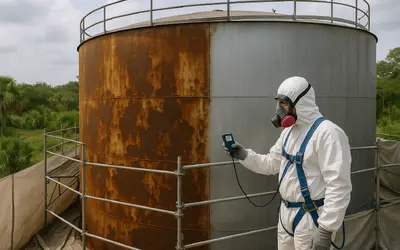
TL;DR: Salt spray corrosion is an electrochemical attack that chloride ions accelerate on unprotected or poorly coated steel, and it’s a year-round risk across Central Florida — not just at the beach. The fix is proper surface preparation to recognized standards...
Articles
Common Causes of Industrial Coating Failure and How to Prevent Them
TL;DR: Most industrial coating failures trace back to a handful of preventable root causes: bad surface prep, wrong environmental conditions during application, thin or uneven film thickness, and mismatched coating systems. In Central Florida’s heat, humidity,...
How to Schedule Industrial Coating Projects Around Florida’s Hurricane Season
TL;DR: Florida’s Atlantic hurricane season runs June 1 through November 30, with the heaviest storm activity from mid-August through mid-October, so industrial coating projects need to be planned around that window, not squeezed into it. This guide walks...
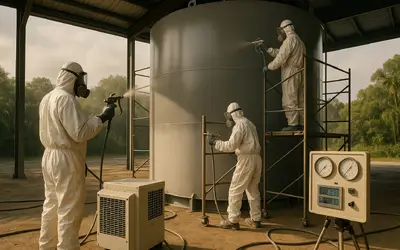
How Humidity Control During Industrial Coating Protects Long-Term Performance
TL;DR: Humidity control during industrial coating means monitoring and managing relative humidity, dew point, and surface temperature so coatings bond, cure, and perform as specified. In Central Florida’s humid subtropical climate, skipping this step is one of...
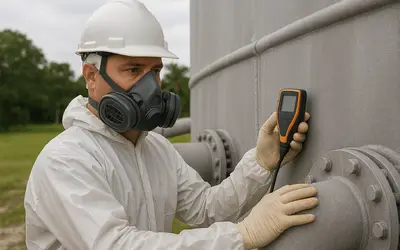
Dew Point, Surface Temperature, and Why They Make or Break a Coating Application
TL;DR: Applying a protective coating when the steel surface is too close to the dew point traps invisible moisture under the film, guaranteeing adhesion failure — even on a surface that looks and feels dry. Industry standards require surface temperature to be at least...
How to Properly Prepare Galvanized Steel Surfaces Before Painting
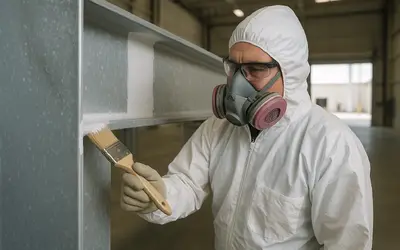
TL;DR: Painting over galvanized steel fails when the zinc surface isn’t properly cleaned, profiled, and primed — not because the paint is wrong, but because prep is skipped or rushed. This guide walks facility managers, contractors, and coating specifiers...
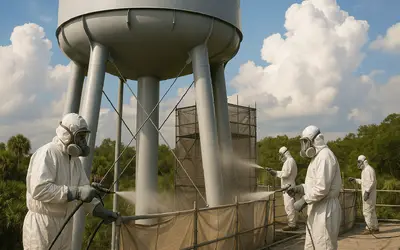
When Should an Elevated Water Tower Be Repainted? Signs, Standards, and Scheduling
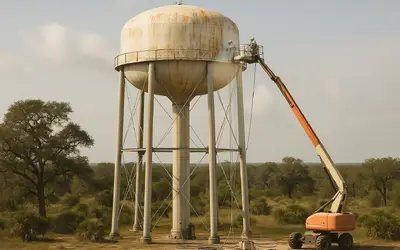
TL;DR: Elevated water towers should be formally inspected at least every five years per AWWA standards, with repainting typically triggered between 10 and 25 years depending on coating system, environment, and inspection findings. Florida’s heat, humidity, and...
Potable Water Tank Coating Standards Every Municipality Should Know
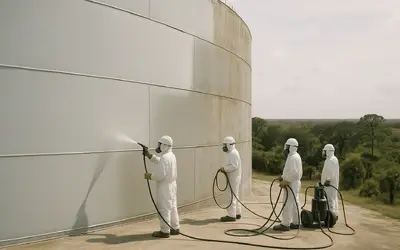
TL;DR: Potable water tank coatings must satisfy three overlapping frameworks: AWWA D102 (system selection and application), NSF/ANSI 61 (health-effects certification for water-contact products), and AMPP/SSPC surface preparation standards. Florida adds a state-level...
Bridge Coating Maintenance: How DOT and Municipal Structures Are Repainted
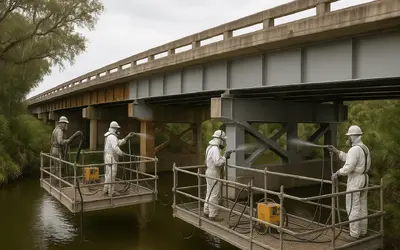
TL;DR: Bridge coating maintenance is the planned process of surface-preparing and repainting structural steel to stop corrosion before it compromises load capacity or safety. Projects follow SSPC/NACE surface-preparation standards and typically use a three-coat...